Fresh to freeze-dried converter
Explore how assumed water content changes weight. The results are modelled amounts, not a measurement of the fruit used to make your packet.
Fresh to freeze-dried converter
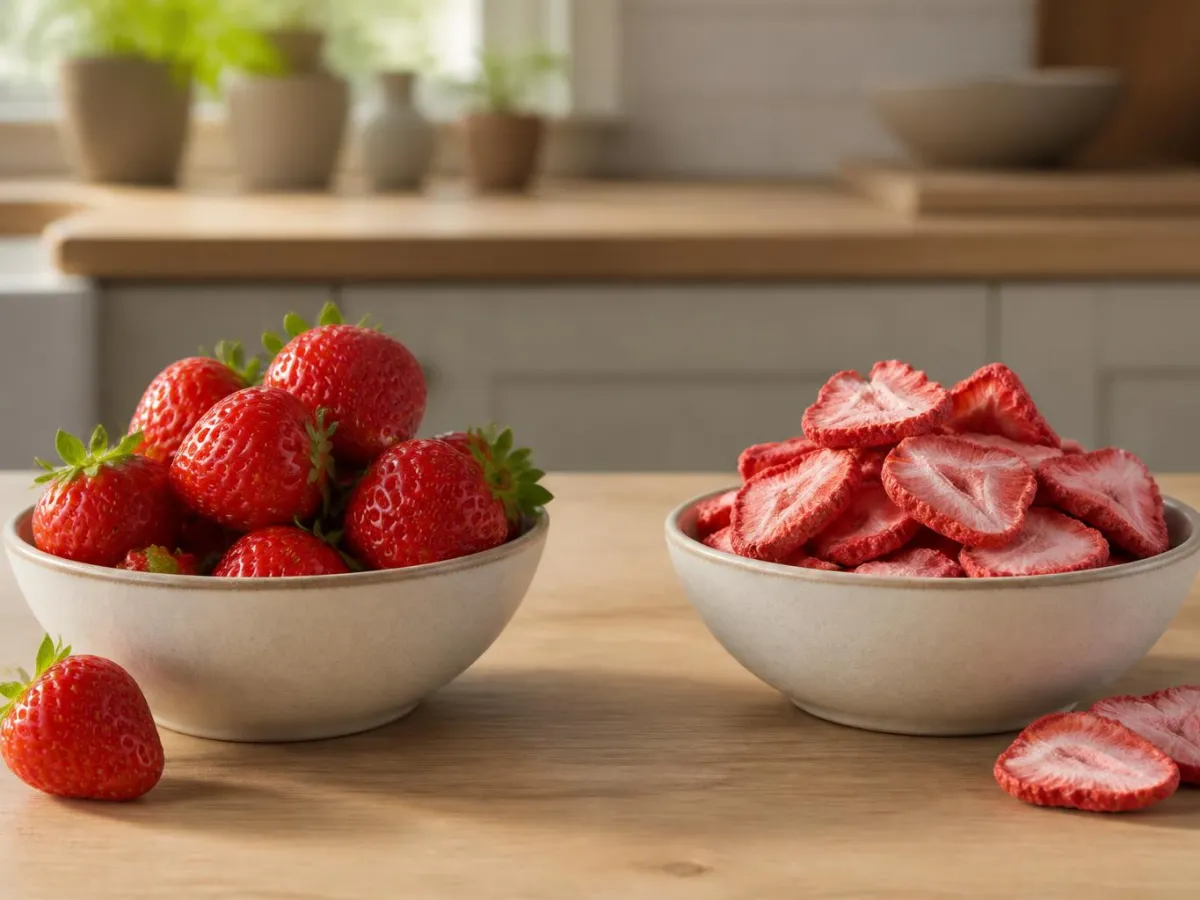
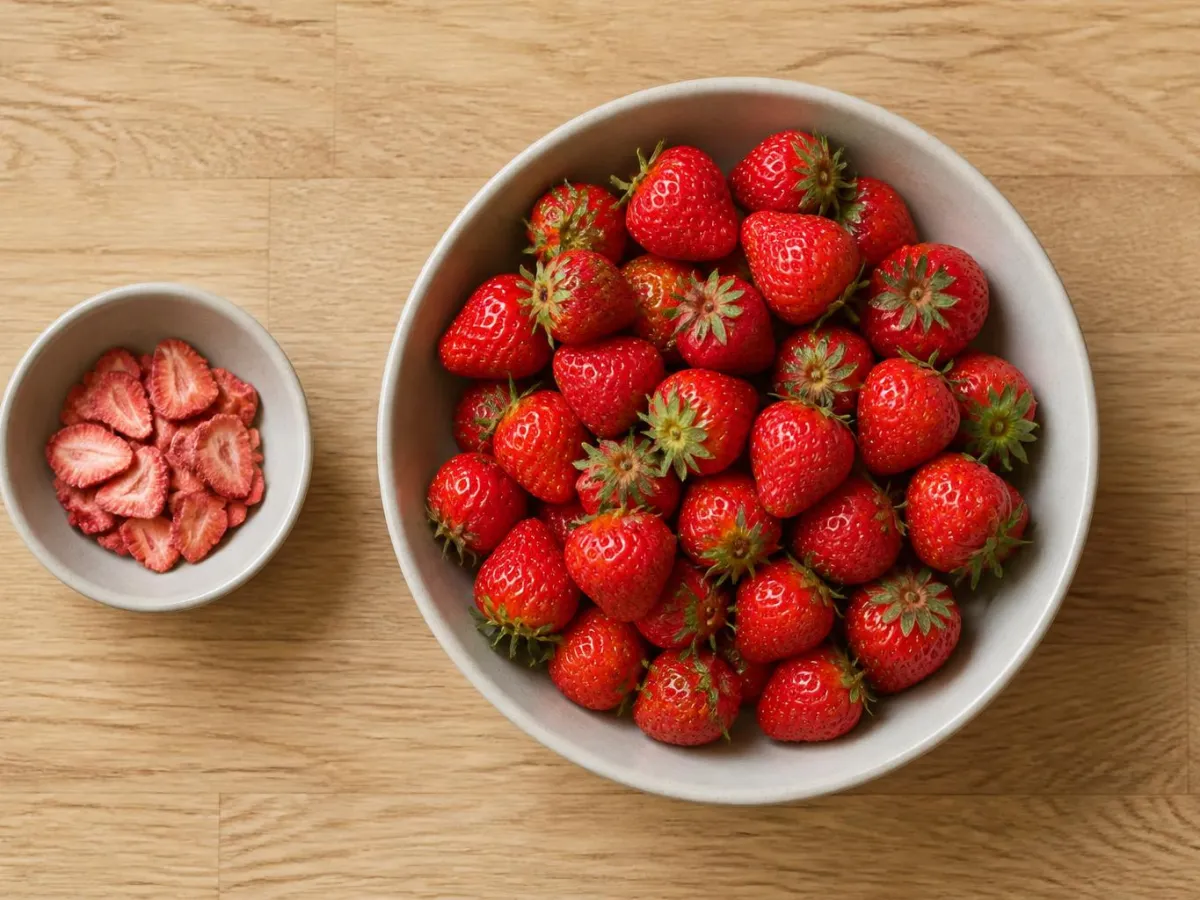
Model estimate: 10g of freeze-dried strawberries has a fresh-weight equivalent of about 108g.
Cooking-weight estimate only, not a nutrient or 5 A Day conversion. Assumes 91% water before drying and 3% after drying; these are not measurements of your product.
On this page
This calculator explores how food weight changes under stated water-content assumptions. Choose one of 18 presets and a direction to see the modelled fresh or freeze-dried weight. It cannot recover the actual fresh weight used to make a packet.
The presets are illustrative. They are not verified CoFID entries or measurements of the food you have. Final moisture is assumed to be 3% for every calculation; it is not a claim about all freeze-dried products.
How the model works
The calculation assumes that water is the only material removed and the amount of dry solids stays the same. It does not account for trimming, other processing losses, added ingredients or changes during storage.
If the assumed starting water content is W per cent, and final moisture is 3 per cent:
Fresh-to-dried weight ratio = 97 ÷ (100 − W)
Modelled fresh weight = entered dried weight × ratio
Modelled dried weight = entered fresh weight ÷ ratio
For the strawberry preset, W is 91. The ratio is 97 ÷ 9, or about 10.78. Entering 10g in the dried-to-fresh direction gives about 108g of modelled fresh weight. This is arithmetic under the preset, not evidence about the origin or nutritional content of a real 10g serving.
The 18 presets used by the calculator
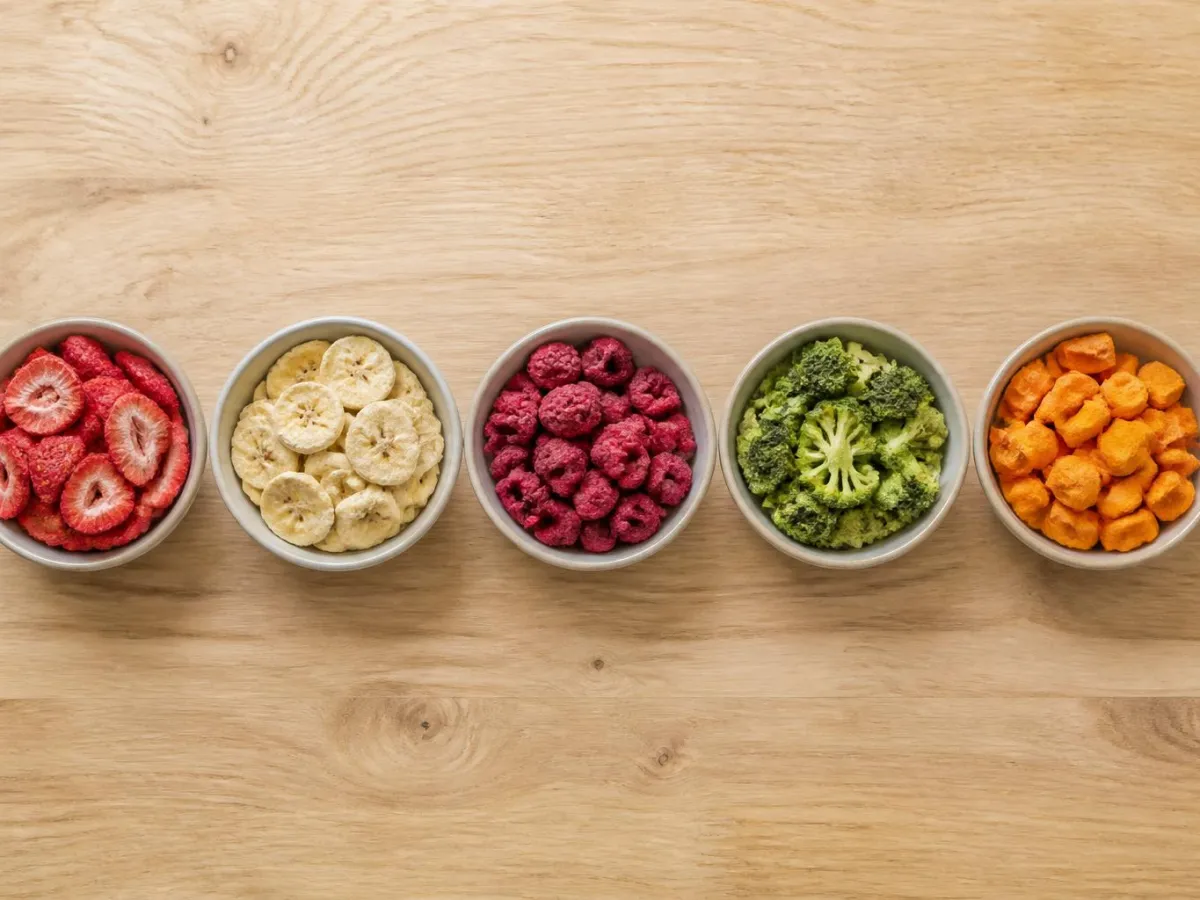
The names identify selectable scenarios. Each water percentage below is an assumed input. Ratios are shown to two decimal places; example weights are rounded to the nearest gram. Calculations use the ratio before rounding.
| Preset | Assumed starting water | Modelled fresh-to-dried ratio | Modelled fresh weight for 10g dried |
|---|---|---|---|
| Strawberries | 91% | 10.78 to 1 | 108g |
| Raspberries | 86% | 6.93 to 1 | 69g |
| Blueberries | 84% | 6.06 to 1 | 61g |
| Blackberries | 88% | 8.08 to 1 | 81g |
| Blackcurrants | 80% | 4.85 to 1 | 49g |
| Cherries | 82% | 5.39 to 1 | 54g |
| Apple | 86% | 6.93 to 1 | 69g |
| Banana | 75% | 3.88 to 1 | 39g |
| Mango | 83% | 5.71 to 1 | 57g |
| Pineapple | 86% | 6.93 to 1 | 69g |
| Peach | 89% | 8.82 to 1 | 88g |
| Peas | 79% | 4.62 to 1 | 46g |
| Sweetcorn | 76% | 4.04 to 1 | 40g |
| Carrot | 88% | 8.08 to 1 | 81g |
| Beetroot | 88% | 8.08 to 1 | 81g |
| Spinach | 91% | 10.78 to 1 | 108g |
| Broccoli | 89% | 8.82 to 1 | 88g |
| Tomato | 94% | 16.17 to 1 | 162g |
Changing either moisture assumption changes the result. The food name does not make its preset a measurement: real ingredients, preparation and finished products can differ.
Using the result in a kitchen experiment
Use the model to understand why a weight swap may not behave as expected. For example, the blueberry preset gives about 25g of modelled dried weight for 150g of fresh input. That does not establish equal flavour, identical nutrients or a successful substitution in a muffin recipe.
A recipe written for fresh fruit may rely on its water. One written for freeze-dried pieces or powder may rely on their texture. Follow the recipe and product instructions, and record any changes you test instead of treating the calculated weight as a guaranteed replacement or adding a fixed spoonful of liquid.
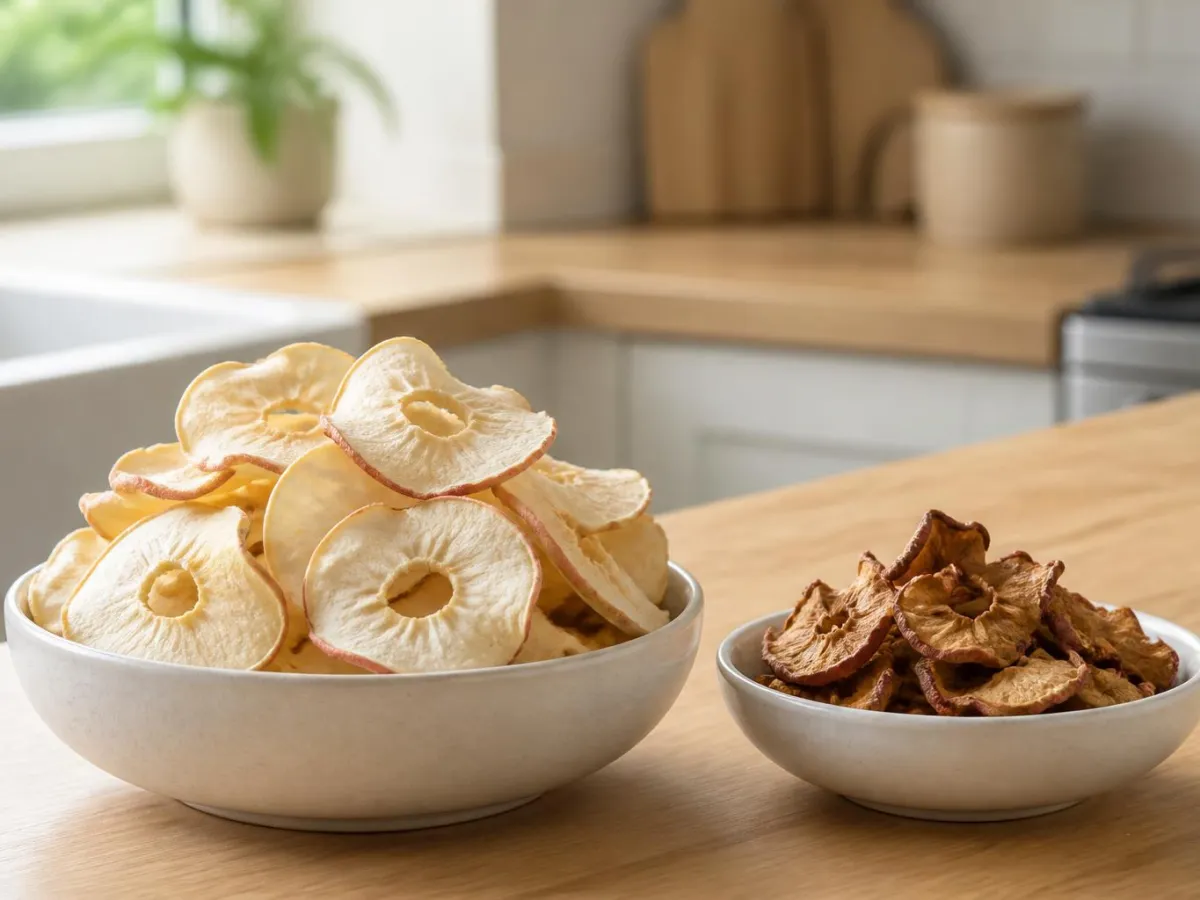
The guides to freeze-drying and freeze-dried versus dehydrated fruit explain the processes behind those differences.
Nutrition and 5 A Day are separate questions
The model does not track sugar, energy, vitamins or other nutrients. It also does not establish how much fresh fruit went into a particular product. Read the product's nutrition information rather than transferring values from the modelled fresh weight.
The NHS portion-size page provides general fruit-and-vegetable guidance, not validation of this mass model. We do not convert its output into portions. Our 5 A Day explanation sets out what the cited NHS pages do and do not specify for freeze-dried fruit.
Good questions, short answers
What does the strawberry preset calculate for 10g?
With assumed starting water of 91% and final moisture of 3%, 10g of modelled freeze-dried weight corresponds to about 108g of modelled fresh weight. This does not establish how much fresh fruit a real packet started with.
Where do the water percentages come from?
They are rounded illustrative presets retained in this calculator. They have not been matched to specific CoFID records or measured in your food. The assumed 3% final moisture is also a model input, not a product measurement.
Why does each preset give a different ratio?
The model holds final moisture at 3% while changing the assumed starting water percentage. More assumed starting water produces a larger fresh-to-dried weight ratio. The result follows those assumptions, not a measurement of a batch.
Can I use the result as a direct recipe substitution?
Not on its own. A recipe also depends on moisture, texture and the other ingredients. Use a recipe written for the format you have, or treat a small trial as an experiment. This model does not prescribe how much liquid to add.
Does the converter calculate nutrition or 5 A Day portions?
No. It models mass while assuming dry solids are unchanged. It does not establish equal nutrients, a serving recommendation or an official 5 A Day conversion. Use the product label for its nutrition figures.