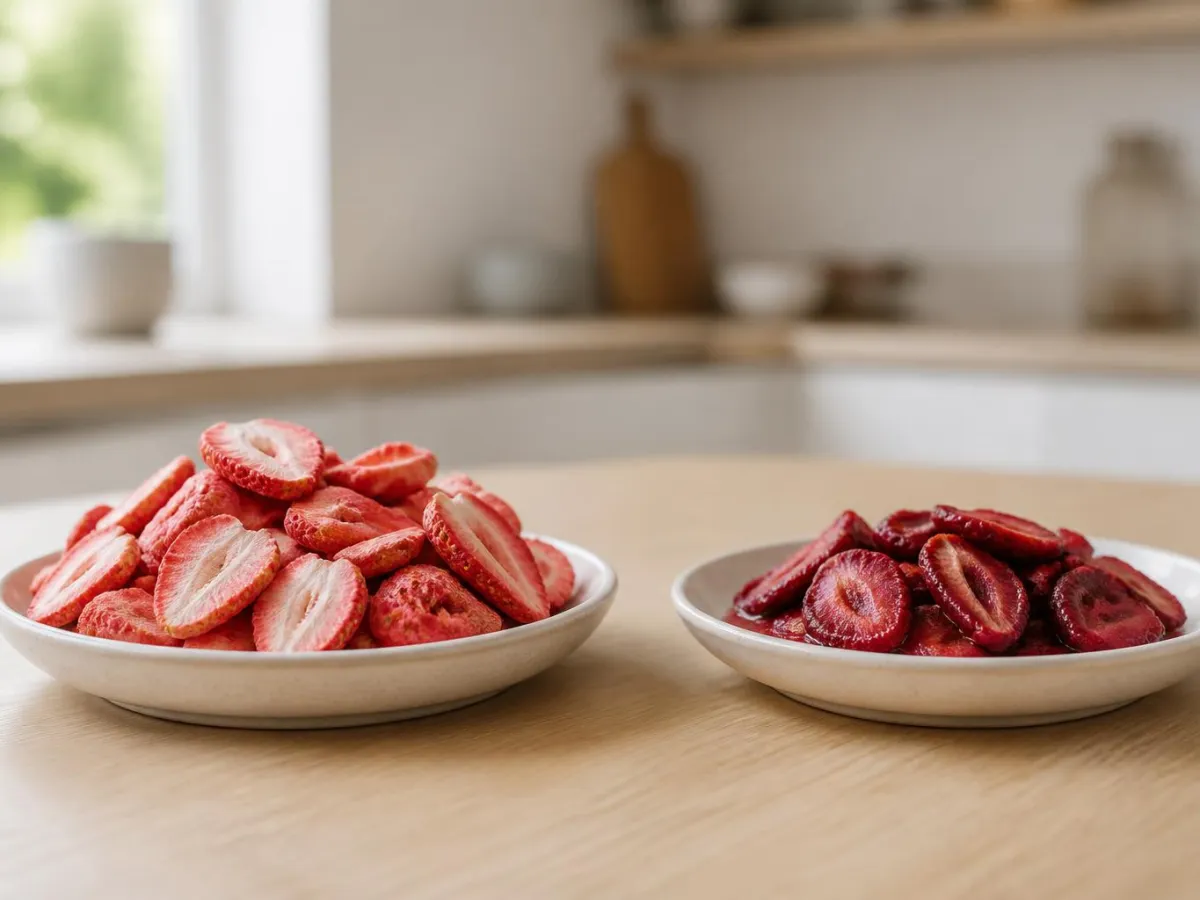
How to rehydrate freeze-dried fruit
Cover it with water and wait. The ratios and the times, fruit by fruit, and what soaked freeze-dried fruit is actually good for.
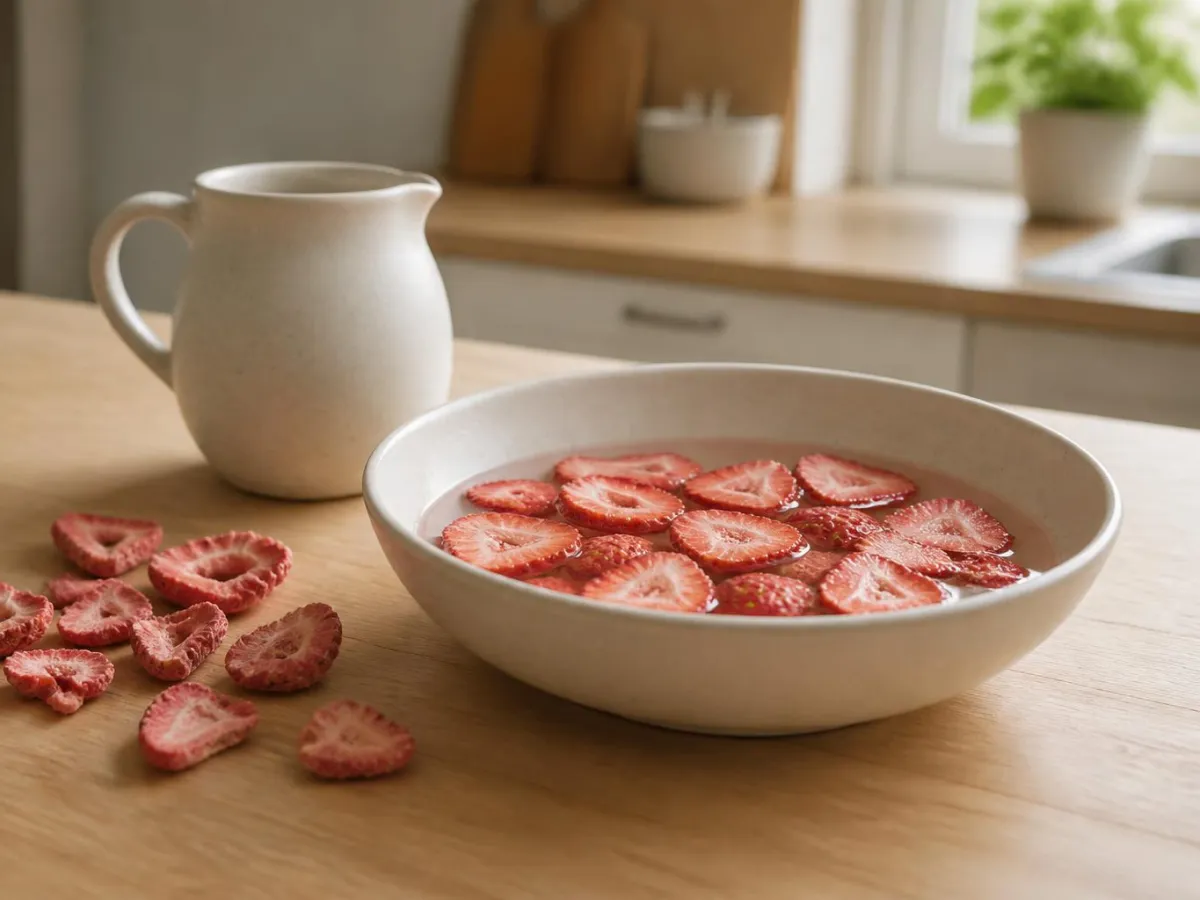
- 1 to 3 minberry slices in just-boiled water
- about 100mlwater per 10g of freeze-dried strawberries
- Thawed, not freshthe texture you should expect
- 30gdried fruit is one 5 A Day portion (NHS)
On this page
- How to rehydrate freeze-dried fruit, step by step
- Rehydration times and water ratios for freeze-dried fruit
- What rehydrated freeze-dried fruit is good for
- What rehydrated freeze-dried fruit is not good for
- How to rehydrate freeze-dried vegetables in the pan
- Rehydrating freeze-dried fruit in milk, juice, tea or alcohol
- Sugar, 5 A Day portions and teeth
- Rehydrating freeze-dried fruit for babies and toddlers
- Common mistakes when rehydrating freeze-dried fruit
To rehydrate freeze-dried fruit, cover it with water and wait: thin berry slices take one to three minutes in just-boiled water, and whole berries or thicker slices of apple, mango and pineapple take three to ten minutes, with cold water needing two to three times as long. Allow roughly the amount of water the fruit lost when it was dried, which is about 100ml per 10g for strawberries and only about 30ml per 10g for banana, then drain off whatever it has not drunk.
The useful part is knowing which fruits are worth rehydrating, which are better left crisp, and how long each one takes.
How to rehydrate freeze-dried fruit, step by step
- Weigh the fruit if you can. It is so light that a bowlful is a surprisingly large amount of fresh fruit, and guessing by eye leads to soup.
- Spread it in a heatproof bowl in a single layer rather than a heap, so every piece meets the water.
- Add the water. Just-boiled water from the kettle is quickest; cold water is gentler and holds the shape better.
- Check early. Press a piece against the side of the bowl at the shorter time in the table below, and give it another minute if the middle is still crisp.
- Drain, and keep the liquid. It is intensely fruity: use it in a cordial, a sauce or a jelly.
- Use it straight away. Rehydrated fruit spoils like fresh fruit, so keep it in the fridge and use it within a day.
For a sauce or compote, add a little more water than the table says and skip the draining. For soft fruit that holds together, use less water and drain it well.
Rehydration times and water ratios for freeze-dried fruit
The water column is roughly what each food lost when it was dried, so it is close to the most it can drink. The times assume the sort of slice thicknesses UK retail packs usually contain.
| Fruit or vegetable | Water per 10g dry | Cold water | Just-boiled water | What the result suits |
|---|---|---|---|---|
| Strawberry slices | about 100ml | 3 to 5 min | 1 to 2 min | Compote, coulis, trifle, porridge |
| Whole strawberries | about 100ml | 10 to 15 min | 4 to 6 min | Stewed fruit, sauces, fillings |
| Raspberries | about 60ml | 2 to 4 min | 1 min | Coulis, ripples, sauce for cheesecake |
| Blueberries | about 50ml | 10 to 20 min | 5 to 10 min | Compote, muffin batter, pancakes |
| Blackcurrants | about 40ml | 5 to 10 min | 2 to 3 min | Compote, cordial, sauce for game |
| Cherries | about 45ml | 5 to 10 min | 2 to 4 min | Clafoutis, Bakewell, chocolate puddings |
| Apple slices | about 60ml | 10 to 15 min | 3 to 5 min | Crumble, pies, porridge, sauce for pork |
| Banana slices | about 30ml | 5 to 10 min | 2 to 3 min | Porridge, banana bread, baby purée |
| Mango | about 50ml | 10 to 15 min | 3 to 5 min | Salsa, curry, yoghurt, lassi |
| Pineapple | about 60ml | 10 to 15 min | 3 to 5 min | Sweet and sour sauce, gammon, curry |
| Peas | about 35ml | 20 to 30 min | 5 to 10 min | Risotto, pasta, soup, crushed peas |
| Sweetcorn | about 30ml | 20 to 30 min | 5 to 10 min | Chowder, fritters, fried rice |
| Carrot slices | about 70ml | 30 min or more | 10 to 15 min | Stews, soups, stock |
| Beetroot | about 70ml | 30 min or more | 10 to 15 min | Soups, warm salads, hummus |
Treat these as a starting point, not a rule. Thin slices are faster than whole fruit, warm water is faster than cold, whole berries with their skins on are the slowest of the lot, and producers cut to different thicknesses.
The water figures come from the same arithmetic as our fresh to freeze-dried converter, which works out how much fresh fruit any weight of freeze-dried started as.
Chewy dried fruit will not behave like this. Air-dried and dehydrated pieces have shrunk as they dried, so they take far longer to soften and never come back to anything like their original volume, as explained in freeze-dried versus dehydrated fruit.
What rehydrated freeze-dried fruit is good for
Anything where the fruit is going to be soft anyway:
- Compotes and stewed fruit. Two minutes in hot water gives you a compote for yoghurt or rice pudding, with no pan and no thawing.
- Sauces, coulis and ripples. Raspberries almost collapse on contact with hot water, which is exactly what you want.
- Porridge and overnight oats. No separate bowl needed: the fruit rehydrates in the oats. There is more in our guide to freeze-dried fruit in porridge and overnight oats.
- Wet batters. Muffins, sponges and pancakes rehydrate the pieces as they bake, so add them dry.
- Smoothies. No soaking at all; the blender does it for you.
- Crumbles and pies. Rehydrated apple slices suit a crumble or pie filling, and they save peeling and coring.
- Baby and toddler food, where soft is the point. See the note below.
What rehydrated freeze-dried fruit is not good for
Freeze-drying leaves an open, brittle structure where the water used to be, which is why the pieces are so light and why they drink water so fast; there is more on that in our guide to what freeze-drying is and how it works. Soaking floods that structure rather than rebuilding the firm cells of fresh fruit, so the result is soft and slightly slumped, like fruit from a bag of frozen berries. Avoid soaking when you need:
- Decoration. A soaked slice on a cake looks tired within minutes and bleeds into the icing. Use the pieces dry, as in our guide to baking with freeze-dried fruit.
- Firm fruit. Fruit salad, a French strawberry tart, skewers, a cheeseboard: these need fruit that holds its shape.
- Crunch. Granola, chocolate bark, cake toppers and snacks depend on the fruit being dry, so use freeze-dried strawberries as they come.
- Colour in icing. Water is the enemy of buttercream. Blitz the fruit instead: strawberry powder gives colour and flavour without loosening the mixture.
If your fruit went soft in the cupboard rather than in a bowl, that is a different problem with a different fix: see freeze-dried fruit that has gone soft.
How to rehydrate freeze-dried vegetables in the pan
Vegetables rarely need a bowl. Most are blanched before drying, so you can tip them straight into a soup, stew, risotto, curry or pan of noodles with a splash more liquid and let them rehydrate as the dish cooks. That is the easiest way to use freeze-dried peas and freeze-dried sweetcorn.
| Vegetable | Add to the pan | Extra liquid per 10g | Watch out for |
|---|---|---|---|
| Peas | Last 10 minutes | about 35ml | Going grey if boiled hard |
| Sweetcorn | Last 10 minutes | about 30ml | Nothing; very forgiving |
| Spinach | Last 2 to 3 minutes | about 100ml | Drinking far more than you expect |
| Carrot slices | 20 to 25 minutes before the end | about 70ml | Staying chalky if rushed |
| Beetroot | About 20 minutes before the end | about 70ml | Colouring everything else |
Two rules make this work: add the extra liquid at the start, not the end, or the dish tightens up before the vegetables have finished drinking; and add hard vegetables early, soft ones late, exactly as with fresh.
Rehydrating freeze-dried fruit in milk, juice, tea or alcohol
Water is only the default. Milk and yoghurt turn berries into a soft fruit layer overnight in the fridge, apple juice makes a sweeter compote, and gin, prosecco and rum soak in beautifully for puddings and cocktails. Thick, sugary or alcoholic liquids are absorbed more slowly than water, so allow longer or leave the bowl in the fridge overnight.
Sugar, 5 A Day portions and teeth
Freeze-dried fruit is concentrated. The water has gone and nothing else has, so weight for weight it carries far more sugar and calories than the fresh fruit it came from. A typical serving is about 10g, which for strawberries is roughly 100g of fresh fruit. Typical values for freeze-dried berries sit around 330 to 380 kcal per 100g, or roughly 35 kcal for a 10g serving, but figures vary between fruits and producers and the label on your pack is what counts.
Rehydrating changes the texture, not the sugar. Soaking 10g of freeze-dried strawberries in 100ml of water gives you something that behaves like a small bowl of soft fruit, but the sugar is still exactly the sugar that was in the 10g.
The NHS counts 30g of dried fruit as one of your 5 A Day, and advises eating dried fruit with a meal rather than between meals, because it is more likely to cause tooth decay when eaten on its own. That applies to a bowl of rehydrated fruit as much as to a handful of the crisp kind. There is more in freeze-dried fruit and teeth and freeze-dried fruit and 5 A Day.
Rehydrating freeze-dried fruit for babies and toddlers
Crisp freeze-dried pieces can be a choking risk for babies and young children. Soften them thoroughly in water, milk or purée until there is no crunch left at all, or blitz them to a powder and stir it in. Follow NHS weaning guidance on textures and finger foods, and speak to your health visitor or GP about your own child.
Because it softens so quickly, freeze-dried fruit is handy at weaning age: a spoonful of powder or well-softened fruit stirred into porridge or plain yoghurt. There is more in our guide to freeze-dried fruit for babies and toddlers.
Common mistakes when rehydrating freeze-dried fruit
- Too much water. The commonest error by a mile. Start with less than you think.
- Boiling it. It needs soaking, not simmering. A pan on the heat turns raspberries to purée in under a minute.
- Leaving berries too long. Raspberry and strawberry slices are done in minutes, then collapse.
- Not draining before baking. Wet fruit sinks through a batter and leaves a soggy layer.
- Soaking the fruit you meant to decorate with. Decide first which job the fruit is doing.
The short version: berries need a splash of water and a couple of minutes, hard vegetables need a pan of something hot and ten, and nothing needs more water than it lost in the first place. If you want crunch, keep it dry.
Good questions, short answers
Can you rehydrate freeze-dried fruit?
Yes. Cover it with water and it drinks the water back in within minutes, far faster than chewy dried fruit ever does. The texture that comes back is soft rather than firm, closer to thawed frozen fruit than to fresh, so rehydrated fruit belongs in compotes, sauces, porridge and baking rather than on a fruit platter.
How long does freeze-dried fruit take to rehydrate?
Thin berry slices take one to two minutes in just-boiled water, or three to five minutes in cold water. Whole berries and thicker slices of apple, mango or pineapple take three to ten minutes hot and ten to twenty minutes cold. Dense vegetables such as carrot and beetroot need ten to fifteen minutes in hot water, or half an hour in cold.
How much water do you add to freeze-dried fruit?
Roughly the amount the fruit lost when it was dried, which is about 100ml per 10g for strawberries, 60ml for raspberries and apple, and only about 30ml for banana. In practice it is easier to cover the fruit with water, let it drink what it wants and drain off the rest.
Does rehydrated freeze-dried fruit taste like fresh fruit?
The flavour is very close, because nothing has been added or taken away except water. The texture is not: freeze-drying leaves an open, brittle structure where the water used to be, and soaking floods that structure rather than rebuilding the firm cells of fresh fruit. Expect soft, slightly slumped fruit of the kind you would get from a bag of frozen berries.
Can you rehydrate freeze-dried fruit in milk or juice?
Yes, and it often tastes better. Milk, yoghurt, apple juice, tea, prosecco and gin all work. Thick or sugary liquids are absorbed more slowly than plain water, so allow a little longer, or leave the fruit in the fridge overnight.
Do you need to rehydrate freeze-dried fruit before baking with it?
Usually not. In a wet batter such as a muffin, sponge or pancake mix, the pieces rehydrate themselves as the cake bakes. Soak first only when the mixture is dry, as in some biscuit doughs, or when you want the fruit to melt into the crumb rather than stay as distinct pieces.