
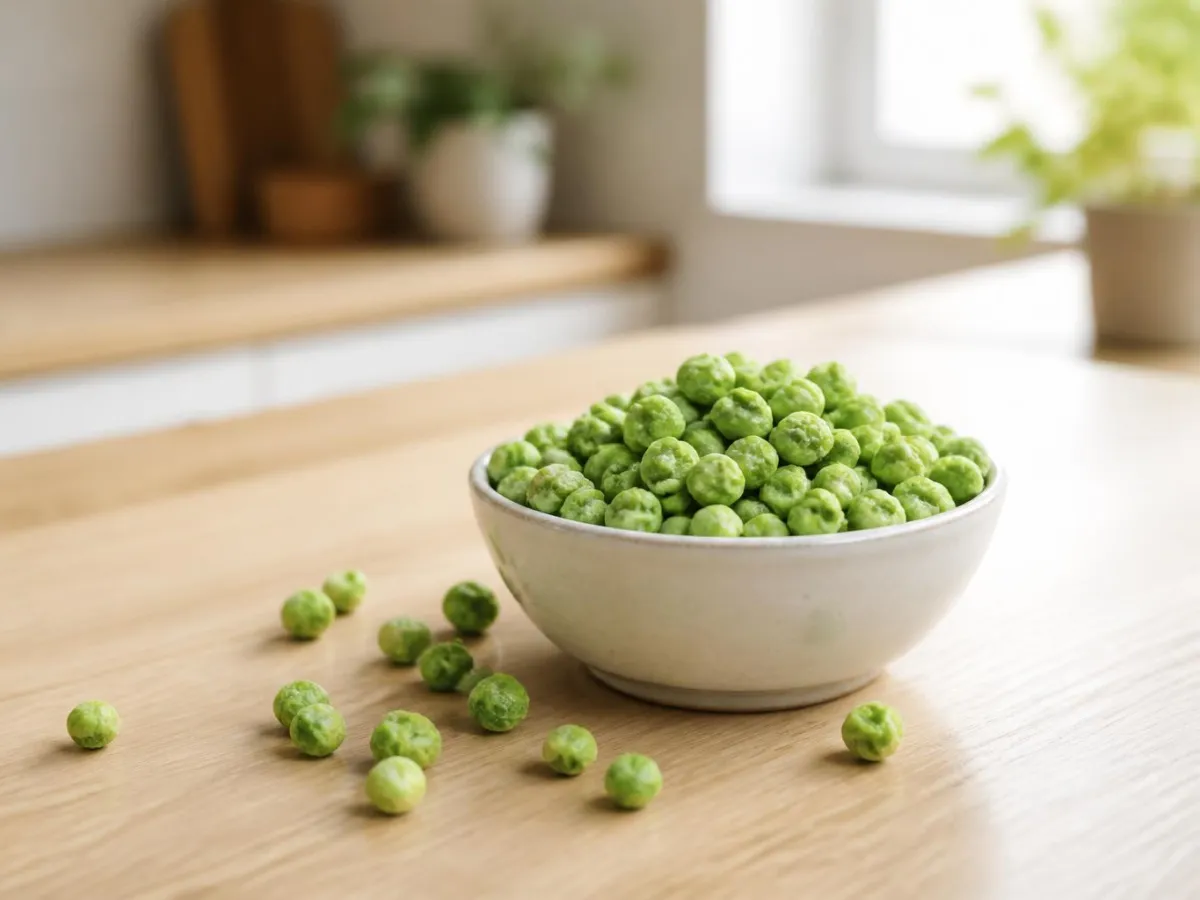
Freeze-dried peas
Sweet, bright green and ready in minutes. How to rehydrate freeze-dried peas, cook with them and even snack on them.
Peas that pop, sweetcorn that crunches and veg that is ready when you are. Rehydration times, cooking ideas, camp meals and where to buy in the UK.
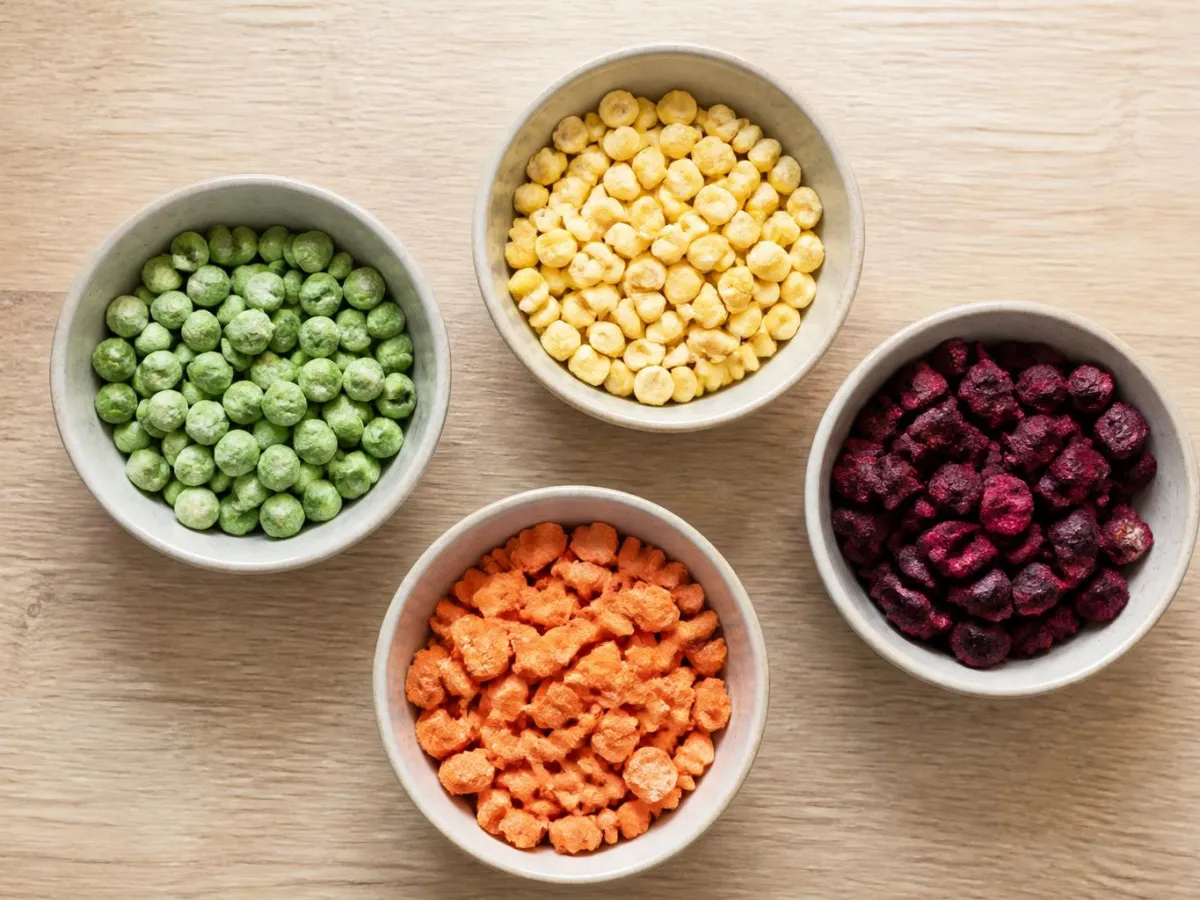
Sweet, bright green and ready in minutes. How to rehydrate freeze-dried peas, cook with them and even snack on them.
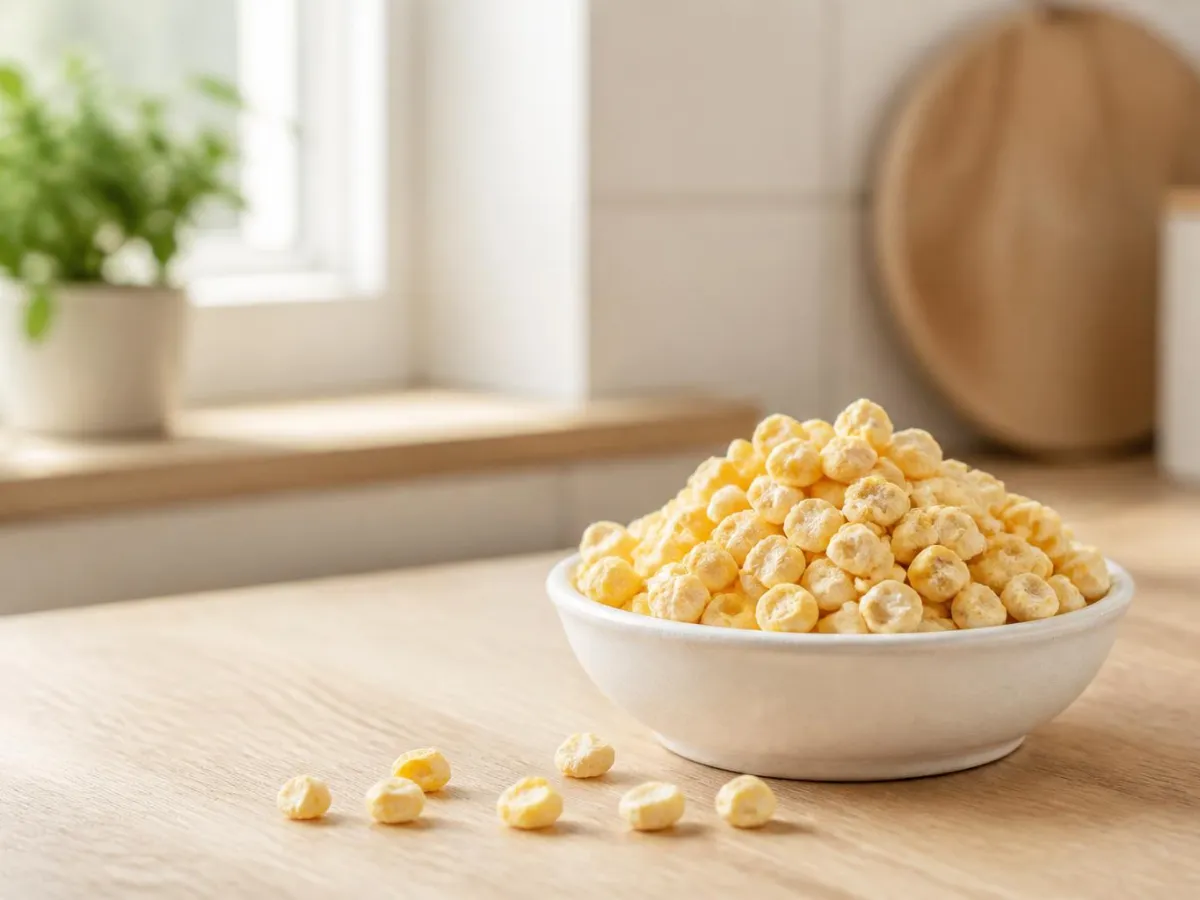
Sweet, golden and properly crunchy, or soft again in five minutes. How to snack on freeze-dried sweetcorn, cook with it and choose...
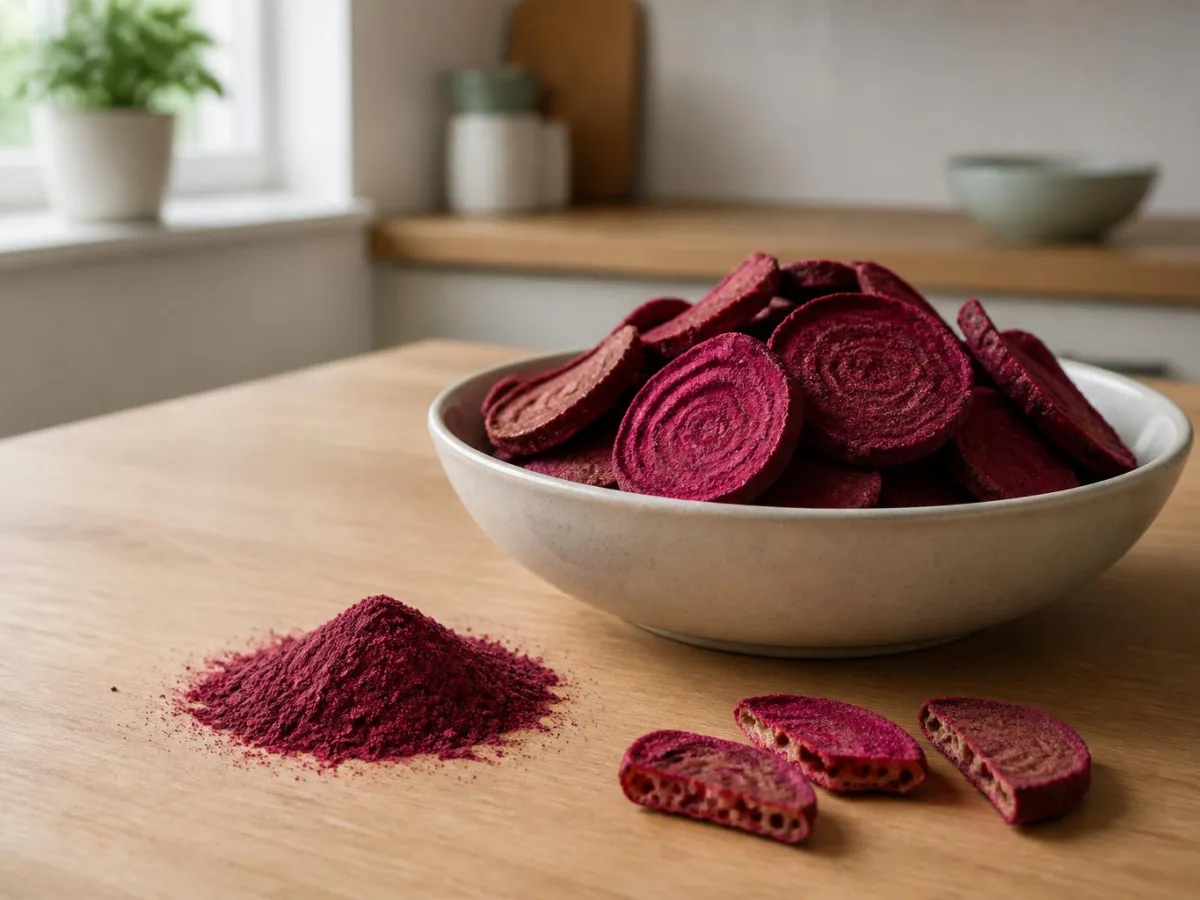
Deep magenta, crisp and concentrated. How to use freeze-dried beetroot for natural colour, snacking and cooking, and what is actua...
Freeze-dried vegetables are ordinary vegetables that have been frozen and then dried under vacuum, so nearly all the water leaves as vapour while the piece keeps its shape, colour and flavour. In the UK they are mostly an online buy rather than a supermarket one, they sit happily in a cupboard for a year or more, and most of them come back to life in five to fifteen minutes in hot water.
They are the quiet half of the freeze-dried aisle. British shoppers know freeze-dried fruit from baking and cereal, but vegetables are where the format is genuinely useful every week: no freezer space, no half a bag of spinach going to slime, and a pan of couscous that turns into a meal.
Most vegetables are washed, cut and briefly blanched, then frozen solid and dried in a vacuum chamber, so the ice turns straight to vapour without melting. The blanching is what sets the green in peas and beans. There is more on the process in what freeze-drying is, and on the difference from air-dried veg in freeze-dried versus dehydrated.
Vegetables are mostly water, so they shrink a great deal, and how much they shrink follows the water content. A freeze-dried piece still holds around 3 per cent moisture, so the fresh-to-dry ratio works out at roughly 97 divided by (100 minus the water percentage).
| Vegetable | Typical water content | Fresh to freeze-dried ratio | 1kg fresh gives about |
|---|---|---|---|
| Sweetcorn | 76% | about 4 to 1 | 250g |
| Garden peas | 79% | about 4.5 to 1 | 215g |
| Carrot | 88% | about 8 to 1 | 125g |
| Beetroot | 88% | about 8 to 1 | 125g |
| Broccoli | 89% | about 9 to 1 | 110g |
| Spinach | 91% | about 11 to 1 | 90g |
| Courgette | 95% | about 19 to 1 | 50g |
Water content shifts with variety, season and how mature the crop was cut, so treat every figure above as approximate. Garden peas lose a little over four fifths of their weight; spinach and courgette, which hold more water still, lose far more than that. That is why a 100g pouch looks enormous, and why a small handful goes further than it appears. The fresh to freeze-dried converter does the same sums for you if you are swapping one for the other in a recipe.
Plain freeze-dried vegetables have one thing on the ingredients list: the vegetable. Nothing is added, and nothing needs to be, though it is worth reading the pack to confirm. More on that in our note on freeze-dried food and ultra-processed food.
Times below are a rough guide for hot water straight from the kettle, with the pieces covered by about twice their volume of water. Bigger cubes take longer, cold water takes two or three times as long, and the instructions on your own pack always win.
| Vegetable | Rough time in hot water | Texture once rehydrated | Best used in |
|---|---|---|---|
| Garden peas | 5 to 10 minutes | Tender and sweet, close to cooked-from-frozen | Risotto, pies, fried rice, pea mash; crunchy dry as a snack |
| Sweetcorn | 5 to 10 minutes | Juicy with a slight chew | Chowder, fritters, fajitas, salads; crunchy dry |
| Diced carrot | 10 to 15 minutes | Firm-tender, never quite raw | Soups, stews, couscous, stock base |
| Beetroot | 10 to 15 minutes | Soft and very staining | Salads, hummus, natural colour in bakes |
| Broccoli and cauliflower florets | 8 to 12 minutes | Soft, slightly grainy | Pasta bakes, soups, curry, dhal |
| Courgette slices | 5 to 10 minutes | Soft and watery, as fresh courgette cooks | Ratatouille, pasta sauce, tray bakes |
| Leek and onion | 5 to 10 minutes | Soft and sweet | Soup and stew bases, omelettes, risotto |
| Green beans | 8 to 12 minutes | Firm-tender | Curries, stews, camp meals |
| Mixed peppers | 5 to 10 minutes | Soft, a little chewy at the skin | Chilli, fajitas, pasta sauce, noodles |
| Potato and sweet potato cubes | 15 to 20 minutes, ideally simmered | Floury and tender | Hash, camp stew, curry, soup |
| Butternut squash and pumpkin | 12 to 18 minutes | Soft and sweet | Soup, risotto, curry |
| Spinach and kale | 1 to 3 minutes | Wilted, like defrosted frozen spinach | Dhal, pasta, eggs, smoothies |
| Herbs such as chives, dill and basil | No soaking needed | Softens in seconds | Stir in at the end of cooking |
You rarely need a separate soaking step. If the dish already has liquid in it, add the vegetables dry about ten minutes before the end and top up the pan with a little extra water or stock.
Treat them as an ingredient rather than a snack, with two exceptions: freeze-dried peas and freeze-dried sweetcorn, which are good eaten crisp from the pack.
Season at the end. Rehydrated veg can taste flat straight out of the water and picks up once it has had a minute in the dish, so taste it before you reach for the salt.
This is the use case that sells itself. A 100g pouch of mixed veg weighs 100g, needs no cool box and survives a rucksack.
A serviceable one-pan camp dinner is a handful of freeze-dried veg, a handful of instant noodles or couscous, a stock cube and enough boiling water to cover, left with the lid on for ten minutes. Peas, sweetcorn, peppers, spinach and leek are the fastest; leave potato and squash to trips where you can simmer properly.
Three practical points for British trips:
There is more on kit, portions and light breakfasts in our guide to freeze-dried food for hiking and camping.
Freeze-dried vegetables are not a supermarket staple here. Tesco, Sainsbury's, Asda and Aldi sell frozen, tinned and ordinary air-dried veg, and the baking aisle sometimes carries small sachets of freeze-dried fruit, but a real vegetable range means shopping online. There is a fuller picture in freeze-dried fruit in UK supermarkets.
Four sorts of seller stock them:
Typical prices, as a guide only:
| Vegetable | Typical UK online price per 100g | Notes |
|---|---|---|
| Garden peas | around £3 to £4.50 | Usually the cheapest and the most widely stocked |
| Potato cubes and onion | around £4 to £5 | Good value for soup and camp cooking |
| Leek and beetroot | around £5.50 to £6.50 | Beetroot also sold as powder |
| Courgette and more delicate veg | around £8 to £9 | Big shrinkage, so high cost per 100g |
Those are other retailers' prices, last checked in September 2026, and they move about, so check before you buy. Compare the price per 100g rather than the pack price, because a 250g or 500g bag is usually a good deal cheaper per gram than a 100g pouch.
The Crispberry shop is not open yet. We are working on it, and you can join the list to hear when it does. Until then this guide is here to help you buy well anywhere.
If you have a garden glut, home freeze-drying is worth a thought: a courgette mountain is free and freeze-dried courgette is expensive. We weigh it up in is a home freeze dryer worth it.
Vegetables count towards your 5 A Day however they are preserved, and the NHS counts them in cooked dishes such as soups and stews too. The portion for cooked, tinned or frozen vegetables is 80g, about three heaped tablespoons, so measure after rehydrating. As a rough guide, 15g to 20g of dry freeze-dried peas comes back to about a portion.
Do not muddle this with the dried fruit rule. The NHS counts 30g of dried fruit as one portion and advises eating it with meals rather than as a between-meal snack, to reduce the risk of tooth decay, because drying concentrates the fruit's own sugars. Because the water has gone, a small weight of freeze-dried fruit is a lot of fruit, and the fruit's own sugars come concentrated along with it: a typical 10g serving stands in for roughly 60g to 110g of fresh berries, depending on the fruit. There is more in our pages on 5 A Day, freeze-dried fruit and sugar and freeze-dried fruit and teeth. Freeze-dried vegetables are concentrated in exactly the same way, but they start out low in sugar, so the sugar and teeth advice does not carry over to them.
Typical values per 100g of dry freeze-dried vegetables run roughly from 250 to 400 kcal, with something like 15g to 30g of fibre, and around 20g to 25g of protein in peas and beans. Those are deliberately wide ranges, worked up from published composition data for the fresh vegetable and the shrinkage ratios above, because figures vary with the vegetable, the variety and the producer. Products vary and the label on your own pack is what counts, and remember that 100g dry is a very large amount of vegetable: for peas it is the best part of half a kilo fresh.
Crisp freeze-dried pieces can be a choking risk for babies and young children. Soften them thoroughly in warm water or milk, or blitz them to a powder and stir into a purée, and follow NHS weaning guidance on textures and timing. Plain vegetables with nothing added suit weaning well, since there is no salt or sugar in the pack. For anything specific to your child, speak to your health visitor or GP. Our page for babies and toddlers goes through it in more detail.
Some plain vegetables are fine for dogs in small amounts, but several common freeze-dried lines are not. Onion, garlic, leek, shallot and chives are all in the allium family and are toxic to dogs and cats, and freeze-drying concentrates them, so a spoonful of powder is a lot of onion. Grapes, raisins, sultanas and currants are also toxic to dogs, and a dried grape is a raisin, so keep fruit mixes away too.
Stick to plain, unseasoned pieces, keep amounts small, and check with your vet before adding anything to your dog's diet, especially if they have a health condition. There is more in our page on freeze-dried food and pets.
Sealed, cool, dark and dry. Moisture from the air is what turns crisp pieces leathery, so press the air out of the pack and reseal it, or move the veg into an airtight jar with the desiccant sachet if one came in the bag. Keep them out of the fridge, where condensation forms every time the door opens. Our guide to storing freeze-dried fruit and veg has the full method, and what to do when freeze-dried food has gone soft covers the rescue job.
Soft veg is not wasted veg. It has lost its crunch, not its usefulness, and it will rehydrate just as well in a soup.
Buy one 100g bag of garden peas. Keep it by the hob, add a handful to the next risotto, soup or pan of noodles, and see how often you reach for it in a fortnight. If the answer is often, add sweetcorn and onion next, and read how to rehydrate freeze-dried food before you try the denser roots.
Put them in a heatproof bowl, cover with hot water to about twice their volume, and leave them for five to fifteen minutes depending on the vegetable and the size of the pieces. Drain and use as you would cooked veg. You can also skip the bowl entirely and add them dry to a soup, stew, curry or pan of rice, with a splash of extra liquid, for the last ten minutes of cooking.
Yes. Peas and sweetcorn are pleasantly sweet and crunchy straight from the pack and make a good salad topping. Denser vegetables such as carrot, beetroot and squash are hard work dry and are much nicer softened. Crisp dry pieces are a choking risk for babies and young children, so soften or powder them first.
Mostly online. UK supermarkets sell frozen, tinned and ordinary dried veg rather than freeze-dried, so a proper range means going to a specialist wholefood shop, a British freeze-drying producer or a marketplace listing. Garden peas are the most widely stocked and usually the cheapest.
Vegetables count however they are preserved, including in soups and stews. The NHS portion for cooked, tinned or frozen vegetables is 80g, which is about three heaped tablespoons, so measure your freeze-dried veg after rehydrating rather than dry. Roughly 15g to 20g of dry freeze-dried peas comes to about a portion once soaked.
Unopened and kept somewhere cool, dark and dry, packs usually carry a best-before date of a year or more. Once opened, press the air out and reseal tightly, or decant into an airtight jar, and use within a few weeks while the texture is still crisp. Moisture from the air is what softens them.
No. Dehydrated vegetables are dried with warm air, which shrinks and darkens them and usually means soaking or simmering for much longer. Freeze-drying removes the water from the frozen piece under vacuum, so the shape stays open and porous and the water goes back in quickly. Freeze-dried pieces are lighter, crisper and more expensive.
Join the list for new guides and easy recipes. One or two emails a month, never more.
We only use your email to send you our newsletter. Unsubscribe any time. See our privacy notice.