
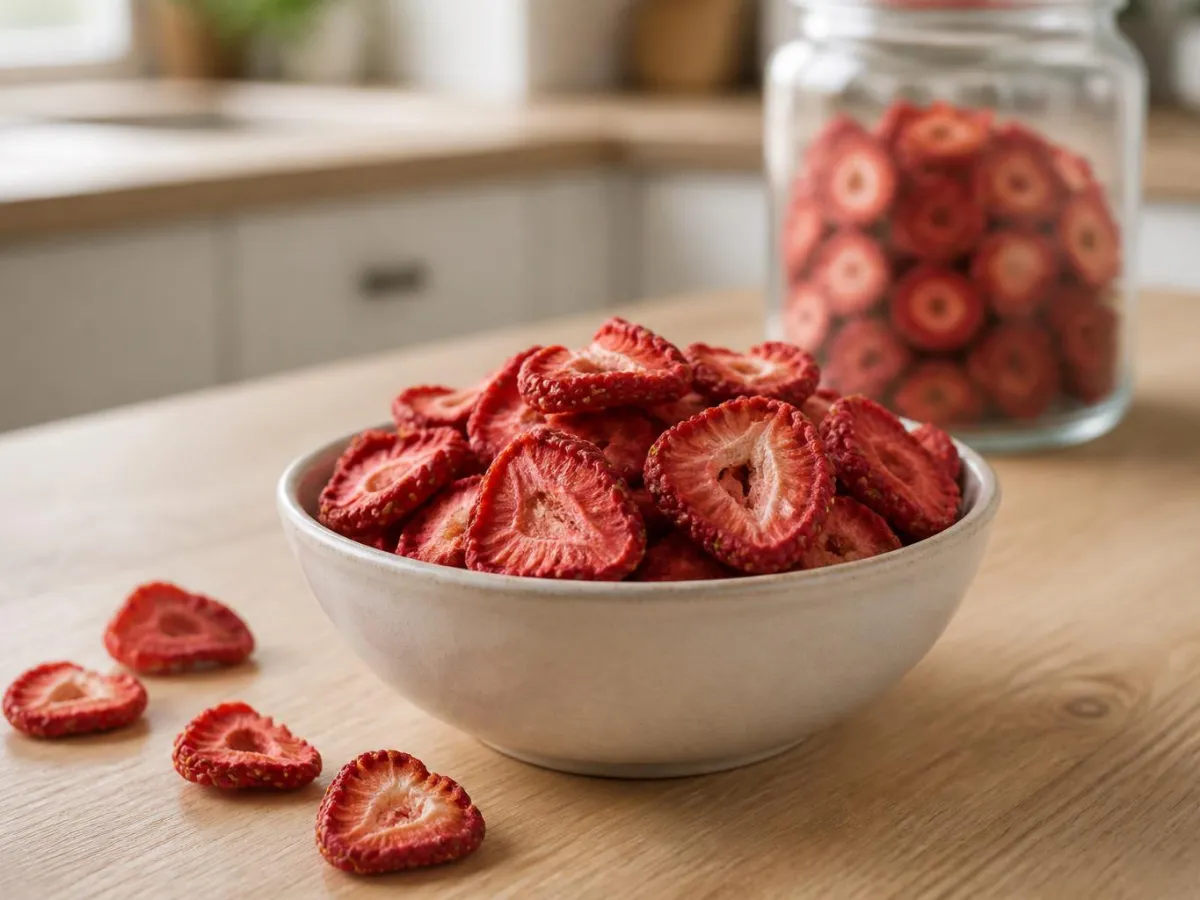
Freeze-dried strawberries
Crisp, scarlet and intensely fruity. How to use freeze-dried strawberries, what is in them and how to choose a good pack.
Crisp, colourful and nothing but fruit. Compare the common fruits, learn how to spot a good pack, and see where freeze-dried fruit is actually sold in the UK.
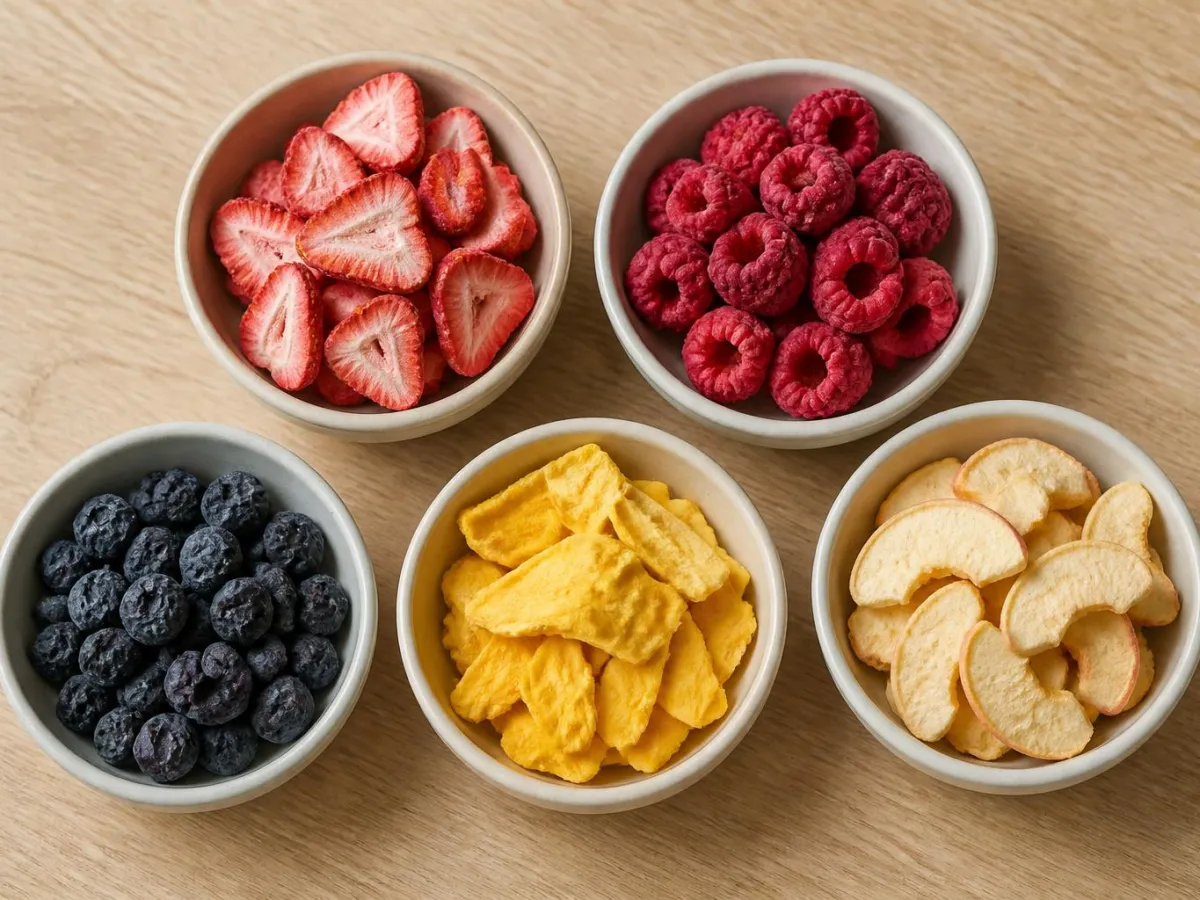
Crisp, scarlet and intensely fruity. How to use freeze-dried strawberries, what is in them and how to choose a good pack.
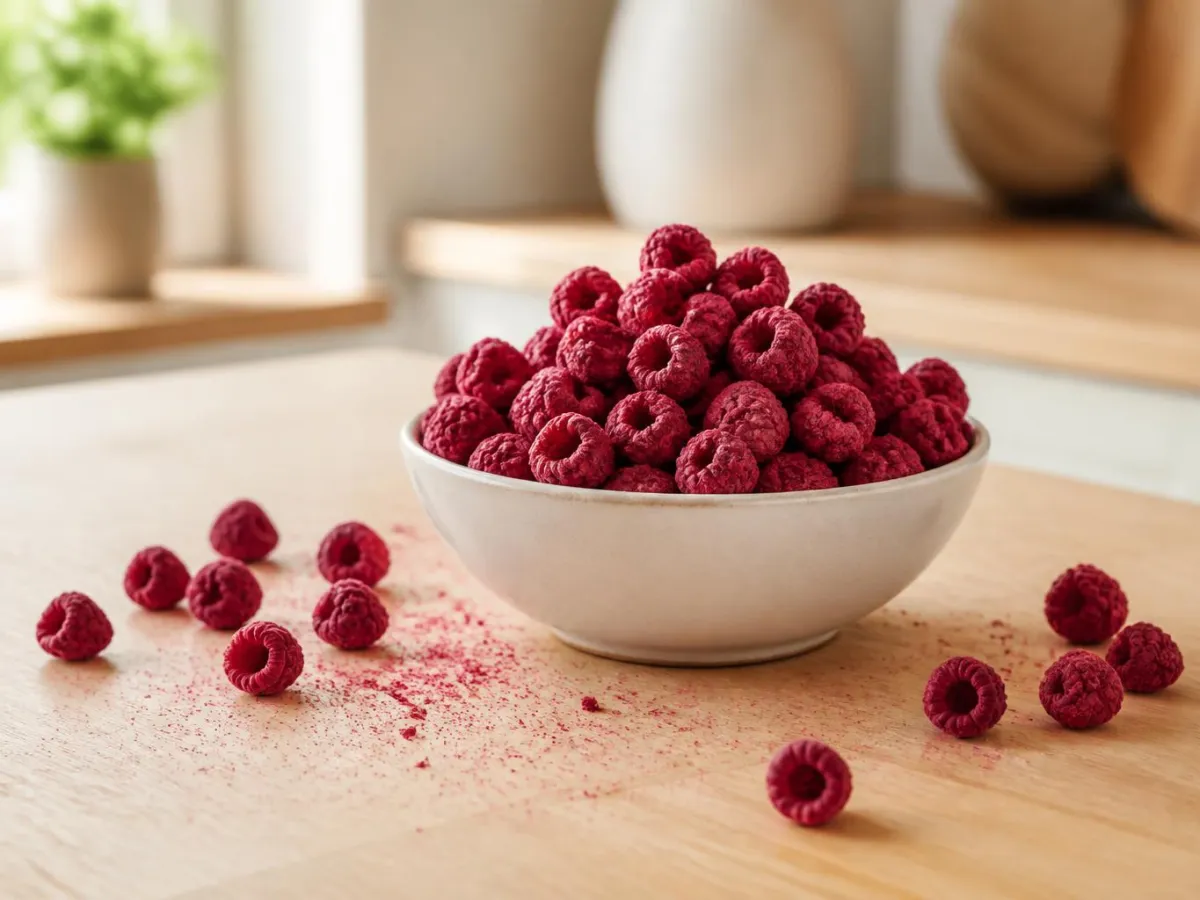
Sharp, crimson and the baker's favourite. How to use freeze-dried raspberries whole, crumbled or powdered, and how to pick a good...
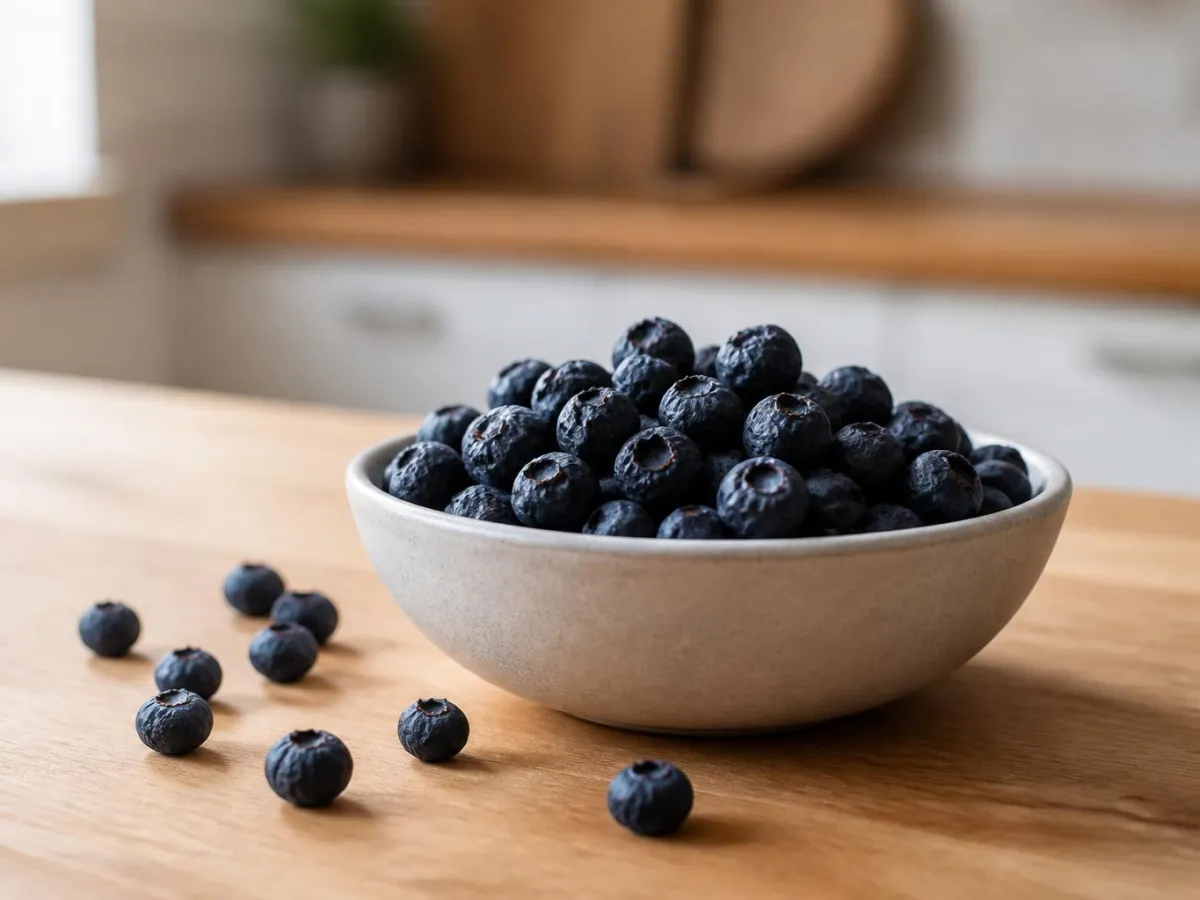
Whole, crisp and rattling in the pack. How to use freeze-dried blueberries, what is typically in them and how to pick a good pack...
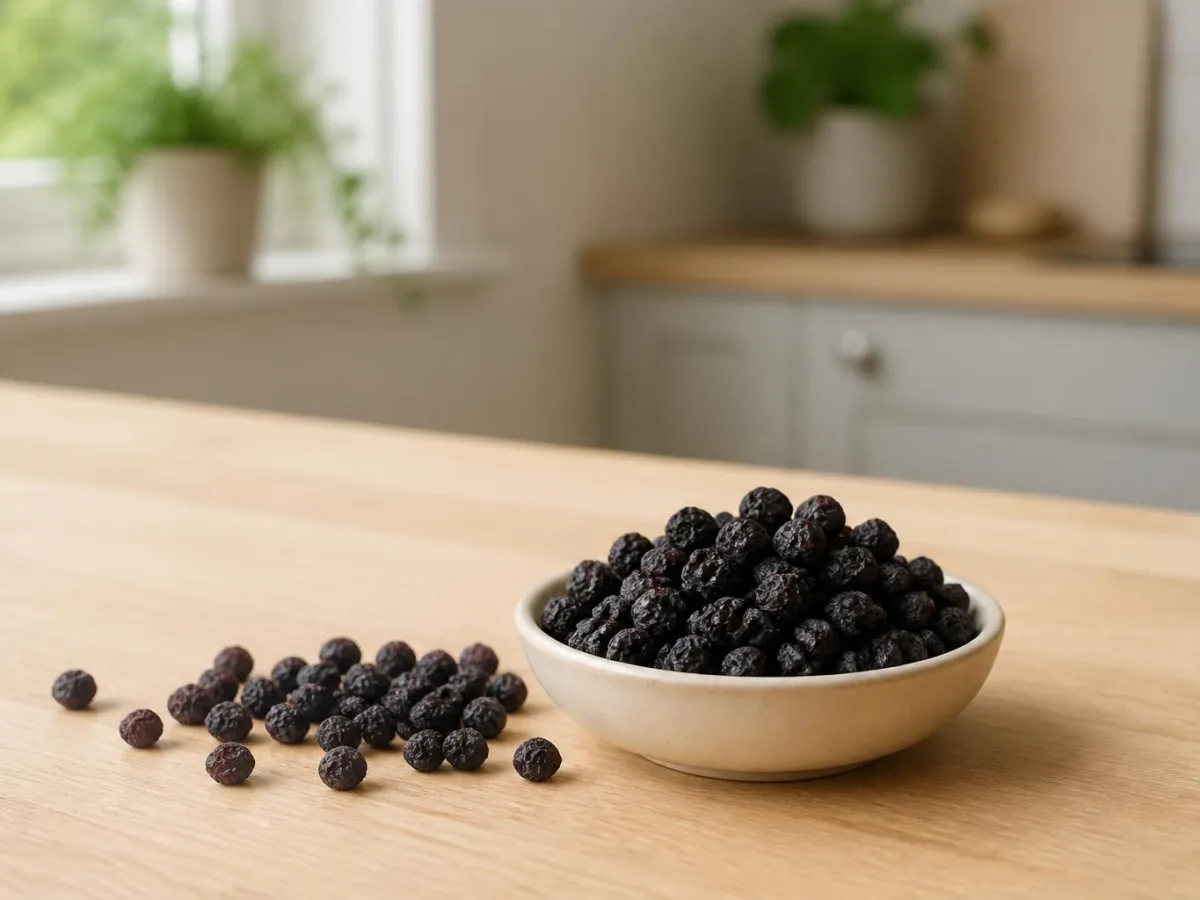
Britain's sharpest berry, concentrated. How to use freeze-dried blackcurrants, what is typically in them and how to choose a pack.
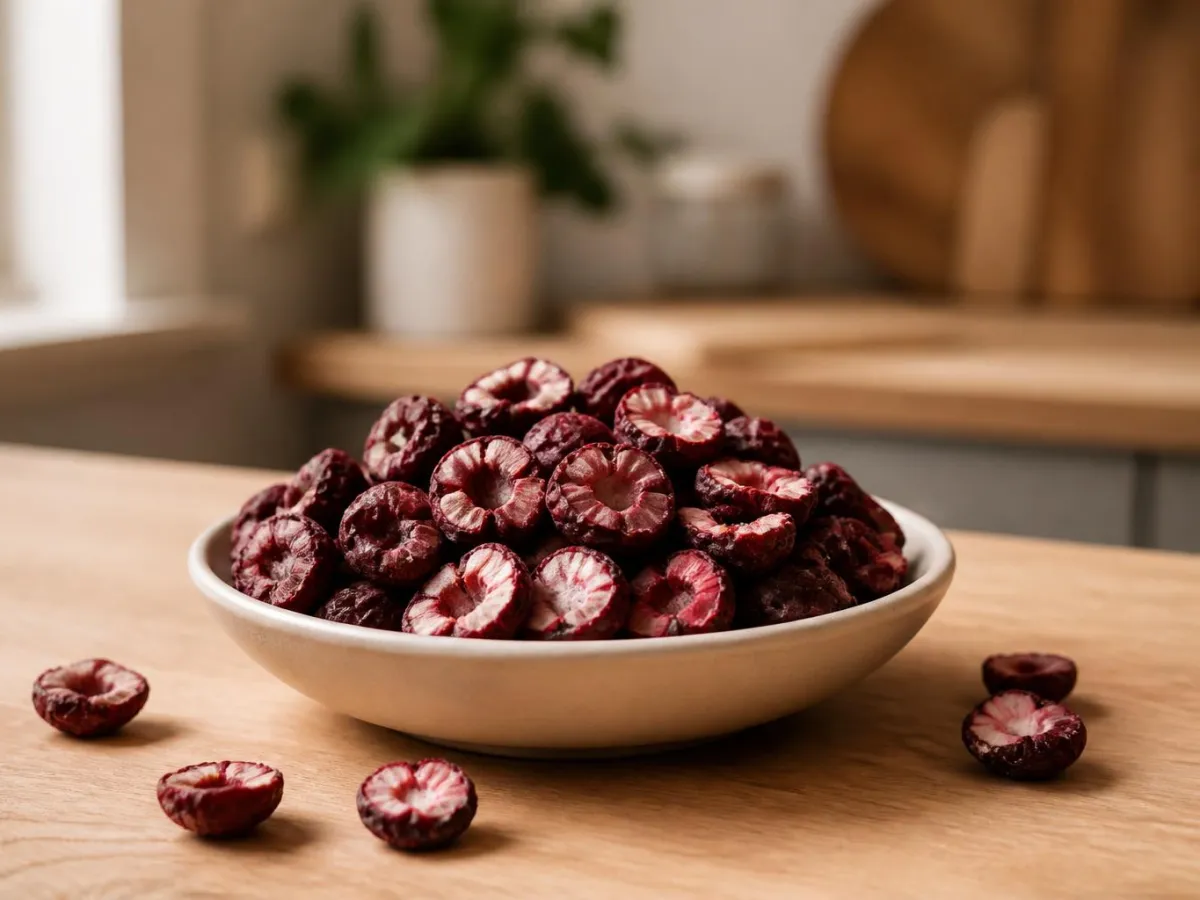
Sweet or sour, crisp and deeply cherry. How to use freeze-dried cherries, what is typically in them, and how to pick a pack.
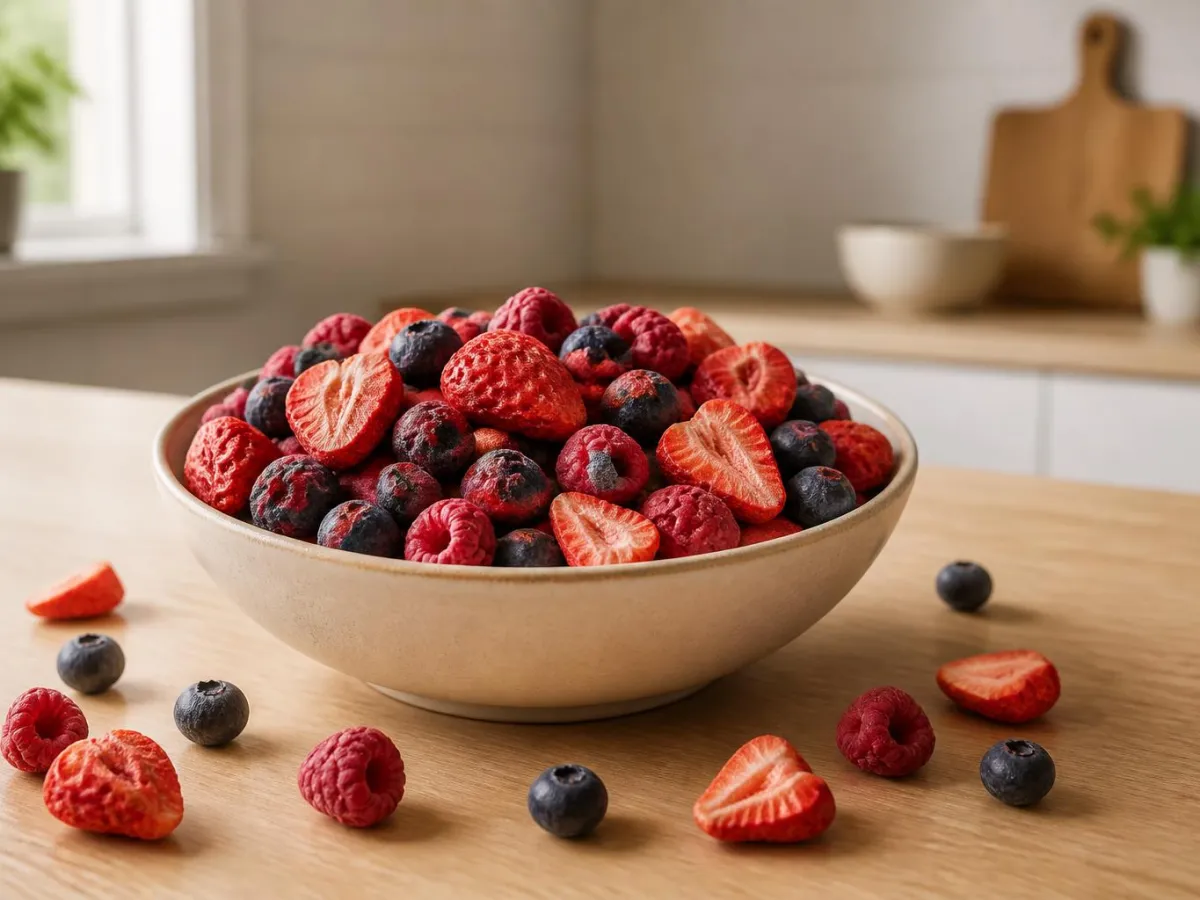
Most UK mixed berry packs are built around strawberry, with raspberry and blueberry alongside. How the common berries differ, and...
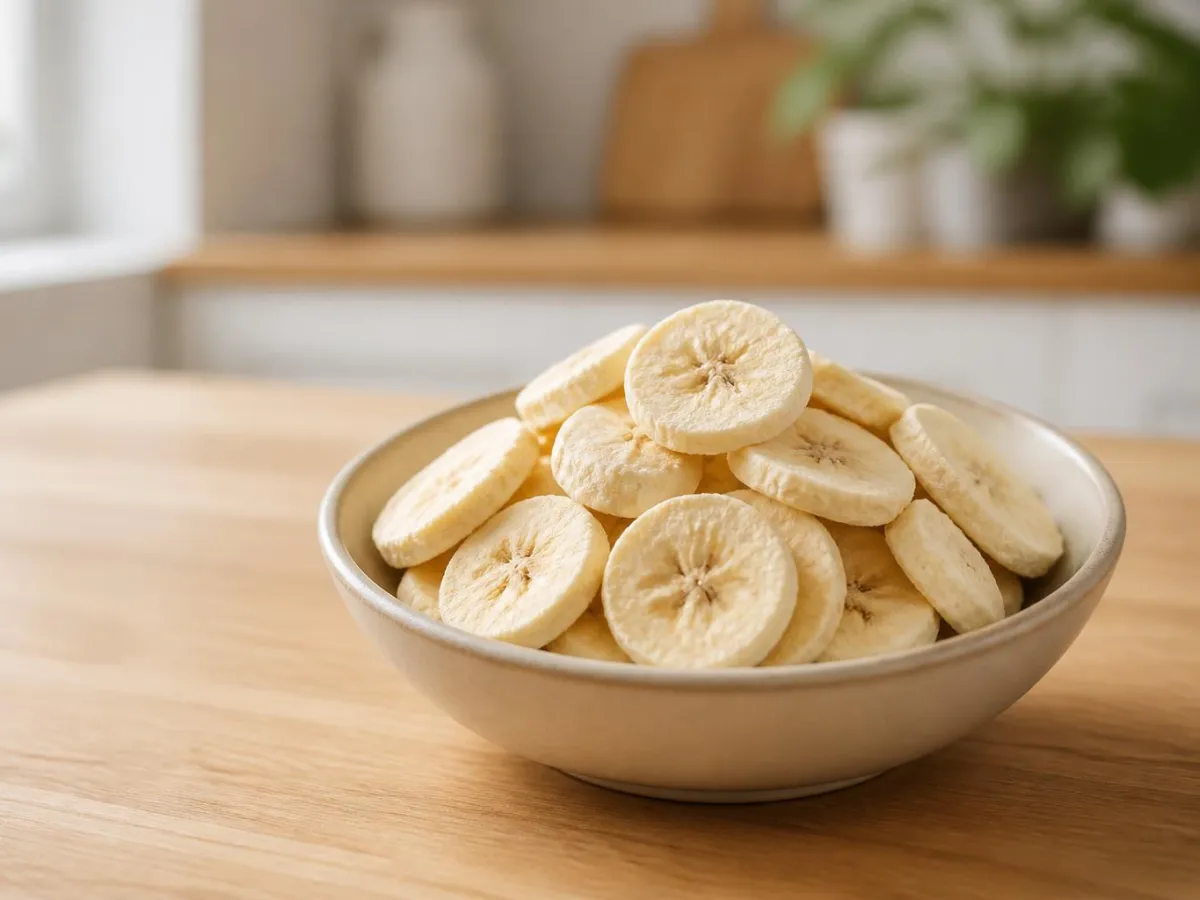
Pale gold, crisp and one ingredient. How freeze-dried banana differs from the fried banana chips most UK shops sell, and what to d...
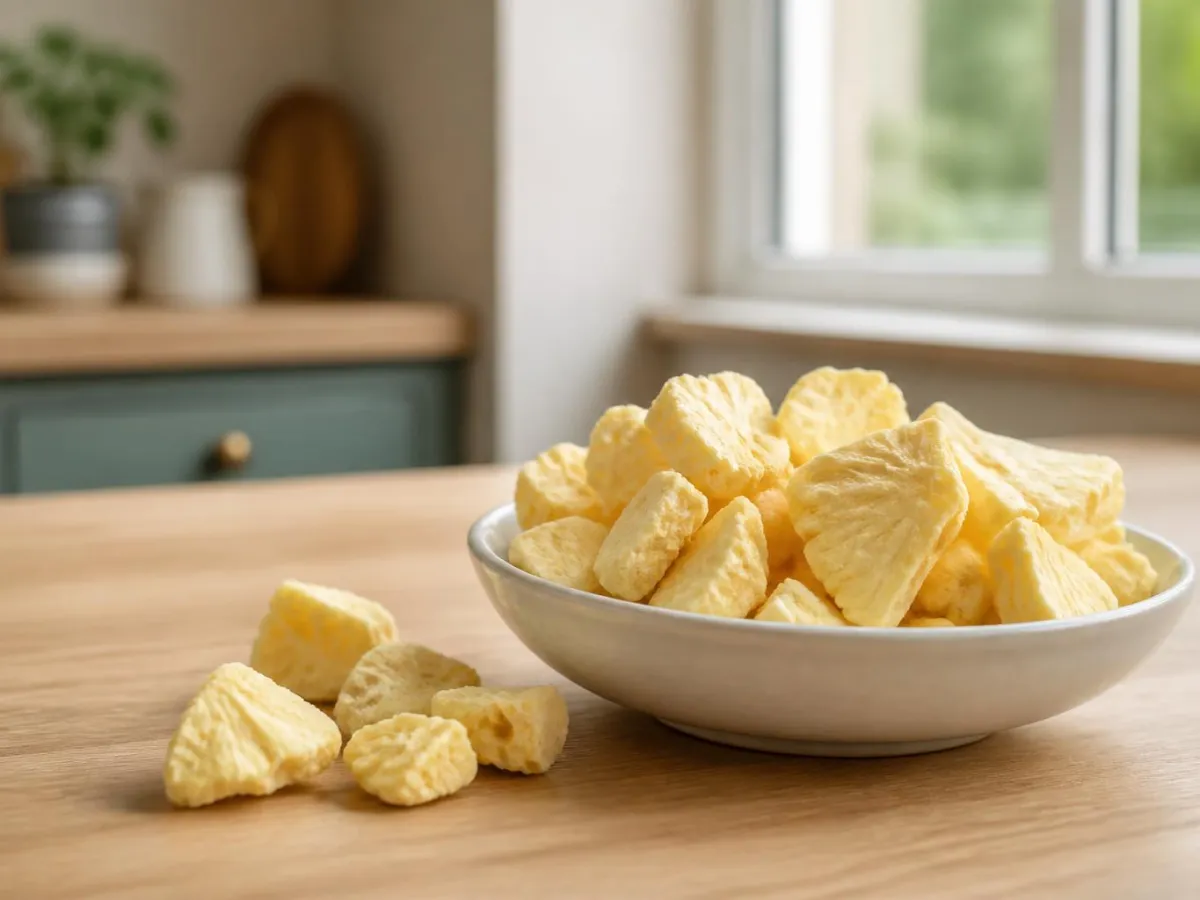
Tangy, tropical and crisp as a wafer. How to use freeze-dried pineapple in the kitchen and behind the bar, and what is really insi...
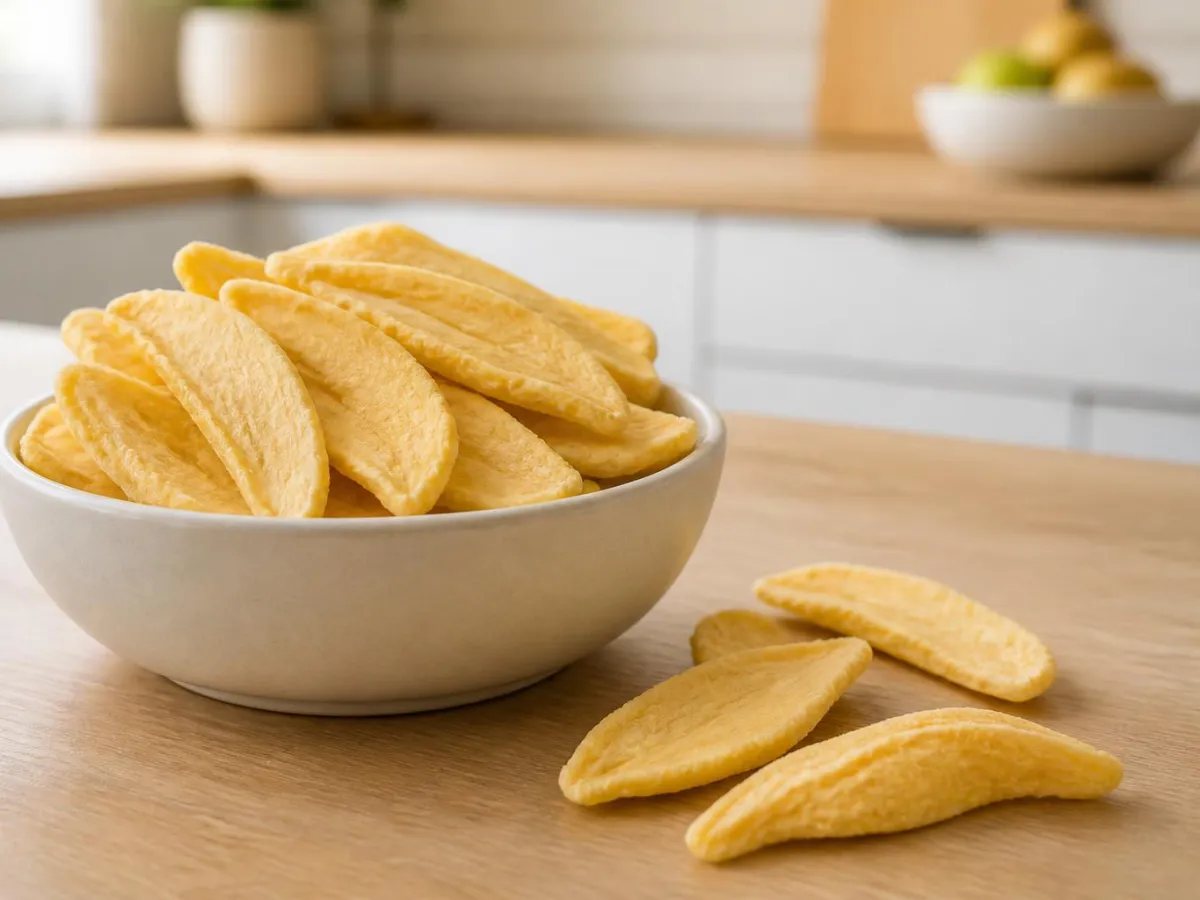
Very sweet, tropical and light as a wafer. How to use freeze-dried mango, what is in it, and why it is nothing like the chewy drie...
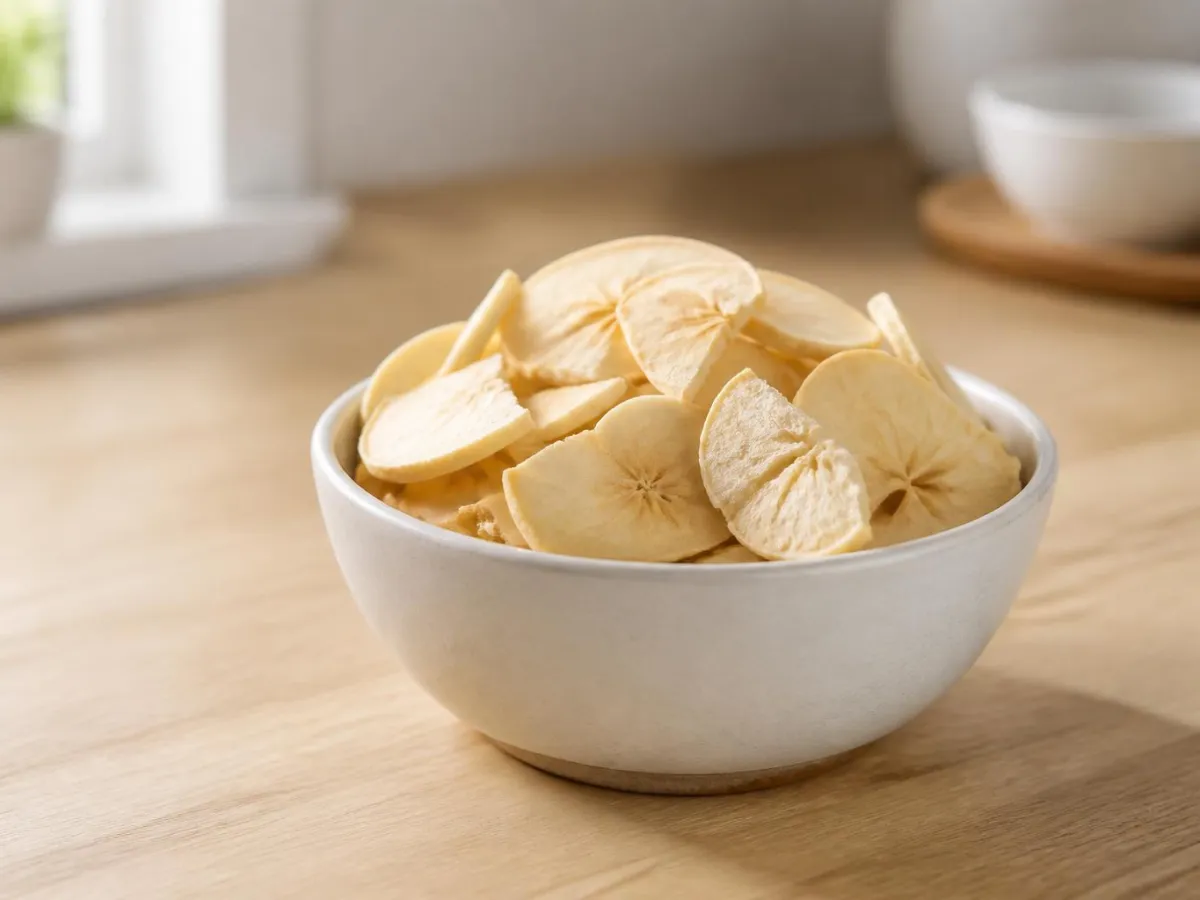
Pale gold, sweet and shatteringly crisp, and usually one of the cheapest freeze-dried fruits you can buy. How to use it, how to re...
Freeze-dried fruit is fresh fruit that has been frozen and then dried under vacuum, so nearly all of its water leaves as vapour while the shape, colour and flavour stay behind. Plain freeze-dried fruit has nothing added at all. In the UK, most of the range is sold online by wholefood and specialist retailers in 100g to 1kg pouches, supermarkets carry little more than tiny baking sachets, and strawberries and raspberries are the two most useful fruits to start with.
The one thing to understand before you buy anything is concentration. Because the water has gone, the sugars, the calories and the flavour are all packed into a fraction of the original weight, so weight for weight freeze-dried fruit has far more sugar and energy than fresh fruit. A sensible serving is about 10g, roughly a small handful.
The ratio column is the useful one. It tells you how much fresh fruit went into what you are holding, which is why 10g looks like so little and tastes like so much.
| Fruit | Flavour when freeze-dried | Best for | Fresh to freeze-dried, by weight | 10g is about |
|---|---|---|---|---|
| Freeze-dried strawberries | Sweet and sharp at once, closer to jam than to a fresh punnet | Baking, buttercream, porridge, snacking | 11 to 1 | 100 to 110g fresh |
| Freeze-dried raspberries | The sharpest of the common berries, seeds and all | Icing, chocolate, meringue, gin and fizz | 7 to 1 | 70g fresh |
| Freeze-dried blueberries | Mild and mellow, more skin than flesh | Cereal, granola, muffins, lunchboxes | 6 to 1 | 60g fresh |
| Freeze-dried blackcurrants | Very sharp and deeply British, a proper hit of acid | Cordial-style drinks, dark chocolate, crumble | 5 to 1 | 50g fresh |
| Freeze-dried cherries | Rich, with an almond edge, sweeter than the berries | Chocolate, granola, rocky road, cocktails | 5.5 to 1 | 55g fresh |
| Freeze-dried mixed berries | Varies with the mix, usually led by strawberry | Breakfast, trail food, everyday use | 5 to 11 to 1 | 50 to 110g fresh |
| Freeze-dried mango | Honeyed and floral, very sweet | Snacking, yoghurt, smoothies, chilli-salt mixes | 5.5 to 1 | 55g fresh |
| Freeze-dried banana | Intensely banana, the closest to a sweet | Porridge, cereal, hiking food, milled for babies | 4 to 1 | 40g fresh |
| Freeze-dried apple | Clean and light, more crisp than sweet | Snacking, porridge, pork and cheese boards | 7 to 1 | 70g fresh |
| Freeze-dried pineapple | Sharp and tropical, a strong flavour | Baking, cocktails, sweet-and-savoury cooking | 7 to 1 | 70g fresh |
Ratios are worked out from typical water content, so treat them as guidance rather than a laboratory result: variety, ripeness and how dry a particular product is all move the number. The fresh to freeze-dried converter does the sums for other weights, and for vegetables too, and what freeze-drying is explains the process itself.
Whichever fruit you choose, decant what you will not finish quickly into a small airtight jar. Air in a half-empty pouch is what turns crisp fruit chewy.
Scatter it over porridge, overnight oats, yoghurt, cereal or granola. In hot porridge, slices soften in a minute or two and colour the whole bowl. This is the easiest way to get through a pack, and it is covered in more detail in the guides to porridge and overnight oats and cereal and granola.
This is where it earns its keep, because it adds fruit flavour without adding water. Powder goes into buttercream, meringue, macarons and icing; pieces fold into sponges, muffins, shortbread and white chocolate bark. Start with baking with freeze-dried fruit, or go straight to strawberry buttercream and chocolate-covered strawberries.
Float slices in fizz, muddle berries into lemonade, crush fruit with sugar for a glass rim, or drop a spoonful of powder into a smoothie or a shaker. There is more in the guide to cocktails and drinks.
It weighs almost nothing, needs no cool bag and does not bruise, which is why it ends up in lunchboxes and rucksacks. See freeze-dried fruit for hiking and camping for packing weights.
Cover it with just enough cool or warm water and give it two to ten minutes, depending on the fruit and whether the pieces are sliced or whole. The result is closer to thawed frozen fruit than to fresh, so use rehydrated fruit in compotes, sauces, trifles and smoothies rather than expecting a fresh strawberry back. The rehydrating guide has times by fruit.
Freeze-drying removes water and leaves everything else in place, so the per-100g figures look startling until you remember what 100g of freeze-dried fruit started as: roughly 400g of fresh banana at one end of the table above and about 1.1kg of fresh strawberries at the other.
| Typical values | Fresh fruit, per 100g | Freeze-dried fruit, per 100g | Freeze-dried, per 10g serving |
|---|---|---|---|
| Energy | about 30 to 95 kcal | about 330 to 400 kcal | about 33 to 40 kcal |
| Carbohydrate | about 6 to 23g | about 65 to 90g | about 7 to 9g |
| of which sugars | about 5 to 20g | about 45 to 75g | about 5 to 8g |
| Fibre | about 2 to 4g | about 8 to 25g | about 1 to 2g |
| Protein | about 0.5 to 1.5g | about 2 to 8g | under 1g |
| Fat | under 1g | about 1 to 4g | under 1g |
These are typical ranges across the common fruits, drawn from published composition data and product labels. They vary with the fruit, the variety, the ripeness and the producer, so the label on your pack is the figure that counts. All the sugar in plain freeze-dried fruit is the fruit's own; freeze-drying adds nothing, and it works at low temperature, which is why colour and flavour survive so well.
On portions, the NHS counts 30g of dried fruit as one of your 5 A Day, and advises eating dried fruit with meals rather than as a between-meal snack, because it is sugary and sticks to teeth, which raises the risk of tooth decay. The NHS does not publish a separate figure for freeze-dried fruit. There is more in the guides to freeze-dried fruit and 5 A Day, sugar in freeze-dried fruit and freeze-dried fruit and teeth, and on where it sits on the processing scale in whether freeze-dried fruit is ultra-processed.
UK shoppers have a genuinely awkward market: the choice is online, and the high street is thin.
| Where you are buying | Typical pack size | Typical price per 100g | Worth knowing |
|---|---|---|---|
| Supermarket home-baking sachet | 6 to 7g | The highest of any format by weight | Sainsbury's and Tesco have both listed own-label freeze-dried strawberry or raspberry sachets; availability comes and goes |
| Health-food shops | Small pouches and cases | Varies widely | Usually fruit crisps and chocolate-coated berries rather than plain fruit |
| Specialist trial or snack pouch | 10 to 30g | roughly £11 to £21 | The sensible way to try a new fruit |
| Specialist standard pouch | 100g | roughly £6 to £12 for strawberries, a little more for raspberries | The size most people settle on |
| Specialist larger pouch | 250 to 500g | commonly 10 to 25 per cent less per 100g | Decant into jars, or the last of it will go soft |
| Bulk and catering | 500g to 1kg and up | roughly £4 to £8 per 100g for strawberries | Worth it if you bake often or share an order |
Those are the ranges seen across UK specialist online retailers, last checked September 2026. Prices move, multibuys come and go and delivery thresholds differ, so work out the price per 100g before comparing anything; organic and named-origin lines sit above these bands. For the retailer-by-retailer picture, see where to buy freeze-dried fruit and freeze-dried fruit in UK supermarkets. If the prices have you thinking about making your own, is a home freeze-dryer worth it does the arithmetic.
The Crispberry shop is not open, so there are no prices, stock or delivery of our own to quote here. Everything above describes the wider UK market. Join the list at the bottom of the page if you would like to hear when we do open.
Babies and young children. Crisp freeze-dried pieces can be a choking risk, so soften them in a little water, milk or yoghurt, or blitz them to a powder and stir them in. Follow NHS weaning guidance on textures and on foods to avoid, and speak to your health visitor or GP about your own child. There is more in freeze-dried fruit for babies and toddlers.
Dogs and other pets. Grapes, raisins, sultanas and currants are toxic to dogs, and a dried grape is a raisin whether it was freeze-dried or not, so anything grape-based is off the list. Small amounts of plain fruit with nothing added are a different matter, but coatings and individual health vary, so check with your vet before giving your animal anything new. See freeze-dried fruit for pets for what to avoid.
Keep packs sealed in a cool, dark, dry cupboard, squeeze the air out after opening, and reseal tightly or decant into an airtight jar. Moisture from the air is the only real enemy: it takes the crunch away rather than making the fruit unsafe. Full detail is in how to store freeze-dried fruit, and what to do when freeze-dried fruit goes soft has the rescue options.
Buy one 100g pouch of freeze-dried strawberries from a specialist rather than six sachets from a supermarket, work out the price per 100g before you order, keep servings to about 10g and eat them with a meal rather than grazing. Once you know how you really use it, buy the bigger bag. And for the same trick applied to dinner, there are freeze-dried vegetables.
It is fresh fruit that has been frozen and then dried under vacuum, so the ice turns straight to vapour. Almost all the water is removed while the shape, colour and flavour stay. Nothing needs to be added.
The NHS says a 30g portion of dried fruit counts as one of your 5 A Day, and that it is best eaten with meals rather than as a between-meal snack, to look after your teeth.
Raspberries and strawberries are the favourites because their sharpness survives sugar and butter. Use pieces in bakes and powder in icings, meringues and macarons.
Sealed, cool, dark and dry. Moisture is what softens it, so reseal the pack tightly or decant into an airtight jar once opened.
Most of the choice, and the best value by weight, is online from wholefood and specialist retailers selling 100g to 1kg pouches. Supermarkets stock very little: Sainsbury's and Tesco have both listed own-label freeze-dried fruit sachets of 6g to 7g in the home-baking aisle (last checked September 2026), and health-food shops tend to carry fruit crisps and chocolate-coated berries rather than plain fruit. Ranges change often, so check before making a special trip.
Weight for weight, yes. Taking the water out concentrates everything left behind, including the fruit's own sugars, so 100g of freeze-dried fruit has several times the sugar and calories of 100g of fresh. The serving is what saves you: a typical 10g handful carries roughly the sugar of the 40g to 110g of fresh fruit it came from. Nothing is added to plain freeze-dried fruit, so check the ingredients say only the fruit, and go by the label on your pack.
Join the list for new guides and easy recipes. One or two emails a month, never more.
We only use your email to send you our newsletter. Unsubscribe any time. See our privacy notice.