Freeze-dried fruit for hiking and camping
A tenth of the weight of fresh fruit, no cool bag and no washing up. What to carry for a day walk or a week in the hills, and what it does not replace.
- 4:1 to 11:1fresh to freeze-dried, by weight
- 20 to 30gfruit per day on a multi-day trip
- No stovecold-soaks in a jar in minutes
- 30gdried fruit is one 5 A Day portion (NHS)
On this page
- Why hikers carry freeze-dried fruit: the weight arithmetic
- What to pack for a day walk
- What to pack for a multi-day trip or a wild camp
- How to rehydrate freeze-dried fruit on a stove or by cold-soaking
- How to build a trail mix with freeze-dried fruit
- Packaging that survives a rucksack
- Sugar, portions and teeth on the trail
- What freeze-dried fruit does not replace
- What freeze-dried fruit costs in the UK
- The short version before you pack
Freeze-dried fruit is worth its space in a rucksack because it weighs a fraction of what the fresh fruit did: an 80g portion of fresh strawberries becomes roughly 7g once the water has gone, and it needs no cool bag, no pan and no washing up. It is carbohydrate and flavour rather than fat or protein, so it belongs alongside your proper hill food rather than in place of it.
Much of the advice online about freeze-dried food and hiking is really about American backpacking meals in foil pouches. This page is about plain fruit and vegetables as ingredients: what they weigh, what to carry for a day on the Pennines or a week in the Cairngorms, and how to soften them without a stove.
Why hikers carry freeze-dried fruit: the weight arithmetic
Fresh fruit is mostly water. Strawberries are around 91 per cent water, blueberries around 84 per cent, bananas around 75 per cent. Freeze-drying takes nearly all of that away and leaves the rest, so the weight you carry drops by the same proportion.
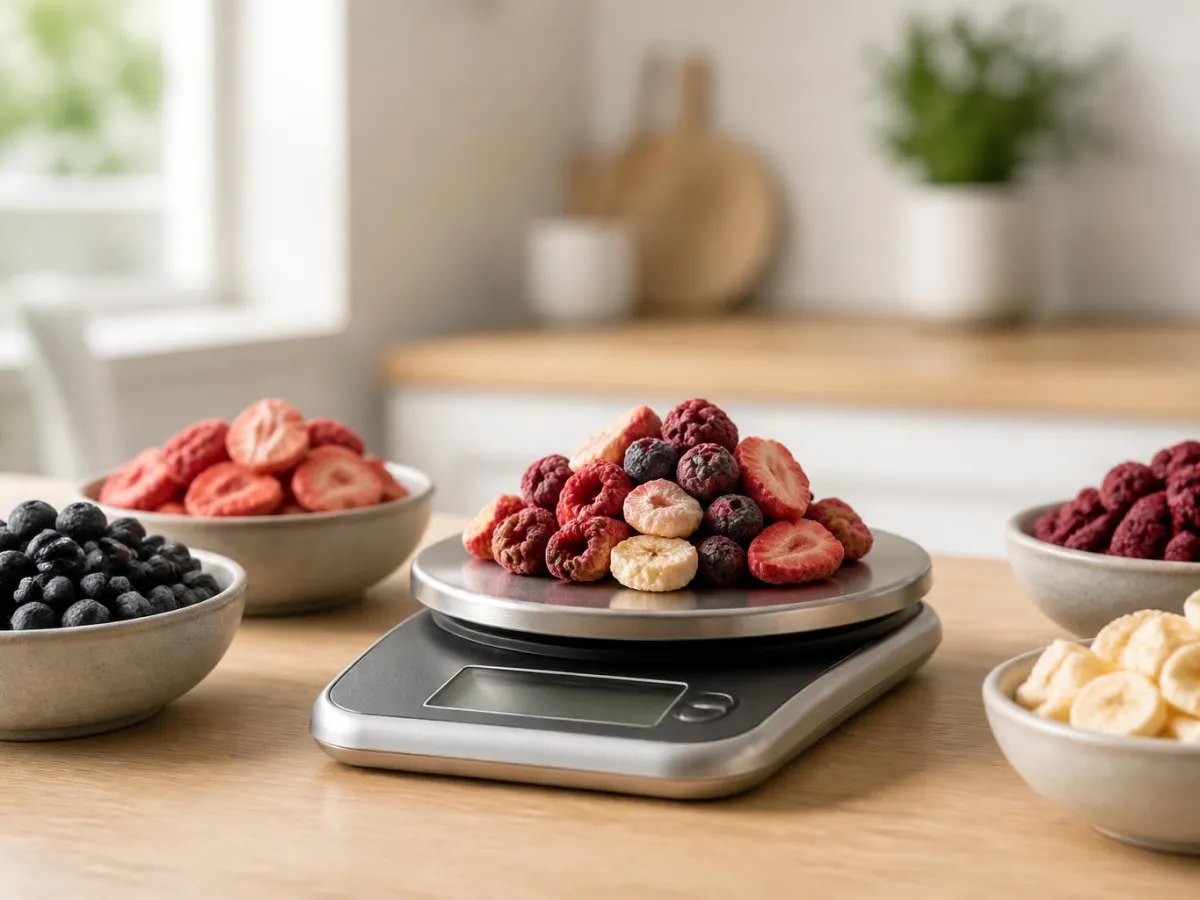
The NHS adult portion of fresh fruit or vegetables is 80g, so that is a useful unit to think in. Here is what one portion of each food weighs once it has been freeze-dried.
| Food | One fresh portion | Freeze-dried, same fruit | Weight saved | Five portions, freeze-dried |
|---|---|---|---|---|
| Strawberries | 80g | about 7g | about 73g | about 35g |
| Raspberries | 80g | about 11g | about 69g | about 55g |
| Blueberries | 80g | about 13g | about 67g | about 65g |
| Apple slices | 80g | about 11g | about 69g | about 55g |
| Mango | 80g | about 15g | about 65g | about 75g |
| Cherries | 80g | about 15g | about 65g | about 75g |
| Banana slices | 80g | about 20g | about 60g | about 100g |
| Peas | 80g | about 18g | about 62g | about 90g |
| Sweetcorn | 80g | about 20g | about 60g | about 100g |
These are estimates from typical water contents, not measurements of any particular pack, and producers dry to slightly different moisture levels. The fresh to freeze-dried converter does the same arithmetic for eighteen fruits and vegetables and any weight you like.
The last column is the argument in one line. Five fresh portions of mixed fruit is around 400g in your rucksack, plus a box to stop it bruising. The freeze-dried equivalent is roughly 60 to 80g and survives being sat on by a tent.
Weight saved is not portions gained. The NHS counts 30g of dried fruit as one of your 5 A Day whatever fresh weight it started as, and suggests eating dried fruit with a meal rather than between meals. More on counting it honestly in freeze-dried fruit and 5 A Day.
What to pack for a day walk
For a single day out you are packing a snack, not a supply. Ten to fifteen grams is a hip-belt pocket's worth; twenty to thirty grams covers a long day with a proper lunch stop.
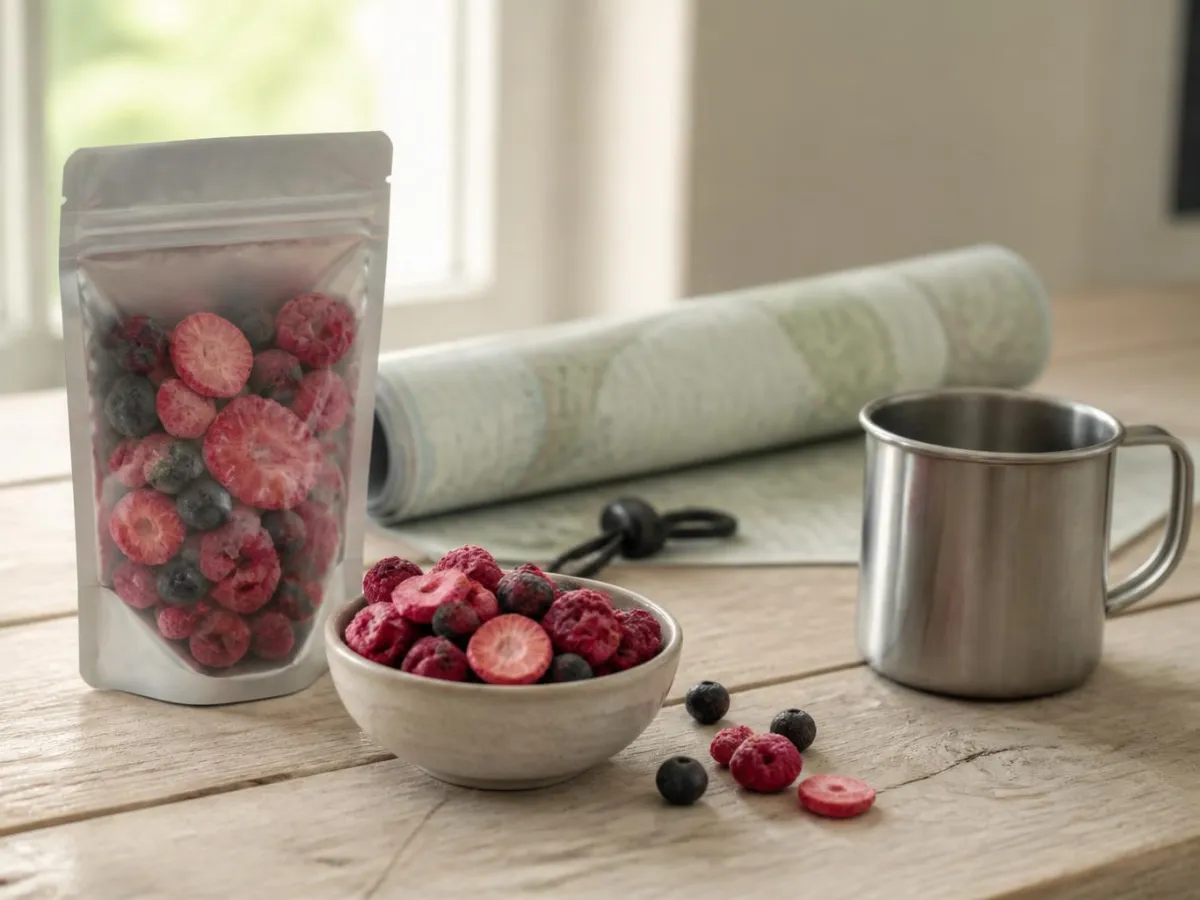
The question is the container rather than the quantity. Crisp fruit shatters, and a resealable pouch pressed against a flask for six hours arrives as dust, so decant what you need into a small rigid pot. Flat, thin slices travel best, so freeze-dried strawberries and apple survive better than whole berries or banana.
If you are feeding children on a walk, crisp pieces can be a choking risk for babies and toddlers: see freeze-dried fruit for babies and toddlers for how to soften or powder them first.
What to pack for a multi-day trip or a wild camp
Over several days the sums start to matter, and so does variety. Twenty to thirty grams a day is a sensible planning figure: a handful at a break and a scatter over breakfast, without carrying pouches you will not finish.
| Trip | Freeze-dried fruit to carry | How to pack it | What it is for |
|---|---|---|---|
| Half-day walk | 10 to 15g | Small rigid pot, hip-belt pocket | Something sharp to break up flapjack |
| Full day in the hills | 20 to 30g | Rigid pot plus a sandwich bag | A break snack and a pudding |
| Two nights wild camping | 50 to 70g | One pot, decanted by day | Breakfast and two break snacks a day |
| Five-day trek | 120 to 150g | Original pouch, double bagged | Mixed fruit, split across resupply |
| Duke of Edinburgh's Award expedition | 60 to 100g | Divided between the group | Shared breakfasts, low faff, no rubbish that leaks |
Split the weight between different fruits rather than carrying one: three fruits at 30g each is more use over five days than 90g of strawberries. Nothing stops you throwing in freeze-dried peas or sweetcorn to lift an otherwise beige pasta packet.
How to rehydrate freeze-dried fruit on a stove or by cold-soaking
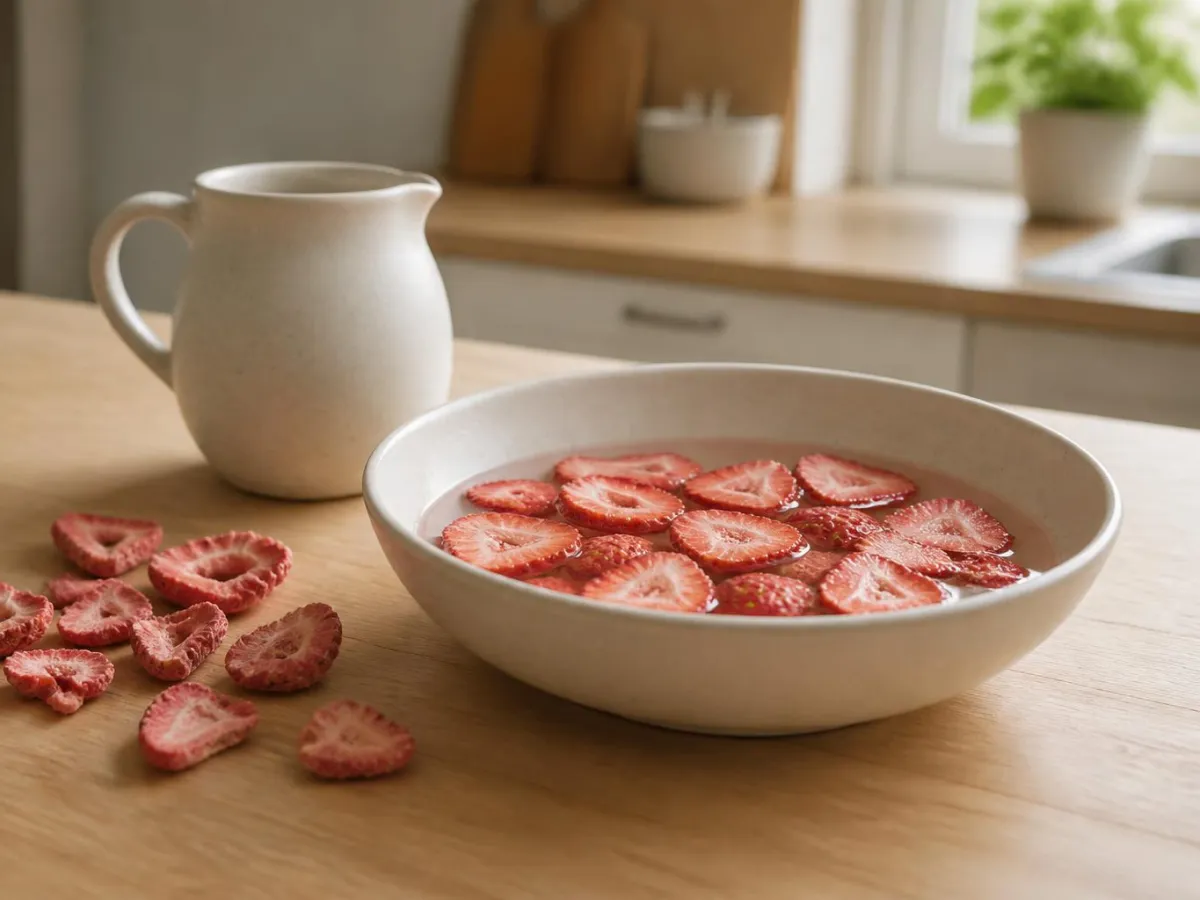
You rarely need to rehydrate fruit deliberately on a trip, because anything wet does the job for you: tip it into porridge, couscous, instant noodles or a meal pouch and it softens while the rest of it does. Where you do want soft fruit on its own, add roughly the water the fruit lost in the first place, which is about 100ml per 10g for strawberries, about 60ml for raspberries and apple, and only about 30ml for banana. Our guide to rehydrating freeze-dried fruit has the full table of times and ratios.
On a stove. Take the pan off the heat first: freeze-dried fruit needs soaking, not simmering, and berry slices collapse into purée within a minute of boiling. Stir it into just-boiled water or porridge, lid on, one to three minutes. It costs no gas beyond the water you were already heating.
Cold-soaking. Put the fruit and the water in a leak-proof jar or screw-top bottle, close it and walk. Berry slices are soft in three to five minutes, blueberries and thicker fruit in ten to twenty, and dense vegetables such as carrot or beetroot need half an hour or more. Overnight in a cold tent gives you a breakfast you can eat straight from the jar.
Nothing in a cold soak gets boiled, so only use water you would drink as it is. If you are filling from a stream, treat or filter it first, exactly as you would for drinking.
How to build a trail mix with freeze-dried fruit
Freeze-dried fruit is the light, bright part of a trail mix rather than the bulk of it: the nuts, seeds and chocolate carry the weight and the fat, the fruit carries the flavour and the colour. Between 10 and 30 per cent fruit by weight is about right. Each of these makes 100g.
| Blend, per 100g | Freeze-dried fruit | Nuts and seeds | Everything else |
|---|---|---|---|
| Hill classic | 15g strawberry slices | 45g salted peanuts, 15g pumpkin seeds | 25g dark chocolate chunks |
| Tropical | 20g mango, 10g pineapple | 40g cashews | 30g coconut flakes |
| Berry and oat | 10g raspberries, 10g blueberries | 35g almonds | 25g toasted oat clusters, 20g sultanas |
Three things stop a homemade mix disappointing you. Mix it the night before rather than the week before, because freeze-dried fruit pulls moisture out of the air and out of chewy ingredients such as sultanas, and goes limp sitting among them. Add the fruit last and fold rather than shake, so the pieces stay whole. And in warm weather swap the chocolate for more nuts, because dark chocolate softens well below the temperature inside a lid pocket on a sunny day.
Packaging that survives a rucksack
The pouch a pack comes in is designed for a cupboard, not a rucksack. Four things go wrong on the hill: crushing, damp, sunlight and split seams.
- Decant into something rigid. A screw-top jar, small food tub or wide-mouthed bottle, which then doubles as your cold-soaking jar.
- Fill it full. Air carries moisture, so a jar filled to the brim keeps the fruit crisper than a half-empty one.
- Keep the desiccant sachet. The sachet from the original pouch is doing real work. Move it across, and do not eat it.
- Double bag in wet weather. A freezer bag inside a dry bag costs almost nothing in grams, and British hill weather gets into everything.
- Keep it out of the sun. Aluminium-lined pouches block light; clear jars do not, and colour fades in a lid pocket on a bright day.
- Take the packaging home. The Countryside Code in England and Wales, and the Scottish Outdoor Access Code in Scotland, both ask you to take your litter with you. Foil pouches and desiccant sachets are not compostable, whatever the fruit inside them was.
If your fruit does arrive limp it is soft rather than ruined: freeze-dried fruit that has gone soft covers what to do with it, and how to store freeze-dried fruit covers keeping the rest of the pack crisp at home.
Sugar, portions and teeth on the trail
Freeze-dried fruit is concentrated. The water has gone and nothing else has, so weight for weight it carries far more sugar and calories than the fresh fruit it came from. Typical values for freeze-dried berries sit around 330 to 380 kcal per 100g, or roughly 35 kcal for a 10g serving, but figures vary between fruits and producers and the label on your pack is what counts. There is more detail on calories in freeze-dried fruit.
The NHS counts 30g of dried fruit as one of your 5 A Day and advises eating dried fruit as part of a meal rather than as a between-meal snack, because it is more likely to cause tooth decay eaten on its own. A long day on the hill is one continuous graze, which makes that hard to follow. The workable compromise is to eat the fruit at lunch and brew stops rather than a pinch at a time, and drink water afterwards. Our page on freeze-dried fruit and teeth explains why the crisp kind behaves differently from a sticky raisin.
What freeze-dried fruit does not replace
- Water. Almost none is left in it, so it does not help you stay hydrated, and soaking it spends water you carried up the hill. Budget about 100ml per 10g of berries.
- A meal. Fruit is carbohydrate. A long day needs fat and protein too: nuts, cheese, oily fish, flapjack or a proper hot dinner.
- Chewy dried fruit for value. Raisins, apricots and mango strips cost a fraction as much per gram and do not shatter.
- Hot food at the end of a wet day. Morale counts, and no amount of crisp strawberry replaces a hot pan of something.
- Fresh fruit at home. This is expensive convenience, best saved for trips where weight genuinely matters.
What freeze-dried fruit costs in the UK
Prices move about, so treat these as ranges rather than a price list. Last checked September 2026: UK wholefood and baking specialists generally sell plain freeze-dried berries in 100g pouches somewhere in the £7 to £11 bracket, with 200g bags nearer £15 to £17 and small trial packs from a few pounds. Vegetables such as peas and sweetcorn usually cost less per 100g than berries. Buy on the price per 100g, not the price on the front of the bag.
The UK expedition-food retailers hikers know best mostly sell complete meals rather than plain ingredients, so fruit packs tend to come from wholefood shops instead. Our guide to freeze-dried fruit in UK supermarkets covers what turns up in British shops, and in which aisle.
Crispberry's own shop is not open yet, so there is nothing for sale on this site today and no prices or delivery times to quote. It opens in a few months, and you can join the list to hear when it does.
The short version before you pack
Weigh out 20 to 30g of fruit per day, split it across two or three kinds, and decant it into a screw-top jar that doubles as your cold-soaking pot. Eat it at meal stops rather than grazing all day. Carry the calories in nuts and the flavour in fruit, and check the sums for your own trip with the fresh to freeze-dried converter.
Good questions, short answers
Is freeze-dried fruit good for hiking?
It is one of the lightest ways to carry fruit, because almost all the water has been removed and water is what makes fresh fruit heavy. An 80g portion of fresh strawberries becomes about 7g of freeze-dried, it needs no cool bag, it does not bruise, and it keeps for months in a sealed pack. It is carbohydrate and flavour rather than fat or protein, so it works best alongside your proper food rather than instead of it.
How much does freeze-dried fruit weigh compared with fresh?
Between a quarter and an eleventh of the fresh weight, depending on how watery the fruit was to start with. Strawberries are about 91 per cent water and shrink to roughly an eleventh of their original weight, while bananas are about 75 per cent water and only shrink to a quarter. In practice, 20 to 30g of freeze-dried fruit a day covers what most walkers want to eat.
Can you eat freeze-dried fruit without rehydrating it?
Yes, and on a day walk that is the whole point. It is crisp, ready to eat straight from the pack and dissolves in the mouth rather than needing chewing. Rehydrating only matters when you want soft fruit in porridge, a pudding or a pan of something hot.
How do you cold-soak freeze-dried fruit on the trail?
Put the fruit in a leak-proof jar or screw-top bottle, add roughly the water it lost when it was dried, which is about 100ml per 10g for strawberries and about 30ml per 10g for banana, then close it and walk on. Berry slices are soft within a few minutes and thicker fruit within twenty. Use water you would be happy to drink, because nothing here is boiled.
Does freeze-dried fruit go off on a camping trip?
Not quickly, as long as it stays dry. An unopened pack is fine in a rucksack for the length of any normal trip, and the risk is damp rather than spoilage: once it absorbs moisture from the air it goes chewy and limp. Once you have rehydrated it, treat it like fresh fruit and eat it the same day.
Is freeze-dried fruit better than ordinary dried fruit for backpacking?
It is lighter and crisper, but it is also far more expensive and far more fragile. Raisins, apricots and mango strips carry more weight in water yet survive being sat on, and they cost a fraction as much. Many walkers carry both: chewy dried fruit as the bulk, freeze-dried as the light, bright part of a trail mix or a breakfast.