
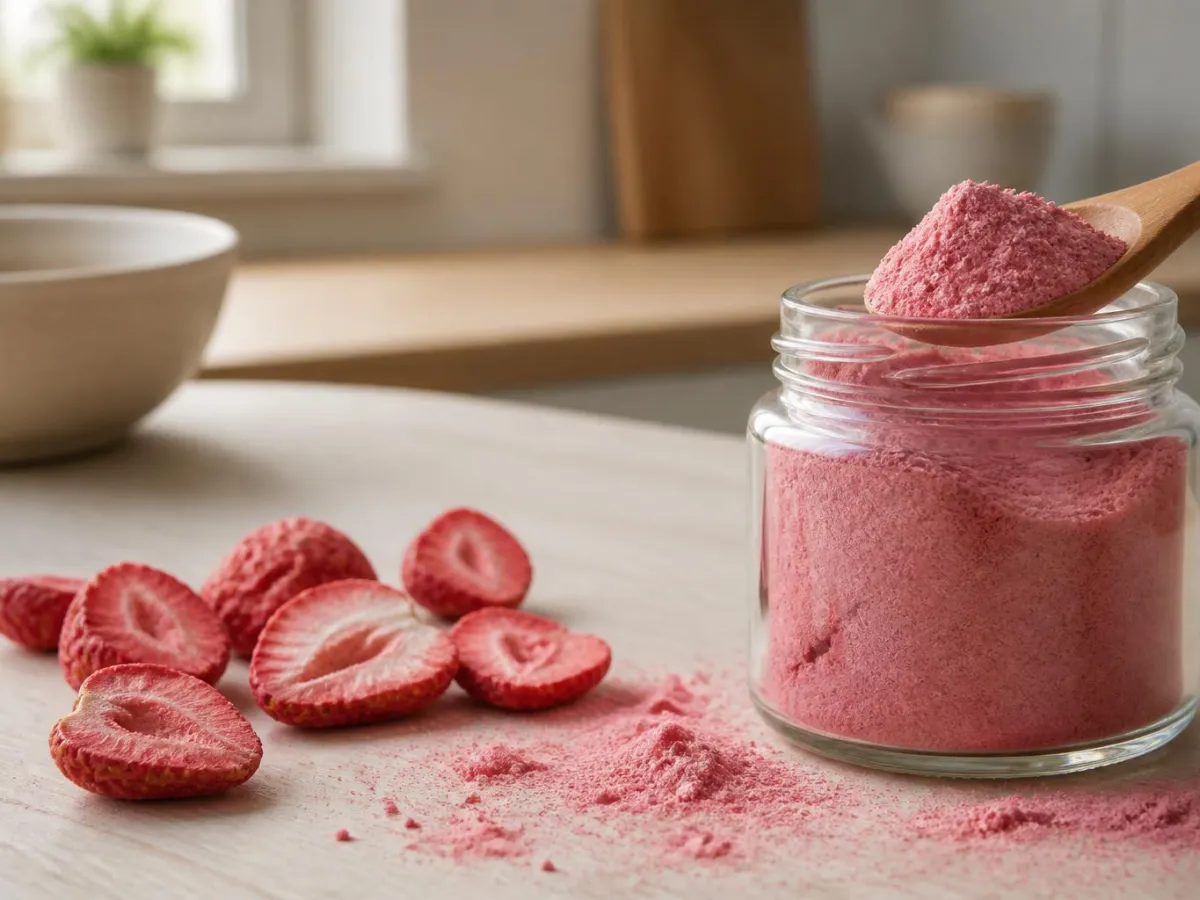
Freeze-dried strawberry powder
Pure strawberry, milled fine. Natural pink colour and real fruit flavour for icing, bakes, milkshakes and yoghurt, with quantities...
Real fruit, milled fine. A spoonful brings natural colour and proper flavour to icing, bakes, drinks and breakfast, and here are the quantities to start from.
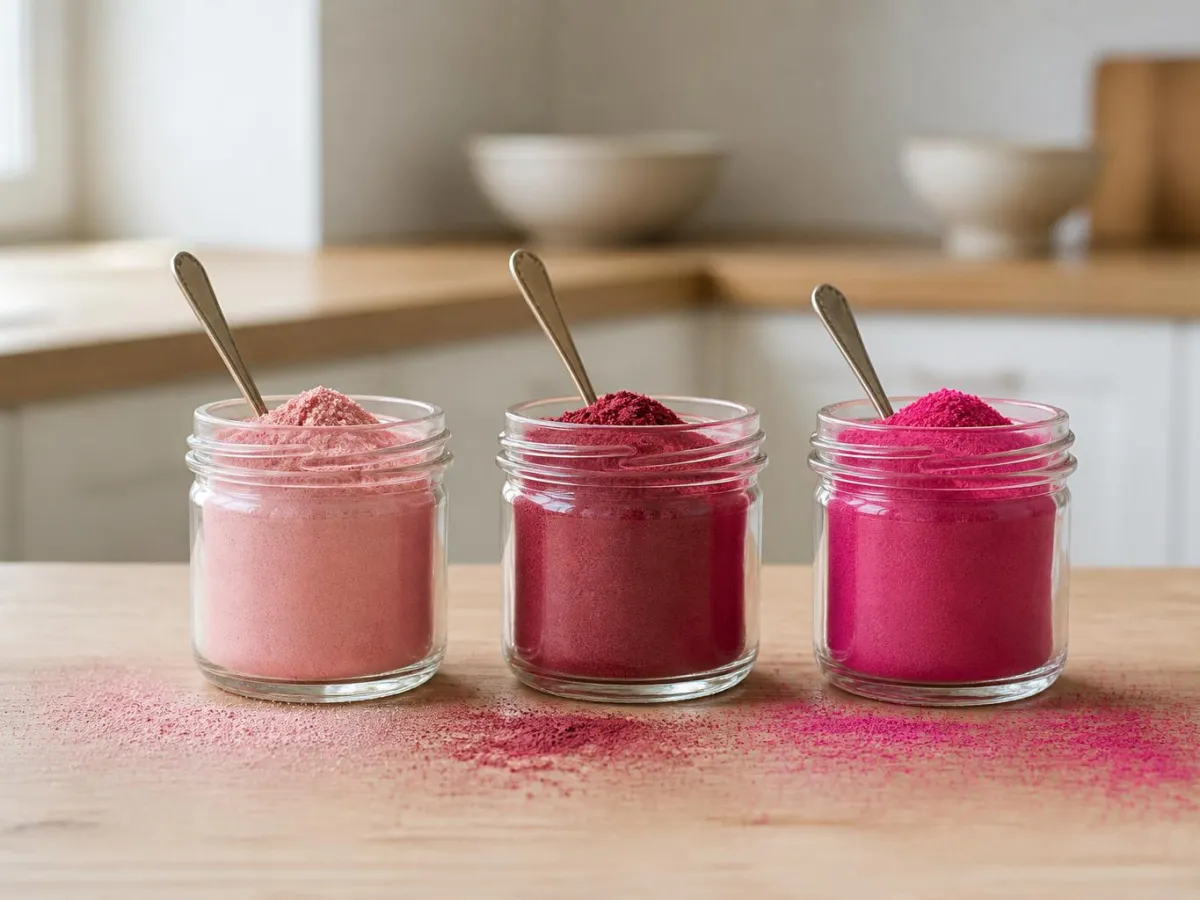
Pure strawberry, milled fine. Natural pink colour and real fruit flavour for icing, bakes, milkshakes and yoghurt, with quantities...
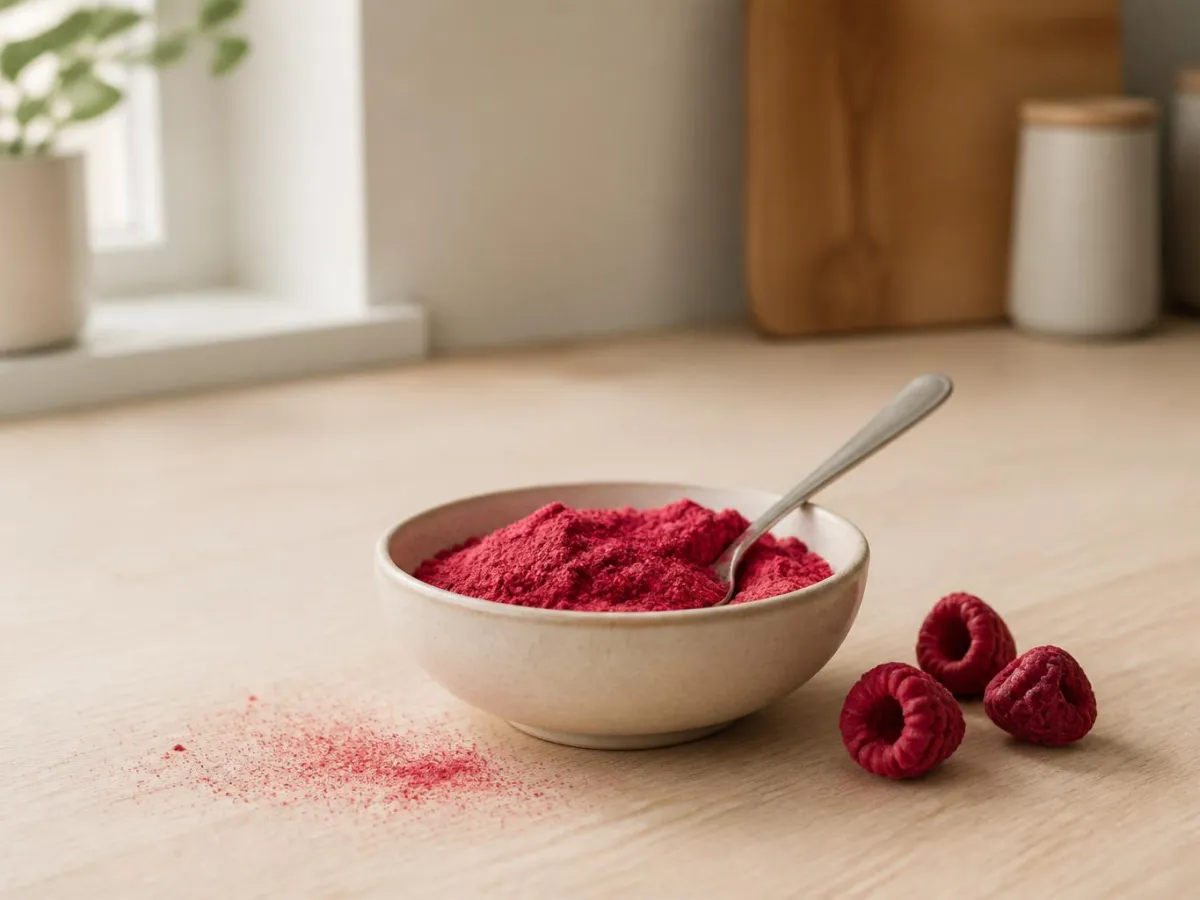
Sharper than strawberry, so you need less of it. What raspberry powder does in icing, meringue, chocolate and drinks, with quantit...
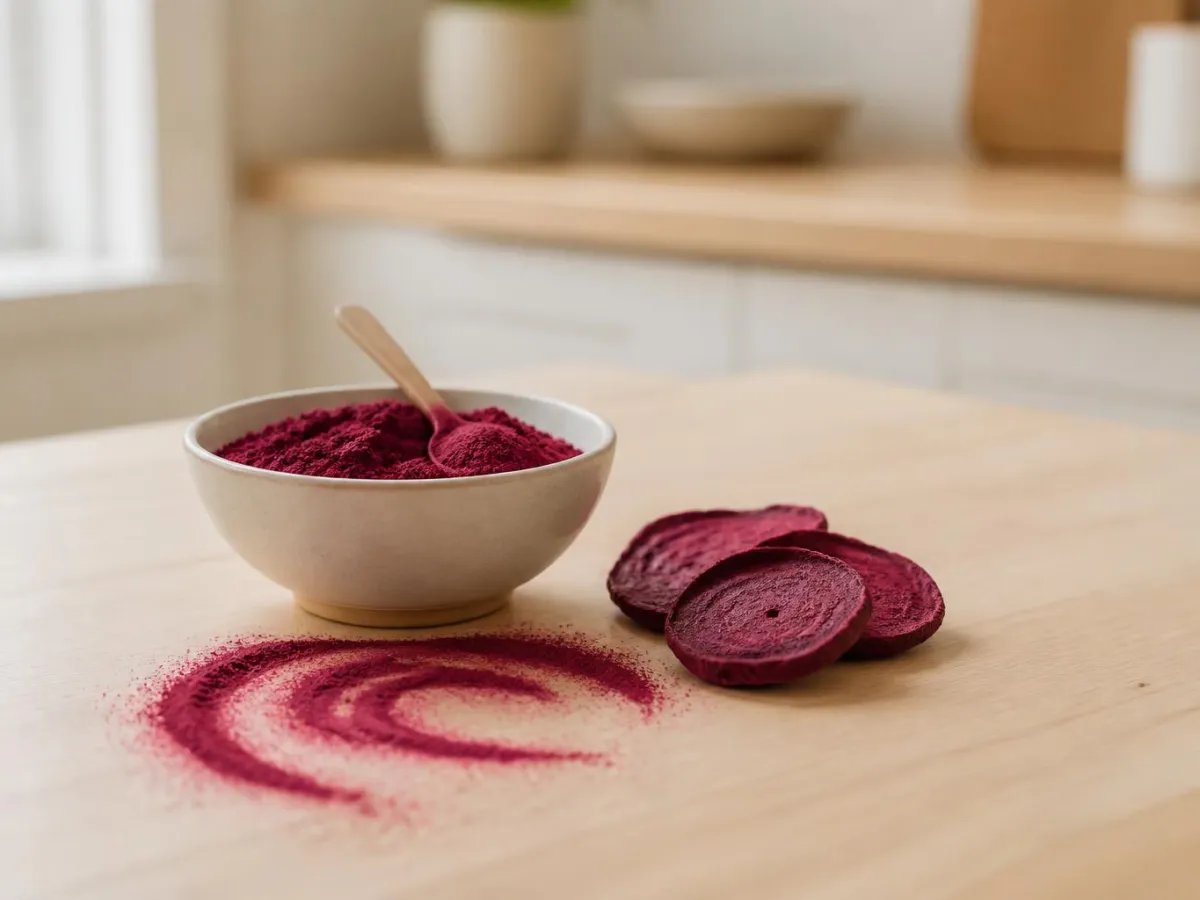
Pure beetroot, milled fine. The strongest natural pink in the cupboard, plus an earthy note that savoury cooking welcomes, with qu...
Freeze-dried fruit powder is whole fruit that has been freeze-dried and then milled fine, so a plain one contains nothing but fruit: no sugar, no flavouring, no added colour. It carries flavour and natural colour with no water at all, which is why roughly 10g beaten into 250g of buttercream gives real fruit flavour and a natural pink without the icing going slack.
That is the whole appeal in one sentence. Everything below is about which powder to reach for, how much to use, and what it will and will not do.
Freeze-drying freezes the fruit and then removes the ice as vapour under vacuum, so the fruit dries without ever being cooked. What freeze-drying is explains the process properly, and freeze-dried against dehydrated fruit explains why the two are not the same thing. Berries are roughly 90 per cent water, and almost all of that leaves, so what comes out weighs about a tenth of what went in: that is where the 10:1 figure comes from. Milling turns it into powder. Because only the water has gone, what is left is concentrated about tenfold by weight: flavour, colour, fibre and the fruit's own sugar. Nothing needs to be added, and in a plain powder nothing is. The ingredients list should say "raspberries" and then stop.
It is worth reading that list, because "fruit powder" on a British shelf can also mean a drink mix or a baking flavouring built from sugar, maltodextrin, acidity regulators and colour, with a little fruit in it. Compare ingredients before you compare prices.
The differences between powders are real and they matter more than they do with whole fruit, because you are using a small amount and asking it to do a lot.
| Powder | Colour it gives | Flavour strength | Start with, per 250g buttercream | Also good in |
|---|---|---|---|---|
| Strawberry | soft pink to strawberry red | medium, sweet | 10g | milkshakes, white chocolate, shortbread |
| Raspberry | vivid pink-red | strong and sharp | 8g | macarons, ganache, dark chocolate |
| Blackcurrant | deep purple | very strong, tart | 5g | cheesecake, gin and tonic, sorbet |
| Blueberry | mauve to grey-blue | mild | 12g | porridge, yoghurt, pancakes |
| Cherry | dull brick red | medium | 10g | brownies, chocolate cake, cola |
| Mango | warm yellow | medium, fragrant | 12g | cream cheese frosting, lassi, meringue |
| Banana | cream to beige | mild and sweet | 15g | porridge, smoothies, flapjacks |
| Beetroot (a vegetable powder) | deep magenta pink | earthy, barely sweet | 5g | red velvet, hummus, pasta dough |
Treat those quantities as starting points, not rules. Crops, varieties and producers differ, colours vary from pack to pack, and the only reliable method is to add half of what you think you need, mix, wait a couple of minutes and taste. Our three detailed pages go further: freeze-dried strawberry powder, freeze-dried raspberry powder and freeze-dried beetroot powder.
Powder solves the one problem fresh fruit always causes in baking, which is water. A purée splits buttercream and collapses meringue; powder adds none.
Powder is thirsty. Use a dry spoon, close the jar between spoonfuls, and add it towards the end of mixing so the colour stays bright.
Fruit powder colours best where there is little water and no long baking: buttercream, royal icing, cream cheese frosting, macaron shells, white chocolate, marzipan, whipped cream and cold desserts. The palette is honest about itself, running from pale pink through scarlet and purple to mauve, yellow and beige. No fruit gives a true blue or a bright green, and anyone promising one is selling something else.
Three things behave differently from a bottle of gel colour:
There is a labelling point worth knowing. A plain fruit or vegetable powder is an ordinary food ingredient and appears on an ingredients list by name, while the colours permitted as additives in Great Britain are the numbered list published by the Food Standards Agency, E100 to E180. That is why so many UK bakers reach for powder when a recipe says "natural pink": it is fruit, and it reads as fruit. For the strongest natural pink of all, freeze-dried beetroot powder beats every berry, as long as you are happy with a faintly earthy background note.
Powder is not sugar and it does not dissolve. It is fruit solids in suspension, so it needs blending or a good shake, and it will settle if a drink stands.
| Drink or dish | How much | Tip |
|---|---|---|
| Milkshake or smoothie | 1 to 2 tsp per glass | Blend, do not stir |
| Yoghurt or fromage frais | 1 tsp per pot | Stir and wait a minute |
| Porridge or overnight oats | 1 to 2 tsp per bowl | Stir in off the heat |
| Sparkling water or lemonade | 1/2 tsp per glass | Shake in a bottle with ice |
| Cocktail glass rim | mix with caster sugar | Dip a damp rim in the mix |
| Hot chocolate | 1 tsp per mug | Raspberry with dark chocolate is the classic pairing |
There is more in porridge and overnight oats and in freeze-dried fruit for cocktails and drinks.
Because the water has gone, everything else is concentrated. Weight for weight, fruit powder has far more sugar and far more calories than the fresh fruit it came from, even though nothing has been added. A typical serving is small, about 10g, which is roughly two teaspoons.
| Typical values, berry powder | Per 100g | Per 10g serving |
|---|---|---|
| Energy | about 330 to 380 kcal | about 35 kcal |
| Carbohydrate | about 65 to 80g | about 7 to 8g |
| of which sugars | about 45 to 65g | about 5 to 6g |
| Fibre | about 12 to 25g | about 1 to 2g |
| Protein | about 5 to 8g | under 1g |
| Fat | about 2 to 4g | under 1g |
These are typical ranges drawn from published composition data and product labels, and they differ a good deal between fruits and producers. Products vary, so the label on your pack is what counts. All the sugar in a plain powder is the fruit's own.
The NHS counts a 30g portion of dried fruit as one of your 5 A Day, and advises eating dried fruit with meals rather than between them, to reduce the risk of tooth decay. That matters more for powder than for pieces, because powder clings. Rinse or brush after a powdered drink, and keep it to mealtimes. See freeze-dried fruit and your 5 A Day, freeze-dried fruit and teeth and sugar in freeze-dried fruit.
Any freeze-dried fruit can become powder in about thirty seconds.
Nothing is lost but the crunch, so 50g of pieces gives about 50g of powder. Whether milling your own saves money depends entirely on the shop: some UK retailers price powder below pieces and others well above it, so compare the price per 100g of both. If you are drying your own fruit at home, home freeze dryers and freeze dryer running costs set out what that actually involves.
Plain fruit powder is still mostly an online purchase in Britain. Supermarket baking aisles more often carry small pots of freeze-dried fruit pieces than powder, so the range sits with wholefood shops, baking specialists and online health-food retailers.
| Powder | Typical UK online price per 100g |
|---|---|
| Strawberry | about £7 to £9 |
| Raspberry | about £7 to £16 |
| Blueberry | about £8 to £11 |
| Vegetable powders such as beetroot | usually cheaper than berry powders |
Typical ranges from UK online retailers, last checked September 2026. Prices move constantly, organic lines cost noticeably more, and a large pouch is almost always cheaper per 100g than a small jar, so compare price per 100g rather than pack price. Where to buy freeze-dried fruit and freeze-dried fruit in UK supermarkets go into who stocks what.
Our own shop is not open yet. When it opens you will be able to buy powders here; until then, join the list and we will tell you the moment it does.
Powder is one of the gentler ways to give a baby the flavour of fruit, because there is nothing crisp to choke on. Stir a pinch into porridge, yoghurt or a fruit purée rather than adding it to a bottle, follow NHS weaning guidance on when and what to introduce, and ask your health visitor or GP about anything specific to your child. Crisp freeze-dried pieces are a different matter and should be softened or powdered first. Freeze-dried fruit for babies and toddlers covers this in detail.
For dogs, the important word is currant. Dried currants in British baking are dried grapes, and grapes, raisins, sultanas and currants are all toxic to dogs: a dried grape is simply a raisin. Blackcurrants are an entirely different plant, but the safe habit is to keep anything grape-derived away from your dog altogether. Small amounts of plain fruit only, nothing with added sugar or sweetener, and check with your vet before you offer a new food. See freeze-dried fruit and pets.
Powder has far more surface area than whole fruit, so it takes up moisture faster and clumps sooner. Keep it in a small airtight jar rather than a big half-empty one, use a dry spoon, leave any desiccant sachet in the pack, and store it cool, dark and dry. How to store freeze-dried fruit and what to do when freeze-dried fruit has gone soft cover the rest.
Buy one powder, not five. Strawberry is the most forgiving and the cheapest to experiment with; raspberry is the one most bakers end up keeping. Make a small batch of buttercream, beat in 10g per 250g, wait ten minutes, and taste before you add any more. If you already have a bag of freeze-dried fruit in the cupboard, you can make the powder yourself before you buy any at all, and the fresh to freeze-dried converter will tell you how much fresh fruit that spoonful represents.
It is fruit that has been freeze-dried and then milled to a fine powder. A plain powder contains nothing but the fruit itself, with no sugar, flavouring or added colour. Check the ingredients list, because drink mixes and flavourings are sold under similar names.
Start with about 10g of powder for every 250g of finished buttercream, then taste and add more. Raspberry and blackcurrant are sharper and stronger, so 5 to 8g is often plenty, while milder banana or blueberry can take 12 to 15g. Let the icing stand for ten minutes, because the colour deepens as the powder takes up moisture.
Yes, and it works best in mixtures with little water in them, such as buttercream, royal icing, macaron shells, white chocolate and cream cheese frosting. Expect pinks, reds, purples, mauve, yellow and beige rather than the flat brightness of a gel colour, and remember the colour fades in a hot oven. There is no fruit that will give you a true blue or a bright green.
Put freeze-dried fruit into a completely dry blender, spice grinder or pestle and mortar and grind in short bursts, then sieve if you want it seed-free. Nothing is lost in weight, so 50g of freeze-dried raspberries makes about 50g of powder. Grind small amounts as you need them and keep it in an airtight jar, because powder clumps quickly in damp air.
The NHS counts a 30g portion of dried fruit as one of your 5 A Day, and advises eating dried fruit with meals rather than between them to reduce the risk of tooth decay. Powder is the same fruit, but 30g is far more than most recipes use, so it is better thought of as a flavouring than as a way to reach five a day.
It has absorbed moisture from the air, which powder does faster than whole pieces because it has so much more surface area. Break up the lumps with a fork or push it through a sieve. It is still fine to use if it has been stored hygienically and shows no sign of mould.
Join the list for new guides and easy recipes. One or two emails a month, never more.
We only use your email to send you our newsletter. Unsubscribe any time. See our privacy notice.