
Start here
A simple route from a packet you are curious about to something useful in your kitchen.
The big questions, answered properly. How it works, how long it keeps, what is in it and how to use it.
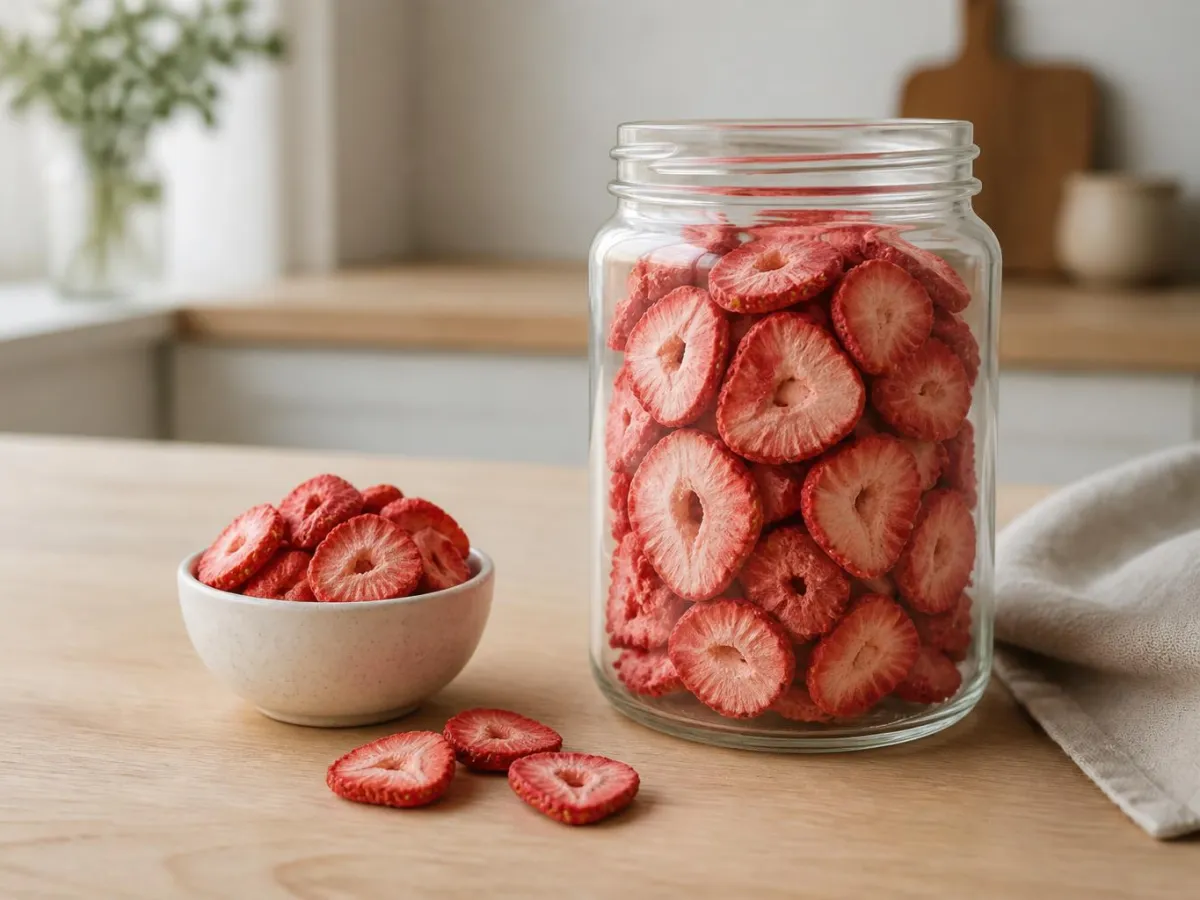
A simple route from a packet you are curious about to something useful in your kitchen.
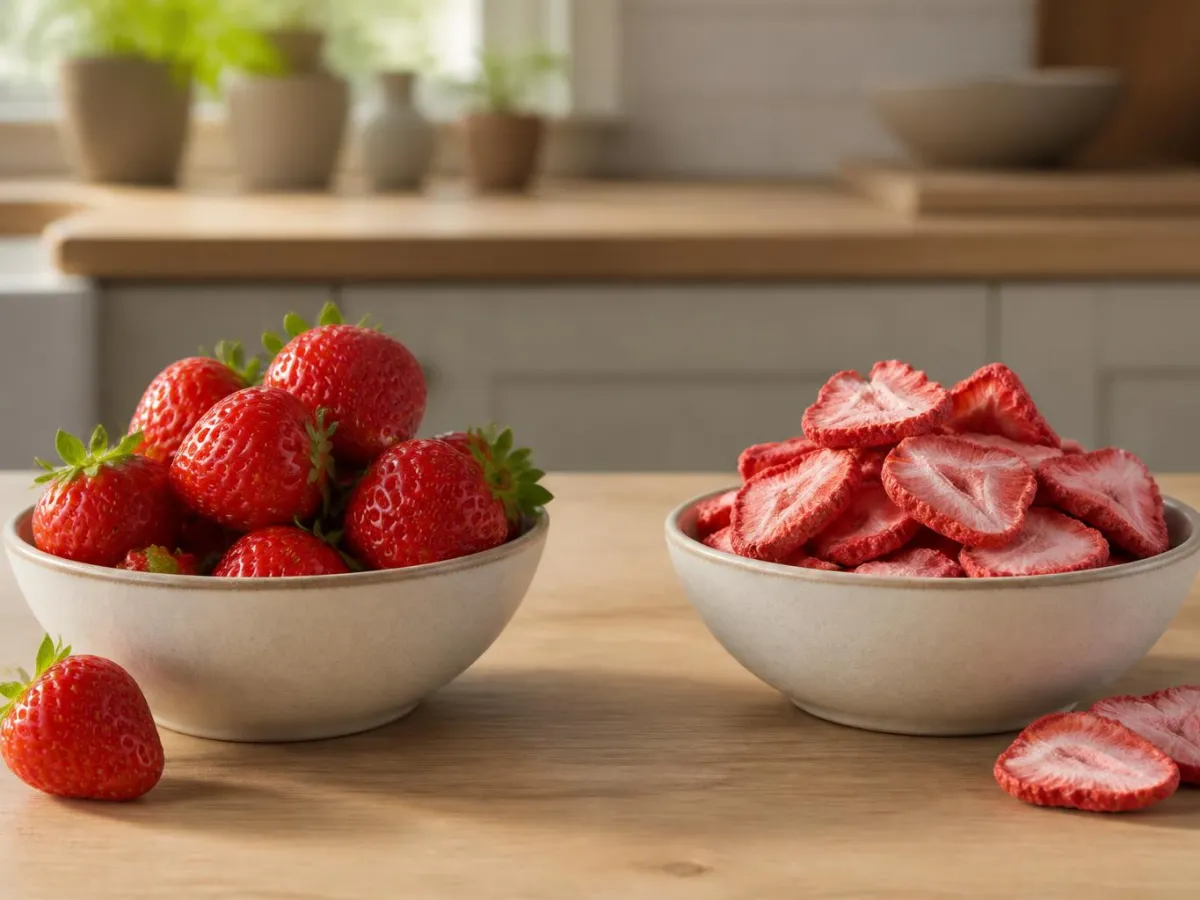
Freeze-drying takes the water out of food without cooking it. Here is how it works, why the fruit stays so colourful, and what tha...
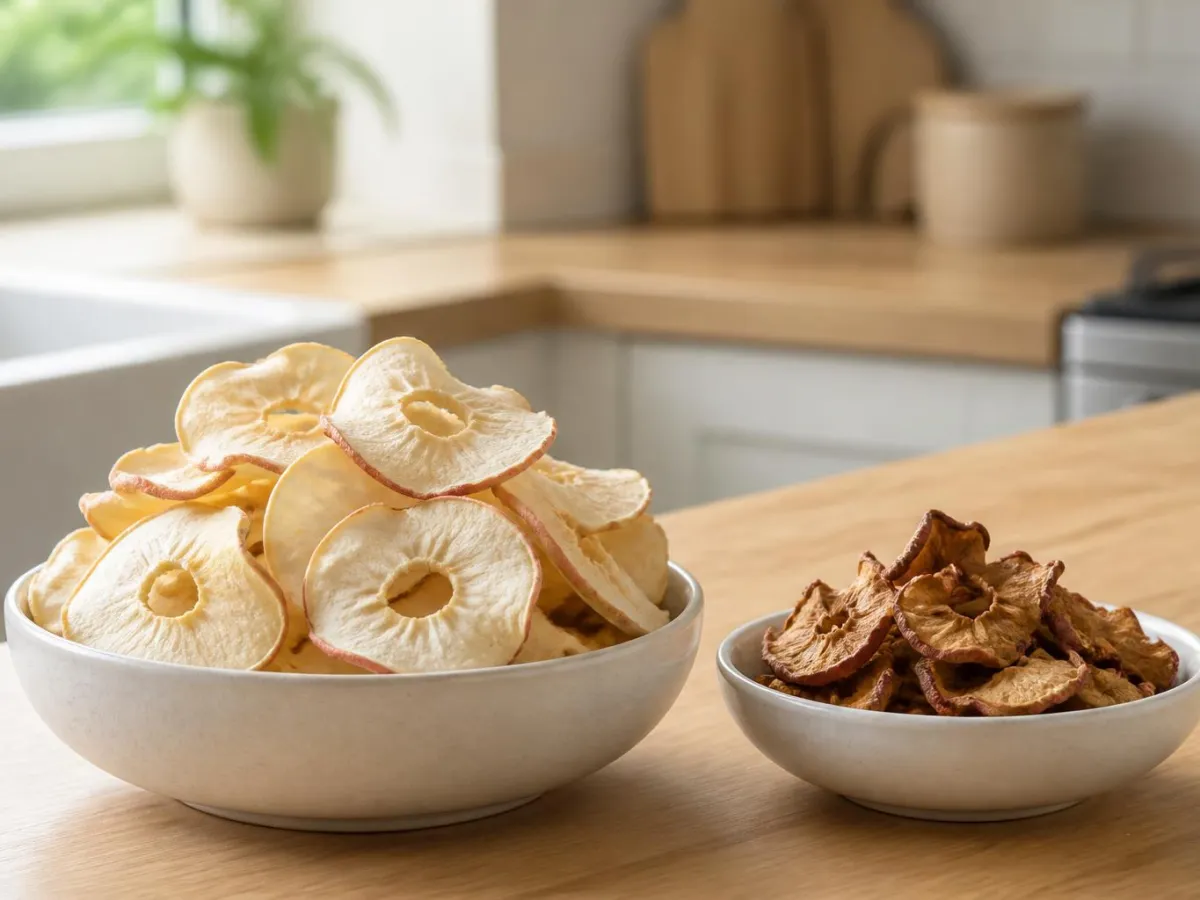
One is crisp and airy, the other chewy and dense. Here is how the two methods differ, and when each one is the better buy.
Freeze-dried fruit is ordinary fresh fruit with almost all of its water taken out: it is frozen solid, then held under a vacuum so that the ice turns straight into vapour instead of melting, which dries the fruit without ever cooking it. That is why a freeze-dried strawberry keeps the shape and colour it had in the punnet, snaps like a crisp, tastes concentrated, softens in water within minutes, and lives in a cupboard rather than a freezer.
Below is the whole subject in the order most people need it: the process, how it compares with other kinds of dried fruit, storage, rehydrating, what the nutrition figures mean, and where to buy.
| Question | Typical answer |
|---|---|
| How much fresh fruit makes 100g freeze-dried? | About 1kg of berries, since fresh berries are roughly 90 per cent water |
| A normal serving | About 10g, which is a small handful |
| One 5 A Day portion of dried fruit (NHS) | 30g, best eaten with a meal |
| Energy, plain freeze-dried berries | About 330 to 380 kcal per 100g, so about 35 kcal in a 10g serving |
| Time to soften slices in cool water | 2 to 5 minutes, longer for whole berries |
| Unopened shelf life | Often a year or more; go by the best-before date on the pack |
| Crispness once opened | A few weeks if you reseal it tightly every time |
| Where to keep it | A cool, dark, dry cupboard, never the fridge |
These are typical values and ranges drawn from published composition data and product labels. Products vary with the fruit, the variety, the ripeness and the producer, so the label on your pack is the figure that counts.
The process has four stages, and none of them involves heating the fruit the way an oven or a dehydrator does.
The full explanation, including what the process does to texture and to heat-sensitive vitamins, is in our guide to what freeze-drying is.
| Measure | Fresh | Freeze-dried | Dehydrated (air-dried) | Frozen |
|---|---|---|---|---|
| Water removed | None | Nearly all, leaving only a few per cent | Most, but noticeably more is left | None |
| How | Not applicable | Frozen, then vacuum-dried | Warm moving air, typically 40°C to 70°C, for hours | Chilled below freezing |
| Texture | Juicy | Crisp and airy | Chewy or leathery | Soft once thawed |
| Shape and colour | The benchmark | Almost unchanged | Shrunken and darker | Close to fresh |
| Kept in | Fruit bowl or fridge | Sealed, in a cupboard | Sealed, in a cupboard | Freezer |
| Ready to use | Straight away | Straight away, or minutes to soften | Slow to soften, never fully | After thawing |
| One 5 A Day portion (NHS) | 80g | 30g as dried fruit | 30g as dried fruit | 80g |
The full comparison, including added sugar, oil and sulphites in some dried fruit, is in freeze-dried vs dehydrated fruit. Neither is better in every situation: crisp freeze-dried pieces are what you want for cereal, icing and decoration, while chewy dried fruit belongs in flapjacks and fruit cake.
The open, airy structure that makes freeze-dried fruit crisp also makes it behave like a sponge, so moisture is the thing to guard against, with oxygen, light and heat some way behind. Keep the pack sealed in a cool, dark, dry cupboard, not in the fridge, where the air is humid and the cold pack attracts condensation every time you take it out.
Once a pack is open, squeeze the air out and reseal it immediately, or decant into a clip-top jar filled as full as you can manage, and only ever use a dry spoon. Our guide to storing freeze-dried fruit covers desiccant sachets, long-term storage in tins and how to tell quality loss from a genuine safety problem. A best-before date is about quality rather than safety, as the Food Standards Agency explains, but anything mouldy or smelling off goes in the bin.
If a pack has already lost its snap, what to do when freeze-dried fruit goes soft explains how to crisp it up in a low oven and which recipes do not care about texture in the first place. The wider storage and shelf life section collects the lot.
Cover the fruit with just enough cool water and wait: slices take two to five minutes, whole berries a little longer, and freeze-dried peas and other vegetables soften in a pan of soup or risotto without any separate soaking. Rehydrated fruit has the texture of thawed frozen fruit rather than fresh, so it is happiest in compotes, sauces, trifles and smoothies.
Often the better move is not to rehydrate at all. Because freeze-dried fruit adds flavour and colour without adding water, it solves the problem fresh berries cause in baking with freeze-dried fruit and in buttercream. Our step-by-step notes are in the guide to rehydrating freeze-dried fruit, and the fresh to freeze-dried converter does the weight sums both ways.
Plain freeze-dried fruit is just fruit, with nothing added and nothing needed, because removing the water is what preserves it. The catch is concentration: weight for weight it has far more sugar and far more calories than fresh fruit, simply because the water has gone. All of that sugar is the fruit's own, and the fibre comes along too, but 100g of freeze-dried berries is a very large amount of fruit, not a portion.
That is why servings are small, around 10g, and why the per-100g column on the pack can look alarming next to fresh fruit. Sweetened, yoghurt-coated and chocolate-coated products are a different thing again, so read the ingredients list. The nutrition section goes through this properly, with separate pages on sugar in freeze-dried fruit, calories in freeze-dried fruit and whether freeze-dried fruit counts as ultra-processed food.
The NHS position, plainly: a 30g portion of dried fruit counts as one of your 5 A Day, and dried fruit is best enjoyed as part of a meal, as a dessert for example, rather than as a between-meal snack, to reduce the risk of tooth decay. A portion of fresh, frozen or tinned fruit is 80g.
Only one 30g portion of dried fruit counts towards the five, however much you eat, so freeze-dried fruit is a useful addition to a meal rather than a replacement for the fruit bowl. There is more in our pages on freeze-dried fruit and 5 A Day and freeze-dried fruit and teeth.
UK supermarkets treat freeze-dried fruit as a baking ingredient, so what you usually find is a small tub of strawberry or raspberry pieces in the home-baking aisle, with larger bags occasionally appearing as limited lines. Specialist online shops carry far more: whole berries, slices, pieces, powders and vegetables, in pack sizes from a few grams to a kilogram.
Prices move about, so compare the price per 100g rather than the pack price. Across UK online retailers, freeze-dried strawberries have commonly sat somewhere around £5 to £11 per 100g, while tiny baking tubs can work out at several times that per 100g; last checked September 2026. Our guide to where to buy freeze-dried fruit and the page on freeze-dried fruit in UK supermarkets go retailer by retailer.
Crispberry's own shop is not open yet, so there is nothing for sale on this site today and no prices, stock or delivery times to quote. It opens in a few months, and you can join the list below to hear when it does.
Babies and toddlers. Crisp pieces can be a choking risk, so soften them or crush them to a powder and stir them into porridge or yoghurt, follow NHS weaning guidance on introducing foods, and ask your health visitor or GP about your own child. See freeze-dried fruit for babies and toddlers.
Dogs and other pets. Grapes, raisins, sultanas and currants are toxic to dogs, and a dried grape is a raisin, so freeze-dried grapes are off the list too. Stick to small amounts of plain fruit that is safe for the animal, and check with your vet before you offer anything new. See freeze-dried fruit for pets.
Walkers and campers. This is where the weight saving really shows, since a day's fruit weighs almost nothing and needs no cool bag. See freeze-dried fruit for hiking and camping.
A home freeze-dryer is a freezer, a vacuum pump and heated shelves in one cabinet, and it runs for many hours per batch. The machines are a serious purchase, and the electricity adds up, so the honest question is how much fruit and veg you would actually process. Our pages on home freeze-dryer running costs and whether a home freeze-dryer is worth it work through the sums, and the home freeze-dryer section covers the machines themselves.
If you read one page, make it what freeze-drying is. Then pick a fruit: freeze-dried strawberries and freeze-dried raspberries are the two most people start with, and the wider freeze-dried fruit and freeze-dried fruit powder sections take it from there. Buy a small pack first, keep it sealed between uses, and treat 10g as a serving rather than a snack you eat by the handful.
The food is frozen solid, then placed in a chamber and held under a vacuum with only gentle warmth. At that low pressure the ice cannot melt, so it turns straight from solid to vapour, a change called sublimation, and the vapour is drawn off and trapped on a cold condenser. The food is dried without being cooked, which is why it keeps its shape, colour and flavour.
No. Ordinary dried fruit is dried with warm air, so it shrinks and turns chewy, and some kinds have sugar, oil or sulphites added. Freeze-dried fruit is dried from frozen under vacuum, so it stays the same shape and turns crisp and airy, and plain versions contain nothing but fruit. Both are concentrated, because in both cases the water has gone.
An unopened pack often carries a best-before date a year or more ahead, and tins packed for long-term storage are dated further out. Always go by the date on your pack. Once opened, reseal it tightly and expect it to stay crisp for a few weeks, longer in an airtight jar in a dry kitchen.
Yes. The NHS counts a 30g portion of dried fruit as one of your 5 A Day, and advises eating it as part of a meal rather than as a between-meal snack, to reduce the risk of tooth decay. A fresh, frozen or tinned portion is 80g, because fresh fruit is mostly water.
Crisp pieces can be a choking risk for babies and young children, so soften them in water, milk or yoghurt, or crush them to a powder and stir them into food. Follow NHS weaning guidance on when and how to introduce new foods, and ask your health visitor or GP about your own child.
Yes, with a home freeze-dryer, which is a freezer, a vacuum pump and a heated shelf in one cabinet. The machines are expensive to buy and run for many hours per batch, so whether they pay for themselves depends on how much you would dry and what you would otherwise throw away.
Join the list for new guides and easy recipes. One or two emails a month, never more.
We only use your email to send you our newsletter. Unsubscribe any time. See our privacy notice.