
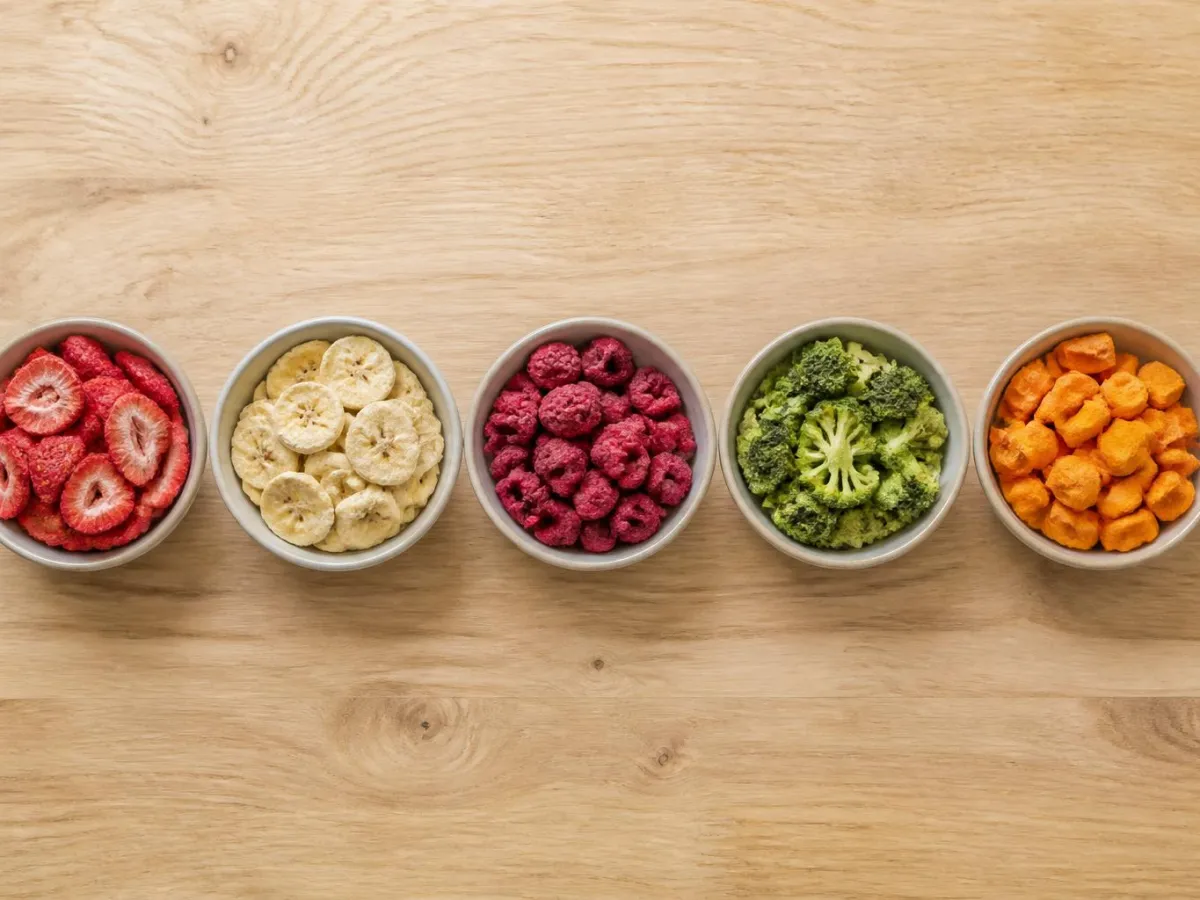
Freeze-dried fruit and 5 A Day
The NHS counts 30g of dried fruit as one portion and says to eat it with meals. It has no separate rule for freeze-dried fruit, so...
Freeze-dried fruit is fruit with the water taken out, which makes it concentrated rather than magic. Here is what that means for sugar, fibre, calories and portions.
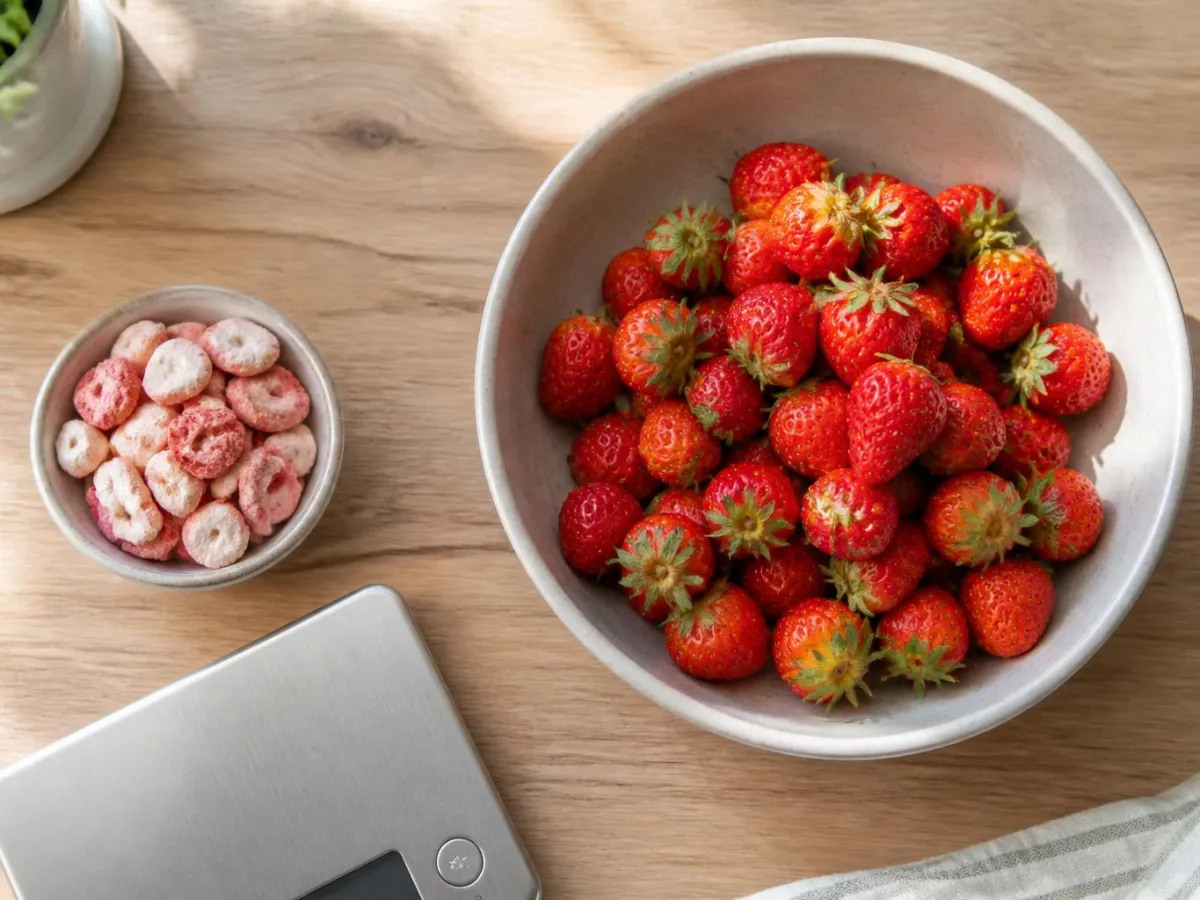
The NHS counts 30g of dried fruit as one portion and says to eat it with meals. It has no separate rule for freeze-dried fruit, so...
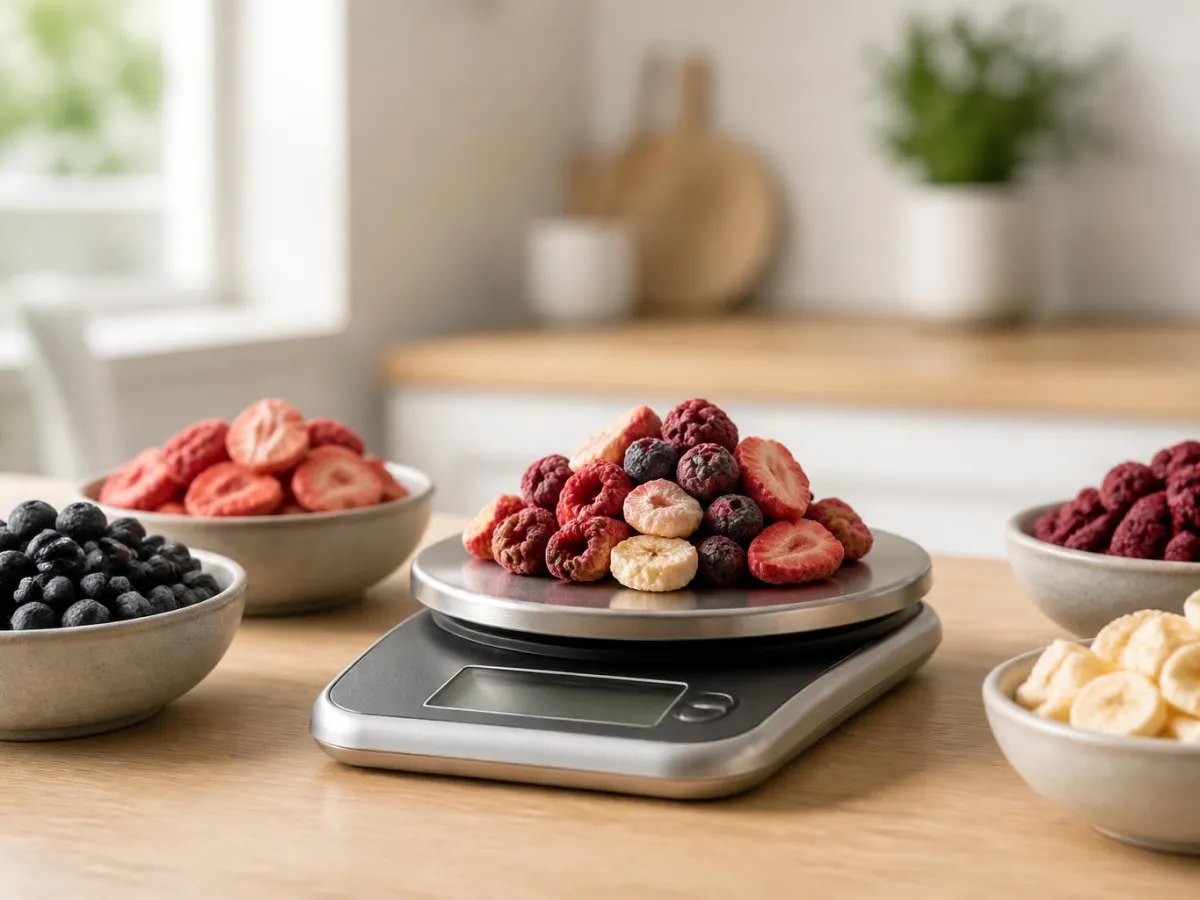
A 10g serving of freeze-dried fruit is usually around 30 to 40 kcal. Here is what the frightening per-100g figure on the pack actu...
Nobody outside Slimming World can tell you for certain, and the plan changes. Here is the nutrition that actually matters, and how...
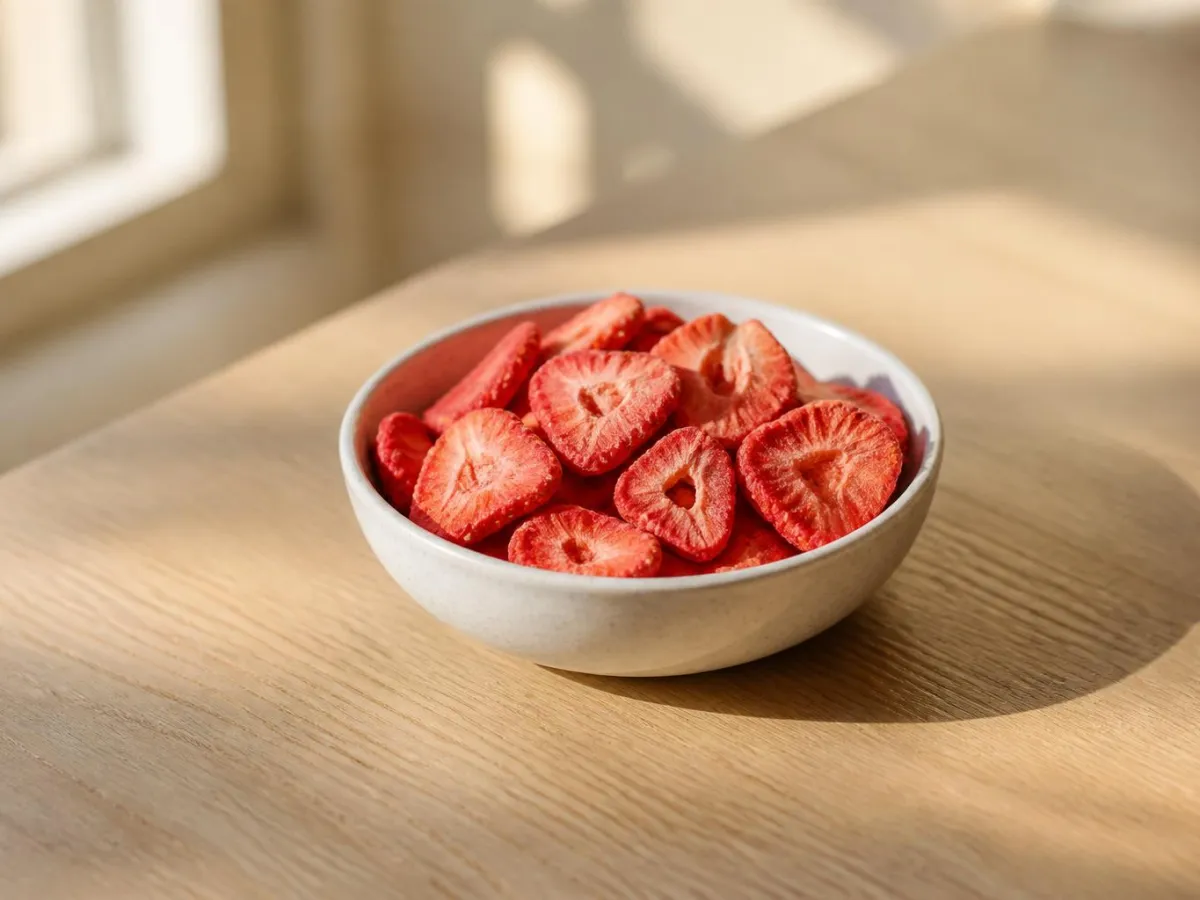
Plain freeze-dried fruit is fruit with the water removed and nothing added, which puts it in NOVA group 1. Coated and sweetened ve...
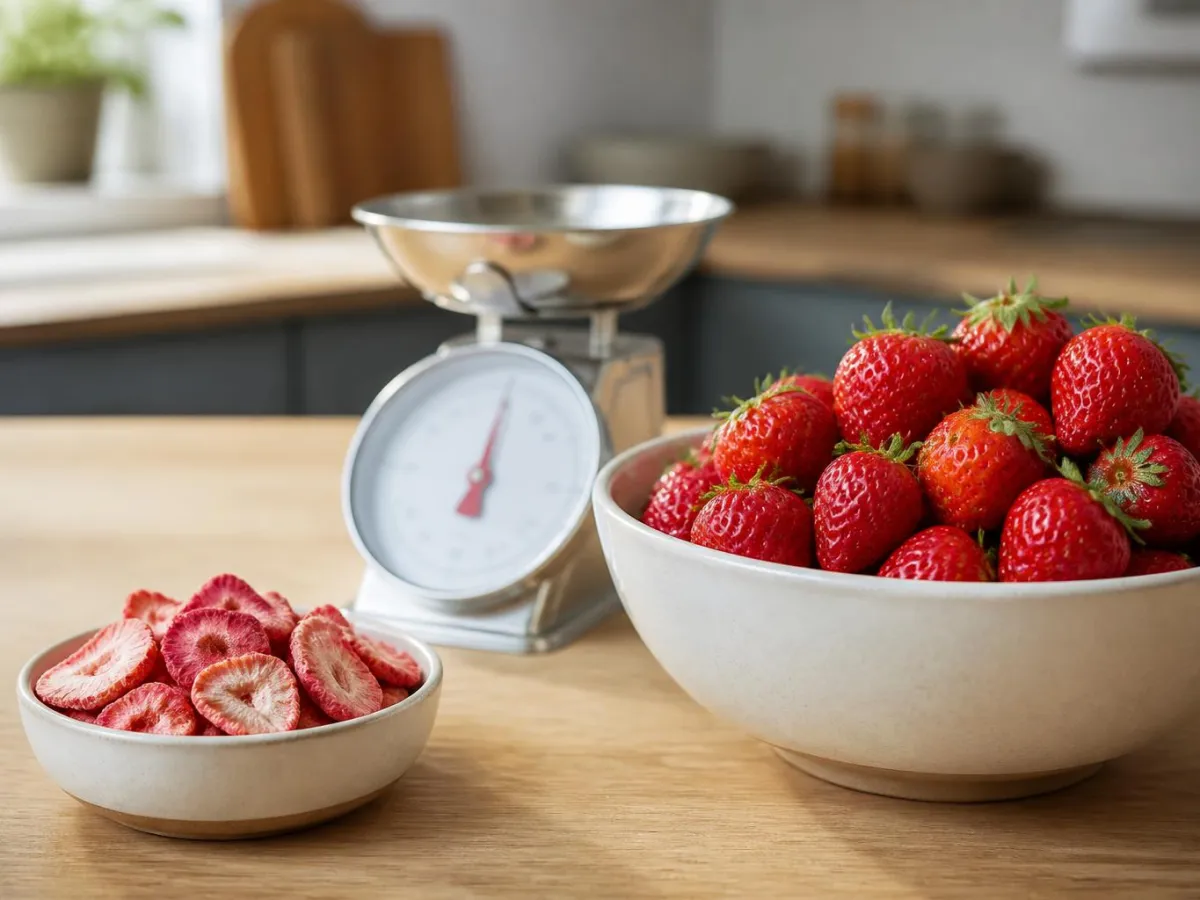
Per 100g, dramatically more. Per serving, no more than the fresh fruit it came from. Here is the arithmetic, fruit by fruit, in gr...
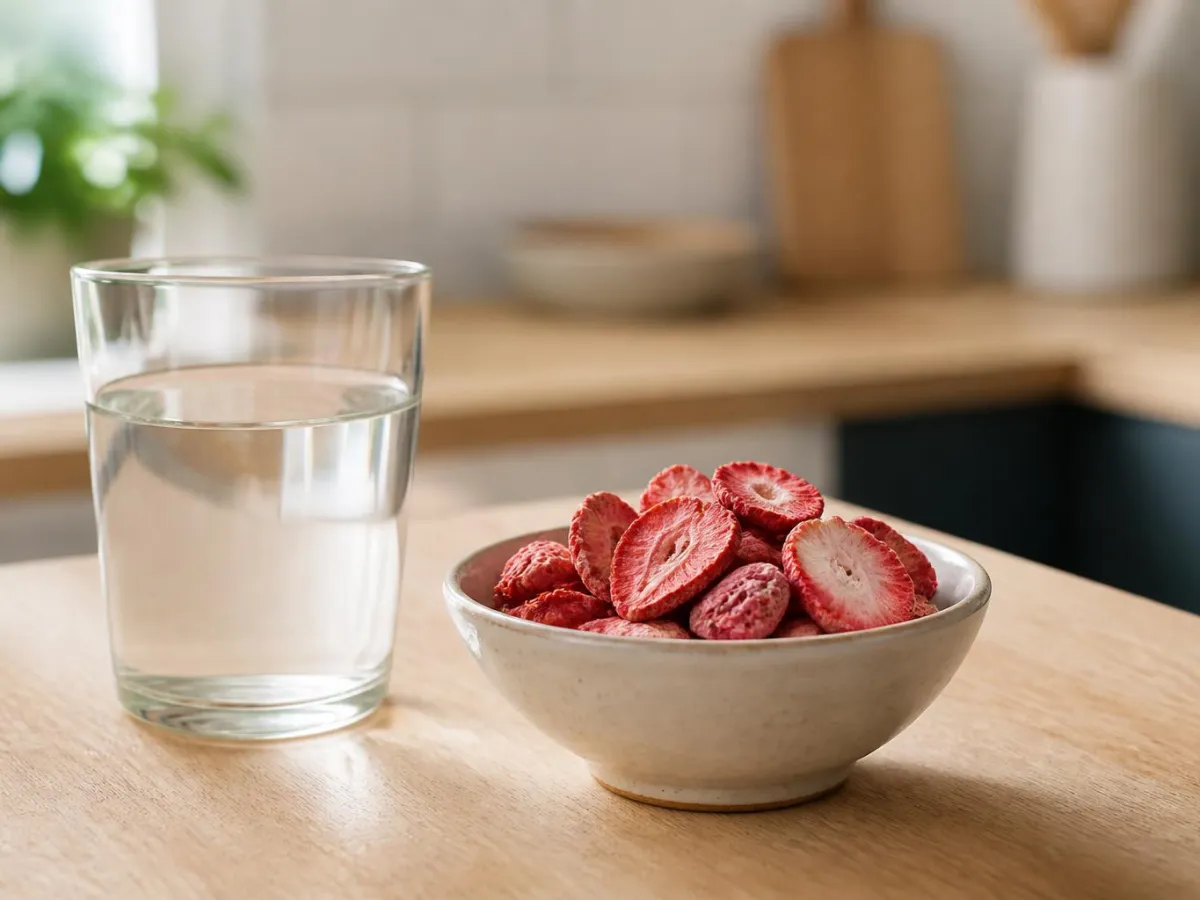
Crisp rather than sticky, but still concentrated fruit sugar. What the NHS advises about dried fruit and teeth, and the habits tha...
Plain freeze-dried fruit is about as healthy as the fresh fruit it was made from: it is nothing but fruit with the water taken out, so it keeps the fruit's own sugars, fibre and minerals, and a good pack has no added sugar, oil, colour or preservative because none is needed. It is also concentrated: weight for weight it carries far more sugar and far more calories than fresh fruit, which is why a serving is about 10g and why the NHS counts 30g of dried fruit, rather than 80g of fresh, as one of your 5 A Day.
That is the whole honest answer in two sentences. Everything below is the detail: what the process does and does not change, what the numbers look like next to fresh, frozen and ordinary dried fruit, what the NHS actually says about portions and teeth, and who should take a bit more care.
| Measure | Fresh fruit | Frozen fruit | Freeze-dried fruit | Conventionally dried fruit |
|---|---|---|---|---|
| Water content | About 80 to 90 per cent | About 80 to 90 per cent | About 2 to 5 per cent | About 15 to 30 per cent |
| Typical sugars per 100g | About 5 to 15g | About 5 to 15g | About 45 to 70g | About 35 to 70g |
| Typical energy per 100g | About 30 to 70 kcal | About 30 to 70 kcal | About 330 to 400 kcal | About 200 to 350 kcal |
| Typical fibre per 100g | About 1 to 4g | About 1 to 4g | About 10 to 25g | About 5 to 10g |
| One 5 A Day portion (NHS) | 80g | 80g | 30g, as dried fruit | 30g |
| A normal serving | A piece, or a handful | 80g or so, cooked or blended | About 10g | About 30g |
| Anything usually added | No | No | No, in plain versions | Sometimes sugar, oil or sulphites |
| Best used for | Eating as it is | Smoothies, compotes, cooking | Cereal, baking, icing, snacking | Flapjacks, fruit cake, lunchboxes |
These are typical values and ranges drawn from published composition data such as the GOV.UK CoFID dataset and from product labels. They move about with the fruit, the variety, the ripeness and the producer, so the label on your own pack is the figure that counts, not this table.
Freeze-drying freezes the fruit solid, then holds it under a vacuum so the ice turns straight to vapour without ever melting or cooking. Our guide to what freeze-drying is goes through the stages properly. For nutrition, three things follow.
It removes water and nothing else. The sugar, fibre, minerals and acids that were in the fruit are still there. They are simply packed into about a tenth of the weight.
It is gentle on heat-sensitive vitamins, but it is not magic. Because there is no hot air, freeze-drying is generally considered one of the kinder drying methods for vitamins such as vitamin C. Some loss still happens in preparation, drying and months of storage, and published figures vary widely between fruits and producers.
It does not add anything. A plain pack should list one ingredient. That is the main difference from a lot of conventionally dried fruit, where sugar, oil or sulphur dioxide are sometimes used, all of which must be declared on a UK label.
What freeze-drying cannot do is make the sugar disappear, turn a snack food into a health food, or excuse eating half a bag in front of the television.
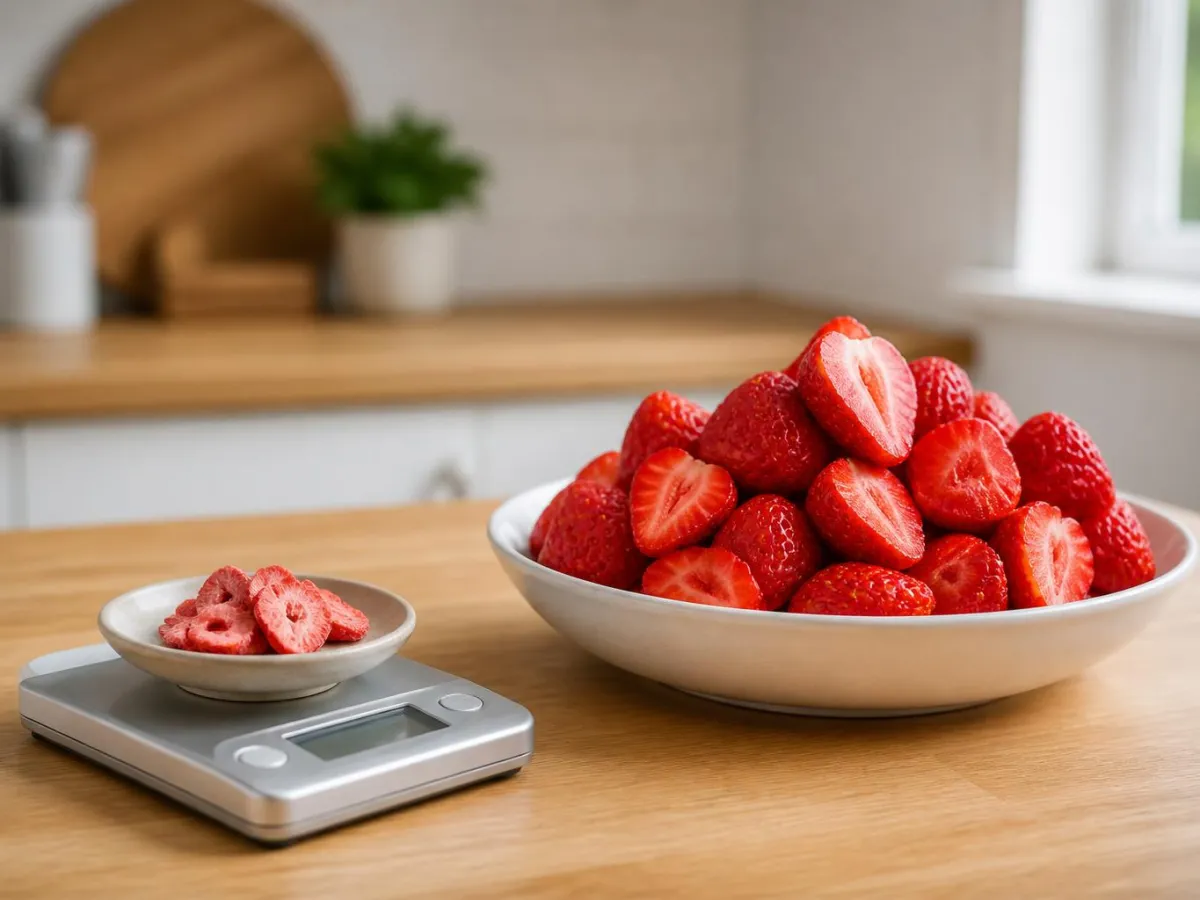
Take 100g of fresh strawberries, remove about 90g of water, and you are left with roughly 10g of crisp fruit that contains everything the 100g contained apart from the water. The per-100g column on the pack therefore looks alarming next to fresh fruit, because 100g of freeze-dried berries represents something close to a kilogram of fresh fruit. Nobody eats a kilogram of strawberries in one sitting; plenty of people could eat 100g of freeze-dried ones without noticing.
Compared portion for portion instead, the picture is calmer. A 10g serving of plain freeze-dried berries typically supplies somewhere around 35 kcal and about 5 to 6g of sugars, which is roughly what the 100g of fresh berries it came from would have given you. The fresh to freeze-dried converter does those sums for other weights and other fruit, and freeze-dried fruit calories and sugar in freeze-dried fruit go into both in detail.
One UK definition worth knowing: the NHS counts as free sugars those added to food and drink, plus the sugars in honey, syrups and unsweetened juices and smoothies. Sugars inside whole fruit, including whole dried fruit, are not on that list, and adults are advised to have no more than 30g of free sugars a day. That is a point about dietary guidance and labelling, not a free pass, because the NHS is equally clear that dried fruit is high in sugar and can be bad for your teeth.
Where sugar really is added: yoghurt-coated, chocolate-coated and sweetened freeze-dried fruit are a different food from plain fruit. That coating is added sugar and fat, it does count as free sugars, and the pack will say so in the ingredients and the nutrition panel. Read the list, not the front of the bag.
The fibre stays with the fruit when the water goes, so plain freeze-dried berries typically contain somewhere around 10 to 25g of fibre per 100g, against roughly 1 to 4g in the fresh fruit. In Great Britain a product may be labelled a "source of fibre" at 3g per 100g and "high in fibre" at 6g per 100g, so many plain freeze-dried fruits comfortably clear both thresholds on paper.
Keep the serving size in view, though. Those thresholds are per 100g, and a realistic 10g serving supplies perhaps 1 to 2g of fibre, against government advice for adults in the UK of 30g of fibre a day. Freeze-dried fruit is a pleasant contributor to that total, scattered on porridge or stirred into yoghurt. It is not a shortcut to it.
The NHS position, in plain words: a 30g portion of dried fruit counts as one of your 5 A Day, and dried fruit is best enjoyed as part of a meal, as a dessert for example, rather than as a between-meal snack, because it is high in sugar and can be bad for your teeth. A portion of fresh, frozen or tinned fruit is 80g, and fruit juice and smoothies count as a maximum of one portion a day, up to 150ml in total.
Three practical consequences follow. First, only one 30g dried-fruit portion counts towards your five, however much you eat, so freeze-dried fruit adds to the fruit bowl rather than replacing it. Second, timing matters more than the exact quantity: the same 30g does less harm to teeth at the end of a meal than spread across an afternoon of grazing. Third, freeze-dried pieces are crisp rather than sticky when they go in, which is genuinely different from a chewy raisin, but they dissolve into the same concentrated sugars and fruit acids within seconds.
There is more in does freeze-dried fruit count as 5 A Day and freeze-dried fruit and your teeth.
It is a fair question to ask of anything that arrives crisp in a foil pouch. Freeze-drying is a physical process that removes water and adds nothing, which puts plain single-ingredient freeze-dried fruit in a different category from a product built from refined ingredients and additives. Coated and sweetened versions are another matter. We work through the NOVA classification and where each kind of pack sits in is freeze-dried fruit ultra-processed.
Babies and toddlers. Crisp, hard pieces are a choking risk for babies and young children. Soften them in water, milk or yoghurt, or crush them to a powder and stir them through food. Follow NHS weaning guidance on when and how to introduce foods, and ask your health visitor or GP about your own child. See freeze-dried fruit for babies and toddlers.
Anyone managing blood glucose. A small weight carries a lot of carbohydrate, and crisp fruit is easy to eat quickly. If you are managing diabetes, talk to your GP, practice nurse or diabetes team about how it fits your own plan; we are not able to give individual advice.
Anyone counting calories or following a plan. Energy density is the thing to watch, because 100g is a very large amount of fruit. Our pages on freeze-dried fruit calories and freeze-dried fruit on Slimming World set out the numbers and the rules as the plans state them.
Teeth, braces and dry mouth. Mealtimes rather than grazing, water afterwards, and the usual brushing twice a day with fluoride toothpaste.
Dogs and other pets. Grapes, raisins, sultanas and currants are toxic to dogs, and a dried grape is a raisin, so freeze-dried grapes are off the list too. Stick to small amounts of plain fruit known to be safe for that animal, and check with your vet before offering anything new. See freeze-dried fruit for pets.
UK supermarkets mostly treat freeze-dried fruit as a baking ingredient, so what you usually see is a small tub of strawberry or raspberry pieces in the home-baking aisle, with bigger bags appearing online and in specialist shops. Our page on freeze-dried fruit in UK supermarkets covers who stocks what.
Whatever the shop, the check is the same:
Crispberry's own shop is not open yet, so there are no prices, stock or delivery details to quote here. You can join the list below to hear when it opens.
If you take one habit from this page: weigh out about 10g into a bowl instead of eating from the bag, and have it with a meal rather than between them. That single change settles most of the sugar, calorie and tooth questions at once.
Plain freeze-dried fruit is real fruit, minus the water, with nothing added. Treat it as concentrated fruit rather than as a snack you eat by the handful, read the label on your own pack, and it earns its place on porridge, in a lunchbox and in baking with freeze-dried fruit — starting, for most people, with freeze-dried strawberries.
Plain freeze-dried fruit is simply fruit with the water removed, with nothing added, so it keeps the fruit's own sugars, fibre and minerals in concentrated form. Because it is concentrated, servings are small, around 10g, and the NHS counts 30g of dried fruit as one of your 5 A Day, best eaten as part of a meal rather than as a between-meal snack to reduce the risk of tooth decay. Sweetened, yoghurt-coated and chocolate-coated versions are a different food, so read the ingredients list.
Per 100g, yes, by a long way, because roughly 90 per cent of a fresh berry is water and freeze-drying takes almost all of it out. Nothing is added to plain freeze-dried fruit, so the sugar is the fruit's own, simply packed into a tenth of the weight. Compared like for like, a 10g serving of freeze-dried berries contains about as much sugar as the 100g of fresh berries it was made from.
Yes. The NHS counts a 30g portion of dried fruit as one of your 5 A Day, and freeze-dried fruit is dried fruit. Only one such portion counts towards the five however much you eat, and a portion of fresh, frozen or tinned fruit is 80g. The NHS advises eating dried fruit with a meal rather than between meals, to reduce the risk of tooth decay.
The NHS says dried fruit is high in sugar and can be bad for teeth, and advises eating it as part of a meal, as a dessert for example, rather than as a between-meal snack. Freeze-dried pieces start crisp rather than sticky, but they dissolve in the mouth into the same concentrated fruit sugars and acids. Keeping it to mealtimes, drinking water afterwards and brushing twice a day with fluoride toothpaste are the sensible habits.
Freeze-drying works at low temperatures without hot air, so it is generally regarded as one of the gentler drying methods for heat-sensitive vitamins such as vitamin C. Losses still happen during preparation, drying and storage, and published figures vary a great deal between fruits and producers. The nutrition panel on your own pack is the only figure that really counts.
About 10g, which is a small handful and roughly what you get from 100g of fresh berries. A 30g portion is the amount the NHS counts as one of your 5 A Day for dried fruit. Per-100g figures on the pack look dramatic because 100g of freeze-dried berries is around a kilogram of fresh fruit.
Join the list for new guides, easy recipes and a friendly nudge on launch day. One or two emails a month, never more.
We only use your email to send you our newsletter. Unsubscribe any time. See our privacy notice.