
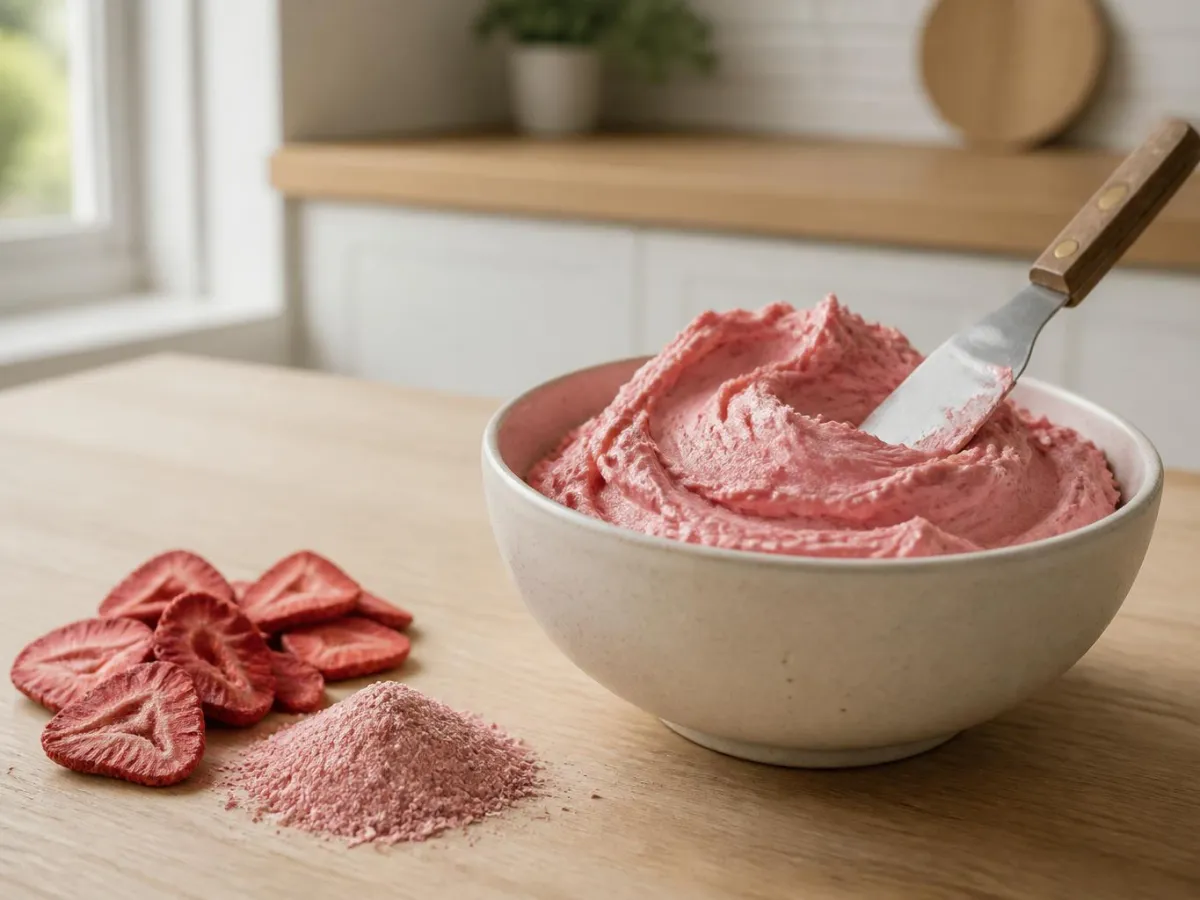
Real strawberry buttercream
Naturally pink, properly fruity and firm enough to pipe. The trick is freeze-dried strawberries, which bring all the flavour and n...
Thirty things to do with a pack of freeze-dried fruit, grouped by occasion, with amounts in grams and links to the full recipes.
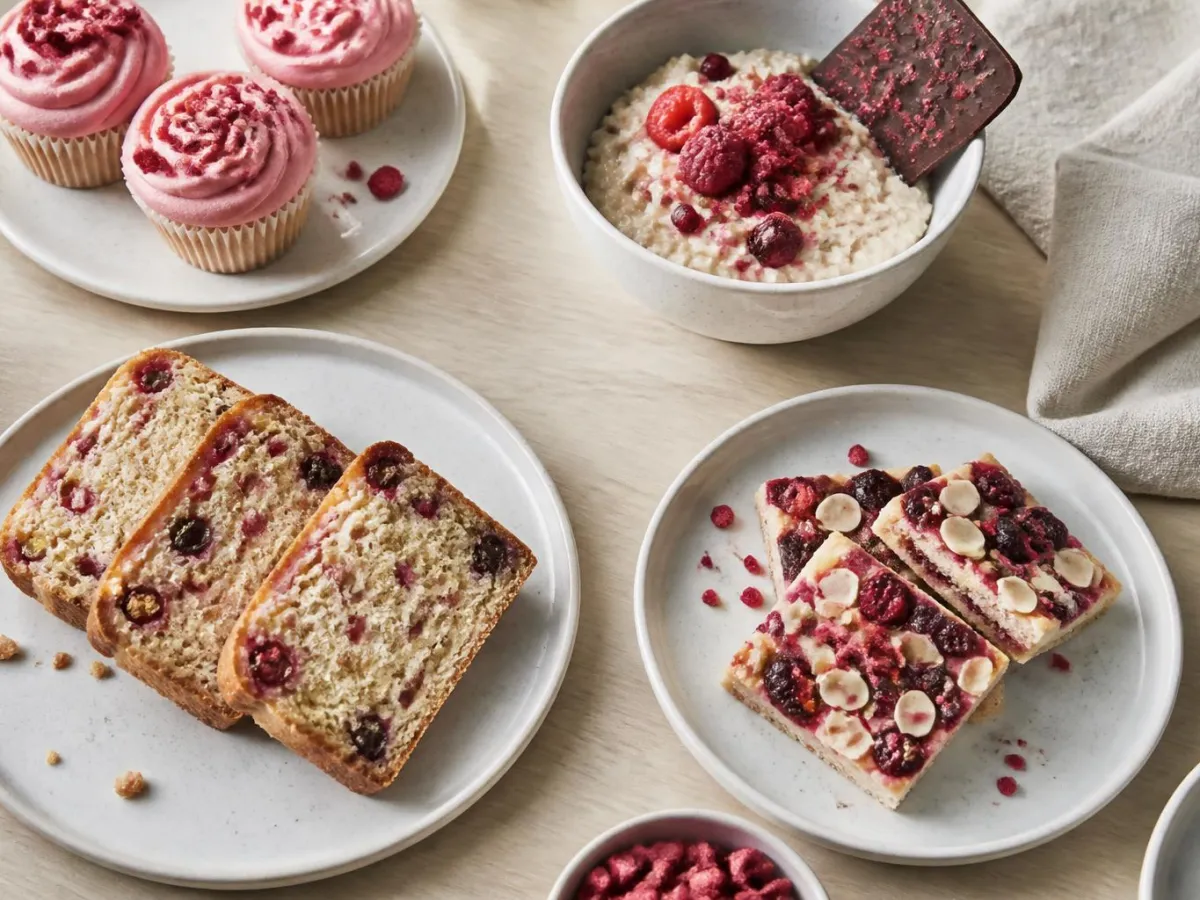
Naturally pink, properly fruity and firm enough to pipe. The trick is freeze-dried strawberries, which bring all the flavour and n...
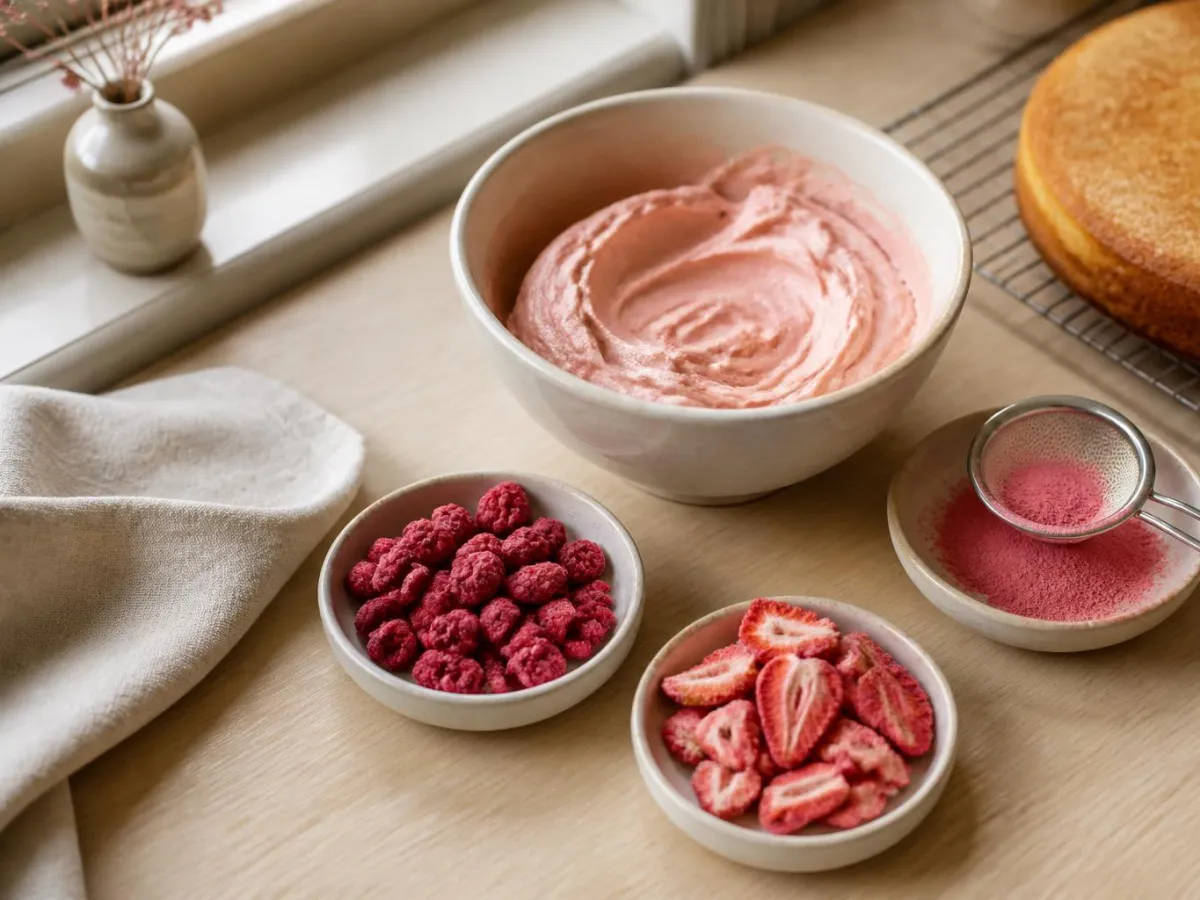
Freeze-dried fruit gives bakers flavour and colour without water, which is why it works where fresh fruit fails. Here are the amou...
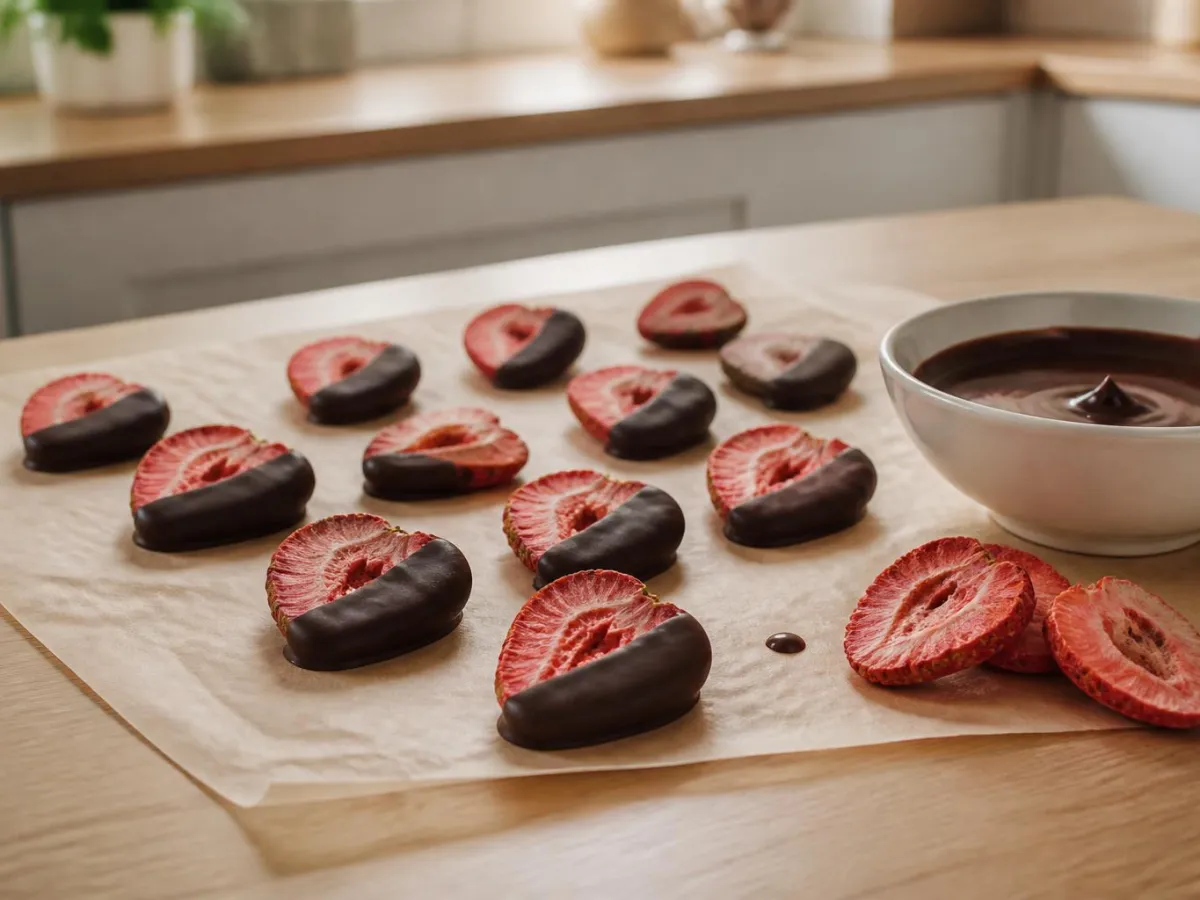
Crisp fruit sealed in chocolate, made at home in about half an hour. Amounts in grams, temperatures in Celsius, and the moisture t...
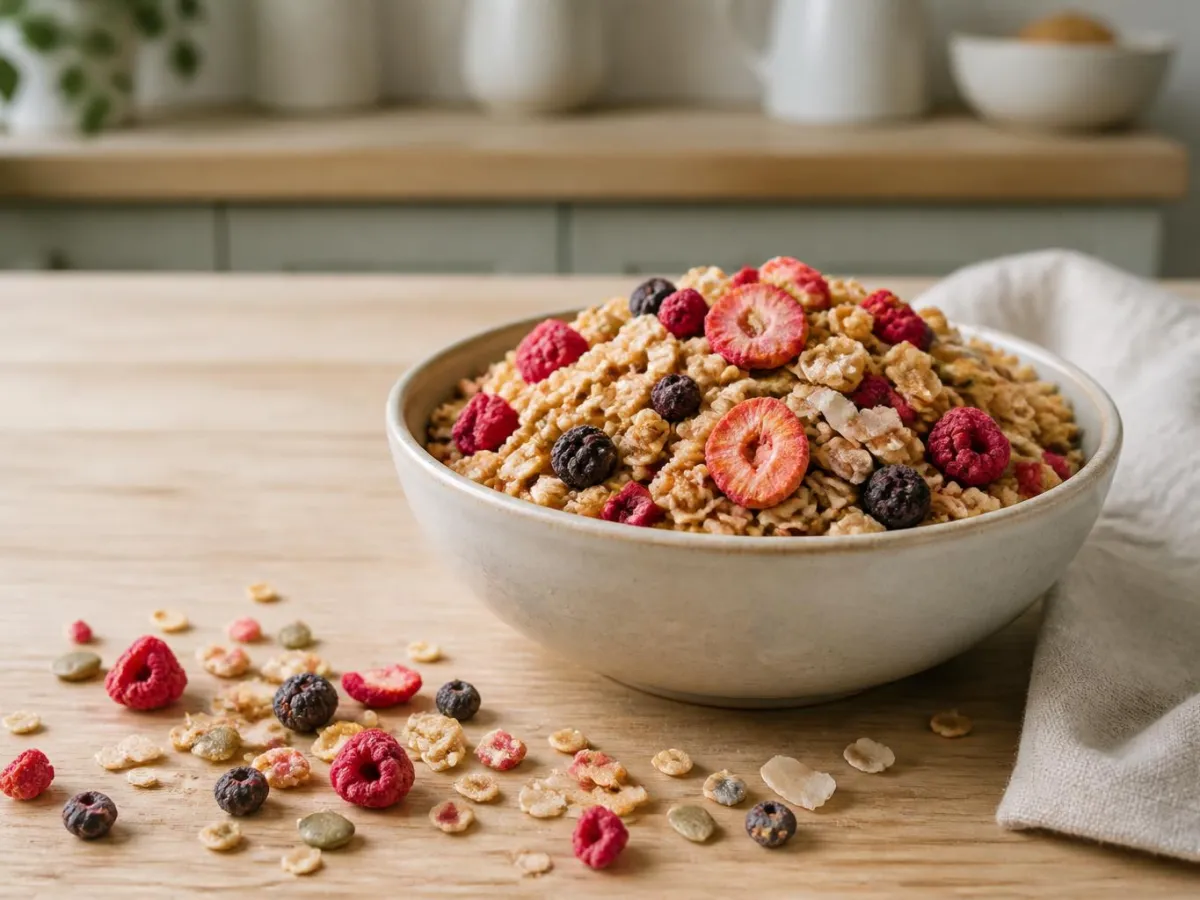
Freeze-dried fruit goes into granola after the tray has gone cold, never into the oven. How much to use per bowl and per batch, a...
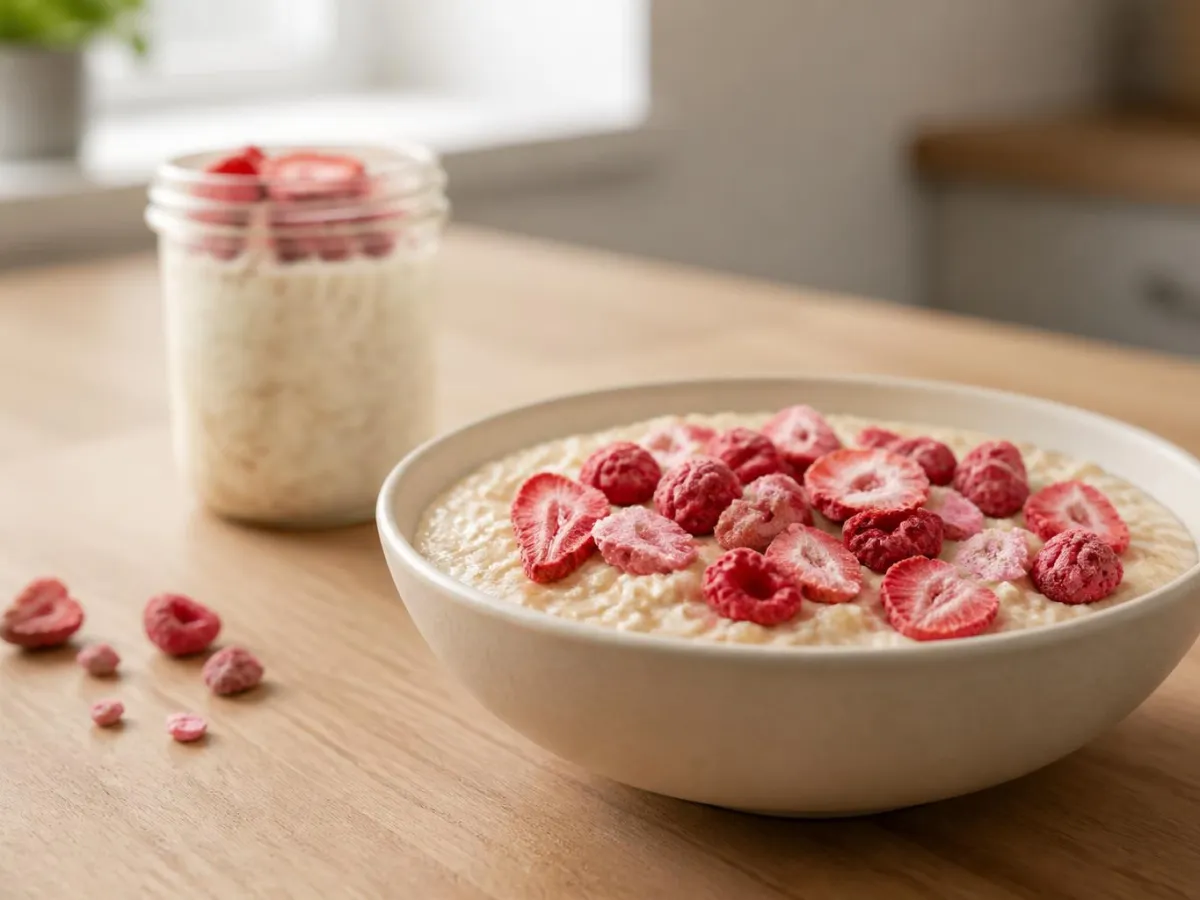
About 10g a bowl, stirred in at the end for bite or at the start to dissolve. Amounts by fruit, hot porridge versus overnight oats...
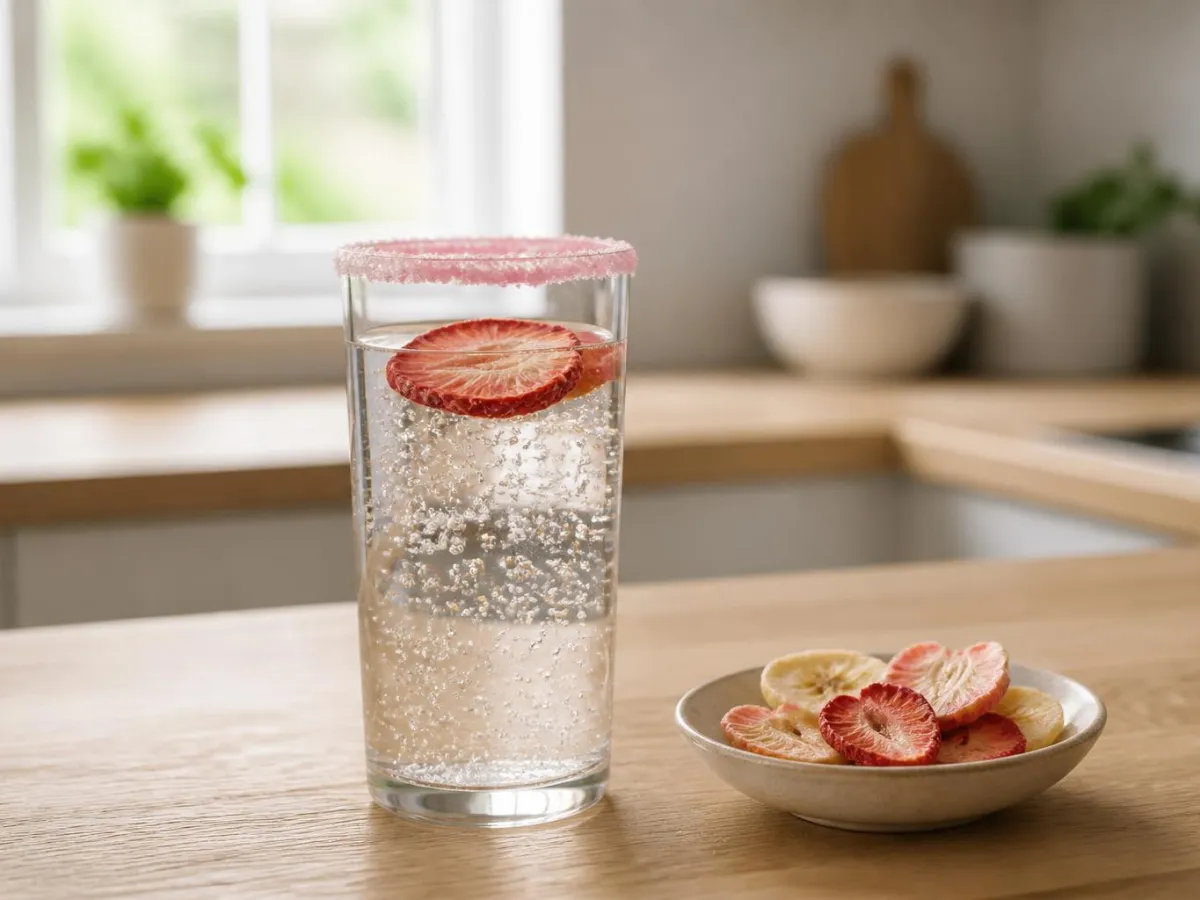
Garnishes that float, sugar rims, gin infusions, fruit teas and alcohol-free drinks, with amounts in grams and millilitres.
The quickest thing to do with freeze-dried fruit is scatter about 10g over porridge, yoghurt or cereal, where it softens in a minute or two and turns the bowl pink. The second is baking: because freeze-dried fruit carries flavour and colour without any water, it works where fresh fruit fails, blitzed to a powder for buttercream and icing, or folded in as pieces for cakes, biscuits and chocolate.
Below are 30 ideas, grouped by the moment you are likely to want them, all in grams and millilitres. Hold one thing in mind throughout: freeze-dried fruit is concentrated fruit. Berries are roughly 90% water and freeze-drying removes almost all of it, so about 10g of freeze-dried berries began life as about 100g of fresh. Weight for weight that means far more sugar and calories than fresh fruit, which is why the amounts below look small.
| What you are making | Typical amount | Best form | Why |
|---|---|---|---|
| A bowl of porridge or yoghurt | 10g | slices or pieces | one serving; softens in the heat |
| Buttercream for 12 cupcakes | 20g per 250g butter and 500g icing sugar | powder | flavour and colour without loosening the icing |
| A 20cm sponge or 12 muffins | 15 to 20g | pieces | folded in last so they keep their shape |
| A 400g batch of granola | 20 to 30g | pieces | stirred in after baking, never before |
| 200g of melted chocolate | 15 to 20g | pieces or whole | bark, buttons and coated berries |
| A 300ml smoothie | 10 to 15g | any | replaces frozen fruit without diluting it |
| One glass of fizz or a cocktail | 1 to 3 pieces | whole or slices | garnish that colours the drink as it sits |
| A 250ml mug of fruit tea | 5 to 10g | pieces | steep for five minutes, then eat the fruit |
These are starting points rather than rules. For other quantities, the fresh to freeze-dried converter does the sums both ways.
Grind powder only when you need it. Fruit powder draws in moisture from the air and clumps within days, so blitz what the recipe asks for and keep the rest as whole pieces.
Vegetables behave differently: they are savoury, they rarely want to be eaten as crisps on their own, and most of them prefer to be rehydrated. Freeze-dried peas are the exception and make a genuinely good snack. Freeze-dried sweetcorn goes straight into soups and chowders, and beetroot powder colours hummus, pasta dough and icing. The freeze-dried vegetables section takes each one in turn.
| Freeze-dried fruit | Roughly the same as fresh | What it is |
|---|---|---|
| 10g | about 100g | a typical serving |
| 30g | about 300g | one 5 A Day portion of dried fruit (NHS) |
Because the water has gone, the figures per 100g look dramatic. As typical values, freeze-dried berries commonly land somewhere around 330 to 400 kcal per 100g, against roughly 30 to 55 kcal per 100g for the same fruit fresh. The gap is the missing water rather than anything added. Those are typical ranges drawn from published composition data and product labels: products vary with the fruit, the variety and the producer, so the label on your own pack is what counts.
The NHS counts 30g of dried fruit as one of your 5 A Day and advises eating it as part of a meal rather than as a between-meal snack, to reduce the risk of tooth decay. That advice matters more here than with a raisin, because crisp fruit pieces are sweet, sticky once chewed and easy to graze on. We go into it further in freeze-dried fruit and teeth, sugar and 5 A Day.
Crisp freeze-dried pieces can be a choking risk for babies and young children. Soften them in a little milk or water, or grind them to a powder and stir them into yoghurt, porridge or a purée. Follow NHS weaning guidance on textures and foods to avoid, and speak to your health visitor or GP about your own child. There is more in our guide for babies and toddlers.
For dogs, stick to small amounts of plain fruit and avoid grapes, raisins, sultanas and currants altogether: they are toxic to dogs, and a dried grape is a raisin whichever way it was dried. Check with your vet before giving your animal anything new, and see our page on freeze-dried fruit for pets.
UK supermarkets stock a narrow range, usually strawberry and raspberry pieces in small pouches, and the baking aisle is often a better bet than the fruit aisle. Online specialists carry far more fruits and bigger bags; across UK online sellers, freeze-dried strawberries typically work out somewhere around £5 to £11 per 100g, with small sachets costing considerably more per 100g (last checked September 2026, and prices change). Our supermarket guide covers who stocks what, and the freeze-dried fruit section takes each fruit in turn.
Our own shop is not open yet, so nothing on this site is for sale and we cannot quote prices or delivery. If you would like to know when it opens, join the list below.
If you only try one thing: put 10g on tomorrow's porridge, then keep the pack sealed and tackle a bake at the weekend. Those two habits use up a 100g bag faster than any recipe will.
Scatter it over porridge, yoghurt, cereal and ice cream, fold pieces into cakes, biscuits and melted chocolate, blitz it to a powder for buttercream and icing, drop it into drinks as a garnish, and carry it as a light snack for lunchboxes and walks. About 10g is a serving, and it needs no preparation at all unless you want it soft.
Straight from the pack, like a crisp. It dissolves on the tongue and tastes more intensely of the fruit than fresh does, because the water has gone. If you prefer it soft, cover it with cool water for two to five minutes, or stir it into something moist such as porridge or yoghurt.
Often yes, and sometimes it works better, because it adds flavour and colour without adding water. That makes it ideal for buttercream, meringues, chocolate and biscuits. Recipes that rely on juice or bulk, such as a compote or a fruit layer in a trifle, need the fruit rehydrated in water first.
Roughly 10g of freeze-dried berries starts life as about 100g of fresh fruit, so about a tenth of the weight. The ratio varies with the fruit and the producer, so treat it as a guide rather than a rule.
The NHS counts a 30g portion of dried fruit as one of your 5 A Day, and advises eating dried fruit as part of a meal rather than as a between-meal snack, to reduce the risk of tooth decay. Because the water has gone, 30g of freeze-dried fruit is a generous amount: a typical serving is nearer 10g.
Crisp pieces can be a choking risk for babies and young children, so soften them in a little milk or water, or grind them to a powder and stir them into yoghurt or porridge. Follow NHS weaning guidance on textures and foods to avoid, and speak to your health visitor or GP about your own child.
Join the list for new guides and easy recipes. One or two emails a month, never more.
We only use your email to send you our newsletter. Unsubscribe any time. See our privacy notice.