Freeze-dried fruit gone soft? How to crisp it again
Soft, bendy freeze-dried fruit has taken on moisture from the air. Here is how to dry it out again in a low oven, and how to tell a texture problem from a bin job.
On this page
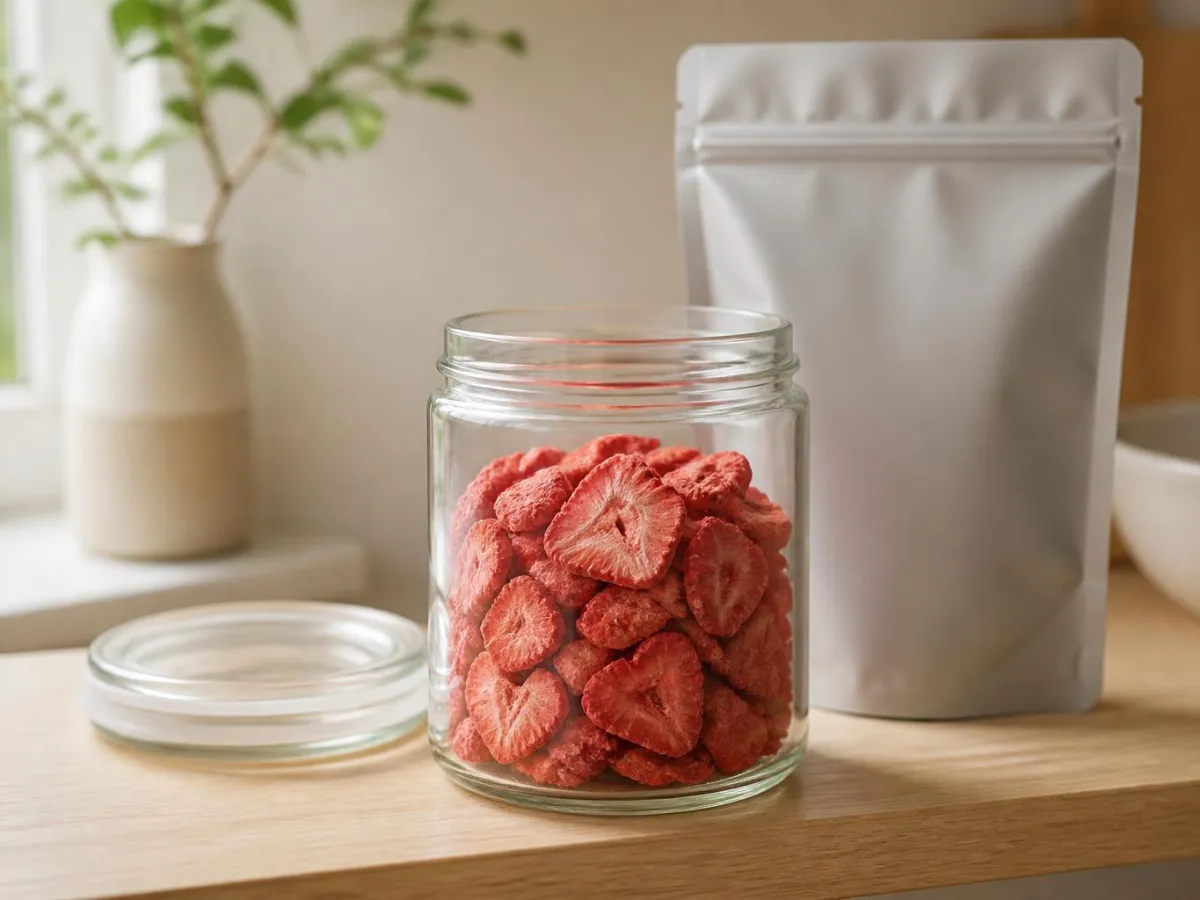
Freeze-dried fruit goes soft because its open, sponge-like structure has absorbed moisture from the air, and if the pack has been kept sealed and dry it is almost always still fine to eat. To crisp it again, spread it in a single layer on a lined baking tray and dry it in the oven at its lowest setting, around 50°C to 60°C in a fan oven, with the door propped slightly ajar, for 20 to 40 minutes.
Softening is a texture problem rather than a spoilage one, so a soft pack is rarely a write-off. A hotter oven needs less time and closer watching; either way, let the fruit cool completely on the tray before you judge it, because freeze-dried fruit crisps as it cools, then seal it in an airtight jar immediately.
The one exception is fruit that has actually spoiled. If there is any mould, an off smell, or water inside the pack, throw the lot away.
Why freeze-dried fruit goes soft
Freeze-drying draws the ice out of frozen fruit as vapour, leaving every piece riddled with the tiny empty spaces the ice used to fill. That open honeycomb is what makes freeze-dried fruit dissolve on the tongue, and it is also what makes it act like blotting paper: it pulls water vapour out of ordinary kitchen air until the two are in balance. British homes are damp in winter, with the heating on and the laundry drying indoors.
What speeds it up:
- Leaving the bag open while you make breakfast. Usually the cause.
- A damp corner of the kitchen, above the kettle, beside the hob or next to the dishwasher.
- A wet spoon or damp fingers. One is enough to spoil a whole jar.
- The fridge. It is humid, and a cold pack collects condensation when you take it out.
- High-sugar fruit. Sugar attracts water, so freeze-dried mango, banana and pineapple soften sooner than berries. Freeze-dried fruit powder clumps soonest of all, because milling multiplies the surface area.
Is soft freeze-dried fruit safe to eat?
Usually, yes. Moulds and bacteria need available water to grow, and fruit that has merely lost its snap in a dry cupboard is far too dry to support them. What you have lost is texture, and over time some colour and aroma.
| What you see or smell | What it usually means | Still good to eat? | What to do |
|---|---|---|---|
| Bendy or chewy, colour still bright | Moisture from the air | Yes, if the pack was sealed and dry | Crisp it in a low oven, or cook with it |
| Pieces sticking in loose clumps | More moisture, common in high-sugar fruit | Usually | Crisp it and use it within a few days |
| Dull, brownish, flavour flat | Age, warmth or light rather than damp | Yes, but past its best | Use it in baking or smoothies |
| Any fuzz, specks or visible mould | Water has got in | No | Throw the whole pack away |
| Sour, musty or fermented smell | Spoilage | No | Throw the whole pack away |
Two points of official guidance help here. GOV.UK is explicit that use-by dates relate to safety while best before dates relate to quality, and freeze-dried fruit carries a best before date. The Food Standards Agency's home food fact checker adds that a sniff check is reasonable for a best before food, though never for a use-by one, and that food containing mould should not be eaten. Do not pick the mouldy pieces out and keep the rest.
If you are feeding young children, anyone pregnant, anyone over 65 or anyone with a weakened immune system, be stricter rather than more relaxed. A doubtful pack goes in the bin.
How to crisp up freeze-dried fruit in the oven
It is the same trick that refreshes stale biscuits. You are not cooking the fruit, only driving off the water it has taken up.
- Heat the oven to its lowest setting and line a baking tray with greaseproof paper.
- Spread the fruit in a single layer. Piled-up fruit steams instead of drying.
- Prop the door slightly ajar, with a wooden spoon if it will not stay, so the moisture escapes.
- Check early and go by feel rather than by the clock.
- Cool it completely on the tray. This is the step people skip: fruit that feels limp at 50°C often snaps at room temperature.
- Seal it into an airtight jar once cold, never while warm, or it will sweat inside the jar.
Ovens vary a great deal, so treat the settings below as starting points to check against.
| Your oven or method | Setting to use | Rough time | What to watch |
|---|---|---|---|
| Fan oven with a 50°C setting | 50°C, door ajar | 20 to 40 minutes | Ideal, and little risk of browning |
| Fan oven starting at 80°C | 80°C, door ajar | 10 to 20 minutes | Check at 10 minutes |
| Conventional oven, lowest dial about 100°C | 100°C, door ajar, tray in the middle | 8 to 15 minutes | Check every 5 minutes; edges darken first |
| Gas oven | Lowest mark, door ajar | 8 to 15 minutes | Gas ovens run hot at the bottom, so check often |
| Dehydrator or home freeze dryer | 40°C to 50°C | 1 to 2 hours | The gentlest option if you own one |
| Airtight jar plus a food-grade silica gel sachet | Room temperature | 24 to 48 hours | Slow but effortless, and the best fix for powders |
Do not use the microwave, and do not use an air fryer. A microwave heats the sugars unevenly and scorches pieces from the inside before the moisture has gone, and an air fryer's fan simply blows light fruit into the element.
Keep the silica gel sachet from the original pack, or buy food-grade ones. They are not edible, so keep them away from children and out of the bowl.
Be realistic about the result. Re-drying gets most of the crunch back, but a little colour and aroma go for good, and the texture ends up closer to a crisp dehydrated slice than to the original freeze-dried snap, which our guide to freeze-dried versus dehydrated fruit explains.
Why freeze-dried fruit will not crisp up again
If a dried batch is still bendy, one of these is usually why.
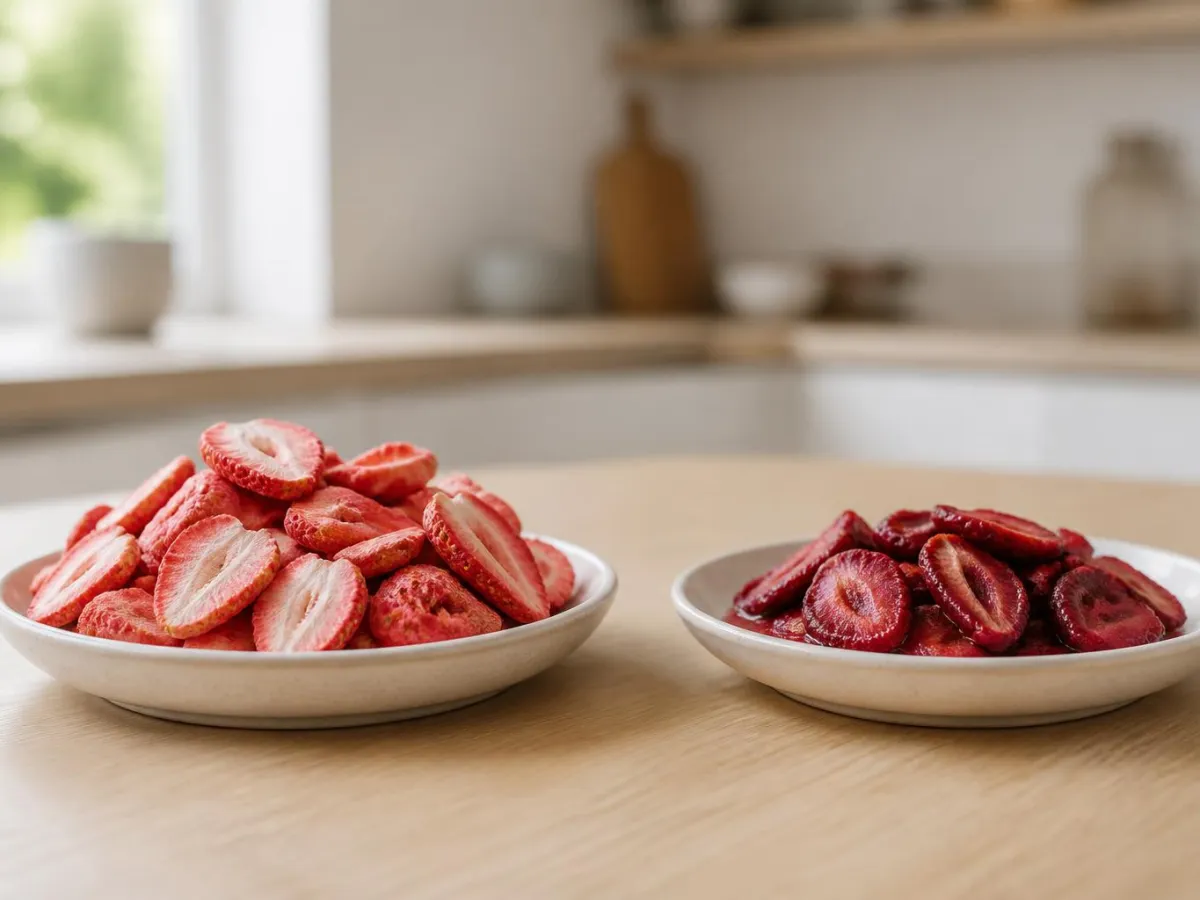
- It is not freeze-dried. Chewy dried fruit sold for baking is dehydrated or air-dried. It is meant to be soft and will never go crisp.
- It is coated or sweetened. Yoghurt-coated, chocolate-coated and sugar-infused fruit goes tacky rather than dry.
- The pieces are thick. Whole berries hold moisture deep inside and need longer than slices.
- It is high in sugar. Mango, banana and pineapple may stay slightly leathery whatever you do.
- It went too far. Fruit that was genuinely wet is a bin job.
What to do with freeze-dried fruit that stays soft
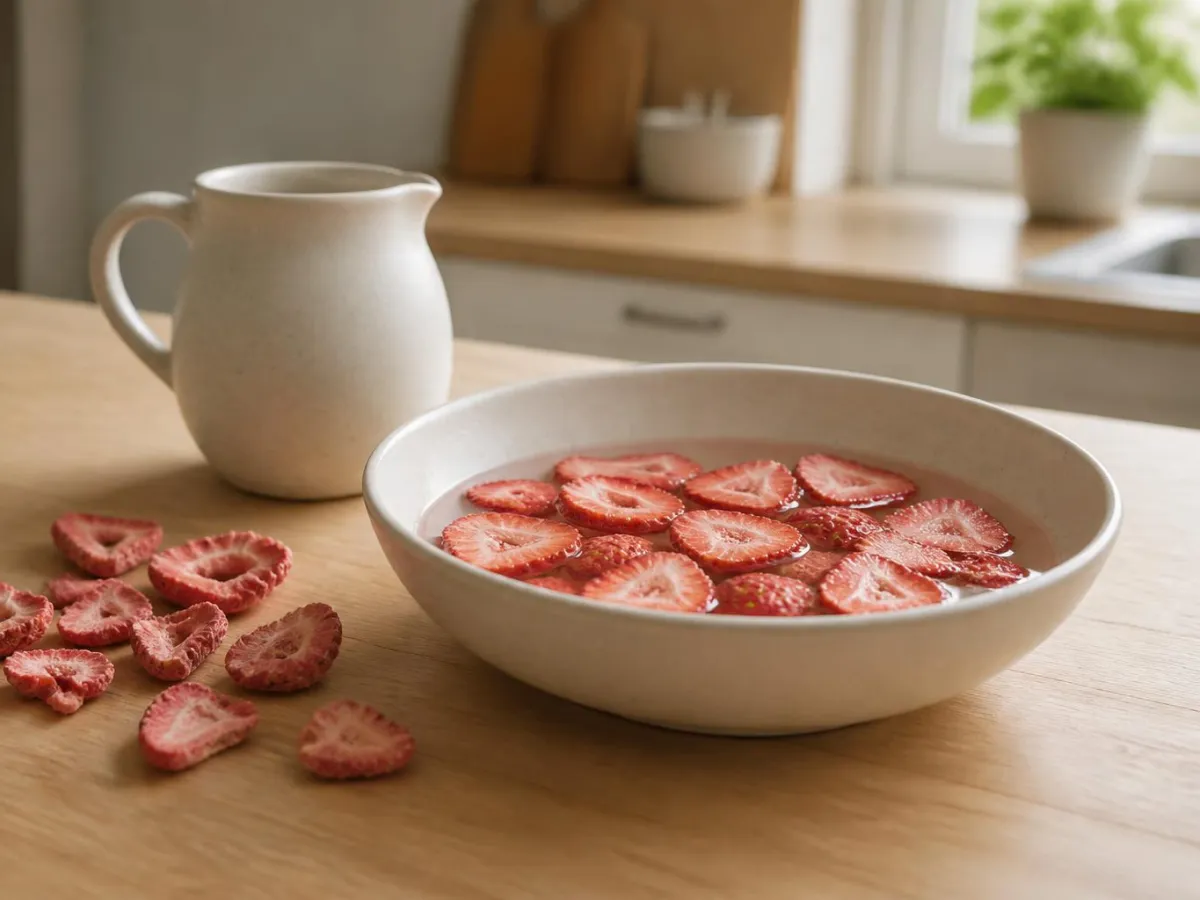
Softness stops mattering the moment the fruit goes into something moist. Keep the crisp pack for snacking and put the soft one to work in porridge and overnight oats, in smoothies and yoghurt, folded into cakes and flapjacks as in our guide to baking with freeze-dried fruit, or softened for compotes using the timings on our page about rehydrating freeze-dried fruit.
Two jobs it cannot do. It will not blitz into a clean powder, because the moisture makes it gum up in the grinder. And it should stay away from melted chocolate and buttercream, where a trace of water will seize the chocolate or slacken the icing.
A usual serving is about 10g, because the water has gone and everything else has stayed. Berries are roughly 90 per cent water to begin with, so 10g of freeze-dried fruit started life as about 100g of fresh fruit, a concentration of around ten to one; our fresh to freeze-dried converter does the sum for other fruit. Weight for weight, that means freeze-dried fruit carries far more sugar and far more calories than the fresh fruit it came from. Typical values vary between fruits and producers, so the label on your own pack is what counts. The NHS counts 30g of dried fruit as one of your 5 A Day, and advises eating dried fruit as part of a meal rather than as a between-meal snack, to reduce the risk of tooth decay. See freeze-dried fruit and 5 A Day and freeze-dried fruit and teeth.
How to stop freeze-dried fruit going soft
Prevention is far easier than rescue.
- Squeeze the air out and reseal the moment you have taken what you need.
- Decant into a clip-top jar if the pack seals badly, and fill it as full as you can.
- Keep the desiccant sachet in with the fruit, and use a dry spoon every time.
- Store it in a cool, dark, dry cupboard, away from the kettle, the hob and the dishwasher, and not in the fridge.
- In a damp home, keep the jar in another room. A bedroom cupboard beats a shelf above the kettle.
- Buy a pack you will finish in a few weeks rather than a big bag you open again and again.
Our storage section covers shelf life and long-term storage, and the full method is in our guide to storing freeze-dried fruit.
Crispberry's own shop is not open yet, so there is nothing for sale here and no prices or stock to quote. In the meantime, our guide to freeze-dried fruit in UK supermarkets covers what British shops tend to stock.
The practical takeaway
Soft is not spoiled. Check for mould, give the pack a sniff, and if it passes, dry the fruit on a tray at the lowest temperature your oven will hold with the door ajar, then let it cool completely before deciding whether it has worked. If it stays bendy, put it in the porridge and lose nothing. Then fix the cause rather than the symptom: a good jar, a dry spoon and a cupboard away from the kettle will do more for your next pack than any amount of rescuing.
Good questions, short answers
Why has my freeze-dried fruit gone soft?
It has absorbed moisture from the air. Freeze-drying leaves an open, sponge-like structure inside each piece, and that structure pulls in water vapour the moment the pack is opened in a normal kitchen. A pack left unsealed overnight, or stored above the kettle or next to the dishwasher, can lose its crunch in hours rather than weeks.
Can you eat freeze-dried fruit that has gone soft?
Usually yes. If the pack has been kept sealed and dry and the fruit simply feels bendy or chewy, softening is a quality problem rather than a safety one, and the fruit is fine in porridge, smoothies and baking. Throw it away instead if you can see any mould, if it smells sour, musty or fermented, or if liquid water has got into the pack.
How do you make freeze-dried fruit crispy again?
Spread it in a single layer on a lined baking tray and dry it in the oven at its lowest setting, around 50°C to 60°C in a fan oven, with the door propped slightly ajar so the moisture can escape. Start checking after 20 minutes. Let it cool completely on the tray, because it crisps as it cools, then seal it in an airtight jar straight away.
Why is my freeze-dried fruit chewy?
Either it has taken on moisture, or it was never freeze-dried in the first place. Chewy, leathery fruit sold for baking is usually dehydrated or air-dried, which is meant to be bendy and will not go crisp however long you dry it. High-sugar fruits such as mango, banana and pineapple also soften faster than berries, because sugar attracts water.
Can freeze-dried fruit go mouldy?
It can, but only if it gets genuinely wet, because moulds need available water to grow and properly dried fruit has very little. A pack stored somewhere damp, opened with a wet spoon or left where condensation can form is the usual cause. The Food Standards Agency advises throwing away food containing mould rather than picking the mouldy part out, so bin the whole pack.
Does freeze-dried fruit go off after the best before date?
A best before date is about quality, not safety, so freeze-dried fruit past that date is usually still safe to eat but may have lost colour, crunch and flavour. Because it carries a best before rather than a use-by date, the Food Standards Agency says a sniff check is a reasonable thing to do. Bin it if there is mould or an off smell.