Freeze-dried mango
Very sweet, tropical and light as a wafer. How to use freeze-dried mango, what is in it, and why it is nothing like the chewy dried mango in most UK shops.
- about 5.7:1fresh fruit to freeze-dried, by weight
- Cubes, slices, powdercommon forms
- Very sweet, tropicalflavour
- 30gone 5 A Day portion of dried fruit (NHS)
On this page
- What freeze-dried mango tastes like
- Freeze-dried mango vs the chewy dried mango in UK shops
- How to use freeze-dried mango
- As a snack
- In smoothies and drinks
- At breakfast
- In baking
- In savoury cooking
- How to rehydrate freeze-dried mango
- Freeze-dried mango nutrition
- Freeze-dried mango and your 5 A Day
- Where to buy freeze-dried mango in the UK
- How to store freeze-dried mango
- Freeze-dried mango for babies and toddlers
- Freeze-dried mango in one paragraph
Freeze-dried mango is fresh mango that has been frozen and then dried under vacuum, so almost all of its water turns straight to vapour and leaves crisp, intensely sweet pieces that keep the fruit's tropical flavour and orange colour with nothing added. Fresh mango is about 83 per cent water, so it takes roughly 5.7kg of fresh fruit to make 1kg of freeze-dried mango, and a typical serving is about 10g.
That makes it a very different thing from the bendy, amber strips sold as dried mango in most UK supermarkets. Same fruit, different process, completely different texture and label.
What freeze-dried mango tastes like
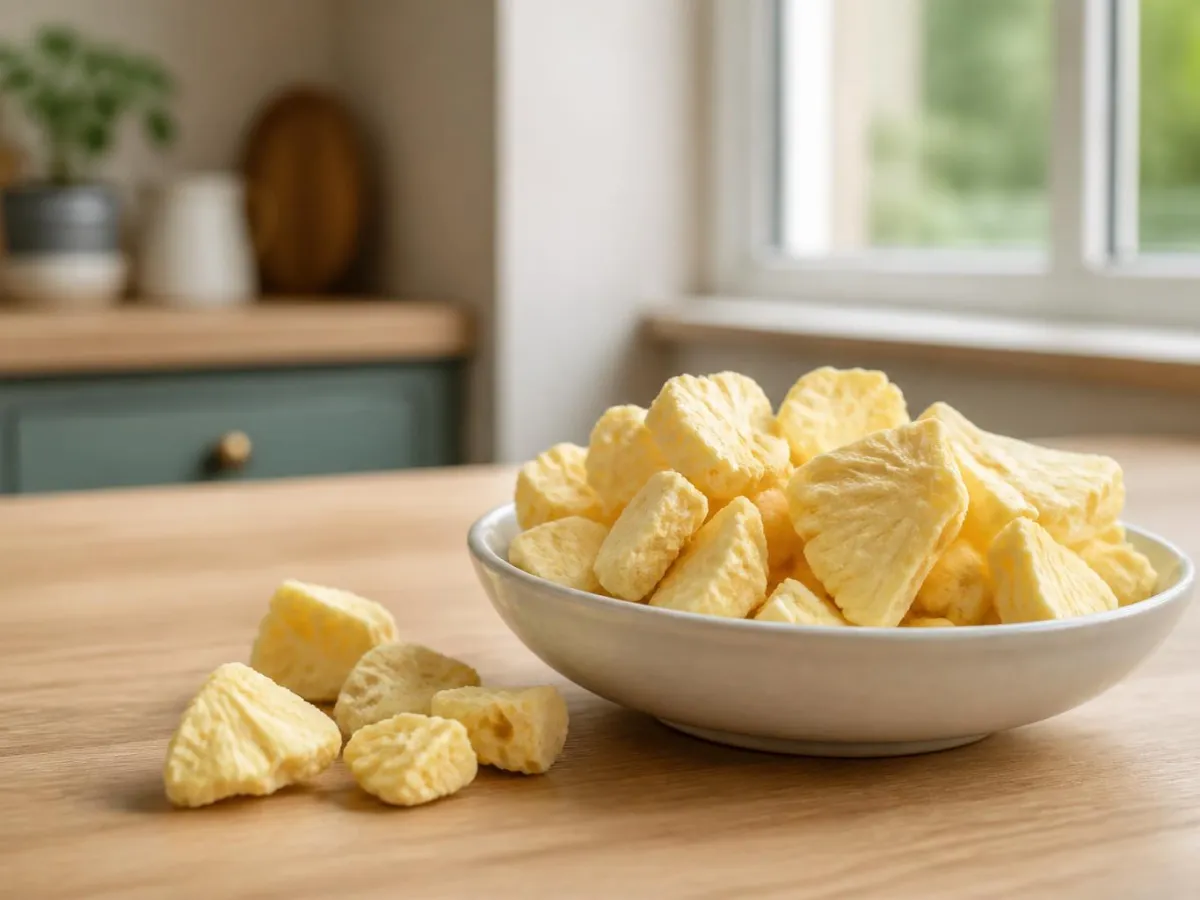
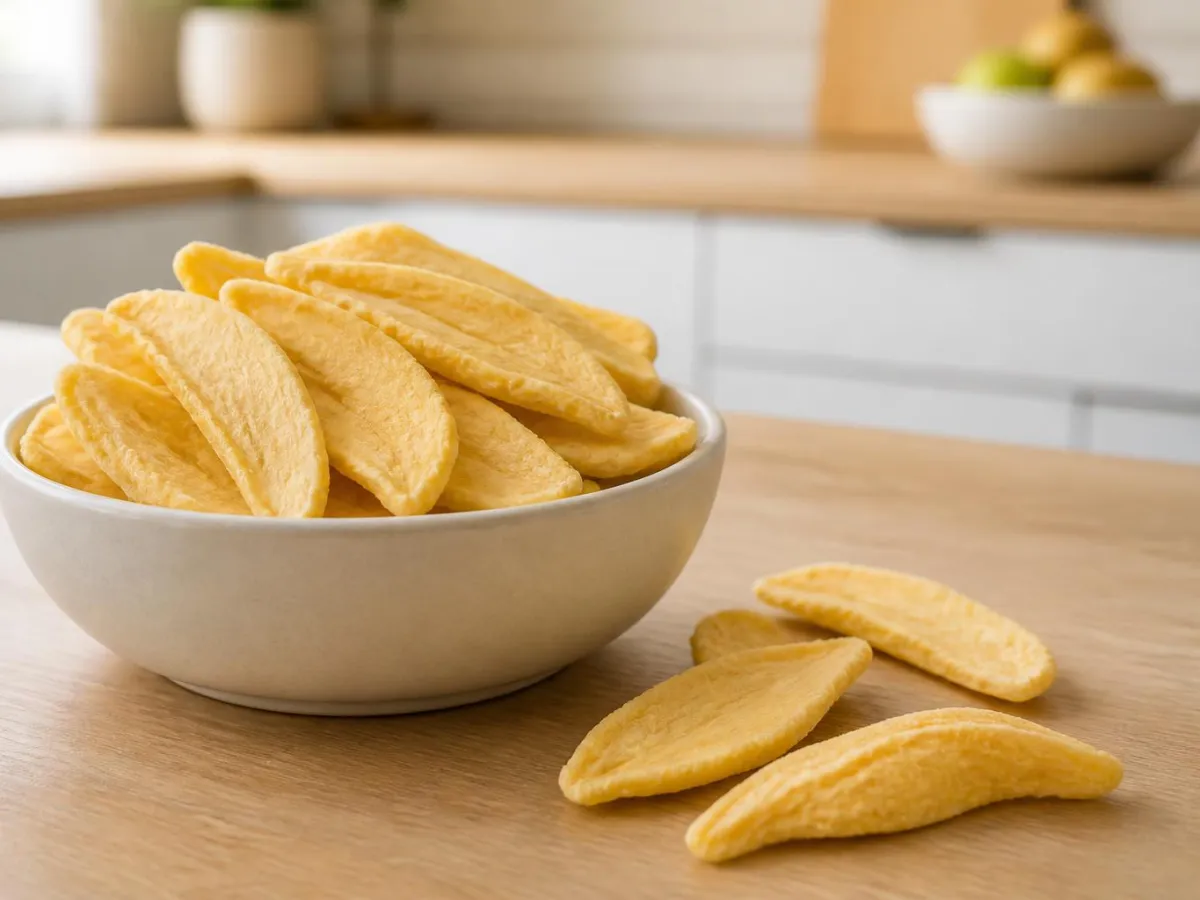
Open a pack and it smells like a ripe mango left in a warm kitchen. The pieces are pale to bright orange, weigh almost nothing, and snap between your fingers before dissolving on the tongue. The flavour is honeyed and floral, with the faint resinous note that good mango always has, and it is distinctly sweeter than freeze-dried berries because mango starts out with more of its own sugar and less acidity.
You will usually find it in three forms:
- Cubes or dice, the most common form. Sturdy enough for snacking, cereal and trail mix.
- Slices or wedges, thinner and more delicate, good for decorating and for drinks.
- Powder, the same fruit milled fine, for smoothies, icing and yoghurt.
Mango is cut into thicker pieces than berries, so it stays crunchy for longer in cold yoghurt and takes a few minutes more to soften in water.
Freeze-dried mango vs the chewy dried mango in UK shops
If you have only ever bought dried mango from the dried fruit aisle, this is the comparison that matters. Both are dried mango. Only one is crisp.
| Typical differences | Freeze-dried mango | Chewy dried mango |
|---|---|---|
| Water left in the fruit | about 2 to 3% | about 15 to 20% |
| Texture | light and crisp, dissolves quickly | dense, bendy, leathery |
| Colour | pale to bright orange | deep amber, often darker |
| Ingredients list | usually mango and nothing else | mango, frequently with added sugar, sometimes a preservative such as sulphur dioxide |
| Energy per 100g | about 310 to 350 kcal | about 280 to 330 kcal |
| A typical serving | about 10g | about 30g |
| Softens in water | yes, in minutes | not really |
| Where you meet it in the UK | online shops, baking suppliers, toddler snack packs | the dried fruit aisle of most supermarkets |
Two points are worth spelling out. Freeze-dried mango shows more energy per 100g than fresh mango only because the water has gone and everything left behind is concentrated into a lighter pack, not because anything has been added. And added sugar and preservatives such as sulphur dioxide must be declared on a UK label, so the ingredients list tells you which sort you are holding. Our guide to freeze-dried versus dehydrated fruit explains why the two processes give such different results.
How to use freeze-dried mango
As a snack
Eat it straight from the pack. It weighs almost nothing and needs no refrigeration, which is why it turns up in lunchboxes and in walkers' food bags alongside freeze-dried banana. Mix it with coconut flakes, nuts and dark chocolate for a tropical trail mix.
In smoothies and drinks
Cubes and powder blend straight in, with no thawing and no watery dilution. A tablespoon of cubes with yoghurt and milk gives you a mango lassi in seconds, and a few cubes dropped into sparkling water slowly soften and flavour it.
At breakfast
Scatter cubes over yoghurt, granola or cereal. In hot porridge and overnight oats the pieces soften and give up their sweetness to the oats, so you may want less honey or sugar than usual.
In baking
Mango lacks the sharpness of raspberry, so it works best where sweetness is welcome rather than where you need a counterweight. Fold cubes into flapjacks, tropical fruit loaves and white chocolate blondies, press pieces into shortbread or biscuits before baking, or beat the powder into buttercream and cheesecake fillings for colour and fruit flavour with no extra liquid.
In savoury cooking
Crush the cubes into a salsa with red onion, chilli, lime and coriander, and they rehydrate in the juices within minutes. Stir a spoonful into a curry near the end of cooking, or scatter powder over grilled chicken or halloumi.
10g of freeze-dried mango started life as about 57g of fresh mango. The fresh to freeze-dried converter does the sums for other amounts and other fruit.
How to rehydrate freeze-dried mango
Put the pieces in a bowl, add just enough cool water to cover, and leave them for five to ten minutes, longer than berries need because the cubes are thicker. Warm water works faster but takes the texture further towards mush. Drain and use as you would soft fruit.
Rehydrated mango is soft, closer to thawed frozen mango than to a fresh cheek of fruit, so save it for compotes, sauces, salsas, curries and drinks rather than for garnishing. Our guide to rehydrating freeze-dried fruit covers the timings for other fruit and for vegetables.
Freeze-dried mango nutrition
Freeze-drying takes the water out and leaves everything else where it was, so the figures per 100g look startling next to fresh fruit. Bear in mind that 100g of freeze-dried mango is a great deal of mango, somewhere around 570g of fresh fruit, and that nobody sits down to that in one go.
| Typical values | Fresh, per 100g | Freeze-dried, per 100g | Freeze-dried, per 10g serving |
|---|---|---|---|
| Energy | about 55 to 60 kcal | about 310 to 350 kcal | about 31 to 35 kcal |
| Carbohydrate | about 14 to 15g | about 78 to 86g | about 8 to 9g |
| of which sugars | about 13 to 14g | about 72 to 80g | about 7 to 8g |
| Fibre | about 1.5 to 2.5g | about 8 to 14g | about 1g |
| Protein | under 1g | about 2 to 4g | under 1g |
| Fat | under 1g | about 1 to 2g | under 1g |
These are typical ranges drawn from published composition data and from product labels. They move about with the variety, the ripeness of the fruit and the producer, so always go by the label on your own pack. In plain freeze-dried mango every gram of sugar is the fruit's own; nothing is added. It is still concentrated sugar, though, which is the whole point of sugar in freeze-dried fruit being worth understanding before you buy a big bag.
Freeze-dried mango and your 5 A Day
The NHS counts 30g of dried fruit as one of your 5 A Day portions, and advises eating dried fruit with meals rather than as a snack between them, because the sugars in dried fruit are more likely to cause tooth decay. That advice applies to freeze-dried mango exactly as it does to raisins or dried apricots.
Thirty grams is a generous amount of freeze-dried mango, roughly three servings, so it is easier to reach a portion with a smaller handful alongside a meal, stirred into yoghurt or scattered on porridge. There is more in our note on freeze-dried fruit and teeth.
Where to buy freeze-dried mango in the UK
- Supermarkets mostly sell the chewy kind in the dried fruit aisle. Freeze-dried mango appears far less often, usually in the baby and toddler snack range or as a fruit crisp, and stock varies by store, so check the shelf label rather than assuming. Our supermarket guide to freeze-dried fruit goes through what is typically carried.
- Online specialists and baking suppliers are where the plain 100g and 500g ingredient pouches live, usually alongside freeze-dried pineapple and banana.
As a rough guide, small snack bags of 10g to 20g tend to sit between about £1.50 and £3.50, and 100g ingredient pouches between about £7 and £12, last checked September 2026. Prices move and vary a lot between sellers, so compare the price per 100g rather than the price on the front of the pack.
What to check before you buy:
- The ingredients. It should say mango, and nothing else.
- Cubes or slices. Cubes for snacking and cooking, slices for decorating.
- Colour. Bright orange is a good sign. Dull brown suggests age, heat or light.
- A resealable pack, unless you plan to decant into an airtight jar.
- The best-before date, and whether the pack has been squashed.
Our own shop is not open yet, so nothing on this page is for sale here. Join the list below and we will let you know when the range is available.
How to store freeze-dried mango
Keep it sealed, somewhere cool, dark and dry. Moisture is the enemy: mango is sugary and picks up damp from the air readily, so a pack left loosely folded loses its snap and turns slightly sticky. Squeeze the air out and reseal it, or tip the fruit into an airtight jar. Our storage guide for freeze-dried fruit covers jars, clips and what to do when freeze-dried fruit has gone soft.
Freeze-dried mango for babies and toddlers
Crisp, hard pieces can be a choking risk for babies and young children. Soften the cubes in a little water, milk or yoghurt until they give easily, or blitz them to a powder and stir it through porridge, yoghurt or a purée. Follow NHS weaning guidance on textures and on foods to avoid, keep sweet foods to mealtimes to protect new teeth, and speak to your health visitor or GP for advice about your own child. There is more in our page on freeze-dried fruit for babies and toddlers.
If you are thinking of sharing a piece with the dog, read our page on freeze-dried fruit and pets first, and check with your vet.
Freeze-dried mango in one paragraph
Buy cubes with one word on the ingredients list, keep them in a jar with the lid on, and treat 10g as a serving rather than a handful. Use them dry where you want crunch and sweetness, in yoghurt, granola and baking, and soak them for five to ten minutes where you want soft fruit, in salsa, curry or a lassi. If you have only ever eaten the chewy sort, the crisp version will not taste like the same product at all.
Good questions, short answers
What does freeze-dried mango taste like?
It tastes like a very ripe mango with the volume turned up: honeyed, floral and noticeably sweeter than freeze-dried berries, because mango is a higher-sugar fruit to begin with. The texture is crisp and light, and the pieces melt on the tongue rather than needing much chewing. There is none of the sticky, slightly caramelised note you get from the chewy dried mango sold in supermarkets.
Is freeze-dried mango the same as dried mango?
No. Chewy dried mango is dried with warm air and still holds roughly 15 to 20 per cent water, which is what makes it dense and bendy, and it often has sugar added. Freeze-dried mango is frozen first and then dried under vacuum, leaving only about 2 to 3 per cent water, so it is crisp, much lighter and usually made from nothing but mango. Always check the ingredients list, because both are sold as simply dried mango.
Is freeze-dried mango high in sugar?
Weight for weight, yes, because removing the water concentrates everything left behind. Plain freeze-dried mango typically carries around 72 to 80g of sugars per 100g, all of it the fruit's own, against roughly 13 to 14g per 100g in fresh mango. A serving is small, though, at about 10g, which works out at roughly 7 to 8g of sugars, and the figures on your pack are the ones that count.
How do you rehydrate freeze-dried mango?
Cover the pieces with a little cool water and leave them for five to ten minutes, longer than berries need because mango is usually cut into thicker cubes. Warm water is quicker but softens them further. Rehydrated mango is closer to thawed frozen mango than to fresh, so it is best in salsas, curries, compotes and lassi rather than used as a garnish.
Can babies eat freeze-dried mango?
Crisp pieces can be a choking risk for babies and young children, so soften them in a little water or milk, or blitz them to a powder and stir it into yoghurt or porridge. Follow NHS weaning guidance on textures and on foods to avoid, and offer fruit with meals rather than as a between-meal nibble to look after new teeth. For advice about your own child, speak to your health visitor or GP.
Can dogs eat freeze-dried mango?
Plain mango flesh is not on the list of fruits that are toxic to dogs, but it is very sugary, so only a small piece now and then, and never the stone or the skin. What you must never give a dog is grapes or dried grapes, because grapes, raisins, sultanas and currants are toxic to dogs, and a raisin is simply a dried grape. Check with your vet before adding anything new to your dog's diet, especially if they are young, small or unwell.