How to judge dried fruit if diabetes is a concern
Check whether the label is per 100g or per portion before comparing products.
On this page
If diabetes is a concern, the safest way to judge dried fruit is to treat it as a concentrated ingredient, not as a casual handful. Check the nutrition panel carefully, make sure you know whether the numbers are per 100g or per portion, and read the ingredients list to see whether the packet contains only fruit or extra sugar, syrups, oils or flavourings. That will not tell you how a particular food fits your own diabetes care, but it will help you avoid basic label-reading mistakes.
At Crispberry, we write for home cooks and bakers who want practical ingredient guidance. That matters here, because dried fruit and freeze-dried fruit can look light and modest in a bowl while still carrying a lot of carbohydrate in a small weight. For anyone comparing dried fruit and diabetes concerns, the useful question is usually not “is it allowed?” but “what exactly is in this packet, how much am I actually using, and what does the label base mean?”
What this article can and cannot tell you
This article can help you read packets more accurately and make calmer kitchen decisions. It can show you how to compare per 100g figures with per portion figures, how to check pack weight, and how to spot added ingredients on the label. It can also help you think about dried fruit as an ingredient used in measured amounts, rather than as something judged by eye alone.
What it cannot do is give personal medical advice about diabetes. We cannot tell you what amount is right for you, whether a particular fruit suits your own meal plan, or how a food may affect your blood glucose. Those questions depend on your diagnosis, medicines, monitoring approach, and advice from your GP, diabetes nurse, dietitian or other care team.
That distinction matters. General food labelling guidance from the NHS on reading food labels is useful for everyone, but it does not replace individual care. So we will stay with practical packet-reading and kitchen use, and leave personal diabetes management where it belongs, with your clinicians.
Why dried fruit can be harder to judge than fresh fruit
Fresh fruit contains a lot of water. Once fruit is dried, much of that water is removed, so the sugars and other solids are left in a smaller, lighter piece of food. That is why dried fruit can seem deceptively modest. A few raisins, apricot pieces or banana chips may not look like much in the palm of your hand, but the label numbers can add up quickly.
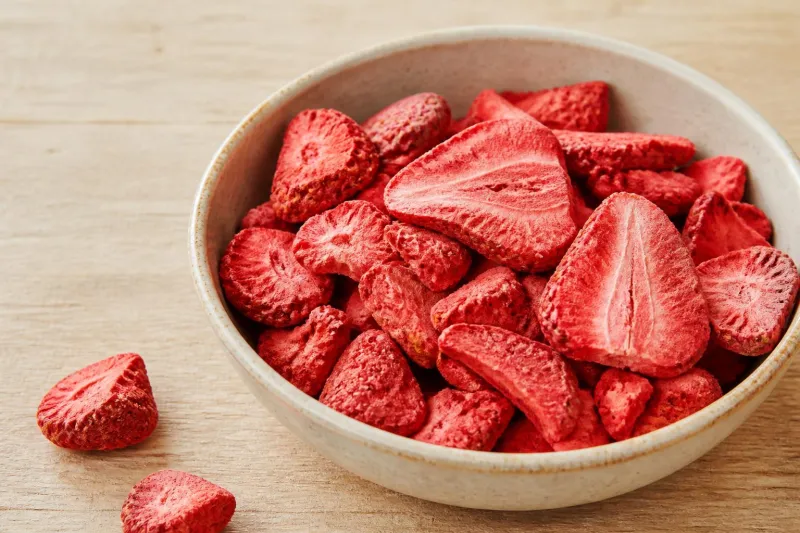
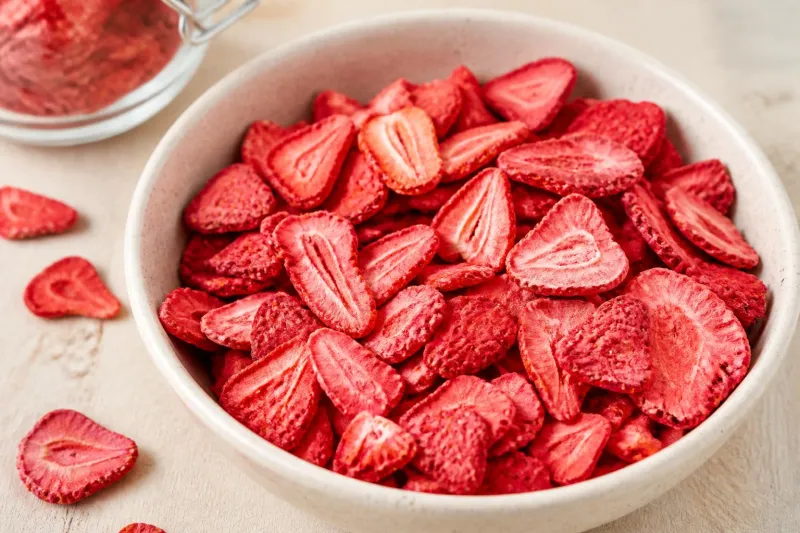
This is just as important with freeze-dried fruit. Freeze-dried ingredients are often airy, crisp and very light. That can make them easy to scatter over porridge, yoghurt or cake batter without noticing the weight used. Texture can be helpful in the kitchen, but it can also make estimation less reliable.
The practical issue is concentration. With fresh strawberries, for example, the water contributes bulk and weight. With freeze-dried strawberries, much of that bulk is gone, so a small jar can contain a lot of fruit solids. If you bake regularly with these ingredients, it helps to think in grams, not handfuls.
That does not mean dried fruit is somehow mysterious or impossible to use. It means the visual cue is weaker than with fresh fruit. A tablespoon of chopped dates, a sprinkle of freeze-dried raspberries, or a spoonful of fruit powder can all be perfectly manageable kitchen ingredients, but only if you measure and check the packet rather than assuming the amount is trivial because the volume looks small.
If you are new to these ingredients, our guide to first steps with freeze-dried fruit explains how their light texture affects everyday use.
How to read the packet without mixing up the numbers
The most common mistake is comparing unlike with unlike. The NHS guidance on food labels is clear that per 100g and per portion are different bases. Per 100g is the standard comparison tool. Per portion depends on what the manufacturer defines as a portion, and that may or may not match what you actually serve.
A simple way to read the packet is:
- Start with the nutrition table.
- Find the carbohydrate figure, and if shown, the sugars figure.
- Check whether the column is per 100g, per portion, or both.
- Find the actual pack weight.
- Decide how many grams you are likely to use, then work from that amount.
Per 100g is the cleanest way to compare one product with another. If one bag of dried mango and one bag of freeze-dried strawberries are both labelled per 100g, you can compare them directly. If one is labelled per 100g and the other mainly promotes a “serving”, stop and find the per 100g line before drawing conclusions.
Per portion is where confusion creeps in. A manufacturer’s portion might be 15 grams, 25 grams or something else entirely. If you eat or cook with more than that, the numbers on the front of pack may understate what you are really using.
Here is an illustrative example only. Suppose a packet lists carbohydrate as 70g per 100g, and the suggested portion is 20g. That would mean about 14g carbohydrate for that suggested portion. But if you pour 35 grams into your cereal, you are no longer eating the suggested portion. You would need to calculate from your actual 35 grams.
The same issue applies in baking. If a recipe idea uses 12 grams of freeze-dried raspberry pieces on top of six muffins, that is different from stirring 40 grams into the batter and then adding more on top. The label is only useful if you match it to the amount you really use.
Also check whether the packet gives values “as sold” or “prepared”. For plain dried fruit this is usually straightforward, but some mixes or cereal toppers may assume serving with milk or yoghurt. Read the wording carefully.
For cupboard planning, weighing ingredients is often simpler than trying to eyeball them. A digital scale is more reliable than a spoon estimate, especially with very light freeze-dried pieces. If you want help handling these ingredients accurately, our notes on how to store freeze-dried fruit also touch on keeping them dry and easy to portion.
What to check in the ingredients list
The ingredients list tells you whether you are buying fruit on its own or fruit plus extras. That matters for anyone trying to make sensible choices around dried fruit and diabetes concerns.
Start with the simplest question. Does the ingredients list name only the fruit, or are there other ingredients as well?
Examples of extras to watch for include:
- sugar
- glucose syrup
- fruit juice concentrates used as sweeteners
- vegetable oil
- preservatives
- flavourings
- starches or coatings
Some dried fruit is just fruit. Some is sweetened. Some is oiled to reduce sticking or improve appearance. Some freeze-dried products are plain fruit, while some powders or blends may contain carriers, anti-caking agents or flavour additions. You only know by reading the list.
For home baking, this matters beyond nutrition. Added syrups can make fruit stickier. Added oils can change how pieces behave in doughs or toppings. Powders with extra ingredients may absorb moisture differently from 100 per cent fruit powder. If you are choosing between forms, our guide on picking the right freeze-dried fruit texture for each bake may help.
Allergen checking matters too. In the UK, allergen information must be clear for prepacked foods, but you still need to read each packet every time, especially if a recipe includes nuts, cereals or other ingredients alongside fruit. The Food Standards Agency consumer allergy guidance explains why ingredient and allergen information should be checked carefully.
A few practical points are worth keeping in mind:
- “No added sugar” does not mean “no sugar”.
- “Fruit blend” does not tell you the proportions without the full list.
- “Natural” is not a nutrition category.
- Front-of-pack claims should never replace the full ingredients list and nutrition panel.
Where UK and EU rules differ in detail, labels on food sold in the UK still need to meet UK requirements. For a home cook, the practical habit is the same either way, read the actual packet you have in your hand, not a memory of a similar product bought elsewhere.
Practical kitchen ways to use dried and freeze-dried fruit
If you want to keep dried fruit manageable, the easiest approach is to use it as a measured ingredient rather than a free-poured snack addition. That is a kitchen method, not a medical rule, but it helps avoid accidental overuse.
In porridge, use a small weighed amount as a topping rather than stirring in a large loose handful. Freeze-dried berries work well here because they add flavour and texture without introducing extra moisture. If you prefer them softer, let them sit on the hot porridge for a minute or two before eating.
In yoghurt or overnight oats, remember that freeze-dried fruit will gradually absorb moisture and soften. If you want crunch, add it just before serving. If you want it fully softened, mix it in earlier and weigh the amount before you add it.
In baking, dried fruit and freeze-dried fruit behave differently:
- Traditional dried fruit adds chew and some moisture.
- Freeze-dried fruit adds flavour and colour, but little moisture.
- Fruit powder disperses quickly and can flavour icing, sponge, meringue or buttercream.
That texture difference matters when you are trying to keep portions modest. A small amount of freeze-dried berry pieces can go a long way as a topping. A spoonful of fruit powder can flavour a whole bowl of icing without needing a large visible quantity of fruit pieces.
A few practical ideas:
- Sprinkle a measured amount over porridge or Greek yoghurt.
- Fold a small weighed quantity into scone or muffin batter.
- Use crushed freeze-dried berries as a finish on plain biscuits.
- Stir fruit powder into icing with a little liquid, adding the liquid gradually in millilitres because powders can thicken mixtures quickly.
- Mix a little chopped dried fruit through muesli, then portion the muesli rather than topping each bowl by eye.
Moisture management matters as well. If you leave freeze-dried fruit exposed to air, it can lose crispness. Once opened, keep it sealed and dry, and follow any storage instructions on the packet. General food safety and storage practice from the Food Standards Agency is still relevant, but the product instructions should come first where they are specific.
For bakers, one sensible habit is to write the weight used into your recipe notes. If you find that 8 grams of freeze-dried strawberries is enough on top of a traybake, note it down. You do not need to rediscover the amount each time, and you are less likely to drift into using much more than intended.
You can browse our ingredient pages on different forms of freeze-dried fruit if you want a clearer sense of how whole pieces, slices and powders differ in the kitchen.
When a general guide is not enough
A general article is not enough when the question moves from label-reading into personal diabetes management. If you count carbohydrates in a particular way, use insulin, take medicines that affect your response to food, or have been given individual targets, rely on your own care team.
The same applies if you are comparing several products and still feel unsure what the label means. A clinician or dietitian who knows your circumstances can help you interpret foods within your own plan. A website article cannot do that safely.
It is also worth remembering what the NHS Eatwell Guide is for. It describes overall dietary balance across the day or week, not perfection in every single snack. That is useful context, but it does not override personal medical advice. If your care team has told you to prioritise certain approaches, follow that advice first.
So where does that leave dried fruit? In practical terms, judge the packet before you judge the ingredient. Read the nutrition table on the right basis. Check the actual weight you use. Read the ingredients list for extras. Treat light, crisp or chopped fruit as easy to overpour. And where diabetes decisions become personal rather than general, stop at the packet and take the next question to the professionals who manage your care.
That is the most sensible way to approach dried fruit when diabetes is a concern, and it is far more reliable than trying to decide by appearance alone.