How to pick freeze-dried fruit texture for each bake
Texture choice depends on moisture, size and when the fruit is added.
On this page
Picking the right freeze-dried fruit texture is mostly about what you want the fruit to do in the mixture. If you want even colour, smooth flavour and no visible pieces, powder is usually the practical choice. If you want bite, recognisable fruit shape or a crisp finish on top, pieces or slices usually work better.
That is the heart of choosing freeze dried fruit textures for different recipes, but there is no single fixed rule. A strawberry powder that disappears neatly into buttercream may turn patchy in a damp icing if it is not sifted well. Raspberry pieces that stay crisp on chocolate bark may soften in a traybake batter. The useful approach is to judge the recipe by moisture, mixing time, bake time and how visible you want the fruit to be.
What texture changes in a recipe
Texture changes more than appearance. With freeze-dried fruit, the size of the fruit affects crunch, colour spread, moisture pickup and how obvious the fruit looks in the finished bake.
Powder spreads flavour and colour quickly. It disperses through flour, sugar, icing sugar or meringue more evenly than larger pieces, so you get a more uniform result. In pale mixtures such as vanilla sponge, whipped buttercream or glace icing, powder can tint the whole batch. That can be exactly what you want if you are after a pink sponge or a berry-coloured icing without visible bits.
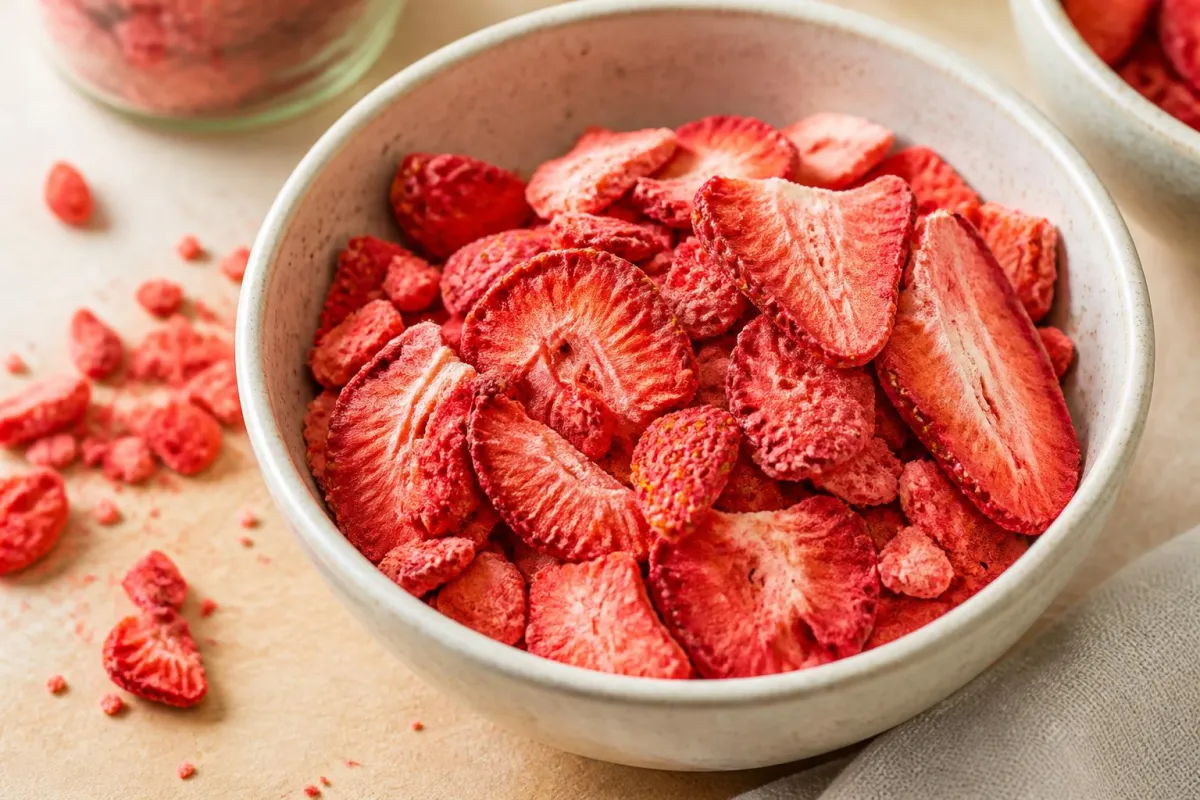
Larger pieces behave differently. They create little pockets of fruit flavour, and they stay visually distinct for longer. In a biscuit dough, that can give a speckled look with bursts of fruit. In a topping, pieces may stay crisp enough to add contrast. In a wetter batter, though, those same pieces can absorb moisture and soften before the bake has finished.
Crunch depends on where the fruit sits and how much moisture it meets. A dry coating on chocolate or a late sprinkle over cooled icing can stay crisp. The same fruit folded into yoghurt-style fillings, whipped cream style fillings or a high-moisture sponge batter will usually soften. That is not a fault. It is simply the fruit taking up moisture from the mixture around it.
Colour can also travel. Powders and fine crumbs are more likely to tint a mixture throughout. Small raspberry fragments can streak pale batters or frostings, especially if mixed vigorously. Larger slices often hold their shape better visually, but they can still bleed at the cut edges once they hydrate.
So there are practical tendencies, not fixed laws. We would treat texture choice as a kitchen judgement call. Ask four questions. Do we want visible fruit or background flavour? Do we need the fruit to stay crisp or can it soften? Is even distribution more important than shape? Will the mixture stay dry, or will it sit in contact with moisture for a while?
If you are still deciding between formats generally, our guide to choosing freeze-dried or dehydrated fruit for the kitchen helps with the broader ingredient choice before you get into texture.
When powder is the better choice
Powder is usually the better choice when the fruit needs to distribute evenly and visible pieces would get in the way.
In icing, powder mixes more smoothly than crushed pieces. A berry powder can be whisked into icing sugar before adding water or lemon juice, which helps reduce lumps and gives a more even colour. If you used slices or chunks instead, they would sit awkwardly in a piping bag and interrupt the finish on cakes or biscuits.
In sponge, powder is useful when you want fruit flavour through the crumb rather than separate pieces. A small amount folded into the dry ingredients can tint the batter and spread flavour without leaving damp pockets. This works especially well in plain vanilla-style sponge, sandwich cakes and loaf cakes where a smooth slice matters more than visible fruit pieces.
In buttercream, powder is often the easiest route because it adds flavour without introducing much extra liquid. That matters in a mixture where texture can split or loosen if too much moisture is added. Sifted powder gives a cleaner result than broken fruit, which can catch in the nozzle if you are piping.
Meringue is another good example. Fine powder can be folded in for colour and flavour with less risk of heavy fragments dragging the foam down. Larger pieces may still work as a topping after baking, but inside the meringue itself, powder is usually easier to manage.
Yoghurt-style fillings and set dessert fillings also tend to suit powder when you want a smooth spoonable texture. Pieces can soften and turn chewy or uneven after a short rest in the fridge. Powder disperses more neatly, though it still needs sifting if the fruit is prone to clumping.
Dry mixes are one of the clearest cases for powder. If you are assembling a pancake mix, porridge topper, crumble mix or flavoured sugar, even distribution matters more than visible fruit shape. Fine fruit powder can be whisked through dry ingredients so each spoonful is more consistent. With pieces, the fruit often settles unevenly unless the mix is handled very gently and used fairly soon after assembly.
This is also where label reading matters. Powders vary. Some are simply freeze-dried fruit milled finely. Others may be blended with carriers or anti-caking ingredients depending on the product. We always suggest checking the ingredient list and the nutrition panel on the actual packet, and remembering that per 100g and per portion are different comparison bases, as the NHS guidance on reading food labels explains.
For a general overview of formats, our page on using freeze-dried fruit powder in the kitchen is a useful next read.
When pieces or slices work better than powder
Pieces or slices are usually the better choice when shape, bite and contrast matter more than perfectly even distribution.
Traybakes often benefit from broken pieces or small chunks. They create visible fruit throughout the slice, and they can hold their identity better than powder, which may simply tint the whole batter. If you want someone to cut a square and clearly see strawberry or raspberry pieces, powder will not give the same result.
Cookies are another strong case for pieces. In many doughs, especially thicker biscuit doughs with moderate moisture, small fragments stay distinct enough to give concentrated fruity bites. Powder can work in cookies too, but it tends to flavour the dough as a whole rather than deliver those little pockets of fruit.
Granola-style mixes and baked oat clusters also suit pieces because they contribute texture as well as flavour. Powder can disappear into the coating or cling to oats, but pieces remain visible and can make the mix feel more varied. The caution is storage. Once the granola is baked and cooled, any moisture creeping in from the air will soften the fruit and the clusters over time, so airtight storage matters.
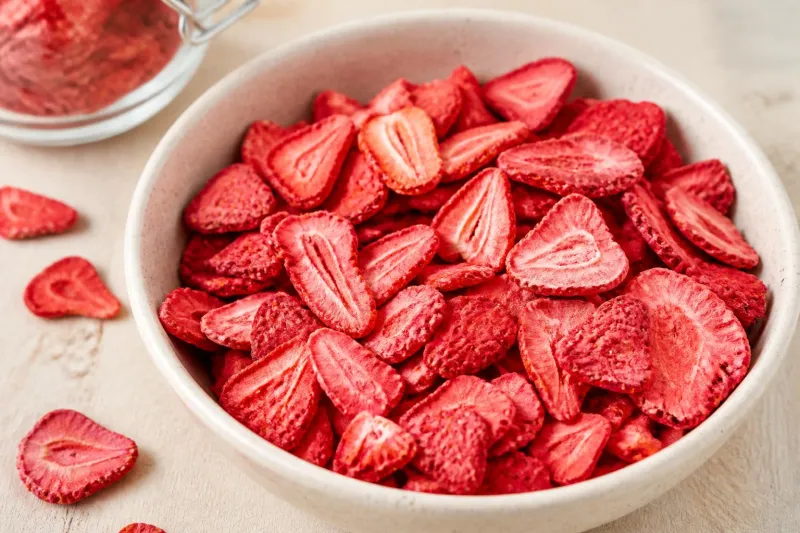
Chocolate bark is one of the easiest places to use slices and pieces well. Because the fruit sits on or in a relatively dry set chocolate layer, it often keeps more of its crisp texture than it would in a wet batter. Slices can also look striking here, especially strawberries. Powder is less useful unless you specifically want to flavour the chocolate itself or dust the surface.
Toppings in general suit larger formats. A cheesecake-style topping, a bowl of porridge, a pavlova, iced buns or a frosted loaf can all benefit from visible fruit. Pieces communicate flavour instantly. They also let you control where the fruit goes, instead of colouring the entire mixture.
The trade-off is that pieces are less even. One slice may be larger than another. Some may soften faster. A crumbly raspberry may break further as you mix it in. That variability is not necessarily a problem. In many home bakes it is part of the appeal.
If you are comparing formats for decoration or mixing in, our overview of freeze-dried fruit formats for home baking can help you narrow down what to reach for first.
How to match texture to wet, dry and baked mixtures
A simple way to choose texture is to sort the recipe into three broad types, wet mixtures, dry mixtures and baked mixtures where the fruit spends time in heat and moisture together.
Wet mixtures include buttercream, whipped fillings, yoghurt-style fillings, glazes and uncooked icings. Here, powder usually gives the neatest result because it disperses quickly. Small pieces can work if you want visible fruit, but expect them to soften. In a wet filling that sits for an hour or overnight, most freeze-dried fruit will no longer be crisp.
Dry mixtures include sugar rubs, cake mix jars, crumble toppings before butter is added, pancake mixes and dusting blends. Powder and very fine crumbs are usually easiest because they distribute evenly and are less likely to separate out. Larger pieces can settle to the bottom of a jar or bag and may need a gentle shake before use.
Baked mixtures need a bit more thought. In biscuits and cookies, small pieces often hold up well enough to stay noticeable after baking. In sponge batter, fruit pieces may soften during mixing and baking, particularly if the batter is loose. In muffins and traybakes, medium pieces can work well if you accept that they will soften and may tint the crumb around them.
If the fruit goes on after baking, it has the best chance of staying crisp. A handful of crushed freeze-dried raspberries over cooled buttercream or a few strawberry slices on chocolate bark will usually keep more texture than fruit baked inside a moist batter.
Clumping is another practical issue. Powder can clump if it meets moisture suddenly, especially in cold or fatty mixtures. Sifting into the dry ingredients first, or whisking it with icing sugar before any liquid is added, usually helps. Small fruit fragments can also clump together in sticky batters, so folding them through a little flour first can make distribution easier.
Colour bleed matters most in pale mixtures. Raspberry and strawberry powders can turn a cream filling pink very quickly. Pieces may create streaks rather than all-over colour. If you want a marbled effect, that can be useful. If you want a clean white finish with only a few visible fruit accents, keep the fruit on top rather than mixing it through.
Soften, stay crisp, bleed colour, clump. Those are the four behaviours worth watching. Once you know which of them matters in your recipe, the texture choice becomes much easier.
A practical comparison for one recipe idea
Take a simple vanilla biscuit dough as an illustration. For example, 200 grams plain flour, 100 grams butter, 75 grams caster sugar and 1 egg yolk, mixed into a firm dough. This is not a tested ranking or a finished Crispberry recipe, just a practical way to compare texture choices.
If we add fruit powder, the dough itself takes on colour and flavour more evenly. Strawberry powder, for instance, can make the dough look lightly pink and give a more all-through fruit note. The finished biscuits are likely to look uniform, with little or no visible fruit definition. This suits neat sandwich biscuits, cut-out shapes and situations where we want a smooth surface for icing.
If we add small fruit pieces, such as crushed freeze-dried raspberries, the dough stays more visibly speckled. Some pieces may soften slightly as the dough rests, but they still tend to leave distinct spots of colour and flavour after baking. That can give a more varied bite than powder, without the larger interruptions of full slices.
If we add larger pieces, the fruit becomes a stronger visual feature. That may be useful in rustic biscuits or cookie-style bakes where obvious fruit bits are part of the look. The trade-off is that larger fragments are more likely to break the dough surface, catch slightly on shaping, or create uneven distribution if not folded through carefully.
None of those outcomes is automatically best. The choice depends on the finish we want. Powder for a smooth, even biscuit. Small pieces for a speckled fruit effect. Larger pieces for visible bite and shape.
If you are just starting to compare textures and formats, our first steps with freeze-dried fruit in home baking guide is the best companion piece to this article.
Storage, labels and ingredient checks before you start
Freeze-dried fruit is very sensitive to moisture from the air. Once opened, reseal the pack promptly and store it according to the packet instructions. If the original packet is not easy to reseal well, move the contents to a clean airtight container and keep the label details with it. Our own practical storage guide for freeze-dried fruit covers the handling points in more detail.
Moisture exposure changes texture quickly. A crisp slice left loosely folded at the top of a packet can become leathery or soft long before the ingredient is actually unusable. That matters for baking because a softened fruit piece will behave differently from a crisp one, even in the same recipe.
Ingredient checks are important too. Not every fruit powder or fruit piece packet is identical. Read the ingredient list and allergen information each time, particularly if you are cooking for someone else. The Food Standards Agency guidance on food allergy and intolerance for consumers is the right primary reference here. We should not infer suitability from a general description alone.
For storage and food handling, follow the packet instructions and normal kitchen hygiene. The Food Standards Agency guidance on chilling, freezing and defrosting food safely is a useful general reference on safe storage practice in the home. If a bake includes dairy fillings, fresh cream or other perishable ingredients, those storage rules matter alongside the fruit itself.
Finally, read nutrition information carefully if you are comparing packets. As the NHS notes, a per 100g figure and a portion figure are not the same basis for comparison, and the actual packet is what counts for the ingredient in your hand. That is especially relevant with powders, where a small spoonful can look insignificant but still be a concentrated ingredient by weight.
In practice, the best texture choice starts before mixing. Check the format, check the label, keep moisture out, and match the fruit to the job you need it to do. That gives better results than any blanket rule.