How to compare iron in dried fruit without guesswork
Iron figures on dried fruit labels are often easiest to compare per 100g.
On this page
If you want to compare iron in dried fruit properly, start with the basis on the label. The most useful like-for-like check is usually the value per 100 grams, because that lets you compare apricots with raisins, prunes, figs or dates without portion sizes getting in the way. Then look again at the portion information, if the packet gives it, to see what you would actually eat in practice. The NHS makes this distinction clearly in its food label guidance, and it matters here because dried fruit is dense, sweet and easy to eat in very different amounts from one use to another NHS food labels guidance.
That is the best way to avoid guesswork when you are looking for dried fruit with a high iron content. Do not assume one type is always higher than another, and do not assume two similar packets will match. Check the nutrition panel, the ingredient list, and the serving basis shown on the pack. If you are choosing ingredients for the cupboard rather than a single snack, texture, moisture and storage matter as much as the mineral figure.
What counts as a useful comparison for iron in dried fruit?
A useful comparison starts with one question, are you comparing the same amount of food?
Under UK labelling practice, nutrition information is commonly shown per 100 grams, and may also be shown per portion. The NHS advises using the nutrition information to compare foods, while recognising that per 100 grams and per portion are different bases NHS food labels guidance. For dried fruit, that point is especially important.
A packet may show:
- iron per 100 grams
- iron per portion
- a manufacturer-defined serving size
- occasionally, a figure for prepared or combined use in a recipe suggestion
If you compare one fruit per 100 grams with another fruit per portion, the result is not meaningful. A 100 gram basis is generally best for the first pass because it strips out brand serving choices. After that, look at the portion line only if you know that portion reflects how you actually use the ingredient.
For example, 100 grams of chopped dates used in a traybake is a realistic recipe quantity. But 100 grams of raisins sprinkled over porridge may be far more than you would use in one bowl. The reverse can happen too. A packet may define a small serving that makes the iron figure look modest, even if the product is relatively rich in iron per 100 grams.
A practical way to compare is:
- Check the iron value per 100 grams on each packet.
- Confirm that you are looking at the same unit, usually milligrams for iron.
- Check whether the product is plain dried fruit or includes oil, flour, sugar, juice concentrates or other ingredients.
- Look at the portion information separately, as a kitchen-use question rather than a ranking question.
This is also where context helps. The NHS Eatwell Guide treats dietary balance across the day or week, not as something every individual food must achieve on its own NHS Eatwell Guide. So if you are comparing dried fruit high in iron, the aim is not to turn one ingredient into a complete nutritional answer. It is to read labels properly and choose the ingredient that suits both your recipe and your broader eating pattern.
Which dried fruits are often checked for iron?
The dried fruits people most often compare are usually:
- apricots
- raisins
- prunes
- figs
- dates
You may also see sultanas, currants, dried cherries, dried mulberries and mixed dried fruit checked for iron, but the five above are the usual starting point in UK kitchens.
Each has a different character in cooking.
Apricots are often chosen for chopping into muesli, fruit loaf, couscous-style dishes and tagines because they hold their shape well and bring a tart note. Raisins are a standard baking and lunchbox ingredient, softer and smaller, and easy to distribute through doughs and batters. Prunes are moist and dark, often used in compotes, stewed fruit, rich cakes and savoury dishes where softness is welcome. Figs bring seeds and chew, useful in fruit cakes, biscuits and cheeseboard-style bakes. Dates are sticky and sweet, often used in traybakes, sticky puddings, energy-style bites and date paste.
When people ask which of these is highest in iron, the honest answer is that there is no single ranking you should rely on without the packet in front of you. Values vary by variety, drying method, added ingredients and brand formulation. Even within one fruit type, one product may not match another closely enough for a generic list to be reliable.
That is why we suggest treating broad claims with caution. “Apricots are always best” or “raisins are low” is not a sound way to shop. Instead, compare the labels of the actual products available to you.
This matters with mixed packs too. A bag labelled “mixed dried fruit” may include different proportions of raisins, sultanas, currants, peel or cherries, and the iron figure will reflect that exact mix rather than a category average. Likewise, diced dates coated in rice flour or oat flour for free-flowing texture are not nutritionally identical to whole dates.
If you are also considering alternatives for baking structure or cupboard convenience, our guide to first steps with freeze-dried fruit explains where low-moisture fruit pieces behave very differently from conventional dried fruit.
Why labels can look inconsistent
Two packets of apparently similar dried fruit can show different iron figures for several ordinary reasons.
First, there is brand variation. Different suppliers use different fruit varieties, different growing regions and different processing methods. Even when the front of pack says simply “dried apricots” or “raisins”, the fruit itself may not be identical.
Second, ingredient differences matter. One packet may be plain fruit. Another may contain sunflower oil, rice flour, preservatives, apple juice concentrate or other additions. These can change the nutritional profile per 100 grams, sometimes only slightly, sometimes enough to matter if you are comparing closely.
Third, fortification can change the picture. Some foods have nutrients added, but you should not assume dried fruit is fortified unless the label makes that clear. If iron has been added, it should be reflected in the ingredient information and nutrition panel. This is one reason a product can look unexpectedly high compared with a more basic equivalent.
Fourth, moisture level affects concentration. Dried fruit is not all dried to exactly the same point. A moister prune or date will weigh more for the same amount of fruit solids than a drier piece. A drier product can therefore appear more concentrated per 100 grams, including for naturally occurring minerals. That does not automatically make it the better choice for your kitchen use, but it does explain why figures may differ.
Fifth, serving-size presentation can confuse the comparison. One brand may show iron per 30 grams, another per 40 grams, another only per 100 grams. If you glance quickly, it can look as though one is much higher when you are actually reading different bases. This is exactly the kind of confusion the NHS label guidance helps avoid NHS food labels guidance.
There are also routine labelling differences in how information is rounded and presented. Small differences do not necessarily mean one label is wrong. They may reflect lawful rounding, supplier data updates, or a reformulated product.
Do not forget allergens and suitability checks either. While dried fruit sounds simple, some products are packed in facilities handling nuts, sesame or cereals, and some include added ingredients that change suitability for individual needs. The Food Standards Agency advises consumers to read ingredient and allergen information carefully rather than relying on assumptions Food Standards Agency allergy guidance.
How to choose for cooking, baking and cupboard use
Iron is worth checking, but it should not be the only factor. In the kitchen, dried fruit succeeds or fails on handling.
For baking, ask how much moisture the fruit will bring into the mixture. Dates and prunes are soft and damp compared with many raisins or dried apricots. That can be helpful in brownies, loaf cakes and soft bars, where they contribute tenderness and stickiness. It can be unhelpful in crisp biscuits or low-moisture granola, where excess softness can spoil the texture.
For chopping, firmness matters. Dried apricots and figs usually cut into neater pieces than sticky dates. If you need tidy cubes for scones, buns or a yeasted loaf, a less adhesive fruit may save time. If you want the fruit to melt into a paste-like layer, dates are often easier to work with after a brief soak.
For soaking, think about purpose. A short soak in hot water can soften tougher dried fruit for blending or folding into cake batter. It can also reduce the risk of firmer pieces drawing moisture from the mixture during baking. But soaking changes weight and texture, so if you are trying to compare nutrition on a label, remember the packet values relate to the product as sold, not after home soaking.
For sweetness, the fruits differ noticeably. Dates and raisins tend to read sweeter than prunes or some apricots. If you are trying to balance flavour in a savoury traybake, stuffing or grain salad, that matters more than a narrow difference in iron.
For cupboard planning, think about how quickly you will use the pack once opened. Some dried fruits are more prone to clumping or drying out further than others. Follow the storage instructions on the product, and keep packs sealed after opening. The Food Standards Agency’s general storage advice is to follow product instructions and store foods appropriately for safety and quality Food Standards Agency storage guidance.
At home, we would usually choose like this:
- raisins or sultanas for everyday baking, porridge and quick scattering
- apricots for chopping, fruit loaves and savoury dishes
- dates for sticky batters, blending and sweet paste-like fillings
- prunes for soft compotes, rich cakes and stewed fruit
- figs where chew and visible seeds are part of the appeal
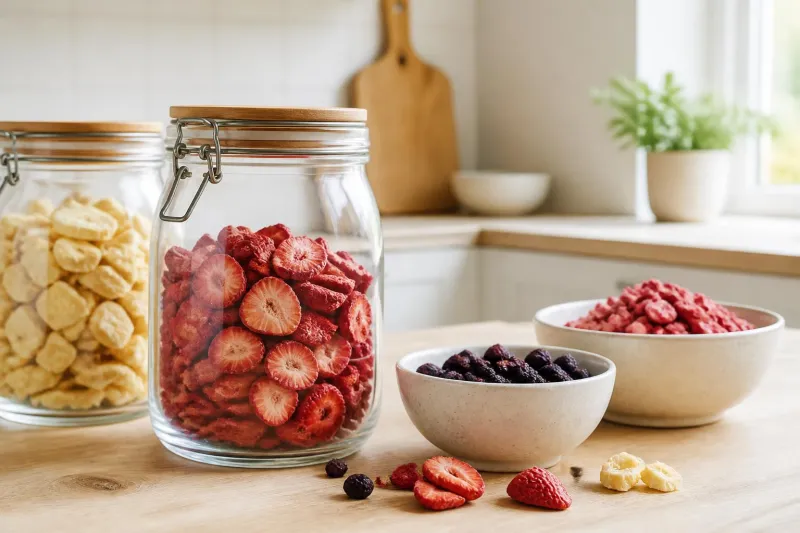
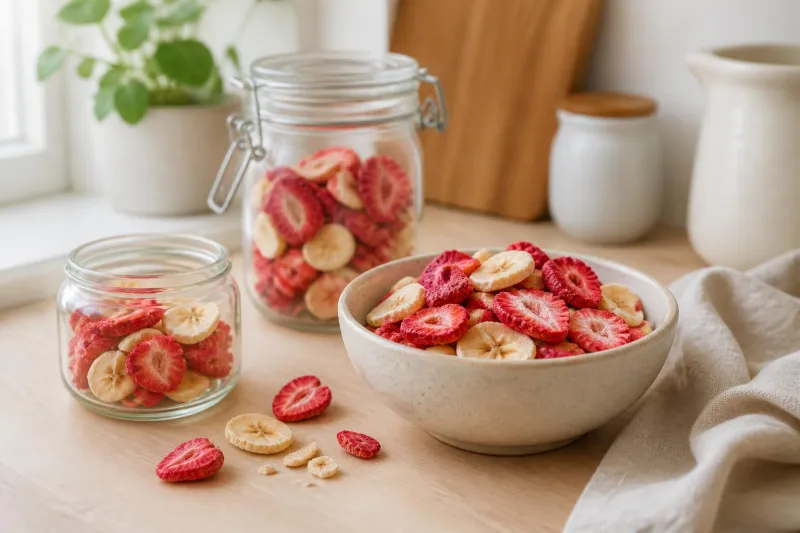
If your main aim is convenience, lower moisture ingredients can also help. They are often easier to store, easier to crumble or blitz, and less likely to introduce unexpected wetness into a recipe. That is one reason some bakers keep both traditional dried fruit and freeze-dried ingredients in the cupboard. Our guide on how to store freeze-dried fruit covers the practical side of keeping low-moisture fruit in good condition once opened.
When freeze-dried fruit fits and when it does not
Freeze-dried fruit belongs in this conversation because people often compare all shelf-stable fruit together, even though the kitchen role is different.
The main reasons to choose freeze-dried fruit are texture, moisture control and convenience. It is useful when you want crisp pieces for toppings, a clean fruit flavour without added wetness, or fruit that can be crushed into crumbs or powder. In meringues, buttercream finishes, chocolate bark, traybake toppings and dry mixes, that low-moisture character is often the deciding factor.
What freeze-dried fruit is not, is a direct stand-in for every kind of dried fruit. It does not behave like a sticky date, a chewy raisin or a soft prune. It will not bind flapjack in the same way, and it will not automatically suit recipes built around the chew and sweetness of conventional dried fruit.
The same caution applies to iron. Do not assume freeze-dried fruit matches the iron level of another dried fruit simply because both are shelf-stable fruit products. Check the packet. Different fruits, different processing and different moisture levels can all affect the per 100 grams figure. The right comparison basis is still the label in front of you.
In practice, freeze-dried fruit fits best when you need:
- a dry topping for porridge, yoghurt or bakes
- fruit pieces that stay distinct in a dry mix
- a strong fruit flavour without extra liquid
- an ingredient that can be crushed easily for decoration
It fits less well when you need:
- chewiness
- stickiness
- a paste or filling made from the fruit itself
- the soft, dense bite associated with classic dried fruit baking
If you are curious about using it more confidently, our overview of freeze-dried fruit for home baking and topping is a good starting point, and our guide on how to rehydrate freeze-dried fruit without guesswork explains when adding back water helps.
The simplest rule is this. For iron, compare labels carefully. For cooking, choose by function. A dried fruit high in iron may still be the wrong ingredient for the texture you need, while a lower-moisture fruit may be exactly right for the bake in front of you. When you separate the nutrition comparison from the kitchen decision, the packet starts making much more sense.