How to judge dried fruit without health hype
There is no single healthiest dried fruit for every kitchen or diet.
On this page
If you are trying to identify the healthiest dried fruit, the short answer is that there is no single winner for every kitchen or every diet. A better question is, healthiest for what, and compared on what basis? One packet may be just fruit, another may include added sugar or oil, and a third may be freeze-dried and behave very differently in a bowl of porridge or a cake batter.
At Crispberry, we find it more useful to judge dried fruit by three practical checks. First, read the ingredient list in full. Second, compare nutrition on the same basis, usually per 100g before you look at any serving suggestion. Third, think about how you will actually use it. That fits the wider NHS point that a balanced diet is judged across a day or week, not by expecting one food to do everything on its own (NHS Eatwell Guide).
What does healthiest really mean for dried fruit?
For dried fruit, “healthiest” usually gets used too loosely. People may mean the least processed option, the one with no added sugar, the one they find most filling, the one that suits a nut-free bake, or simply the one they are most likely to keep in the cupboard and use. Those are not all the same thing.
The NHS Eatwell Guide is useful here because it keeps the conversation grounded. It does not ask every individual food to be perfect. It sets dietary balance in the context of the overall pattern of eating (NHS Eatwell Guide). That matters with dried fruit because it is easy to drift into hype. A raisin, apricot, date, freeze-dried strawberry and sweetened dried cranberry are all “dried fruit”, but they are not interchangeable nutritionally or practically.
So rather than looking for a universal champion, we suggest judging dried fruit through a few sensible questions:
- Is it just fruit, or has anything been added?
- What does the nutrition panel say per 100g?
- What does a realistic amount look like when you eat or bake with it?
- Does the texture suit the job?
- Will it store well once opened in your kitchen?
That last point often gets missed. A dried fruit that clumps, softens or goes stale before you finish it may be less useful to you than one that stays easy to portion and reseal.
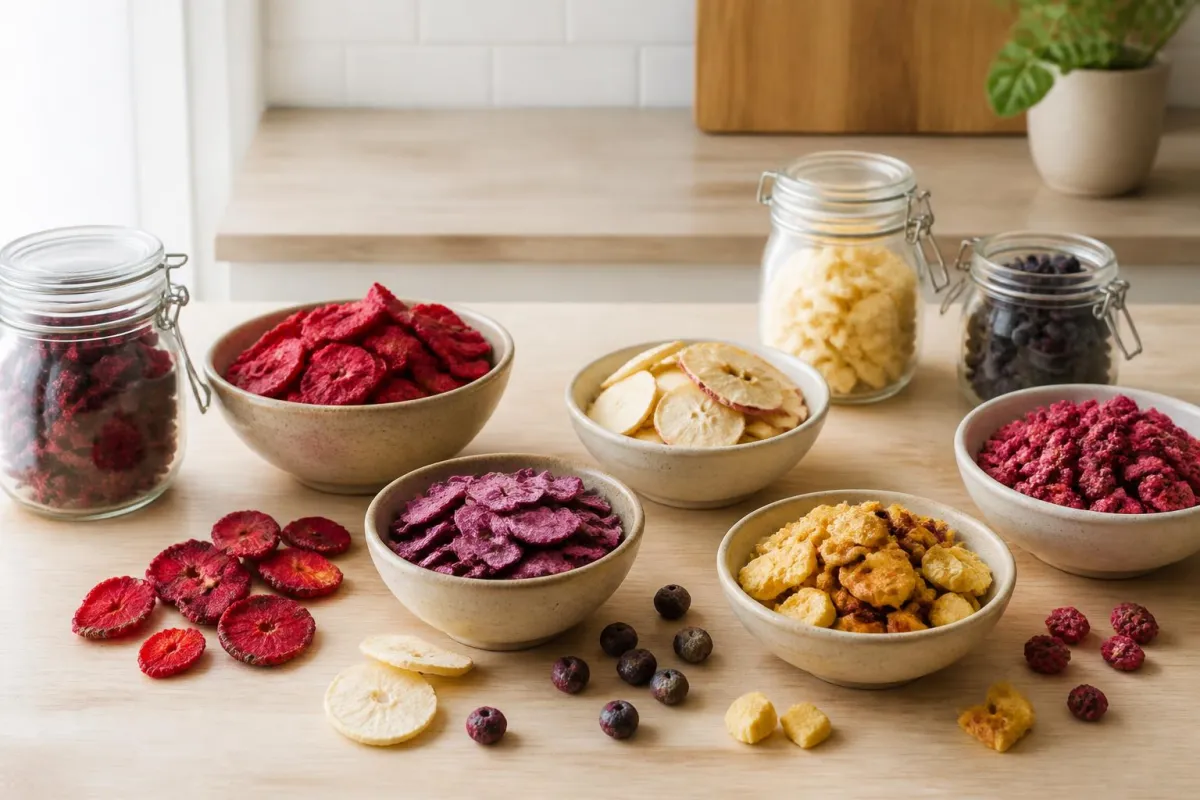
It is also worth separating “dried” into different styles. Traditional dried fruit usually has a chewy texture because some moisture remains. Freeze-dried fruit is much drier and much lighter, often crisp rather than chewy. That does not automatically make one healthier than the other. It simply changes how concentrated the fruit is by weight, how it feels to eat, and how it behaves in recipes.
In other words, the healthiest dried fruit for your cupboard is usually the one that matches your priorities without relying on marketing shortcuts. For many readers, that means plain fruit, a short ingredient list, and a label comparison done properly.
How to compare labels without misleading yourself
The first rule is simple. Compare like with like. In the UK, the most reliable starting point is the nutrition information per 100g. The NHS explains why this matters, because a portion and 100g are different bases and serving sizes vary between products (NHS food labels).
This is especially important with dried fruit because packet serving suggestions can be all over the place. One brand may suggest 30 grams, another 20 grams, and another may frame the product as a topping rather than a snack. If you compare one packet “per serving” and another “per 100g”, you can easily talk yourself into the wrong conclusion.
A practical way to compare is:
- Read the per 100g row first.
- Check the ingredient list.
- Only then look at the suggested serving, if it is relevant to how you use it.
For example, imagine two packets.
- Packet A is plain dried apricots.
- Packet B is dried cranberries with sugar added.
If you only compare the front of pack language, both may sound fruit based. If you compare per serving, Packet B may even look modest if the suggested serving is tiny. Per 100g, the difference is usually clearer. The ingredient list then tells you why.
The same applies within freeze-dried ingredients. A packet of freeze-dried strawberries intended for topping porridge may have a very different serving suggestion from one intended for baking decoration. That does not mean one is better. It means the manufacturer expects it to be used differently.
When reading labels, check:
- energy
- fat
- saturates
- carbohydrate
- sugars
- fibre, where listed
- protein
- salt
For dried fruit, the ingredient list often tells you more than the headline nutrition. If the packet says “mango”, that is straightforward. If it says “mango, sugar”, that is a different product. If it says “cranberries, sugar, sunflower oil”, it will behave differently again.
Front of pack colour coding can help with some foods, but it does not replace reading the actual panel. And with specialist ingredients, imported products, or products sold for baking, the front of pack format may vary. In the UK, always rely on the packet itself before drawing conclusions.
One more point for UK readers. You may sometimes see products sold in the UK with labelling shaped by non-UK markets. Since rules can differ between the UK and the EU generally, especially after regulatory changes, use the specific product label you have in front of you rather than assuming all packs present information in exactly the same way. The basic habit still holds, compare on the same basis and read the full ingredient list.
Ingredients that change the answer
If you want the healthiest option by a plain-food standard, the biggest separator is usually not the fruit variety. It is what has been added to it.
The most common additions are:
- sugar or syrup
- oil
- preservatives
- acidity regulators or similar processing aids
Added sugar changes the nutritional picture and often the eating experience as well. Sweetened dried cranberries are a familiar example. They can be useful in baking or salads, but they are not the same as unsweetened fruit. The answer to “which is best?” depends on whether you want a cupboard ingredient for flavour balance, or simply fruit with no extras.
Oil is sometimes added to reduce sticking. That can make pieces easier to separate, but it also means the ingredient list is no longer just fruit. Some people do not mind that. Others prefer a one-ingredient product for baking or topping.
Preservatives can also matter. Sulphites are a common example in some dried fruits, particularly where colour retention is important. That is not a reason to panic, but it is a reason to read carefully if you or someone you cook for needs to avoid them. The Food Standards Agency guidance is clear that ingredient and allergen information should be checked properly, and personal suitability should not be guessed from a broad product description (Food Standards Agency consumer allergy guidance).
That full check matters because allergen and “may contain” statements can sit beyond the main ingredients. A dried fruit may be plain in itself but packed in a site that also handles nuts, sesame or other allergens. For a household managing allergies, that can be just as important as whether the fruit is sweetened.
This is one reason we avoid sweeping statements about the healthiest dried fruit. A sulphite-free option might be the right choice for one cook. A no-added-sugar option might be the priority for another. A freeze-dried fruit powder with nothing but fruit may be ideal for icing, but less suitable than chopped soft dates in a flapjack.
The sensible approach is to define your own criteria first. If your shortlist is “just fruit, no oil, no added sugar, no sulphites”, you can usually narrow the field quickly by reading the back of pack rather than the marketing on the front.
Where freeze-dried fruit fits in
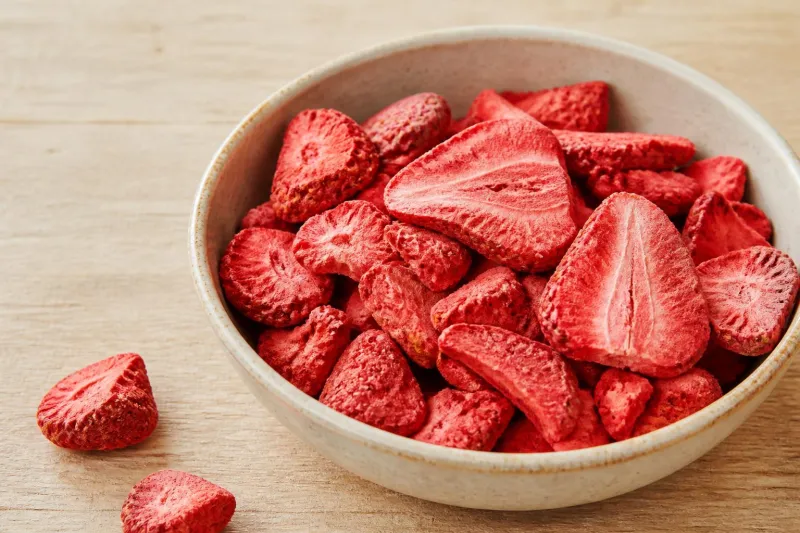
Freeze-dried fruit sits in a slightly different category from the chewy dried fruit many people picture first. The key difference is moisture. Freeze-dried fruit is dried to a much lower moisture level, which gives it a light, crisp or brittle texture rather than a soft chew.
In the kitchen, that changes quite a lot.
Texture is the first obvious difference. Freeze-dried raspberries can crush into sharp crumbs, while standard dried fruit tends to stay leathery or sticky. That makes freeze-dried fruit particularly useful for toppings, decoration and mixing into dry ingredients where you do not want extra moisture. If you are new to using it, our first steps with freeze-dried fruit guide explains the basics clearly.
It also changes how the fruit behaves once it meets liquid. Freeze-dried fruit rehydrates quickly. In porridge, yoghurt or buttercream, that can be useful. In a wet cake batter, it may soften fast and colour the mixture more than expected. In some bakes that is exactly what you want. In others, it can make a topping lose its crunch.
That is why freeze-dried fruit is often more suitable for:
- topping porridge or yoghurt just before serving
- decorating cakes, biscuits and desserts
- folding into dry mixes such as granola
- blitzing into crumbs or powder
- adding concentrated fruit flavour without introducing much liquid
It may be less suitable where you want:
- a plump, chewy bite
- fruit that stays soft in a traybake
- a slow release of moisture in baking
- a sticky texture for binding mixtures
For those jobs, conventional dried fruit may be the better fit.
If you want examples, our pages on crisp freeze-dried strawberries for toppings and baking and freeze-dried fruit powder for colour and flavour show where these formats tend to work best. We also have a practical note on using passion fruit in bakes without adding sogginess, which is often the deciding factor in recipe choice.
Choosing the right dried fruit for how you cook
A good dried fruit choice is usually task-led. Once you stop chasing a single “best” answer, selection becomes easier.
For snacking, many people prefer soft, chewy fruit because it feels substantial and is easy to eat straight from the packet. Dates, raisins and apricots often fit that role. If your priority is a plain ingredient, check for added sugar, oils and preservatives.
For porridge and breakfast bowls, both styles can work. Soft dried fruit gives chew and sweetness as it warms through. Freeze-dried fruit gives a lighter, brighter finish and often keeps its shape until it meets the hot porridge. An illustrative example would be stirring chopped dried apricots into oats before cooking, or scattering freeze-dried raspberries over the top at the end.
For baking, think about moisture first.
Choose conventional dried fruit when you want:
- chew in cookies or flapjacks
- fruit that sits comfortably in enriched doughs
- pieces that stay soft in a loaf cake
Choose freeze-dried fruit when you want:
- a dry inclusion in meringues
- a crisp topping added after baking
- fruit crumbs for coating truffles
- colour and flavour in icing sugar mixes or sponge fillings
For decorating, freeze-dried fruit is often much easier to handle. It is light, colourful and can be left whole, crumbled or ground. A spoonful of crushed freeze-dried strawberries can finish a cheesecake neatly without adding syrup or wetness. A fruit powder can tint icing or buttercream with less extra liquid than fresh fruit puree.
For blending, powders are often the most convenient format. They disperse more evenly than larger pieces and can be measured in small amounts. If you are comparing options for this kind of use, look for a short ingredient list and think about whether you need a powder, slices, or berry pieces.
For cupboard planning, resealability matters more than people expect. A fruit you use in 5 grams here and 15 grams there needs to stay in good condition after opening. That is where very dry ingredients can be convenient, provided they are stored properly and kept away from moisture.
Storage, freshness and when quality drops
Storage instructions vary by product, and the packet should always come first. That matters with all dried fruit, but especially with freeze-dried ingredients because they can pick up moisture from the air quite quickly once opened.
The Food Standards Agency guidance on food storage is broad rather than product specific, but the underlying principle is straightforward, store food appropriately and follow the pack instructions to help keep it safe and in good condition (Food Standards Agency food storage guidance).
For dried fruit in everyday use, quality usually drops before anything dramatic happens. What you notice first may be:
- loss of crunch in freeze-dried pieces
- clumping in powders
- stickiness increasing in soft dried fruit
- fading aroma
- tougher texture
- colour changes
Moisture is often the main culprit. If a packet is left open, or resealed badly, dry fruit can soften and powders can cake. That does not mean every product becomes unusable at once, but it does mean the texture you bought it for may not last.
A few practical habits help:
- reseal the pack promptly after use
- use a clean, dry spoon
- avoid steam from pans or kettles when portioning
- store in a cool, dry place if that is what the packet says
- move to an airtight container if suitable and if the manufacturer’s guidance allows
We cover these points in more detail in our guide on how to store freeze-dried fruit.
Avoid promising yourself a fixed shelf life once opened, because there is no single answer that fits every product, pack format or kitchen. A foil pouch of freeze-dried strawberries, a carton of sweetened dried fruit pieces, and a fruit powder all respond differently to air and humidity. The realistic rule is to follow the packet, watch for changes in texture and freshness, and buy formats you are likely to use up sensibly.
So, how do you judge the healthiest dried fruit without the hype? Start with the label, not the claim. Compare per 100g, read the ingredients in full, and choose the format that suits how you actually cook. For some kitchens that will mean plain chewy dried fruit. For others it will mean freeze-dried pieces or powders that keep moisture out of the recipe. The best choice is the one that stays honest on the packet and useful in your cupboard.