Using freeze-dried passion fruit without soggy bakes
freeze-dried passion fruit adds sharp flavour with very little immediate moisture
On this page
Freeze-dried passion fruit is one of the easiest ways to add a sharp, tropical flavour to bakes without pouring extra liquid into the mixture. That is the main reason it helps with soggy sponges, loose buttercream and weeping toppings. Because the fruit has had most of its moisture removed, you get concentrated flavour and colour in a form that is much easier to control than fresh pulp or juice.
The trick is choosing the right format, then adding it where its dryness works for you rather than against you. Powder, pieces and slices each behave differently in icing, fillings, toppings and desserts. Once you know how they take up moisture from the rest of the recipe, freeze dried passion fruit becomes a very practical cupboard ingredient rather than a gamble.
What freeze-dried passion fruit is and why it behaves differently
Freeze-dried fruit starts as real fruit that is frozen and dried under controlled conditions so that water is removed while much of the fruit’s shape, colour and flavour remain. In the kitchen, that low moisture content is what matters most. It changes how the ingredient handles, how strongly it tastes, and how quickly it softens once it meets cream, icing, batter or humid air.
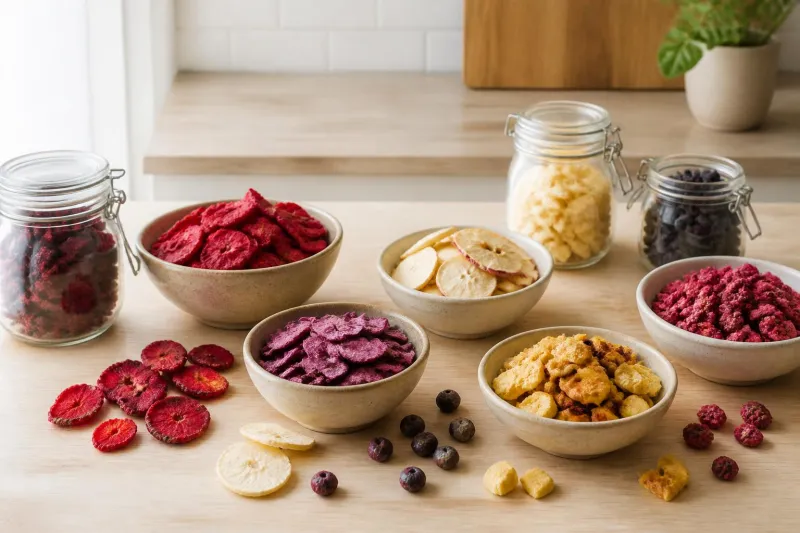
With passion fruit, you may see a few forms:
- fine powder
- small pieces or crushed fruit
- larger slices or shards
- mixed packs that include seeds or uneven fragments
Those forms are not interchangeable in every recipe. A powder disperses quickly and colours evenly. Pieces give bursts of flavour and some texture. Slices are usually best where you want a visible garnish rather than a smooth finish.
Compared with fresh passion fruit pulp, freeze-dried passion fruit brings very little free liquid. That means you can flavour buttercream, royal icing, cheesecake filling or sponge batter without having to compensate for spoonfuls of juice. If you have ever added fruit purée to frosting and watched it turn slack, this is the problem freeze-dried fruit helps you avoid.
It also behaves differently because it is porous and thirsty. As soon as it sits in something moist, it starts absorbing water. That can be useful. Powder can blend into whipped cream and help carry flavour through it. It can also be awkward. Crisp pieces scattered over a frosted cake may lose their crunch within minutes if the topping is damp.
Flavour is another difference. Because the fruit is dry, the taste can seem more concentrated at first bite. In practice, that means a small amount may be enough in icing or decoration, while a batter or mousse may need more to make the flavour noticeable after mixing. Acidity can also stand out more clearly than sweetness, which is often exactly what bakers want from passion fruit.
If you are still getting used to freeze-dried ingredients more generally, our guide to first steps with freeze-dried fruit information explains the basic handling points that apply across many fruits.
How to choose between powder, pieces and slices
The best format depends on the job.
Powder is usually the easiest option for smooth mixtures. It suits buttercream, glacé icing, whipped ganache, meringue buttercream, cheesecake filling, custard-based desserts and sponge batters where you want flavour distributed evenly. Because it is dry and fine, it can often be added without changing the texture much, provided you do not add so much that the mixture turns chalky or thick. If you regularly bake with fruit flavours, a look at our guide to freeze-dried fruit powder is useful for understanding how powders behave across different recipes.
Pieces are better when you want visible fruit through the bake or dessert. They work well folded through cookie dough, traybake toppings, chocolate bark, rocky road, cereal bars, semifreddo and layered desserts. They give a more obvious fruit presence than powder, but they can soften if left in a wet filling for too long. In some recipes that is fine. In others, especially where crunch matters, it is disappointing.
Slices are mostly decorative. They can look striking on top of cakes, pavlovas, tarts and plated desserts. The drawback is that they are the most exposed to humidity and handling damage. A large slice can also be awkward to eat on a soft dessert unless it is broken up first.
A practical way to choose is to ask what you need from the ingredient.
Choose powder when you want:
- smooth texture
- even flavour through a mixture
- easy measuring by grams
- no visible chunks
- less risk of soggy icing
Choose pieces when you want:
- small pockets of fruit flavour
- a bit of texture
- a topping that looks natural rather than uniform
- flexibility for folding into doughs and fillings
Choose slices when you want:
- a clear decorative finish
- larger visible fruit pieces
- a topper for serving time rather than long storage on the cake
Cupboard convenience matters too. Powder is often the easiest to use little and often, because you can measure out a small amount and reseal the packet quickly. Pieces and slices can crumble during storage and handling, which is not necessarily a problem, but it does mean the packet may gradually become a mix of formats.
If your main aim is neat flavouring rather than decoration, powder is usually the most forgiving choice. If your main aim is visual finish, pieces or slices may suit better, but they need more thought about when they are added.
How to use it in bakes and desserts without upsetting texture
The easiest way to avoid soggy bakes is to use freeze-dried passion fruit where you would otherwise have added wet fruit. In practical terms, that means replacing some uses of purée, juice or fresh pulp with powder or dry pieces when flavour matters more than fresh fruit moisture.
For buttercream, start small. A little powder can go a long way. Sift it first if it looks lumpy, then beat it in after the butter and sugar are already combined. If you add a lot at once, the buttercream can become speckled or slightly dense. If the mixture thickens more than you want, adjust with a very small amount of milk or cream, measured in millilitres, rather than guessing.
For glacé icing, powder is usually better than pieces. Stirring dry fruit powder into icing sugar before adding water or lemon juice helps distribute flavour evenly. This reduces the chance of over-thinning the icing while chasing a stronger fruit taste.
For sponge cakes and cupcakes, powder can be mixed with the flour or folded in near the end. This tends to spread the flavour more evenly than adding pieces. Pieces can work in muffins, but they often soften during baking and may create slightly damp spots if used heavily in a small area. A light hand is better than packing them in.
For cheesecakes and mousse-style desserts, think about timing. Powder blends well into the filling. Pieces are better kept for a final topping if you want contrast. If you fold pieces into a wet filling hours before serving, expect them to soften.
For chocolate work, freeze-dried passion fruit is particularly useful because water and melted chocolate do not mix well. Powder can be stirred into white chocolate fillings or sprinkled over set chocolate surfaces. Pieces can be pressed onto dipped truffles or bark while the chocolate is still tacky. Here the dryness is an advantage.
For meringues and pavlovas, powder can flavour the cream or the shell, but slices and pieces are best added close to serving. Meringue attracts moisture from air and toppings, so any crisp fruit decoration will not stay crisp indefinitely.
A few practical kitchen habits make a big difference:
- add powder gradually and taste as you go, where the recipe allows
- sift powder for smooth icings and fillings
- keep decorative pieces back until near serving time
- break large slices into smaller shards for easier eating
- avoid storing crisp fruit on top of very wet toppings overnight if crunch matters
- measure additions in grams for repeatable results
Acidity needs a mention too. Passion fruit has a bright, tart profile. In sweet mixtures that can be excellent, but in delicate custards or lightly sweetened cream it may come through more sharply than expected. If the balance feels too tart, it is often better to adjust the sweetness of the whole mixture slightly than to keep adding more fruit and make the texture worse.
Colour can fade or bleed a little once the fruit absorbs moisture, especially on pale toppings. That is normal. If appearance matters, do a small test on one portion first, particularly for celebration cakes you plan to hold for several hours.
If you do want a softer fruit effect rather than a crisp one, controlled rehydration may help. Our guide to rehydrating freeze-dried fruit without guesswork covers the general approach. For passion fruit decorations, though, rehydrating on purpose is usually for fillings or plated desserts, not for keeping toppings neat.
What to check on the label before you use it
Before using any packet, check the label rather than assuming all freeze-dried fruit is the same. This matters for ingredients, allergens, storage and nutrition.
Start with the ingredients list. Ideally, you know whether the packet contains only passion fruit or whether it includes added sugar, carriers, anti-caking agents or other ingredients. Powders in particular can vary. A label that says 100% fruit tells you something very different from one that lists extra ingredients.
Then check allergen information. In the UK, allergen labelling rules are specific, and the safest approach is always to read the actual packet each time, especially if somebody in the household has a food allergy or intolerance. General guidance from the Food Standards Agency on food allergy and intolerance for consumers is worth following here. Do not infer suitability from the fact that a fruit sounds simple.
Storage instructions matter because freeze-dried products are highly sensitive to moisture once opened. If the packet says reseal immediately, store in a cool dry place, or use within a stated period after opening, treat that as the primary instruction.
Nutrition panels also need careful reading. Some labels give values per 100g, others also give a per portion figure. Those are not the same basis for comparison. The NHS explains clearly that per 100g and per portion serve different purposes when reading labels, and one portion may not match what you actually use in your recipe NHS food labels guidance. For freeze-dried ingredients, this matters even more because small quantities can have strong flavour, while the per 100g panel can look intense simply because the product is dry and concentrated.
For example, if you stir 4 grams of powder into icing, the per 100g numbers do not describe what you have added unless you scale them correctly. Equally, if a packet gives a suggested portion, that may be an illustrative serving for that brand, not a standard amount used by every baker in every recipe.
Where rules differ between Great Britain and the EU generally, labels may not look identical in layout or wording, especially on imported products, but the practical point for a home cook is the same. Read the ingredients, allergen statement, storage instructions and nutrition basis on the packet in front of you, rather than relying on a generic expectation.
How to store freeze-dried passion fruit once opened
Once opened, freeze-dried passion fruit needs protection from air and humidity more than it needs refrigeration. The aim is to keep it dry, crisp and clean-tasting.
The basic method is simple:
- seal the packet as tightly as possible straight after use
- if the original pack does not reseal well, transfer the contents to a clean, dry, airtight container
- keep it in a cool, dry cupboard away from steam, direct sun and the cooker
- use a dry spoon every time
- open the container only briefly, then close it again promptly
The biggest enemy is kitchen moisture. Opening the packet over a simmering pan or leaving it on the worktop while you bake can be enough for slices and pieces to start softening. Powder may clump instead.
If the product came with a small desiccant sachet and the packet instructions do not say to remove it, leave it in place but keep it away from food contact. It is there to help control moisture in the pack, not to be mixed into the ingredient.
We do not recommend guessing a fixed storage life after opening because it depends on the packet, the format, the humidity in your kitchen and how often it is opened. Packet instructions take priority. General food storage guidance from the Food Standards Agency on safe storage is also a useful reminder that manufacturer instructions matter.
Watch for practical signs of decline. If slices have turned leathery, pieces have lost their crispness, or powder has formed hard clumps, the ingredient has probably taken up moisture. That does not automatically tell you anything about safety on its own, but it does tell you the texture has changed and performance in baking may be poorer. For broader handling tips, our page on how to store freeze-dried fruit covers the same dry-storage principles in more detail.
In everyday baking, the most reliable approach is to portion out what you need, reseal immediately, and add decorative fruit at the last sensible moment. Used that way, freeze-dried passion fruit gives you the bright flavour of passion fruit with far less risk of slack icing, wet toppings or heavy sponge.