Is a home freeze dryer worth it in the UK?
For most UK households the arithmetic does not work. Here is the method for costing it yourself, a worked example per kilogram, and the four groups it genuinely suits.
On this page
- What a home freeze dryer costs to buy in the UK
- How to work out your cost per kilogram of freeze-dried fruit
- A worked example: cost per kilogram from a medium home freeze dryer
- How long a home freeze dryer takes to pay for itself
- Who a home freeze dryer genuinely suits
- The practical drawbacks of a home freeze dryer
- Buying a home freeze dryer in the UK: what to check first
- The verdict on home freeze dryers in the UK
For most UK households, no. A domestic freeze dryer is a four-figure purchase that converts roughly ten kilograms of fresh fruit into one kilogram of finished product, and unless the fruit is free and you run the machine dozens of times a year, buying freeze-dried fruit ready-made costs less.
It genuinely does pay for a minority: people with an allotment or garden glut, smallholders, households with specific dietary needs, and small food businesses. Below is the arithmetic, so you can put your own numbers in rather than take anyone's word for it, ours included.
We have not bought, run or tested a freeze dryer. Everything on this page is either a figure published by a manufacturer or regulator, clearly attributed, or arithmetic you can check line by line. Where we have assumed a number to make an example work, we say so.
What a home freeze dryer costs to buy in the UK
When we last checked UK resellers in September 2026, domestic Harvest Right machines were listed in the region of £2,700 to £3,700 depending on size, with laboratory and semi-commercial units in the range of about £5,000 to £12,000 and up. Prices move with exchange rates, shipping and promotions, so treat those as bands rather than quotes and check the seller rather than any blog, this one included.
Two things are easy to miss beside that headline price:
- The vacuum pump is part of the machine, not an accessory, and it needs oil. Harvest Right's own FAQs say oil changes are needed every four to five batches on a standard pump, or every 20 to 30 batches on the premium type, using roughly 500ml to 700ml each time.
- Packaging is a running cost. Freeze-dried food only stays crisp if you seal it properly: aluminium-lined bags or jars and oxygen absorbers, batch after batch. Our guide to storing freeze-dried fruit explains what the seal has to do.
How to work out your cost per kilogram of freeze-dried fruit
Every honest comparison comes down to one number: what a kilogram of finished, sealed freeze-dried fruit costs you. Four lines go into it.
- The machine, spread over its working life. Divide the purchase price by the number of batches you will realistically run before it dies or you lose interest. This is the number people get wrong, because they imagine running it weekly for a decade.
- Electricity per batch. Kilowatt hours used, multiplied by your unit rate. Ofgem has capped the electricity unit rate at 26.32p per kWh for direct debit customers in England, Scotland and Wales for 1 October to 31 December 2026; your own tariff may differ, so use the rate on your bill. Our freeze dryer running costs page works this line through in detail.
- Consumables per batch. Pump oil, bags, absorbers.
- The fruit itself. And here is the trap.
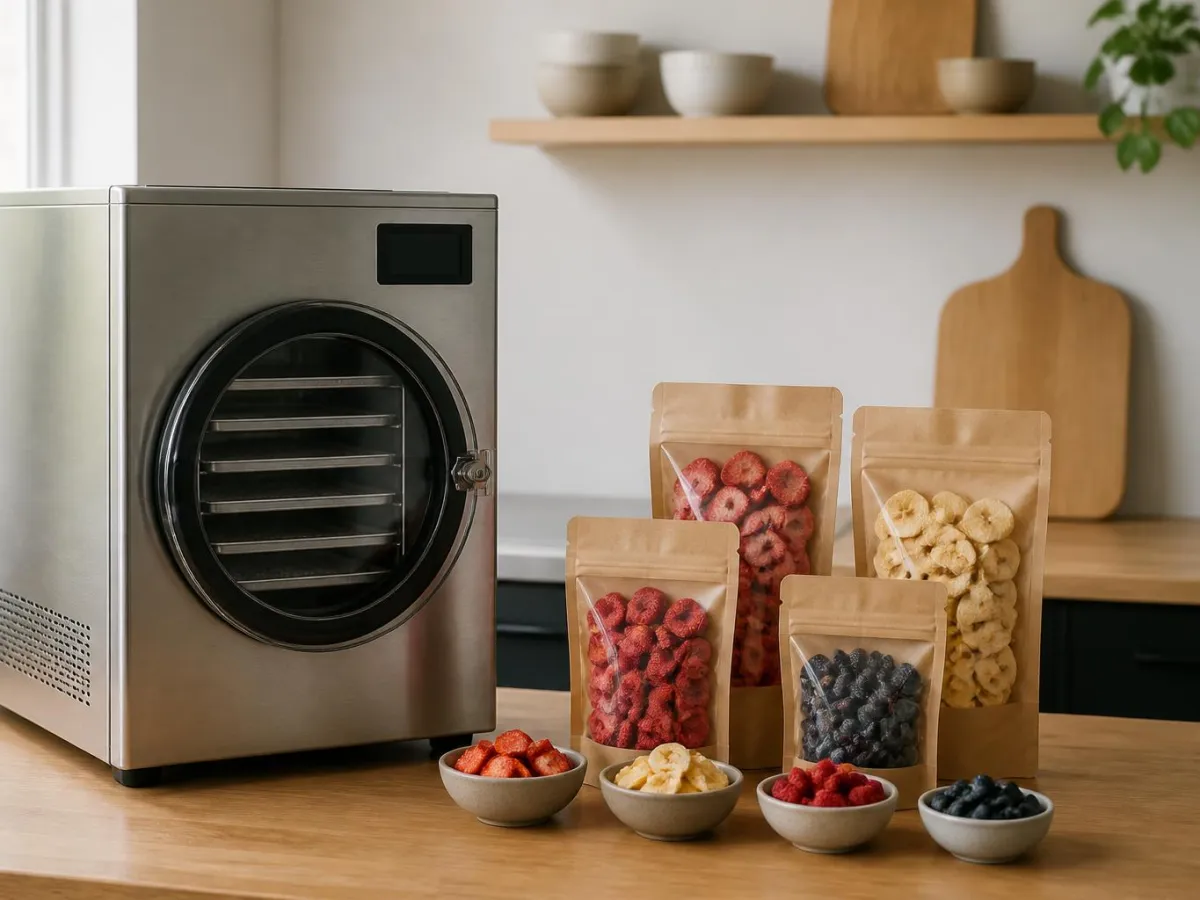
Freeze-drying removes water and nothing else. Soft fruit such as strawberries and raspberries is around 90 per cent water, and the process takes almost all of it out, which is why the fruit comes out at roughly a tenth of its starting weight: ten kilograms in, about one kilogram out. That ratio works on your fruit bill as a multiplier: every £1 per kilogram you pay for fresh fruit adds about £10 per kilogram to the finished cost. Pay £5 a kilogram for strawberries and you have added £50 per kilogram to your output before the machine has drawn a single watt. Our fresh to freeze-dried converter does the weight conversion for other fruits.
A worked example: cost per kilogram from a medium home freeze dryer
Assumptions, all of them stated so you can change them: a £3,100 medium machine; 5.5kg of fresh soft fruit per batch, within the 4.5kg to 6.8kg the maker quotes; 550g of finished fruit out, at the usual ten-to-one ratio; 17 kWh per cycle, which is an illustration and not a measurement; £2 a batch for oil, bags and absorbers.
| Route | Machine per batch | Electricity and consumables | Fruit per batch | Cost per kg finished |
|---|---|---|---|---|
| Garden fruit, 100 batches in the machine's life | £31.00 | £6.47 | £0 | about £68 |
| Garden fruit, 400 batches | £7.75 | £6.47 | £0 | about £26 |
| Bought fruit at £5/kg, 100 batches | £31.00 | £6.47 | £27.50 | about £118 |
| Bought fruit at £5/kg, 400 batches | £7.75 | £6.47 | £27.50 | about £76 |
Now the thing you are comparing against. On UK sellers' sites in September 2026, plain freeze-dried strawberries in 100g packs sat roughly between £50 and £110 per kilogram, one-kilogram bulk bags from the cheaper suppliers were nearer the high £30s to mid £70s per kilogram, and the small sachets in the supermarket baking aisle worked out at roughly £110 to £200 per kilogram. Those bands come from a single check in September 2026 rather than a live feed, and retail prices move constantly, so look for yourself before you buy; our guide to freeze-dried fruit in UK supermarkets covers what is usually stocked where.
Read the two together and the answer falls out. Only the free-fruit rows beat buying: bought fruit over 100 batches is worse than almost anything on a shop shelf, and over 400 batches it only matches mid-range retail. Home freeze-drying is not a way to make cheap fruit cheaper. It is a way to make free fruit keep.
How long a home freeze dryer takes to pay for itself
A machine only saves you money against spending you would actually have done. That is where most break-even claims quietly cheat. So: how much freeze-dried fruit do you genuinely get through?
The table below recovers a £3,100 machine at an assumed £70 per kilogram avoided, with free fruit, and ignores electricity and consumables entirely. It is deliberately generous.
| If you use this much a month | Per year | Batches a year | Fresh fruit needed | Years to recover £3,100 |
|---|---|---|---|---|
| 100g | 1.2kg | 2 | about 12kg | about 37 |
| 250g | 3kg | 6 | about 30kg | about 15 |
| 500g | 6kg | 11 | about 60kg | about 7 |
| 1kg | 12kg | 22 | about 120kg | about 4 |
| 2kg | 24kg | 44 | about 240kg | under 2 |
The manufacturer says most foods take between 13 and 35 hours per cycle, so 44 batches a year means the machine is tied up for a day or more, most weeks of the year, and you are picking or growing about a quarter of a tonne of fruit. That is not a household. That is an allotment or a business.
If you are buying a machine mainly to eat more fruit, remember that freeze-dried fruit is concentrated. Nothing is added, but nearly all the water has gone, so weight for weight it carries far more natural sugars and calories than the fresh fruit it came from. Freeze-dried berries typically sit somewhere around 330 to 390 kcal and 45g to 70g of sugars per 100g, against roughly 30 to 55 kcal per 100g for the fresh fruit; those are typical ranges only, products vary a great deal, and the label on the pack is the figure that counts. A helping is correspondingly small, in the region of 10g. The NHS counts 30g of dried fruit as one of your 5 A Day portions and advises eating dried fruit with meals rather than between them, which also matters for freeze-dried fruit and tooth decay.
Who a home freeze dryer genuinely suits
- Gardeners and allotment holders with a glut. Thirty kilograms of raspberries ripening in a fortnight is the textbook case. The fruit is free, the alternative is compost, and the ten-to-one multiplier finally works in your favour.
- Smallholders and growers. Soft fruit, orchard fruit, surplus veg and herbs, year after year, at a scale where the machine amortises properly.
- People with specific dietary needs. Single-ingredient control for allergies or elimination diets, or foods nobody sells freeze-dried at all: particular vegetables, homemade purées for babies and toddlers, cooked meals for hiking and camping. Denser foods also lose less water, so they yield better than berries.
- Small food businesses. Bakeries, ice cream and dessert makers, market stalls, pet treat makers. Here the machine is a cost of goods that runs constantly rather than a hobby. If you sell what you make, you become a food business: in England, Wales and Northern Ireland you must register with your local authority at least 28 days before you start trading, and your packs need compliant labelling.
If none of those describes you but you like the idea, that is a perfectly good reason to buy one. Just buy it as a hobby rather than as a saving.
The practical drawbacks of a home freeze dryer
- Noise. The vacuum pump runs continuously for the whole cycle. We have not measured one, so disregard any confident decibel figure. Plan on a garage, utility room or outhouse, not a worktop beside a bedroom wall.
- Run time. 13 to 35 hours per batch, per the manufacturer's own figures, plus loading, pre-freezing and unloading. Two batches a week is a realistic ceiling, and that assumes you are around to swap them.
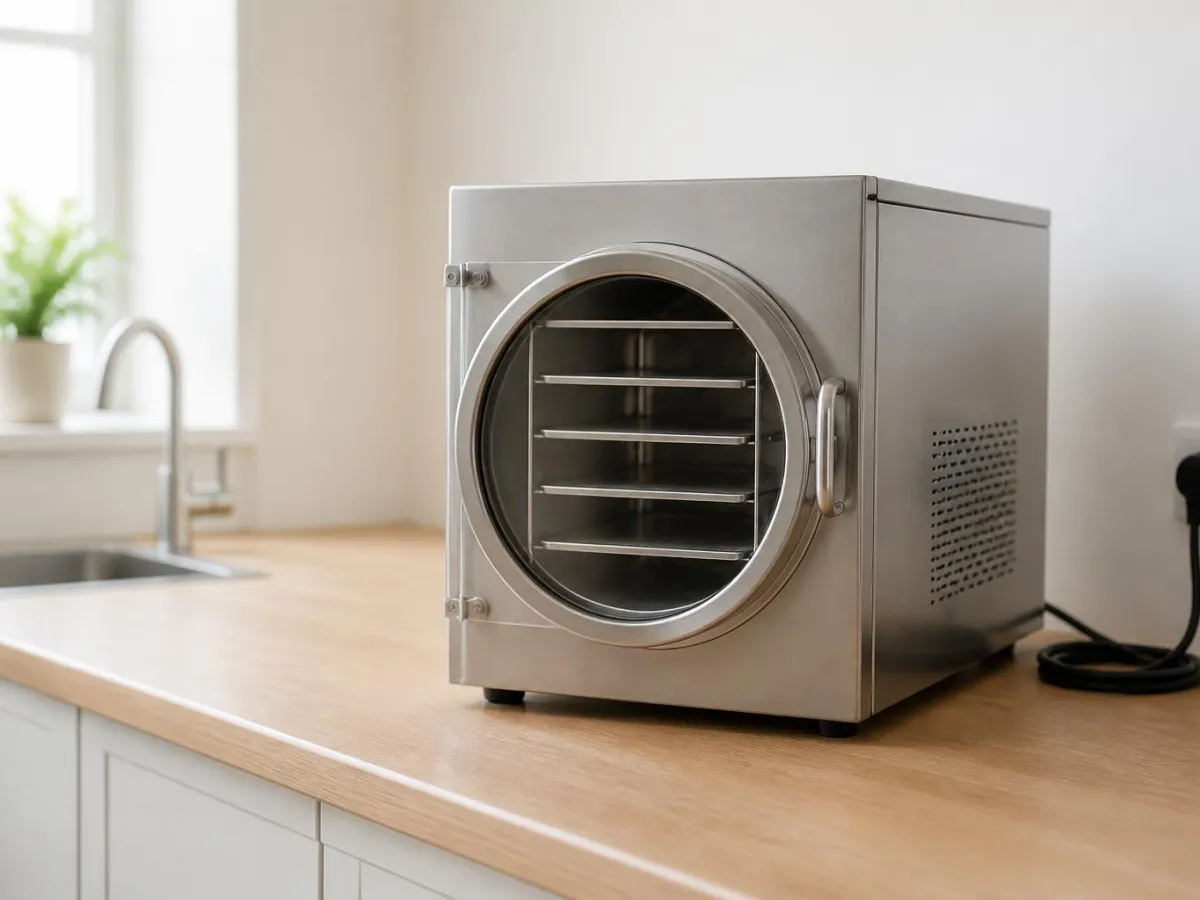
- Space, permanently. A medium unit is a heavy benchtop appliance needing airflow, with a separate pump beside it and somewhere for trays, bags, absorbers and a bottle of oil. It is not going in a cupboard between uses.
- Pump maintenance. Oil changes on the schedule above, and used vacuum pump oil is not a sink or general-bin job. Check what your council's household waste recycling centre accepts before you buy.
- Failed batches. Under-dried fruit is not shelf stable and goes soft or worse. Our guides to how freeze-drying works and freeze-dried versus dehydrated fruit explain why residual moisture is unforgiving, and why freeze-dried fruit goes soft covers what it looks like when a seal has failed.
- Hire is not an option. Freeze dryer hire in the UK is a laboratory equipment market, priced monthly for businesses. There is no weekend rental to try before you buy.
Before spending four figures, weigh out 10g of shop-bought freeze-dried fruit and see how long a 100g pack actually lasts your household. That single measurement tells you more about whether a machine is worth it than any cost table, including ours.
Buying a home freeze dryer in the UK: what to check first
If the numbers work, check three things. Buy a model built for a UK supply at 230V, 50Hz, not a US 110V machine with an adaptor. Buy from a UK-based seller, so warranty claims and spare pump parts do not involve an international return. And confirm which pump is included, because the standard and premium types have very different oil-change schedules and running costs.
The verdict on home freeze dryers in the UK
Work out three numbers before you spend anything: how many kilograms of finished freeze-dried fruit you would actually use in a year, what your fruit costs per kilogram, and how many batches you will honestly run. If the fruit is free and the answer is more than about twenty batches a year, a machine can pay. If you would be buying the fruit, or you would run it a handful of times, a year of shop-bought freeze-dried strawberries will cost you less than the machine's pump oil and bags.
Good questions, short answers
Is a home freeze dryer worth it in the UK?
For most households, no. A domestic machine is a four-figure purchase that turns roughly ten kilograms of fresh fruit into one kilogram of finished product, so the only way the sums work is free or nearly free fruit and a great many batches. If you would realistically buy 100g of freeze-dried fruit a month, the machine takes decades to pay for itself. If you have an allotment glut, a smallholding or a small food business, it can genuinely pay.
How much does a home freeze dryer cost in the UK?
When we last checked UK resellers in September 2026, domestic machines were listed in the region of £2,700 to £3,700, with laboratory and larger units running well into five figures. Prices, exchange rates and stock all move, so treat that as a band rather than a quote and check the seller yourself. Budget for consumables too: vacuum pump oil, aluminium-lined bags and oxygen absorbers are ongoing costs.
How much electricity does a home freeze dryer use?
It depends on the machine, the load and the cycle length, and we have not measured one, so we will not pretend to a single figure. What we can tell you is the shape of it: Harvest Right's published FAQs say most foods take between 13 and 35 hours, during which a compressor, heaters and a vacuum pump all run. Multiply your own metered kilowatt hours by your own unit rate, which Ofgem has capped at 26.32p per kWh for direct debit customers in England, Scotland and Wales for 1 October to 31 December 2026.
How much freeze-dried fruit does one batch make?
Far less than people expect. Soft fruit is roughly nine-tenths water, so a batch shrinks to about a tenth of its starting weight. A medium machine that holds 4.5kg to 6.8kg of fresh food, per the manufacturer's own figures, therefore yields somewhere around 450g to 700g of finished freeze-dried berries. Denser foods such as cooked meals lose less water and yield more.
Is it cheaper to freeze dry your own fruit or buy it ready-made?
Only if the fruit costs you almost nothing and you run the machine often. Because of the ten-to-one weight loss, every £1 per kilogram you pay for fresh fruit adds roughly £10 per kilogram to the finished cost, before you have counted the machine or the electricity. Garden and allotment fruit is what makes home freeze-drying cheap; supermarket fruit is what makes it expensive.
Are home freeze dryers noisy?
The vacuum pump is the noisy part and it runs continuously for the whole cycle, which can be well over a day. We have not measured a machine, so we will not quote a decibel figure and would treat anyone else's with caution. Plan on a garage, utility room or outhouse rather than a kitchen worktop, particularly if the batch will run overnight.