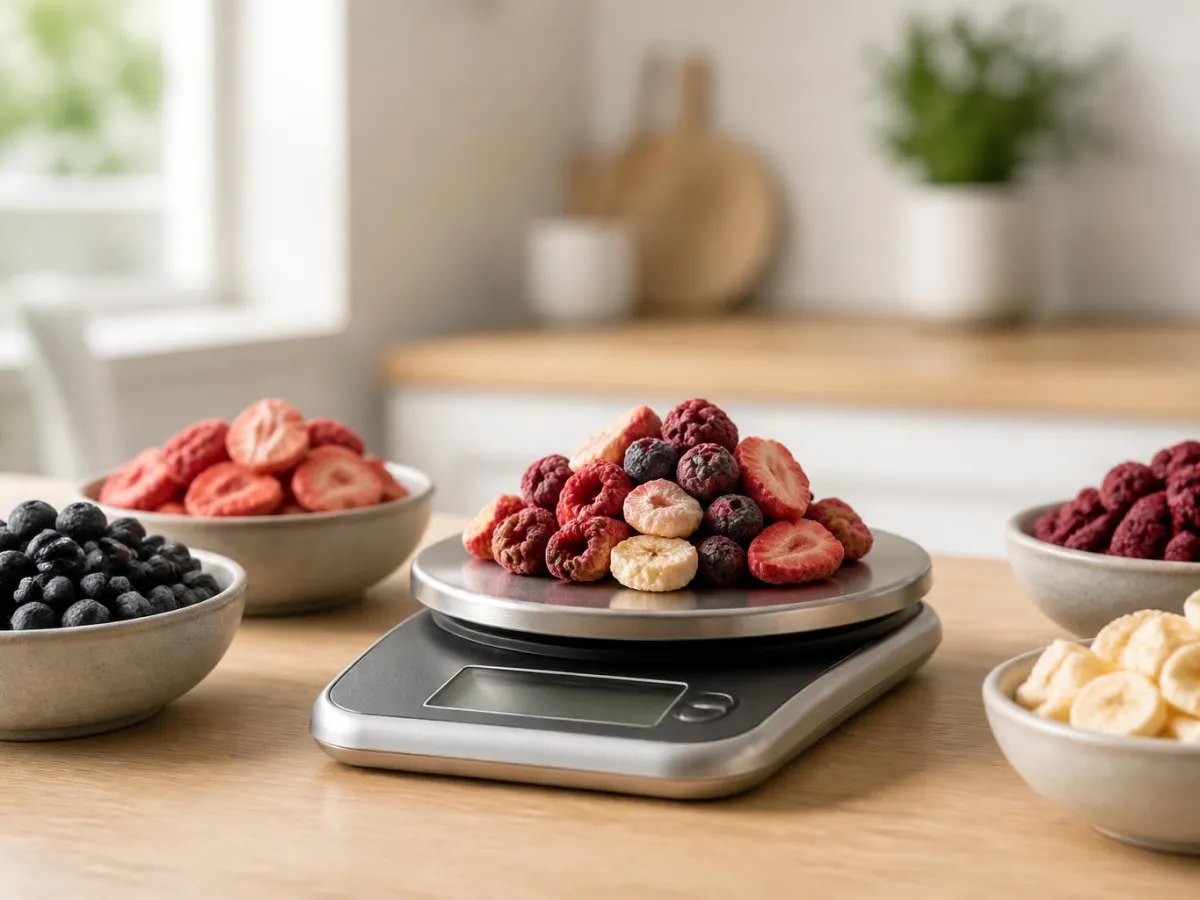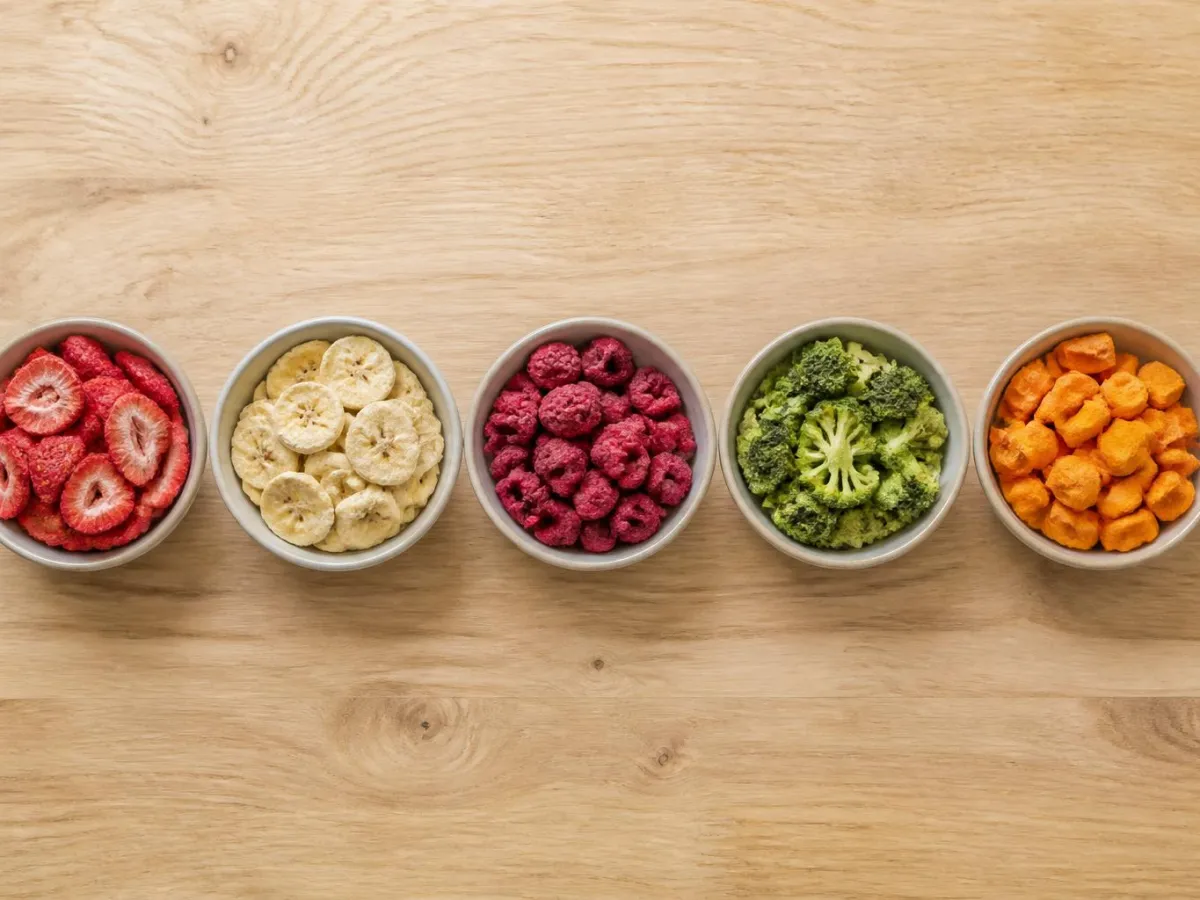
Is freeze-dried fruit free on Slimming World?
Nobody outside Slimming World can tell you for certain, and the plan changes. Here is the nutrition that actually matters, and how to check properly.
On this page
- What Slimming World says publicly about fruit and Free Food
- Why freeze-dried fruit behaves differently from fresh fruit
- Freeze-dried fruit calories and sugar: typical values
- Energy density compared: fresh, freeze-dried and traditional dried fruit
- Syns, Swips and why old advice may be wrong
- How to check whether freeze-dried fruit is free on your current plan
- How to use freeze-dried fruit while you are watching what you eat
- Freeze-dried fruit, 5 A Day and your teeth
- Freeze-dried fruit on Slimming World: the practical takeaway
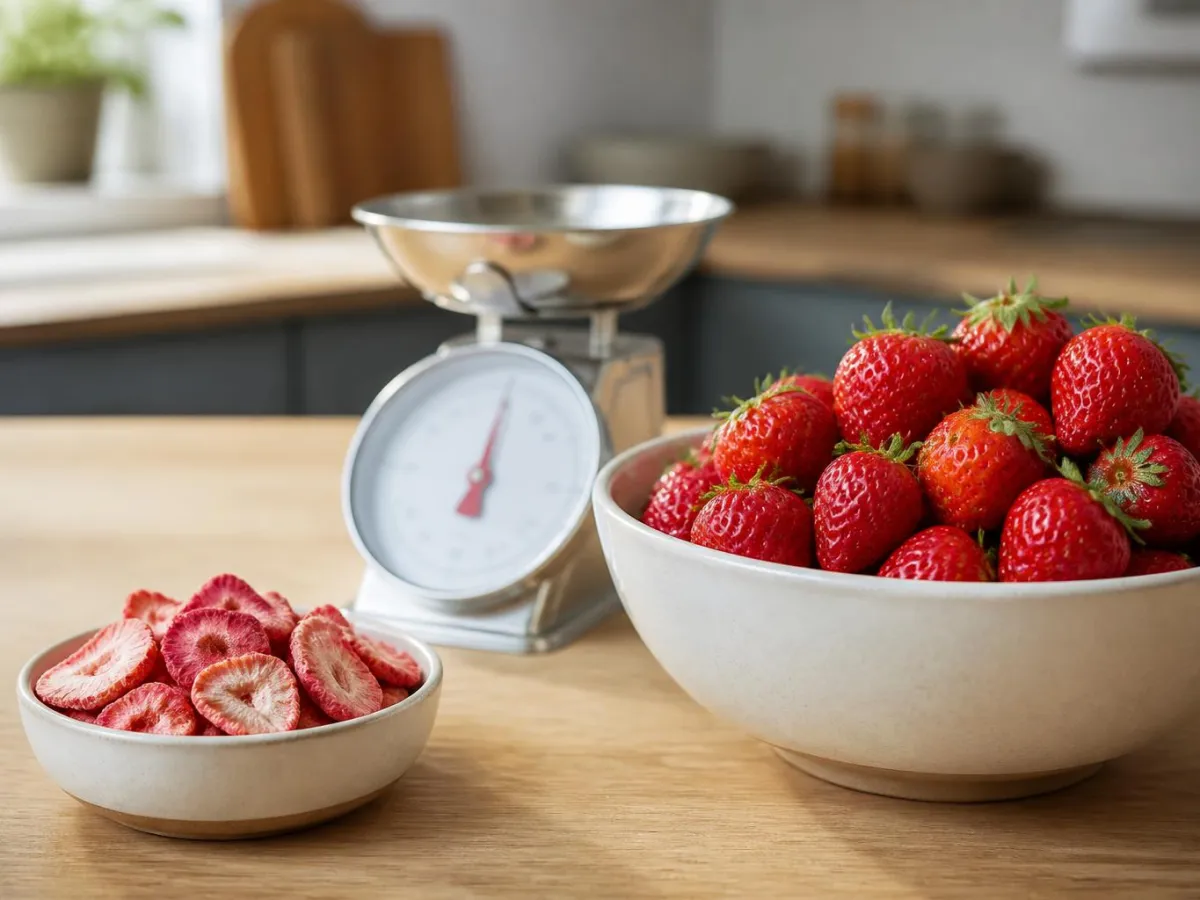
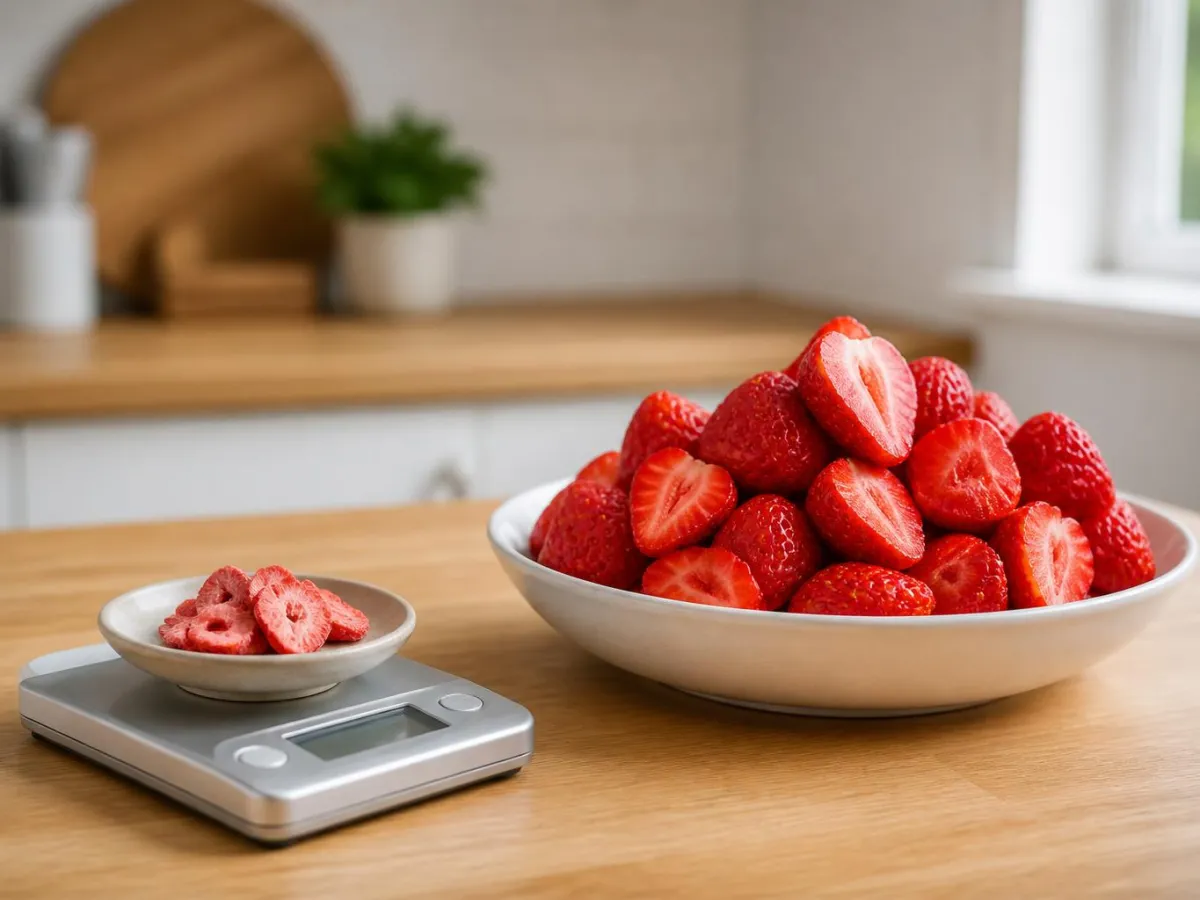
Nobody outside Slimming World can tell you for certain, because the plan's food values live in members' own books and app rather than on the open web, and they are revised from time to time. What the nutrition makes clear is that freeze-dried fruit is not fresh fruit: a 10g handful of freeze-dried strawberries carries roughly the same calories and sugar as the 100g of fresh strawberries it was made from, in about a tenth of the volume, so check your current plan materials or ask your consultant before you treat it as free.
Crispberry is not connected with Slimming World, WW or any other slimming organisation, and we have no access to their member materials. Everything below is published nutrition data or something those companies say publicly.
What Slimming World says publicly about fruit and Free Food
On its own public pages, Slimming World describes Free Foods as foods that are low in energy density, meaning low in calories for their weight, and filling enough that members are told they do not have to monitor every mouthful. Fruit and vegetables are listed among them in general terms. The energy density idea is the whole engine of the plan: fill up on food that is mostly water and fibre, and the calories look after themselves.
What those public pages do not do is break fruit down. They name fruit generically and draw no line between fresh, dried and freeze-dried (last checked September 2026). The detailed lists and values sit behind membership, which is their right, and it is why an honest answer here has to be about the nutrition rather than the rules.
Freeze-dried fruit is the exact case where the words "fruit" and "low energy density" pull in opposite directions.
Why freeze-dried fruit behaves differently from fresh fruit
Fresh strawberries are around 90 per cent water. Freeze-drying freezes the fruit solid and then draws that water off as vapour under vacuum, without cooking it, so what comes out is everything except the water. Nothing is added and nothing is sweetened. The sugar was always there; the water that used to dilute it has gone.
The practical effect is that the brake comes off. A 400g punnet takes a while to eat and fills you up, because most of what you are chewing is water. The same fruit as 40g of crisp slices disappears in two minutes. On any plan built on volume and fullness, that is the thing to understand: freeze-dried fruit gives you the calories of fresh fruit without the fullness that normally comes with them.
There is more on this in our guides to freeze-dried fruit calories and whether freeze-dried fruit has more sugar than fresh.
Freeze-dried fruit calories and sugar: typical values
| Typical values | Fresh strawberries, 100g | Freeze-dried strawberries, 10g | Freeze-dried strawberries, 100g |
|---|---|---|---|
| Fresh fruit it was made from | 100g | about 100 to 110g | about 1kg |
| Energy | about 30 kcal | about 35 kcal | about 330 to 380 kcal |
| Carbohydrate | about 6g | about 7g | about 65 to 80g |
| of which sugars | about 6g | about 5 to 6g | about 45 to 65g |
| Fibre | about 2g | about 1 to 2g | about 12 to 20g |
| Water | about 90g | under 1g | a few grams |
These are typical ranges drawn from published composition data and product labels, not measurements of any particular pack. They vary with the fruit, the variety, the ripeness and the producer, so the label on your pack is what counts when you are recording anything. All the sugar in plain freeze-dried fruit is the fruit's own, with nothing added.
Read the 10g column across and a small handful is nutritionally close to the 100g of fresh fruit behind it. Read the 100g column and it is obvious why no bag should be treated as a free snack. Multiplying the fresh figures by ten is the right rough sum, although the numbers printed on a pack of freeze-dried fruit often land a little above it, partly because label energy counts fibre as well as sugar and partly because sugar content shifts with the variety and how ripe the fruit was.
Energy density compared: fresh, freeze-dried and traditional dried fruit
| Food | Typical energy per 100g | Typical water content |
|---|---|---|
| Fresh strawberries | about 30 kcal | about 90 per cent |
| Fresh apple | about 50 kcal | about 85 per cent |
| Raisins and sultanas | about 270 to 300 kcal | about 15 per cent |
| Freeze-dried strawberries | about 330 to 380 kcal | a few per cent |
Freeze-dried fruit usually sits at the top of a table like this, above traditional dried fruit, simply because freeze-drying removes more of the water. That is not a mark against it: it is why the fruit stays crisp, keeps its colour and lives in a cupboard rather than a fridge. It is also why 10g is the sensible serving. Our fresh to freeze-dried converter does the sums the other way round for eighteen fruits and vegetables.
Syns, Swips and why old advice may be wrong
Slimming World announced that from January 2026 the term Syns would be replaced by Swips, short for Slimming World Individual Picks, with the website and app updated from mid-December 2025 and printed member books from the end of that month. The same refresh added a dedicated healthy fats element within Healthy Extras.
That is a good illustration of why we will not put a figure on this page. A number posted to a forum in 2019, or a free foods list on a blog with no date on it, may describe a version of the plan that no longer exists, in vocabulary the company has retired. If a page gives you a value for dried or freeze-dried fruit, look for the date before you rely on it.
How to check whether freeze-dried fruit is free on your current plan
- Read the pack. Energy and sugars per 100g are on every label, and most packs also give a figure per portion. That is your raw material for anything you record.
- Search your own app or book for the food as it is actually sold, not for "strawberries" in general. Fresh, frozen, tinned, dried and freeze-dried are different foods nutritionally.
- Ask your consultant if it is not listed. They have the current materials and are the right person to interpret them. You should not have to guess, and neither should we.
- Weigh 10g once, on kitchen scales, and look at it. Most people are surprised how little it is, and once you have seen it you can eyeball it forever.
- Distrust undated numbers, wherever you find them. Your pack label and your own current plan materials outrank everything else.
How to use freeze-dried fruit while you are watching what you eat
The honest framing is that freeze-dried fruit is a flavouring more than a snack, and treated that way a very small amount does a great deal of work.
- Weigh it, do not pour it. A 5g scatter over yoghurt or porridge is plenty of flavour and colour. Tipping from the bag is how a 100g pack vanishes in a week.
- Put the water back. Rehydrating freeze-dried fruit returns the volume without changing the calories at all, which is exactly what a low energy density approach wants.
- Pair it with something wet. Stirred through yoghurt, porridge or overnight oats, it softens and spreads its flavour through a much larger amount of food.
- Use powder where you only want the taste. A teaspoon of strawberry powder flavours a whole bowl or a drink for very few calories.
- Keep fresh fruit as the bulk. Freeze-dried fruit on top of fresh fruit gives you the intensity without replacing the volume that fills you up.
This is not a cheap way to eat fruit either. Across UK online specialists, freeze-dried strawberries typically run somewhere around £5 to £11 per 100g depending on pack size and form, and prices change often (last checked September 2026). Small supermarket sachets usually work out dearer per 100g than larger bags, so compare the unit price; our guide to freeze-dried fruit in UK supermarkets covers what is usually stocked.
Our own shop is not open yet. When it opens, the pack labels will carry the per-100g and per-portion figures you need, and you can join the list in the meantime.
Freeze-dried fruit, 5 A Day and your teeth
The NHS counts a 30g portion of dried fruit as one of your 5 A Day, against 80g for fresh, frozen or tinned, and advises eating dried fruit as part of a meal rather than as a between-meal snack, because it is high in sugar and can be bad for your teeth. The NHS does not publish a separate portion figure for freeze-dried fruit, so 30g is a guide rather than an official count, and it is a considerable amount of concentrated fruit.
That advice is worth following whatever plan you are on, because crisp fragments can lodge between teeth and it is the sugar sitting there that does the damage. There is more in our guides to freeze-dried fruit and 5 A Day, freeze-dried fruit and your teeth and whether freeze-dried fruit counts as ultra-processed.
Freeze-dried fruit on Slimming World: the practical takeaway
Weigh out 10g once and treat that as your handful. Assume it carries roughly what 100g of fresh fruit carries, use it to flavour food rather than to fill a bowl, and get the value for your plan from your current app, book or consultant rather than from any article, including this one.
Good questions, short answers
Is freeze-dried fruit free on Slimming World?
Nobody outside Slimming World can answer that with authority, because the plan's food values are published in members' own books and app rather than on the open web, and they are revised from time to time. What the nutrition shows is that freeze-dried fruit is concentrated: a 10g handful carries roughly the calories and sugar of the 100g of fresh fruit it was made from, with almost none of the water or bulk. Check your current member materials or ask your consultant rather than trusting a figure from a blog or a forum.
How many Syns or Swips is freeze-dried fruit?
We will not print a number, because we would be guessing and because the figure is not ours to publish. Slimming World also renamed Syns to Swips from January 2026, so older blog posts and forum threads may be out of date even where they were once right. Look the food up in your current app or book, and if it is not listed, ask your consultant.
Why does freeze-dried fruit have more calories than fresh fruit?
It does not have more calories in absolute terms, only far more per gram. Freeze-drying removes almost all the water and leaves the sugar, fibre and everything else behind, so around 100g of fresh strawberries shrinks to roughly 10g. Weight for weight, that makes freeze-dried fruit about ten times as energy dense as fresh, which is why a serving is about 10g rather than a bowlful.
Is freeze-dried fruit zero points on Weight Watchers?
WW puts most fresh fruit and vegetables on its ZeroPoint lists, but members' lists are personalised inside the app and dried fruit is not treated as interchangeable with fresh. That means the only reliable answer is the one in your own app, for your own plan, on the day you look. The underlying nutrition is the same whichever plan you follow, so weighing a 10g portion is worth doing either way.
Does freeze-dried fruit count towards your 5 A Day?
The NHS counts 30g of dried fruit as one of your 5 A Day and advises eating it as part of a meal rather than as a between-meal snack, to reduce the risk of tooth decay. It does not publish a separate figure for freeze-dried fruit, so treat 30g as a guide rather than an official count. A fresh, frozen or tinned portion is 80g, because fresh fruit is mostly water.