How to rehydrate freeze-dried fruit without guesswork
Rehydrate only when the recipe needs softness or released juice.
On this page
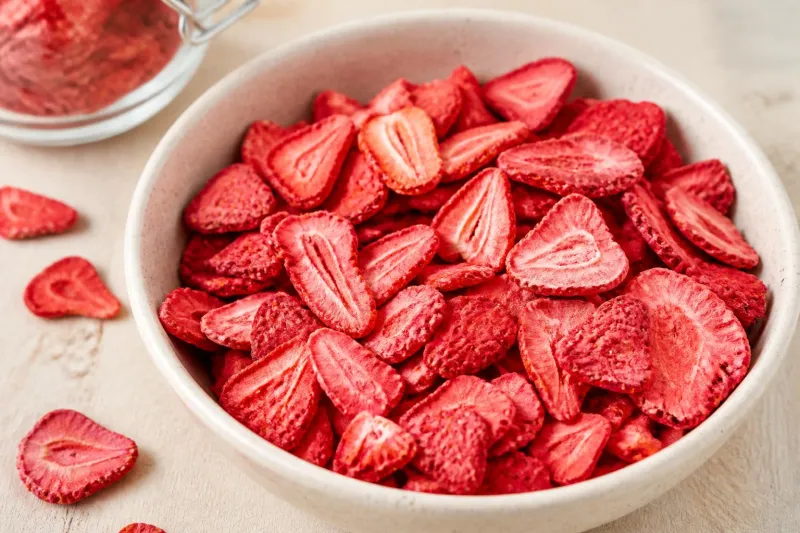
If you want a reliable starting point for how to rehydrate freeze dried fruit, keep it simple. Put the fruit in a bowl, add just enough cold or warm liquid to cover most of it, leave it for 5 to 10 minutes, then check the texture before adding more. Small berry pieces soften quickly. Larger slices, such as strawberry pieces, usually need a little longer.
The important part is not chasing a fixed conversion. Different fruits, cut sizes and recipes need different results. For porridge, you may want soft fruit with a little juice left behind. For muffins, you may want fruit that is plump but not dripping. Rehydrating works best when you match the liquid and resting time to the dish, rather than treating every packet the same.
When rehydrating helps and when it does not
Rehydrating helps when you want freeze-dried fruit to behave more like softened fruit in a finished dish. Good examples include:
- porridge and overnight oats
- yoghurt pots and breakfast bowls
- muffin and cake batters
- chilled desserts, such as trifles or layered pots
- compotes, coulis and quick fruit toppings
- fillings where dry pieces would pull moisture from the mixture
In these cases, adding liquid before the fruit goes in can improve texture and help you avoid dry, chewy spots. It also gives you more control over how much moisture enters the recipe.
There are also plenty of times when using freeze-dried fruit dry is the better choice. Keep it dry when you want crunch, sharp definition or a clean finish, for example:
- sprinkled over yoghurt just before serving
- folded into granola after baking
- used as a topping for iced cakes or desserts
- stirred into chocolate bark or traybakes where extra water would be unhelpful
- crushed into crumbs or used with freeze-dried fruit powder ideas and uses
Dry fruit is often the better option in batters that are already quite wet, or in toppings where colour bleed would spoil the look. Freeze-dried raspberry pieces, for example, can give a bright finish when left dry, but can quickly stain cream or icing if soaked first.
The dish matters more than the ingredient in isolation. That is why we usually suggest deciding on the role of the fruit first. Is it there for crunch, flavour, colour, softness, or moisture? Once that is clear, the choice between dry and rehydrated becomes much easier.
If you are still getting used to these ingredients, our first steps with freeze-dried fruit guide covers the basics of choosing formats and using them in everyday cooking.
A simple method to start with
The easiest method uses a bowl, a spoon and measured liquid. You do not need special equipment.
- Weigh the fruit into a small bowl. Start with a modest amount, such as 10 to 25 grams, especially if you are testing a recipe.
- Add liquid a little at a time. Begin with enough to moisten and mostly cover the fruit, rather than flooding it.
- Stir once so all pieces contact the liquid.
- Leave it to stand for 5 minutes.
- Check the texture. Press a piece with the back of a spoon or taste one if that suits the recipe.
- If it is still too firm, add a small splash more liquid and leave for another 2 to 5 minutes.
- Drain only if needed, or use both fruit and soaking liquid if the recipe can absorb it.
For most home uses, cold water works well. Warm water can speed things up, but it can also soften delicate fruit more quickly than you want. Boiling water is usually unnecessary for fruit and can push it towards mush.
If you want more flavour, rehydrate in something other than water. Common options include:
- orange juice for berry compotes or breakfast bowls
- apple juice for mixed fruit toppings
- milk for porridge or soft breakfast mixes
- a little tea, such as weak hibiscus or berry tea, for desserts
- a small amount of cordial or lemon juice diluted with water, if the recipe needs brightness
Use stronger-flavoured liquids carefully. They can mask the fruit rather than support it.
It also helps to choose a bowl that matches the quantity. A very wide bowl can spread a small amount of liquid too thinly, leaving some fruit dry. A mug or ramekin is often better for small test batches.
How much liquid to use
There is no single correct ratio for every fruit, and we do not recommend relying on a universal conversion. Freeze-dried strawberries, raspberries, apples and mango all absorb differently. Slice thickness and broken pieces also change the result.
Instead, judge the amount of liquid from three things: the fruit itself, the recipe, and the final texture you want.
Start by looking at the fruit.
Small pieces and powders need very little liquid. Whole or larger slices need more. A bowl of freeze-dried strawberries in pieces or slices will usually take more liquid and more time than a bowl of crushed raspberry fragments.
Then think about where the fruit is going.
If it is going into porridge, baked oats or a fruit sauce, a bit of extra liquid is rarely a problem. The dish can usually absorb it. If it is going into muffin batter, buttercream, whipped cream or cheesecake filling, too much free liquid can upset the texture.
A practical approach is to work in measured spoonfuls or small pours. For example, if you have 15 grams of freeze-dried fruit, start with 15 to 30 millilitres of liquid, then adjust. That is not a rule, only an illustration. Some fruits will need less, and some recipes will tolerate more. The packet and the appearance of the fruit should guide you.
Aim for one of these texture points:
- Lightly softened, for folded batters where you do not want extra wetness
- Fully plump, for porridge, yoghurt and spoon desserts
- Very soft, for compotes, sauces or blending
If liquid is pooling in the bowl after the fruit has softened, you added more than the fruit needed. That is not always a problem. You can stir the extra into porridge, reduce it briefly in a pan for a topping, or leave it behind before adding the fruit to a batter.
Label reading also matters here. Some packets give serving suggestions or handling instructions. Follow those if they are present, because formats vary. When you compare nutrition information or ingredient details, remember that per 100g and per portion are not the same basis, as the NHS explains in its guide to how to read food labels.
Best approaches for baking, breakfast and desserts
For baking, the goal is usually controlled moisture. In cakes and muffins, we want the fruit soft enough that it does not stay chewy, but not so wet that it loosens the batter.
A good method for baking is to soak the fruit briefly, then drain off obvious excess before folding it in. Patting very wet fruit on kitchen paper can help if the batter is already loose. This is especially useful with berries, which can release strongly coloured liquid. If you are using a thick batter, such as for muffins, lightly rehydrated fruit is often enough. In a softer cake batter, dry fruit may work perfectly well if the bake itself provides enough moisture.
For porridge, baked oats and breakfast bowls, you can be more generous. Add the fruit to a bowl, cover with water, milk or juice, leave for 5 to 10 minutes, then tip in both the fruit and any remaining liquid. This works well with strawberry and raspberry pieces, particularly if you want a more jammy effect by the end.
For yoghurt, rehydrate separately if you want a soft fruit layer. If you stir dry fruit straight into yoghurt and leave it, it will absorb moisture unevenly. That can be fine, but the result is less predictable. Rehydrating first gives a cleaner texture, especially in make-ahead pots.
For overnight oats, either method can work. Dry fruit will slowly soften in the mixture overnight. Rehydrating first gives a more even finish and lets you control how much liquid enters the jar. If your overnight oats already use a measured milk to oats ratio that you like, it is often better to soften the fruit separately so the oats do not become thinner than intended.
For chilled desserts, think about appearance as well as texture. In trifles, layered pots and fridge-set desserts, soaked fruit can leak colour into cream, custard or soft cheese mixtures. Sometimes that is attractive. Sometimes it looks messy. To keep sharper layers, rehydrate the fruit, drain it well, and cool it before assembly.
If you want a puree effect without seeds or pieces, fruit powder may suit the recipe better than whole pieces. Our guide to using freeze-dried fruit in different forms can help you choose between pieces, slices and powders.
Common texture problems and how to correct them
Soggy fruit usually means too much liquid, too much time, or both. The fix depends on the dish.
- For porridge or compote, simply use the extra liquid.
- For yoghurt or chilled desserts, drain the fruit in a sieve for a few minutes.
- For baking, drain and gently blot the fruit before adding it.
Tough fruit usually means it has not had enough time, or the pieces are larger than you realised. Add a little more liquid, stir, and leave it longer. Warm liquid can help at this stage, but add it in small amounts.
Uneven texture often comes from poor contact with the liquid. Some pieces sit on top and stay dry while others at the bottom over-soften. Use a smaller bowl, stir once or twice during soaking, and avoid adding far more liquid than needed.
Colour bleed is common with deeply coloured berries. This is not necessarily a fault, but it can be inconvenient in pale batters, frostings or creamy desserts. To reduce it:
- use cold rather than warm liquid
- keep the soaking time short
- drain the fruit before adding it
- add the fruit at the last practical stage
- choose larger pieces over crushed fragments where possible
Excess liquid in batter is one of the most common baking problems. If you have soaked fruit and your batter suddenly looks looser, stop before adding all the soaking liquid. In most cakes and muffins, the fruit and liquid do not have to go in together. If the recipe is already close to its moisture limit, use only the softened fruit.
Fruit turning mushy is usually a sign that the pieces were small to begin with, or that the liquid was too hot. Next time, use less liquid, a shorter soak, or a larger cut of fruit. This matters especially with strawberries, which can collapse more quickly than firmer fruits.
Storage, labels and food safety checks
Before rehydrating, check the packet. Look for the ingredient list, allergen information, storage instructions and any use guidance from the manufacturer. In the UK, allergen information matters, and people should not guess from a general product type. The Food Standards Agency sets out the importance of checking ingredient and allergen information in its consumer allergy guidance.
This is also where UK and wider EU practice can diverge in presentation after Brexit. Products sold in the UK should follow UK labelling rules, and imported products may not present information in exactly the same format you are used to from older EU packaging. The practical point is simple, check the actual packet in your hand, do not assume one brand matches another.
Once liquid has been added, freeze-dried fruit is no longer a dry cupboard ingredient. Treat it like other moistened food. If you are not using it straight away, cover it and chill it. The Food Standards Agency’s guidance on chilling, freezing and defrosting food safely is the relevant baseline here. Follow the packet if it gives a shorter or more specific instruction.
For dry storage of unopened or resealed packs, keep them in line with the packet instructions and away from moisture. A dry ingredient that has picked up humidity from the kitchen will not rehydrate as predictably and may lose its crisp texture. We cover that in more detail in our guide on how to store freeze-dried fruit.
A few sensible checks help avoid waste:
- make sure the dry fruit still looks and smells normal before soaking
- discard any fruit that shows signs of damp storage or spoilage
- use clean bowls and spoons
- do not leave rehydrated fruit sitting at room temperature for long periods
- if you have mixed it into dairy or another perishable ingredient, follow the storage needs of the finished dish
If you are learning how to rehydrate freeze dried fruit, the best habit is to start small, measure the liquid, and write down what worked. After two or three batches, you will know whether you prefer your berries just softened, fully plump, or left dry for crunch. That is usually all the precision a home cook needs.