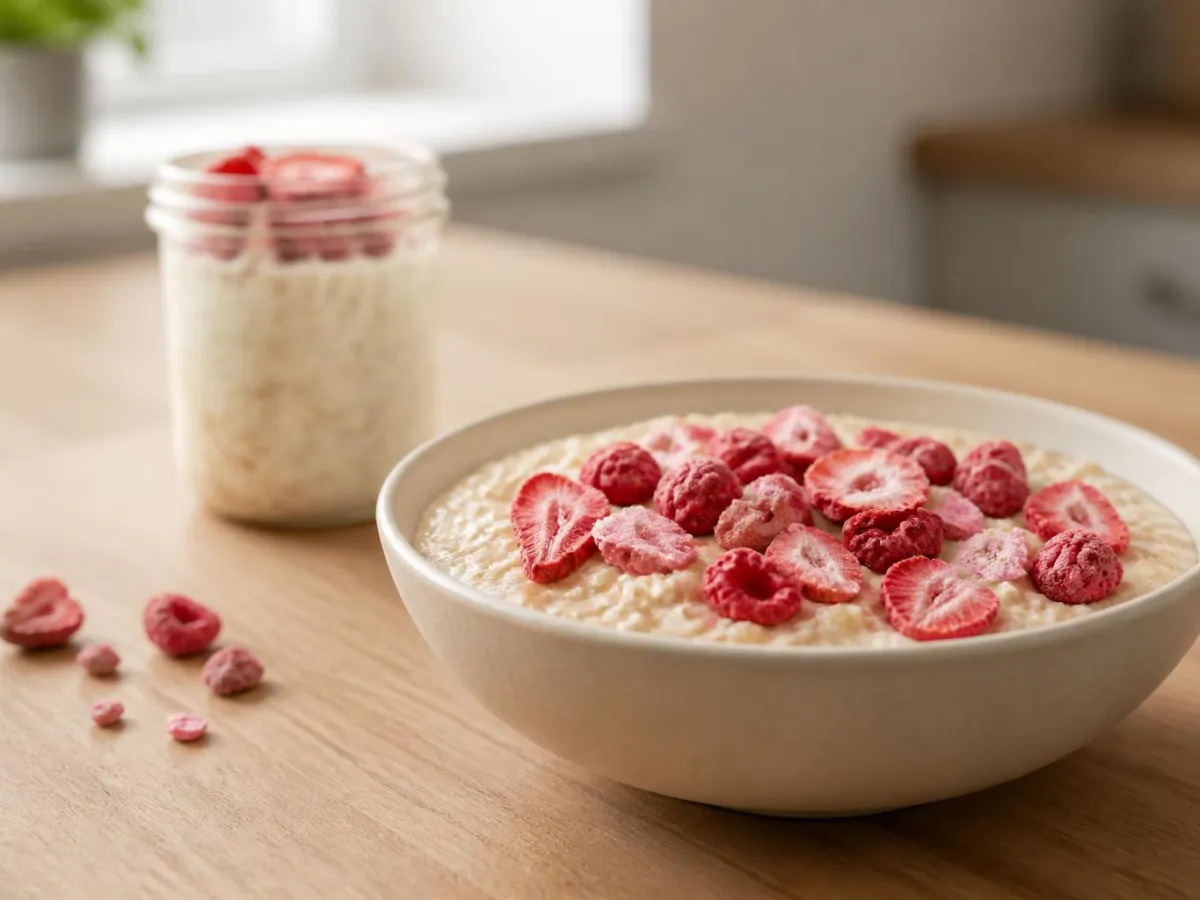
Freeze-dried fruit for cereal and homemade granola
Freeze-dried fruit goes into granola after the tray has gone cold, never into the oven. How much to use per bowl and per batch, a granola recipe, and how to keep the crunch.
- 10 minPrep
- 30 minCook
- Makes about 550g, roughly 12 servings of 45gMakes
- EasyLevel
Ingredients
- 300g jumbo rolled oats
- 100g nuts, roughly chopped (almonds, hazelnuts or pecans)
- 50g mixed seeds, such as pumpkin and sunflower
- 30g desiccated coconut (optional)
- 60ml light olive or rapeseed oil
- 90g honey, maple syrup or golden syrup
- 1 tsp ground cinnamon
- ½ tsp fine salt
- 30g freeze-dried fruit pieces, added at the very end
Method
- Heat the oven to 150°C fan (170°C conventional) and line a large baking tray.
- Stir the oats, nuts, seeds, coconut, cinnamon and salt together in a big bowl.
- Warm the oil and honey together until runny, pour over the dry mix and stir until every oat is coated.
- Spread thinly and evenly over the tray. Bake for 25 to 30 minutes, stirring once at the halfway point so the edges do not run ahead of the middle.
- Press the granola down gently with the back of a spoon if you want clusters, then leave it on the tray until it is completely cold, about 30 to 40 minutes. It crisps as it cools.
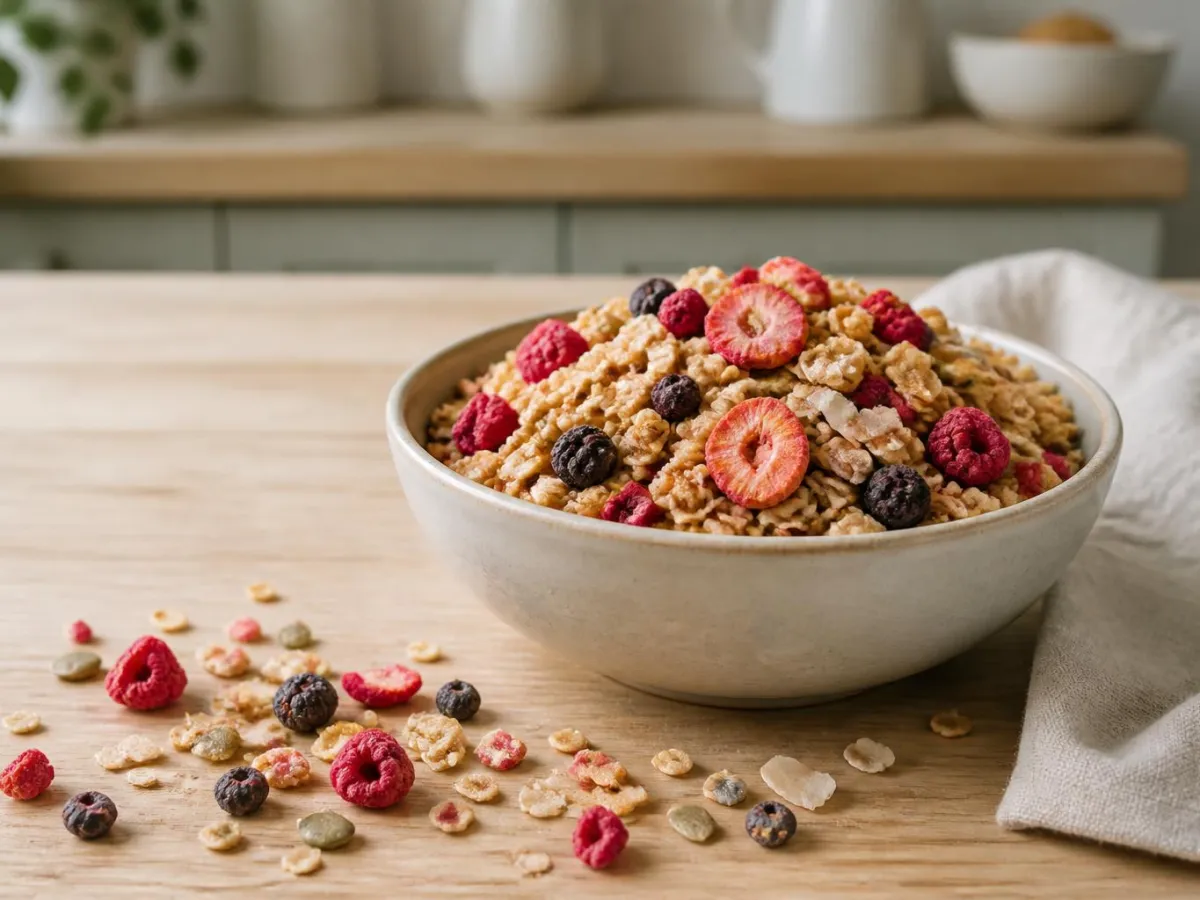
- Only now stir in the freeze-dried fruit. Tip into an airtight jar and seal it straight away.
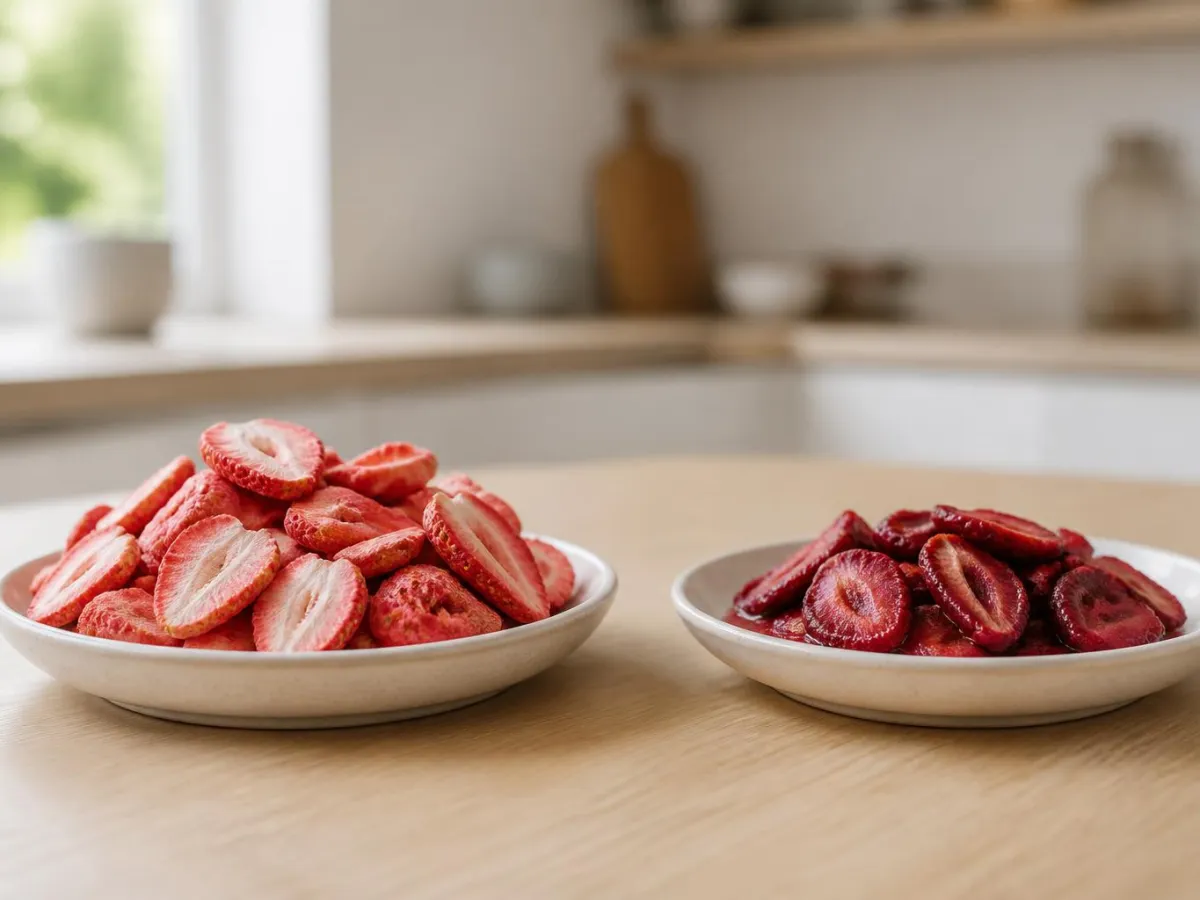
Scatter 5 to 10g of freeze-dried fruit over a bowl of cereal at the table, and stir about 30g of pieces through a batch of homemade granola only once the tray has gone completely cold. Never bake freeze-dried fruit into granola: there is almost no water left inside it to keep it cool, so at granola temperatures the pieces scorch, dull from scarlet to brown and taste bitter long before the oats are golden.
Most granola recipes tell you to tip the dried fruit in with the oats. That is fine for raisins and it is the quickest way to waste a pack of freeze-dried strawberries.
Why you should never bake freeze-dried fruit into granola
A granola tray wants about 150°C in a fan oven for half an hour. Freeze-dried fruit is a different material from the fruit it came from: only a few per cent moisture, an open sponge-like structure full of air, and nearly all of the remaining weight is the fruit's own sugar. Thin, dry, sugary and with an enormous surface area, it browns fast and then burns. For comparison, the oven temperature we suggest for crisping up fruit that has gone soft is 50°C to 60°C with the door ajar.
- The colour goes first. The dulling starts well before anything looks burnt, and a rust-brown berry is what most homemade granola ends up with.
- The flavour turns. Lightly caramelised fruit sugar is pleasant; burnt fruit sugar is bitter, and it carries through the whole batch.
- The pieces weld to the tray. Sugar that melts and then sets takes the fruit with it.
- The crunch is lost twice. Steam coming off the oats softens the fruit in the oven, and it then dries out hard rather than crisp.
Add the fruit afterwards and none of this happens. It needs no cooking, because it is already finished food.
How much freeze-dried fruit to add to cereal and granola
| What you are filling | Freeze-dried fruit | Roughly the same as fresh | When to add it |
|---|---|---|---|
| A 30 to 45g bowl of cereal | 5 to 10g | about 50 to 100g | at the table, from the jar |
| A 45g bowl of granola | 5g | about 50g | at the table, or already stirred through |
| A 550g batch of homemade granola | 30g | about 300g | when the tray is completely cold |
| A 500g jar of muesli | 25 to 30g | about 250 to 300g | stirred through the dry mix |
| One 5 A Day portion of dried fruit (NHS) | 30g | about 300g | with a meal, not between meals |
The ratio worth remembering is about 5g of fruit per 100g of finished granola. For any other quantity, the fresh to freeze-dried converter does the sums both ways.
How to make granola with freeze-dried fruit
The recipe above makes about 550g. Four things decide whether it works:
- Spread it thin. A deep layer steams instead of toasting, and steam is the enemy of the fruit that goes in later.
- Stir once, halfway. The edges of the tray always run ahead of the middle.
- Cool it completely on the tray. Granola crisps as it cools, and warm granola releases moisture that will soften the fruit the moment it lands. Give it 30 to 40 minutes and use a hand to check, not a guess.
- Seal it immediately. An open jar in a normal kitchen is enough to take the snap out of the berries within a day or two.
Freeze-dried pieces are so light that they settle unevenly in a jar. Give it a gentle shake before pouring, or keep the fruit in its own small jar and add it bowl by bowl, which keeps it crispest of all.
Which freeze-dried fruits work best in cereal
Everything works dry. The difference shows once the milk is in, and it comes down to how thick the pieces are and how much water the fruit lost. The times below are rough guides for cold water rather than exact figures, and thickness varies from producer to producer; milk is thicker and fattier than water, so it is usually a little slower.
| Fruit | Softens in about | In the bowl | Best for |
|---|---|---|---|
| Strawberry slices | 3 to 5 min | Softens steadily, colours the milk pink | Everyday cereal, granola, muesli |
| Raspberries | 2 to 4 min | Collapses quickest of all | Flavour rather than crunch |
| Blueberries | 10 to 20 min | Holds up best; skins keep the water out | Granola jars, lunchbox cereal |
| Cherries | 5 to 10 min | Chewy-crisp, good with dark chocolate granola | Clusters, weekend bowls |
| Banana slices | 5 to 10 min | Sweetens the milk as it softens | Cornflakes, wheat biscuits, porridge |
| Apple pieces | 10 to 15 min | Stays crunchy with cinnamon granola | Muesli, granola, lunchboxes |
For a bowl you eat slowly, choose blueberry, apple or mango. If you want the milk to go pink in a minute, choose raspberry or strawberry. Hot oats are a different job entirely, covered in freeze-dried fruit in porridge and overnight oats.
How to store granola with freeze-dried fruit
Airtight jar, cool dark cupboard, lid back on every time. Never the fridge: it is a humid place, and cold granola pulls condensation out of the kitchen air the moment it comes out. In a properly airtight jar expect the fruit to stay crisp for a couple of weeks, and less if the granola went in warm. Soft fruit is a texture problem rather than a safety one, and our guide to freeze-dried fruit that has gone soft covers how to rescue it.
How freeze-dried fruit in cereal counts towards 5 A Day
Freeze-dried fruit is concentrated fruit. Fresh berries are roughly 90 per cent water, and freeze-drying takes almost all of that water away while leaving the sugar, fibre and everything else behind, so about 100g of fresh berries comes out as roughly 10g dry. Weight for weight, then, the dry fruit carries far more sugar and calories than the fresh fruit it came from. As typical values, freeze-dried berries commonly land somewhere around 330 to 380 kcal per 100g, against roughly 30 to 50 kcal per 100g for the same fruit fresh, which makes a 10g scattering about 35 kcal. Those are typical ranges rather than figures for any particular pack: they vary with the fruit, the variety and the producer, so the label on your pack is what counts.
The NHS counts 30g of dried fruit as one of your 5 A Day, and advises eating dried fruit as part of a meal rather than as a between-meal snack, to reduce the risk of tooth decay. Breakfast is a meal, which puts cereal on the right side of that advice; grazing on the jar in the afternoon does not. There is more on freeze-dried fruit and your 5 A Day, on how much sugar freeze-dried fruit contains and on freeze-dried fruit and your teeth.
Freeze-dried fruit in cereal for babies and toddlers
Crisp freeze-dried pieces can be a choking risk for babies and young children. Soften them in milk or water first, or grind them to a powder and stir them through porridge or yoghurt. Follow NHS weaning guidance on textures and foods to avoid, and speak to your health visitor or GP about your own child. Our guide for babies and toddlers goes into it properly.
Where to buy freeze-dried fruit for cereal in the UK
British supermarkets keep a narrow range, and the baking aisle is usually a better bet than the fruit aisle: small pouches of strawberry and raspberry pieces, sometimes blueberry. The cereal aisle is where freeze-dried fruit hides in plain sight, listed in the ingredients of granolas rather than sold on its own. Online specialists carry far more fruits in bigger bags, and across UK online sellers freeze-dried strawberries typically work out somewhere around £5 to £11 per 100g, with small sachets costing considerably more (last checked September 2026, and prices change). Our guide to freeze-dried fruit in UK supermarkets covers who stocks what.
Our own shop is not open yet, so nothing on this page is for sale here and we have no prices, stock or delivery times of our own to quote. Everything above describes the wider UK market. Join the list below if you would like to hear when that changes.
If you change one thing: bake the oats plain, let the tray go stone cold, and only then stir the fruit in. That single change is the difference between brown, bitter specks and berries that still snap in week two.
Good questions, short answers
Can you bake freeze-dried fruit into granola?
No. Freeze-dried fruit holds only a few per cent moisture and is almost all sugar and fibre, so at the 150°C a granola tray needs it scorches, dulls from bright to brown and tastes bitter. Bake the oats on their own and stir the fruit in once the tray is completely cold.
How much freeze-dried fruit should I add to granola?
About 5g of freeze-dried fruit per 100g of finished granola, so roughly 30g for a 550g batch. Go up to 45g if you want fruit in every spoonful. Remember that 30g of freeze-dried berries started life as about 300g of fresh fruit, so it goes further than it looks.
How much freeze-dried fruit do you put on a bowl of cereal?
5 to 10g is a normal amount on a 30 to 45g bowl, which is roughly 50 to 100g of fresh fruit. Add it at the table rather than storing it mixed into the box, so it is still crisp when it meets the milk.
Does freeze-dried fruit go soggy in milk?
Eventually, yes, and how fast depends on the fruit. Raspberries and strawberry slices soften within a few minutes, while blueberries, apple and mango hold their crunch for ten minutes or more. Scatter the fruit on top just before you eat rather than letting the bowl stand.
Does freeze-dried fruit in cereal count towards your 5 A Day?
The NHS counts a 30g portion of dried fruit as one of your 5 A Day, and advises eating dried fruit as part of a meal rather than between meals to reduce the risk of tooth decay. Breakfast cereal is a meal, so it is a sensible place for it, but 30g of freeze-dried fruit is a generous serving: 10g is more typical.
How do you stop granola with freeze-dried fruit going soft?
Let the granola go completely cold before the fruit goes anywhere near it, because warm granola gives off steam. Then keep it in an airtight jar in a cool, dark, dry cupboard, never the fridge, and keep the lid on between servings.