Why freeze-dried fruit costs more than fresh
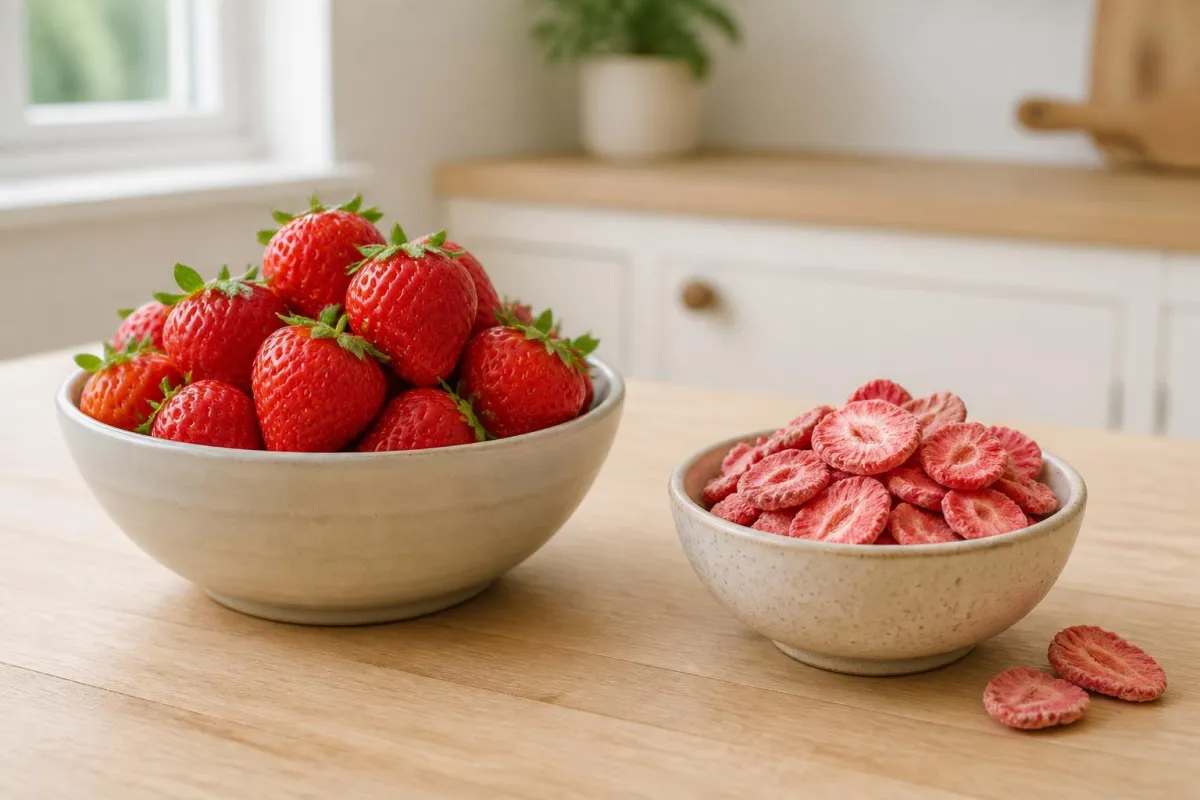
Most of the fresh fruit’s weight is water, so far less product is left after drying.
On this page
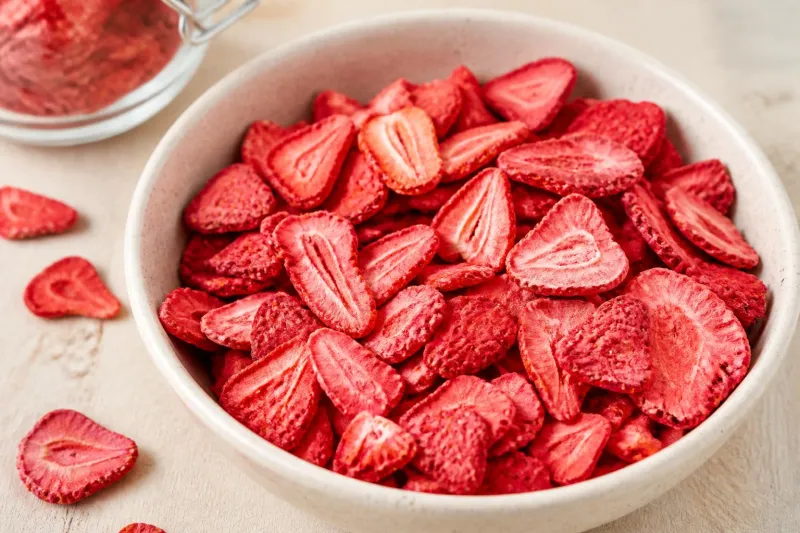
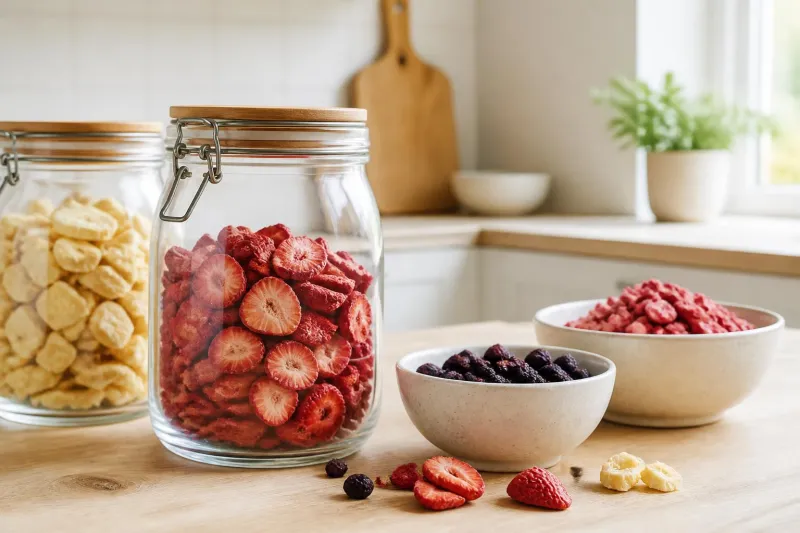
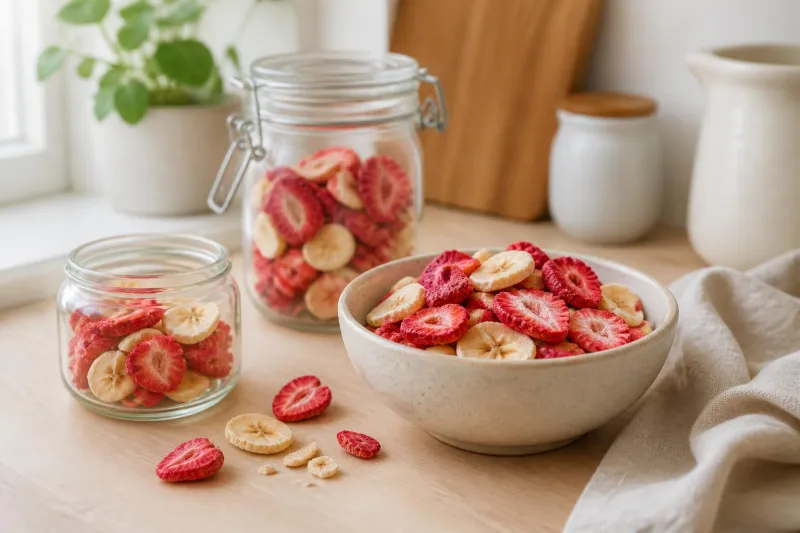
Freeze-dried fruit often looks expensive because you are not buying a punnet full of water. You are buying the part that is left after most of the water has been taken out, so the fruit becomes much lighter, smaller and more concentrated. A small bag can represent a surprisingly large amount of fresh fruit.
That is the short version of why people ask why freeze dried fruit is so expensive. The shelf price is higher than fresh fruit, but the comparison can be misleading if you only look at bag size. Once the water is gone, what remains is the fruit’s solids, fibre, natural sugars, acids, colour and flavour, packed into a much smaller weight.
The short answer: you are paying for fruit with the water removed
Fresh fruit contains a lot of water. Strawberries, raspberries, blueberries and apples all carry substantial moisture, which is part of what makes them juicy and perishable. In freeze-dried fruit, that water is removed while the fruit’s shape, colour and flavour are kept far better than with many other drying methods.
This matters because fresh fruit is sold by the punnet or by the kilogram, and water makes up a big chunk of that weight. Freeze-dried fruit is sold in much smaller packs, often in tens of grams rather than hundreds. If you put a 25g bag next to a 400g punnet, the bag can look poor value at first glance. But they are not directly comparable in the way they appear on the shelf.
Think of it like this. Fresh strawberries are mostly water. Take that water away, and you are left with a crisp, light version that weighs far less but still carries much of the fruit’s flavour. So the price per gram rises sharply, not because anyone has added luxury, but because the heavy, bulky part has gone.
That is why freeze-dried fruit can look dear even when the ingredients list is beautifully short. Often it is simply fruit, and nothing else.
How much fruit it takes to make a small bag
The easiest way to understand the value is to picture what happens to weight during drying.
Drying removes water, so the finished weight differs from the starting weight. Actual yield varies with the fruit and process; there is no verified fresh-to-dried conversion for the product in this article. Use the pack for nutrition information rather than deriving it from an assumed yield.
For a UK shopper, here is a simple way to picture it.
A small pouch may have started from a larger weight of fresh fruit, but that does not establish its nutrient content or its portion equivalence. Keep manufacturing yield, nutrition and dietary guidance separate.
The same is true in baking. If a recipe uses a spoonful of freeze-dried raspberry pieces or a tablespoon of strawberry powder, it can deliver a lot of flavour because the fruit is concentrated. We see this particularly with freeze-dried strawberry powder for baking and icing, where a small amount goes further than people expect.
Volume can mislead as well as weight. Freeze-dried fruit is light and airy. Some pieces stay whole and look generous in a bag, while others settle and compact in transit. Two packs of the same net weight can look different if one contains larger slices and the other has more broken pieces. That is one reason to compare the grams on the label, not just the apparent fullness of the pouch.
So when a 20g or 30g pack seems expensive, remember that it may have started life as several times that weight in fresh fruit. The water has gone, but the fruit itself has not vanished.
Why the freeze-dried process costs more than ordinary drying
Ordinary drying usually uses heat to evaporate water. Freeze-dried fruit uses a more complex route.
First, the fruit is prepared. It may be washed, hulled, sliced or sorted, depending on the product. Then it is frozen. Properly frozen fruit goes into a vacuum chamber, where pressure is lowered so that the ice inside the fruit can turn directly into vapour without first becoming liquid water. That direct change is called sublimation.
In plain English, the fruit is frozen solid, then dried under vacuum so the ice escapes as vapour. This helps the fruit keep its structure, colour and much of its original flavour. It is also why freeze-dried strawberries still look like strawberries, rather than collapsing into sticky leather.
The technical name for the process is lyophilisation. You do not need the term to enjoy the fruit, but it helps explain the cost. This is specialist food processing, not simply putting trays in a warm dryer for a few hours.
Why does that cost more?
First, the machinery is expensive. Freeze dryers are not basic ovens. They need controlled freezing, vacuum systems, condensers and careful monitoring.
Second, the process takes time. Freezing the fruit, running the vacuum cycle and removing moisture thoroughly is not quick. Longer production time means lower throughput than simpler methods.
Third, it uses energy in more than one stage. You are not just heating fruit. You are freezing it, maintaining vacuum conditions and driving off moisture in a controlled way.
Fourth, the process needs consistency. If the final moisture level is too high, the fruit can soften, spoil more easily or lose its crisp texture. If it is handled badly after drying, it can quickly absorb moisture from the air.
This is why freeze-dried fruit costs more than many ordinary dried fruits such as raisins or soft dried mango. Those products are useful in their own right, but they are made differently. Freeze-dried fruit is paying for a process designed to preserve shape, bright flavour and crisp texture, while producing a very low-moisture ingredient.
The hidden costs after drying
Drying is not the end of the story. Several less obvious costs push up the shelf price.
Sorting and grading come first. Fruit is variable by nature. Some berries are too small, too soft, too damaged or simply not suitable for the finished product. Good freeze-dried fruit starts with decent raw fruit, and not every piece makes the cut.
There is also waste. Hulls, stems, skins and damaged fruit all affect yield. If a product is sold as neat slices or whole berries, more material may be excluded than with a purée or powder.
Breakage matters too. Freeze-dried fruit is crisp and fragile. That is part of its appeal, but it also means pieces can crack in processing, packing and transport. Some breakage is normal. It is not necessarily poor quality. Still, if a retailer wants attractive whole slices or whole berries, that standard can increase cost.
Packaging is a bigger factor than many people realise. Freeze-dried fruit needs moisture-proof packaging. Once dried, it readily pulls water from the air. If the pouch is not suitable, the fruit can lose its crunch and shelf life. Resealable barriers, good seals and sensible pack formats all cost more than very basic bags.
Storage and handling matter as well. Dry products are often easier to store than fresh, but only if they stay dry. Warehousing, decanting and fulfilment all need care to avoid moisture exposure and breakage. If you want practical guidance once a pack is open, our guide on how to store freeze-dried fruit at home covers the basics.
Import and transport add another layer. If fruit is grown in one country, freeze-dried in another, then packed or sold in the UK, each stage adds cost. Because freeze-dried fruit is light but delicate, transport economics are not as simple as they look. You are shipping less water, yes, but also handling a product that can be crushed and that needs decent packaging.
Finally, there are normal food business costs. Testing, traceability, compliance, labelling and stock management all sit behind the shelf price. In the UK, labels and claims must meet our rules, and food businesses must work within frameworks set by bodies including the Food Standards Agency. For consumers, the practical point is simple. A plain ingredients list does not mean a cheap product to produce.
Is it actually poor value, or just easy to misread?
Often, it is easy to misread.
If you compare freeze-dried fruit with fresh fruit only by pack size, it can look overpriced. If you compare by servings, waste, convenience and shelf life, the picture changes.
Take waste first. Fresh berries are lovely, but they can turn quickly. A punnet bought with good intentions can become a soft, furry science project by the weekend. Freeze-dried fruit has a much longer shelf life when stored properly, so you are less likely to throw it away. Check the best-before date and storage instructions on the pack.
Then consider portion control. A small amount of freeze-dried fruit can be enough on porridge, cereal, yoghurt, flapjacks or cupcakes. You do not need a full bowl every time. For lunchboxes, a little goes a long way, especially when mixed with nuts, seeds or cereal.
Flavour is another point. Because the fruit is concentrated, the taste can be vivid. That makes it useful where you want fruit flavour without adding extra liquid, such as buttercream, meringues, sponge fillings or overnight oats. Our guide to freeze-dried fruit for snacking, breakfast and baking covers exactly that sort of use.
Weight and convenience matter too. Hikers and campers often like freeze-dried fruit because it is light to carry and keeps well. Parents like it because it sits in the cupboard ready for porridge or lunchboxes. Bakers like it because it adds colour and flavour without making batters soggy.
Nutritionally, the comparison needs a calm head. Freeze-dried fruit still contains the fruit’s natural sugars, so the sugar per 100g looks high once the water is removed. That does not mean sugar has been added. It means the fruit is concentrated. The same is true of kcal per 100g. A label can look startling until you remember that 100g of freeze-dried strawberries is a great deal more fruit than 100g of fresh strawberries.
This is one reason portion size matters. A realistic sprinkle might be 5g to 15g, not 100g. Check the label for serving suggestions, and if you are following a specific eating plan such as Slimming World, use the current guidance from that plan rather than guessing.
For general dried fruit, the NHS 5 A Day guidance lists a 30g portion and advises eating it with meals. This is not product-specific validation of every freeze-dried format. An estimated fresh-weight conversion cannot establish nutrient content or an official portion equivalent.
So is it poor value? Not necessarily. It is often a premium format, yes. But it is also a concentrated ingredient with a long shelf life, low waste and uses that fresh fruit cannot always match.
How to buy it wisely in the UK
Start with the ingredients list. For plain freeze-dried fruit, the best list is usually very short. Often it is just the fruit itself. If you want nothing added, check there is no sugar, syrup, oil or flavouring.
Next, compare net weight properly. Do not judge by pouch size alone. A larger bag is not always better value if it is mostly air around delicate fruit pieces. Compare grams, and think about how you will use it. Whole slices for lunchboxes and toppings behave differently from powders for baking.
Check whether the product is pieces, slices, whole berries or powder. This affects both price and usefulness. Powder can be brilliant for icing, yoghurt and cakes. Whole or broken berries are better if you want texture. If you are choosing between formats, our pages on freeze-dried raspberries for toppings and baking and other fruit types can help you picture the difference.
Read the nutrition panel in context. Concentrated fruit will show higher sugars and kcal per 100g than fresh. That is normal. What matters in real life is the amount you actually eat. A tablespoon stirred through porridge is not the same as sitting down with a whole bag.
Look at storage instructions. Once opened, freeze-dried fruit needs to stay dry. If a pack is resealable, use that feature properly. If not, transfer the contents to an airtight container promptly. Softening does not always mean the fruit has gone bad, but it can lose the crisp texture people buy it for.
Pay attention to breakage expectations. If you are buying freeze-dried strawberries or raspberries, some crumbs at the bottom are normal. In many kitchens they are a bonus, because they can be stirred into yoghurt or scattered over porridge rather than wasted.
Use small portions where they shine. A few practical ideas:
For porridge, stir through 5g to 10g near the end, or sprinkle on top.
For yoghurt, add a small handful just before serving so the fruit stays crisp.
For baking, fold pieces into cookie dough, crush over cheesecakes, or use powder in buttercream and icing sugar mixtures.
For lunchboxes, add a modest portion alongside nuts, seeds or plain cereal.
For camping or hiking, pack measured portions into small tubs or bags to keep them from being crushed.
The main thing is not to treat freeze-dried fruit as a like-for-like replacement for a full punnet of fresh berries at every meal. It is a different format with different strengths. Once you compare it on that basis, the price usually makes more sense.
Freeze-dried fruit costs more than fresh because it starts as fresh fruit, then loses most of its weight in water, passes through a slow and technical drying process, and needs careful packing and handling afterwards. It can still be good value if you use it for what it does best, concentrated flavour, long keeping quality, low waste and convenience in small portions.
Good questions, short answers
Is freeze-dried fruit healthier than fresh fruit?
Not automatically. It is still fruit, but it is concentrated because the water has gone. Weight for weight, it usually has more sugar and kcal than fresh fruit. A typical serving is about 10g, and values vary, so check the label.
Why is freeze-dried fruit dearer than ordinary dried fruit?
Usually because the process is more complex. freeze-dried fruit is frozen first, then dried under vacuum so ice turns to vapour by sublimation. That takes specialist equipment, time and energy.
Does freeze-dried fruit count towards 5 A Day?
The NHS guidance linked in this article covers dried fruit generally. It does not validate an identical portion equivalent for every freeze-dried product; do not infer one from water loss.
Why are the bags so small?
Because fresh fruit is mostly water. Once that water is removed, the fruit weighs much less and takes up less space. A small bag can represent quite a lot of fresh fruit.
Is freeze-dried fruit worth buying for baking?
Often, yes, if you want strong flavour and natural colour without adding extra liquid. Small amounts can go a long way in buttercream, yoghurt, porridge and biscuit dough.