Choosing kitchen containers that keep dry ingredients usable
For dry ingredients, the main risks are moisture, air exposure and poor labelling.
On this page
Choosing kitchen containers that keep dry ingredients usable starts with one simple aim, keep moisture out and make the ingredient easy to reach, measure and identify. For flour, sugar, oats, rice, seeds and baking ingredients, a good container does not need to be complicated. It needs a close fitting lid, a shape that suits your cupboard, and enough space that you are not constantly transferring half-used packets from one place to another.
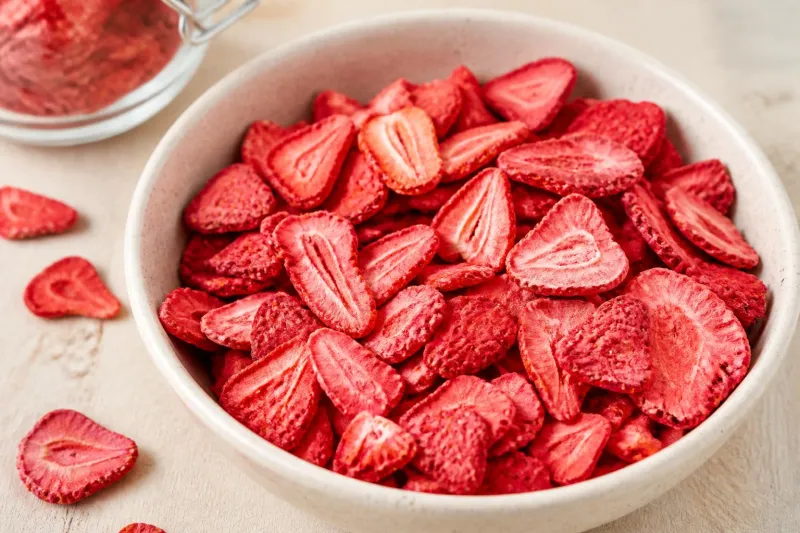
That matters even more with ingredients that lose their best texture quickly once exposed to air, especially freeze-dried fruit, vegetables and powders. In UK kitchens, where cupboards may be near kettles, ovens or external walls, small changes in humidity can affect crispness and flow. When readers ask us about Food storage containers UK shoppers should look for, our answer is practical rather than fashionable, choose containers that help you keep ingredients dry, labelled and in regular rotation.
What a good container needs to do
For dry cupboard ingredients, the basic job is protection. A container should reduce exposure to moisture, steam, crumbs, spills and strong odours from nearby foods. It should also let you open and close it without making a mess, because awkward storage gets ignored, and ignored storage leads to stale ingredients and waste.
Moisture control matters because many dry ingredients change texture long before they are unsafe. Caster sugar can harden into lumps. Salt can clump. Flour can pick up odours. Breakfast cereals go soft. Freeze-dried ingredients are especially sensitive because their crisp structure is designed to stay dry. Once moisture gets in, pieces that were light and crisp can become chewy, and powders can compact or cake.
A useful container also keeps the ingredient identifiable. If you decant plain flour, self-raising flour and icing sugar into matching tubs without labels, mistakes become much more likely. The same applies to fruit powders that can look similar at a glance. A neat cupboard is helpful, but an accurate cupboard is better.
The lid matters more than almost any other feature. In everyday use, look for a lid that closes cleanly all the way round and is easy to reseal after each use. A container that is technically airtight but fiddly to shut often ends up left slightly open. We would always choose a simpler, properly used lid over a more elaborate mechanism that people in the household avoid.
Placement matters too. Even the best container will struggle if it lives above a boiling kettle or beside the hob where steam is frequent. The Food Standards Agency’s general storage guidance is about following product instructions and storing food appropriately, and that same practical principle applies here, keep dry ingredients somewhere cool and dry, not just somewhere empty in the kitchen (Food Standards Agency storage guidance).
Which container materials make sense in a UK kitchen
For most cupboards, glass, rigid plastic and stainless steel can all work well. The right choice depends less on trend and more on weight, visibility, breakage risk and how you actually use the ingredient.
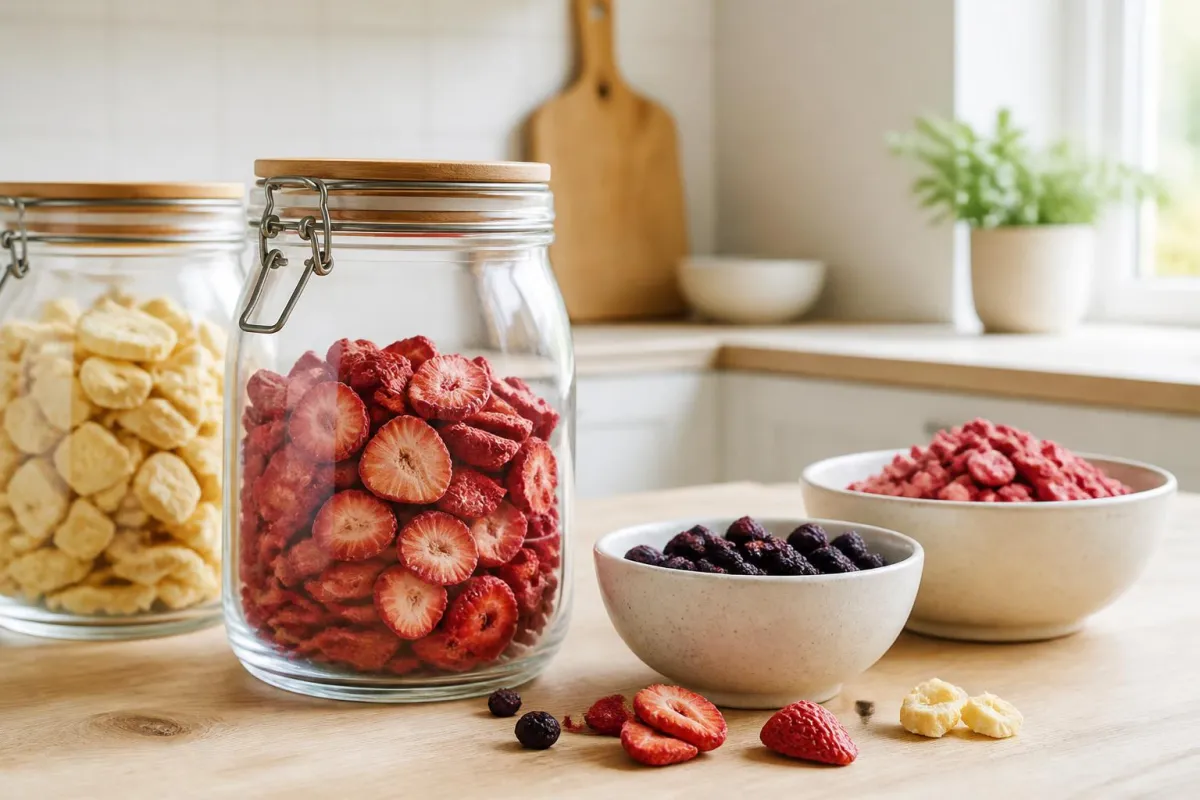
Glass is popular for good reason. It is easy to clean, does not stain easily, and lets you see the contents straight away. That visibility is useful for ingredients you reach for often, such as oats, rice or dried pulses. It also makes stock rotation easier because you can see how much is left. The trade-off is weight and breakage. A large glass jar full of flour can be awkward on a high shelf, and not every household wants heavy containers around children or on hard floors.
Rigid plastic is often the most practical choice for everyday cupboard use. It is lighter than glass, usually easier to stack, and often available in shapes that make efficient use of narrow kitchen cupboards. For bakers and batch cooks, that can matter more than appearance. The main thing is to choose sturdy containers intended for food use, with lids that still fit properly after repeated opening and washing. If a plastic lid warps or stops sealing well, replace the container rather than hoping it is still doing the job.
Stainless steel works well where you want durability and low breakage risk. It is lighter than glass and can be long-lasting. The limitation is visibility. If you cannot see the contents, you need good labels, otherwise duplicate buying and forgotten ingredients become more likely. For ingredients used less often, stainless steel can still be sensible, especially if the container opening is wide enough for a scoop or spoon.
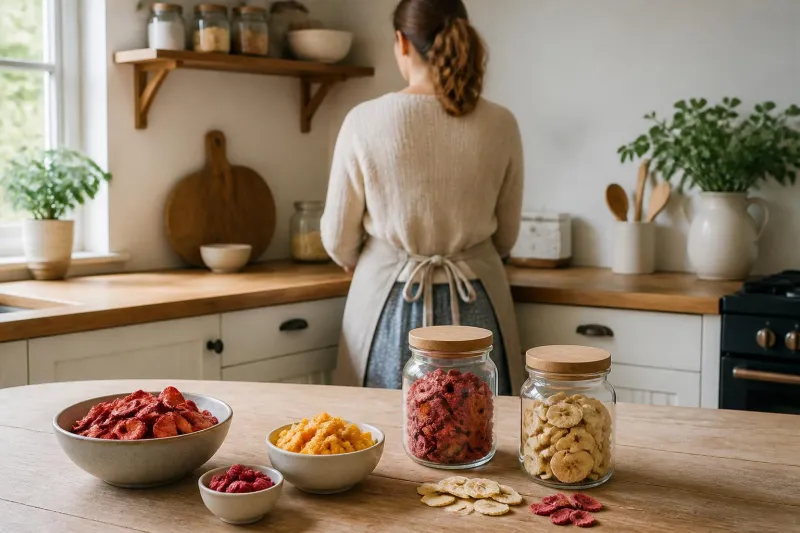
In a typical UK kitchen, many people end up using a mix. Glass for frequently used ingredients in easy reach. Rigid plastic for stackable cupboard staples. Stainless steel where durability matters. There is no need to force one material into every job.
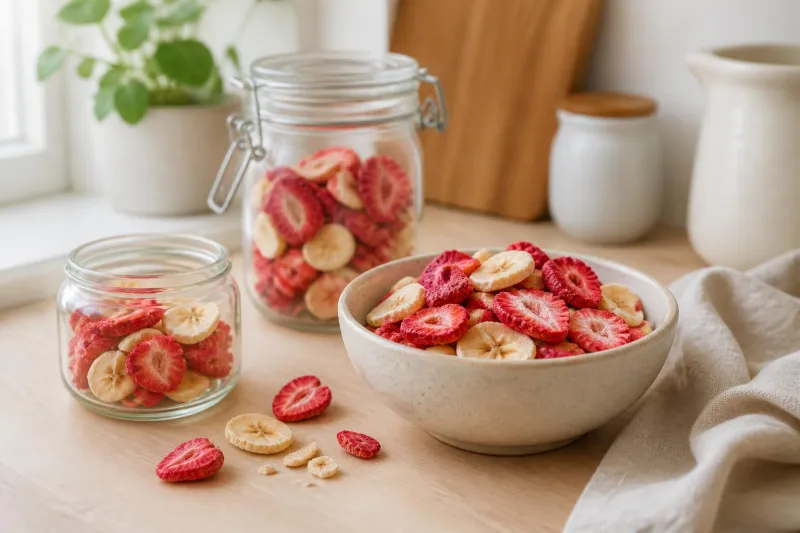
If you use freeze-dried ingredients regularly, the material itself is usually less important than the seal, the opening size and whether the container encourages quick handling. The less time the ingredient spends exposed to kitchen air, the better. We cover more on that in our guide to storing freeze-dried fruit after opening.
How to choose the right size and shape
The right container size depends on how much you buy, how often you use it, and whether you want room for a scoop. Bigger is not automatically better. Too much empty space can be inconvenient, and oversized containers take up cupboard room that could be used more efficiently.
Start with the pack sizes you actually bring home. If you usually buy 500 grams of porridge oats, choose a container that takes that amount comfortably, with a little headroom so the lid closes without crushing the contents. If you buy 1 kilogram bags of flour, look for a container that can hold the full bag, or accept that you will need two containers or will keep part of the flour in its packet.
For liquids, millilitres are straightforward. For dry ingredients, capacity labels on containers can be less helpful because volume does not tell you exactly how many grams of every ingredient will fit. One 1 litre container will not hold the same weight of icing sugar as rice. Treat capacity markings as a guide, then check with the ingredient you use most.
Opening width matters as much as total capacity. A tall, narrow container may fit neatly in a cupboard, but it is frustrating if you cannot get a measuring cup into it. For flour, sugar, oats and similar ingredients, a wider opening is often easier. For ingredients used in small amounts, such as bicarbonate of soda, cocoa powder or freeze-dried fruit powder, a smaller container can be perfectly practical if a spoon fits comfortably.
Shape should match storage position. Square and rectangular containers generally use shelf space more efficiently than round ones. Tall containers suit deep cupboards and dry goods used in larger quantities, such as pasta or rice. Lower, wider containers can be better for baking ingredients kept on a middle shelf where you want quick access.
A simple way to plan is to group ingredients by use:
- Everyday breakfast and baking staples, medium to large containers with easy-access openings.
- Small quantity flavourings and raising agents, compact containers with clear labels.
- Fragile ingredients, including many freeze-dried pieces, containers with enough room that the contents are not crushed every time the lid goes on.
If your cupboard routine needs to stay manageable on busy weeks, our piece on keeping a food cupboard usable through the week goes into simple ways to organise ingredients without turning the kitchen into a storage project.
When decanting helps and when the original packet is better
Decanting helps when the original packaging is awkward, flimsy or difficult to reseal. A paper flour bag that tears at the top, a sugar packet that spills into the cupboard, or a bag of oats with no reliable closure are all good candidates for transfer into a container.
Decanting is also useful when you use the ingredient frequently and need quick access. A container that opens easily and stands upright can make everyday cooking simpler, especially for ingredients used several times a week.
But decanting is not always the better choice. The original packet often carries key information, including the ingredient name, best before date, allergen information, storage instructions and nutrition panel. That information matters. The NHS guidance on food labels is a useful reminder that labels are there to help us compare foods properly, and that per 100g and per portion are not the same thing (NHS food label guidance).
For some products, especially specialist baking ingredients, mixes, powders and freeze-dried items, it is sensible to keep the packet even if you decant the contents. A practical approach is:
- Cut out or photograph the label before transferring.
- Write the ingredient name and best before date on the container.
- Keep the original packet until the container is empty if allergen or usage details may matter later.
Keeping the original packet is often better when the manufacturer packaging is specifically designed to protect the ingredient and includes a good reseal. If a packet is robust, clear and easy to close, there may be no benefit in moving the contents at all.
This is particularly true for ingredients used occasionally. If you only open a packet every few weeks, transferring it into another container may add handling without solving a real problem.
How to store freeze-dried ingredients after opening
Freeze-dried ingredients need the same good storage principles as other dry goods, but with a bit more care. Their useful texture depends on staying dry. Once opened, they should be handled quickly, resealed promptly and kept away from steam and humidity.
For freeze-dried fruit pieces, vegetables and powders, first check the packet. If the manufacturer gives storage instructions, follow those. In the UK, that product-specific guidance should take priority over general cupboard habits. If the packet has a reliable zip seal and the contents will be used up soon, keeping them in the original packaging is often the simplest option.
If the original pack does not reseal well, transfer the contents to a clean, dry container with a close-fitting lid. Make sure the container is fully dry before use. Even a small amount of residual moisture from washing up can affect the texture. We would avoid decanting straight after the dishwasher if the container still feels cool or slightly damp.
Choose a size that minimises empty space without crushing the ingredient. Whole freeze-dried berries or slices can break if packed into a container that is too small. Powders need a container that opens wide enough for a dry spoon and closes securely afterwards.
Handling matters. Use a dry spoon. Do not hold the open container over a steaming saucepan. Do not leave it open on the worktop while you finish the recipe. If you are baking, measure out what you need, close the container, then continue.
For powders in particular, keep checking the packet details before discarding them. Similar fruit powders can differ in ingredients, allergen statements and nutrition labelling. Crispberry’s ingredient pages, including our guide to freeze-dried fruit powder uses and handling, are there to help with kitchen understanding, but the actual packet remains the authority for the product in your cupboard.
Labels, allergens and cupboard routines that prevent waste
Labels save ingredients from becoming mystery tubs. At minimum, write the ingredient name and best before date. If the ingredient has a common lookalike, such as plain flour and self-raising flour, be specific. For freeze-dried powders, include the fruit or vegetable name in full.
If allergens matter in your household, go further. The Food Standards Agency’s consumer guidance makes the basic point clearly, ingredient and allergen information matters, and people should not guess suitability from a general assumption about the food (Food Standards Agency allergy guidance). In practice, that means not relying on memory once a product has been decanted. Keep the label information with the container, or keep the original packet until the contents are finished.
Simple rotation habits also help prevent waste:
- Put newer packs behind older ones.
- Finish an open packet before opening another of the same ingredient where practical.
- Check the cupboard before writing a shopping list.
- Keep ingredients you use weekly at eye level.
- Move occasional ingredients to a visible place before seasonal baking so they are not forgotten.
A quick monthly cupboard check is usually enough. Look for clumping, softening, stale odours, damaged lids and duplicate ingredients. This is not about making every container look identical. It is about making the cupboard easy to trust.
For households using a range of specialist dry ingredients, it can help to separate them by job. Baking staples together. Breakfast ingredients together. Freeze-dried fruit and powders together. That makes it easier to spot what needs using and reduces the chance of opening the wrong thing in a hurry.
At Crispberry, we focus on practical ingredient guidance for adult home cooks and bakers. We are published by Fleeta Limited, and we keep our advice grounded in ordinary kitchen use rather than idealised pantry photos. Good storage is rarely about buying the fanciest jar. It is about choosing containers that fit your cupboard, keeping packet information where you can find it, and handling dry ingredients in a way that protects texture and reduces waste.
If you want your cupboard ingredients to stay usable, start with the ingredients most likely to suffer from moisture or confusion. A few well-chosen containers, clear labels and a consistent routine usually do more than a full set of matching tubs ever will.