Is freeze-dried fruit ultra-processed?
Freeze-dried fruit is not automatically ultra-processed.
On this page
If the packet contains nothing but fruit, freeze-dried fruit is not usually what people mean when they talk about ultra-processed food. In plain terms, removing water does not automatically put fruit into the same category as products made with added sugars, flavourings, coatings, emulsifiers or other manufactured ingredients.
That is the short answer to the question, “is freeze dried fruit ultra processed?” Usually, plain freeze-dried fruit is treated differently from heavily formulated snacks. The important part is the label. Two packets can look similar on the shelf but be very different once you read the ingredients, allergen information and nutrition panel.
What people usually mean by ultra-processed
“Ultra-processed” is a classification idea, not a legal food label that UK manufacturers must print on packs. You will see it used in media coverage, books and general food discussions, but you will not usually find an official stamp saying “ultra-processed” or “not ultra-processed” on a packet in a UK shop.
That matters because everyday shopping is done from the back of the pack, not from a theory. In practice, people often use “ultra-processed” as shorthand for foods that are highly formulated, made with ingredients not commonly used in home kitchens, or designed to be especially convenient, flavoured or shelf-stable. That can include products with sweeteners, flavour enhancers, colourings, stabilisers, glazing agents, coatings and blends of refined ingredients.
The trouble is that the term can become blurry once it leaves a research or policy discussion and lands in an ordinary cupboard. Many foods are processed in some way. Chopping, drying, freezing, milling and pasteurising are all forms of processing. A bag of oats is processed. Flour is processed. Tinned tomatoes are processed. That does not automatically make them “ultra-processed” in the way most shoppers mean it.
So when people ask whether freeze-dried fruit is ultra-processed, they are usually trying to work out something more practical. They want to know whether it is basically fruit with the water removed, or whether it is a more engineered snack product with extra ingredients and a very different nutritional profile.
For home cooks and bakers, that distinction is more useful than arguing over labels alone. If we want to understand what we are putting into a cake batter, breakfast bowl or cupboard tin, we need to separate simple preservation from heavy formulation.
Where plain freeze-dried fruit usually sits
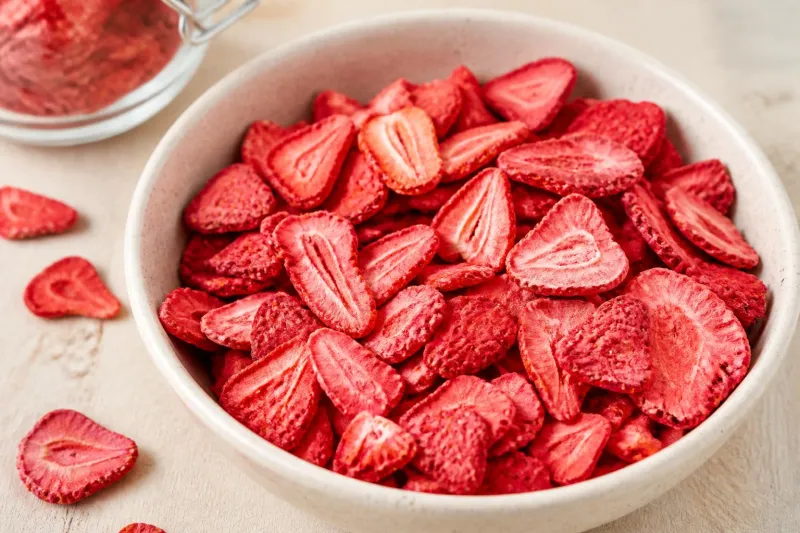
Plain freeze-dried fruit usually sits in the simpler camp. If the ingredient list says something like “strawberries” or “raspberries”, and nothing else, the product is generally understood as fruit that has been preserved by removing water at low temperature, not as a heavily reformulated food.
That does not mean it is identical to fresh fruit in texture or handling. It is lighter, drier, crisp and much more fragile. It may crush into crumbs or powder very easily. But a change in texture is not the same thing as a long list of added ingredients.
Where things change is when the packet contains more than fruit. Some products sold in the same general aisle can include:
- added sugar or syrup
- oils
- chocolate or yoghurt-style coatings
- flavourings
- acidity regulators
- anti-caking agents in powders
- other fruit juice concentrates used as sweeteners or binders
Once those additions appear, you are no longer looking at plain freeze-dried fruit alone. You are looking at a formulated product that uses freeze-dried fruit as one component.
This is why broad statements are unhelpful. “Freeze-dried fruit” is not one single thing in the same way that “biscuits” are not one single thing. A packet of plain freeze-dried raspberry pieces is different from a strawberry snack coated in sweetened yoghurt flavouring. They may both be crunchy and shelf-stable, but the ingredient lists tell very different stories.
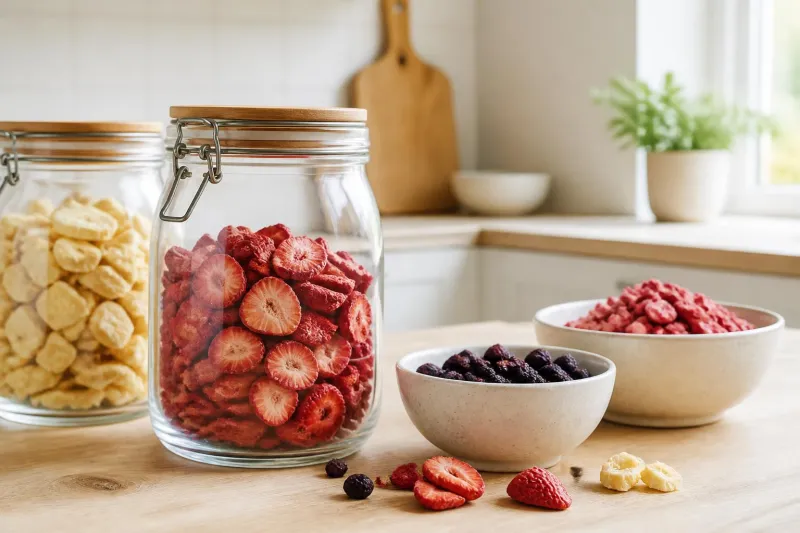
In UK shopping, that is the practical dividing line. Fruit with water removed is usually considered differently from fruit-based snacks with multiple additions. If you want a straightforward cupboard ingredient for baking, porridge, muesli or decorating, plain single-ingredient fruit is normally the clearest choice. Our guides to freeze-dried fruit in different kitchen forms and freeze-dried fruit powder for baking and mixing can help you recognise those differences.
What to check on the packet before deciding
If you want to decide sensibly whether a packet is simply dried fruit or something more processed, start with three places on the label.
First, read the ingredient list. This is the quickest test. If it says only the fruit name, that is a strong sign you are dealing with plain freeze-dried fruit. If it lists sugar, maltodextrin, flavourings, oils, cocoa-based coatings, starches or stabilisers, you are looking at a more manufactured product.
Second, check allergen information carefully. In the UK, allergen information matters whether a food seems simple or not. The Food Standards Agency guidance for consumers explains why ingredient and allergen details should be checked rather than assumed. This is especially important with coated fruit, mixed snack products and powders packed in facilities that may also handle other allergens. A fruit powder may still be fruit-only in ingredients, but the allergen statement can still affect whether it suits your household.
Third, read the nutrition panel properly. The NHS guide to reading food labels points out that per 100g and per portion are different comparison bases. This matters a lot with freeze-dried ingredients because they are very light.
A common mistake is to compare freeze-dried fruit directly with fresh fruit by weight without noticing that the water has been removed. On a per 100g basis, freeze-dried fruit can look much more concentrated in sugars and energy simply because 100 grams of a dry product represents a lot of fruit. That does not mean sugar has been added. It may simply mean the water is gone.
For example, an illustrative kitchen use might be 5 grams stirred into muesli or 12 grams folded into icing. Those are small amounts by weight, but the nutrition table may still be printed per 100g. So do not glance at one column and jump to conclusions. Check:
- whether the panel gives values per 100g, per portion, or both
- what the manufacturer means by a portion
- how many grams you would actually use in your recipe or bowl
- whether sugar is naturally occurring from fruit, or partly added
If the packet gives a suggested serving, remember that it is only a manufacturer reference point, not a universal rule. For baking, your actual use might be quite different.
Also look at the product name with care. “Freeze-dried strawberries” is not the same as “strawberry-flavoured bites” or “fruit snack with strawberry”. The front of pack can sound simple while the back of pack tells a more complex story.
Why freeze-dried fruit can look more processed than it is
Freeze-dried fruit often looks more processed than it really is, especially to anyone used to judging foods by appearance and texture.
Fresh fruit is soft, moist and recognisable. Freeze-dried fruit is dry, crisp and very light. It can shatter when crushed between your fingers. It can turn into dust in the bottom of a tub. It can sit in a cupboard unopened for far longer than fresh berries would survive in the fridge, provided the product is stored as labelled. That combination can make it seem more industrial than a punnet of fresh fruit.
But appearance can be misleading.
The crispness comes from the lack of moisture, not necessarily from additives. The lightness comes from the fruit structure being left behind once the water has been removed. The powdering happens because dry fruit is fragile. None of those features, by themselves, prove that a product is ultra-processed.
This is especially noticeable with powders. A bright pink strawberry powder can look like a manufactured flavouring even when it is simply milled freeze-dried fruit. Likewise, raspberry crumbs used on buttercream can seem like a decorative processed topping when they may be nothing more than crushed fruit pieces.
Convenience also affects perception. Foods that live neatly in a cupboard often feel more “processed” than foods that need quick use from the fridge. Yet shelf convenience and ingredient complexity are not the same issue. A single-ingredient dried herb, for example, is convenient without being heavily formulated. Freeze-dried fruit can be similar in that respect.
Packaging can add to the confusion too. Resealable pouches, moisture barriers and oxygen-conscious packing methods can make a simple ingredient seem more technical than it is. In reality, dry ingredients need protection from moisture in the air. Once opened, good storage matters if you want to keep the texture. We cover the practical side in our guide on how to store freeze-dried fruit after opening.
So if a product looks unusually crisp, colourful or long-lasting, do not decide from appearance alone. Go back to the ingredient list. That is the more reliable test.
How to choose the right type for baking and cupboard use
Once you have worked out that a product is plain fruit, the next question is usually not about processing at all. It is about form. The right type depends on what you want it to do in the kitchen.
Whole pieces are useful when you want visible fruit shape. They work well as a topping for granola, porridge, yoghurt or traybakes added at the end. They are also handy for decorating cakes and desserts where appearance matters. The trade-off is fragility. Whole freeze-dried berries can break in storage and handling, so “whole” often means mostly whole with some natural breakage.
Slices are practical when you want a neater look or easier measuring. Strawberry slices, for example, are often simpler to scatter over bakes or press onto icing than irregular chunks. They can also be easier to crumble by hand into smaller flakes.
Small pieces or broken fruit are often the most useful all-round cupboard format for home baking. They mix into cookie doughs, flapjack-style bakes, cake batters and fillings with less crushing than large whole fruit. They also tend to distribute more evenly.
Powders are best when you want fruit flavour and colour spread through a mixture rather than visible pieces. They are useful in buttercream, icing sugar glazes, meringue-style mixtures, cheesecake fillings and dry mixes. Because powder is dry and concentrated, it can affect texture differently from fresh fruit puree or jam. It adds fruit solids without adding much moisture, which is often exactly the point.
A few practical examples:
- For decorating the top of a loaf cake, slices or small pieces are usually easier than powder.
- For colouring and flavouring buttercream without extra liquid, powder is usually more convenient than fruit pieces.
- For folding into a scone or biscuit-style dough, small pieces are often easier to distribute than large whole berries.
- For dusting over chocolate bark or white icing, a fine powder gives a more even finish.
This is about kitchen function, not health claims. A powder is not “better” than pieces in the abstract. It is just better for some jobs. If you want help matching texture to use, our guide on picking the best freeze-dried fruit texture for each bake goes into more detail.
It is also worth thinking about storage once opened. Whole pieces and slices are often easiest to rescue if they soften slightly, because they can still be used crumbled into toppings. Powders are more sensitive to moisture in the air and can clump if not resealed well. Keep an eye on the packet instructions and use clean, dry spoons.
For recipe planning, weigh what you use in grams rather than guessing by handfuls, especially with powders and light fruit pieces. A large-looking bowlful may weigh very little. If you are mixing into icing or batter, small changes in grams can make a noticeable difference to colour, sharpness and texture. If you are rehydrating for a sauce or compote-style use, measure your liquid in millilitres and add gradually, because different cut sizes absorb differently.
So, is freeze dried fruit ultra processed? In most plain, single-ingredient cases, no, that is not the most accurate way to describe it. It is usually fruit that has had water removed, not a heavily formulated snack. The sensible way to decide is not by the crisp texture or the bright colour, but by the packet itself. Read the ingredients, read the allergen information, and compare the nutrition panel on the correct basis. That gives you a much clearer answer than the appearance ever will.