A food cupboard that stays usable on busy weeks
Group cupboard foods by use, not just by type.
On this page
- Start with a cupboard layout you can keep up
- Which foods belong together and which do not
- Containers, packets and the moisture question
- Labels that help you use food before quality drops
- Small-kitchen ideas that make awkward cupboards work harder
- How freeze-dried ingredients fit into a practical cupboard plan
A usable food cupboard is not the one with the prettiest jars. It is the one you can reset in five minutes on a Wednesday evening, where everyday ingredients are easy to see, packets stay readable, and nothing disappears behind a row of worthy but forgotten staples.
Our best food storage cupboard ideas start with that principle. Organise by how you actually cook, keep moisture-sensitive ingredients dry and visible, and label in a way that helps you use food while the texture and quality are still where you want them. That matters for flour and crackers, but it matters just as much for freeze-dried fruit, vegetables and powders, which stay at their best when storage is dry, tidy and easy to manage.
Start with a cupboard layout you can keep up
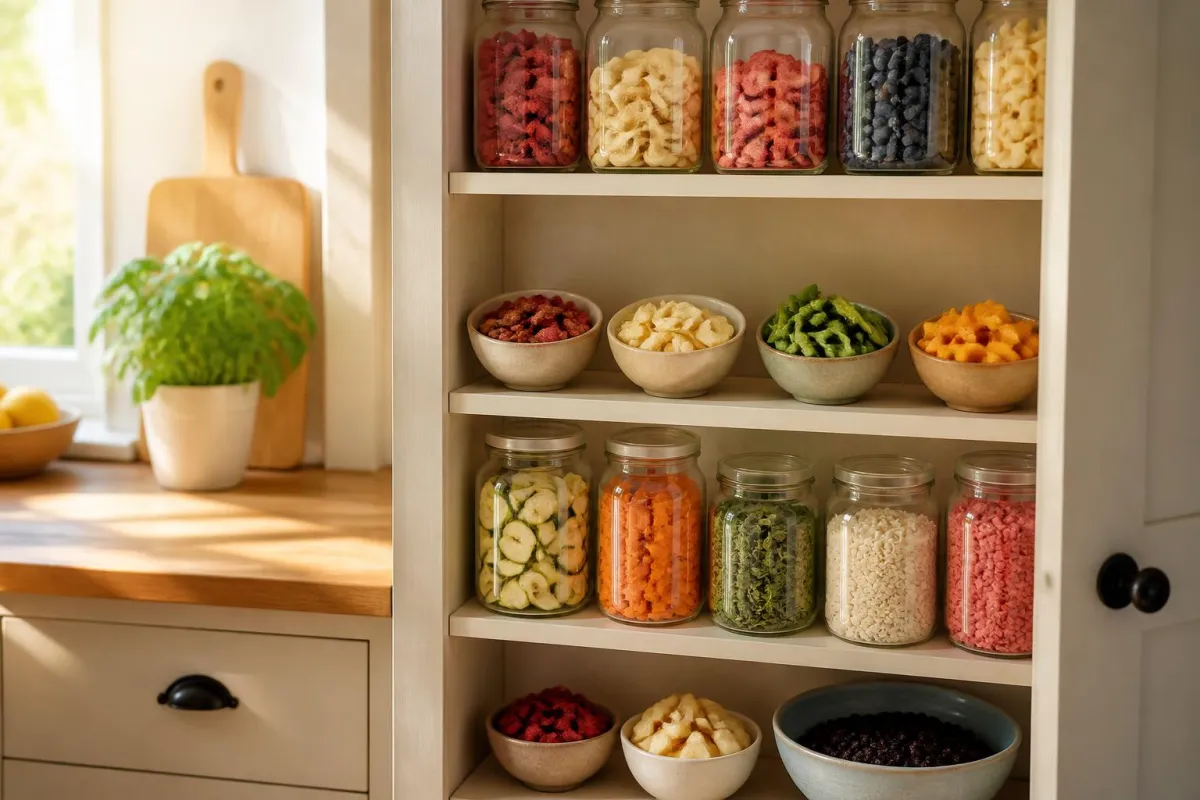
The easiest cupboard to maintain is usually split into broad working zones rather than very narrow categories. If you create twelve tiny sections, they look neat for a day and then collapse as soon as you bring home an extra bag of pasta or a half-used packet of oats.
We suggest starting with four practical zones.
First, keep a daily cooking zone at eye level. This is for the ingredients you reach for several times a week, such as pasta, rice, tinned tomatoes, stock, oils that are suitable for cupboard storage before opening, lentils, wraps, noodles, and your most-used seasonings. If you cook after work, this zone should do most of the heavy lifting.
Second, create a baking and sweet pantry zone. Group flour, sugars, baking powder, bicarbonate of soda, cocoa, chocolate chips, dried fruit, nuts, decorations and freeze-dried toppings together. This avoids the familiar problem of finding flour in one cupboard, cake cases in another and the fruit powder in a third.
Third, set up a quick-meal and lunch zone. Think soup packets, couscous, instant noodles, jars for speedy sauces, crackers, crispbreads, nut butter and other low-effort ingredients. When busy weeks hit, this zone is what stops the cupboard becoming a jumble.
Fourth, give over one smaller area to back-up stock and specialist ingredients. This is where extra bags of rice, unopened flour, seasonal baking ingredients, and less frequent items such as freeze-dried vegetable powders can sit without clogging your everyday space.
Try not to divide the cupboard by supermarket aisle logic alone. “All tins together” sounds tidy, but if your chopped tomatoes are used for weekday dinners and your sweetcorn is mostly for lunch salads, those items may work better in different zones. Organising by use beats organising by abstract category.
If more than one adult cooks in the house, keep the layout obvious enough that anyone can put things away correctly without asking. A cupboard system only lasts if the whole household can follow it.
Which foods belong together and which do not
Some foods naturally belong together because they are used together. Others should be separated because they create clutter, hide one another, or have different storage needs.
Baking ingredients work best as a cluster. Flour, sugar, baking powder, yeast, cocoa, cake decorations, dried fruit and freeze-dried fruit all make sense in one area because they are often used in the same session. If you use fruit powders for icing, sponge batter, buttercream or yoghurt toppings, keep them with the baking ingredients rather than with breakfast cereal. That cuts down rummaging and reduces the chance of duplicate buying.
Quick-meal staples also benefit from being grouped by use. Pasta, noodles, couscous, rice pouches, jarred sauces, stock cubes and tins used for fast suppers should live together. The point is speed. If you can pull together a tray of “things for tonight” in seconds, the cupboard is doing its job.
Snacks are where clutter often starts. A good rule is to separate adult grab-and-go snacks, including Crispy Snacks, from ingredients. Crackers, cereal bars, popcorn kernels, nuts and packets of savoury snacks should not spill into the same space as your baking almonds, sesame seeds or pumpkin seeds if you use those for recipes. They may look similar, but they play different roles in the kitchen.
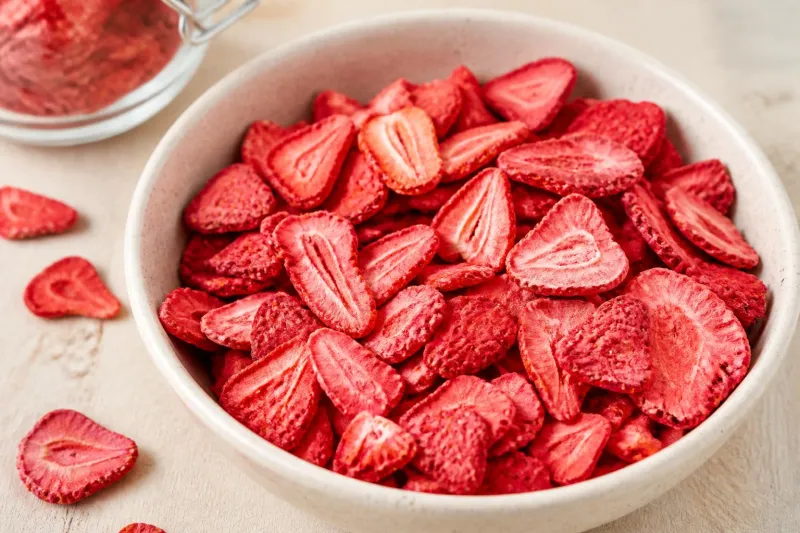
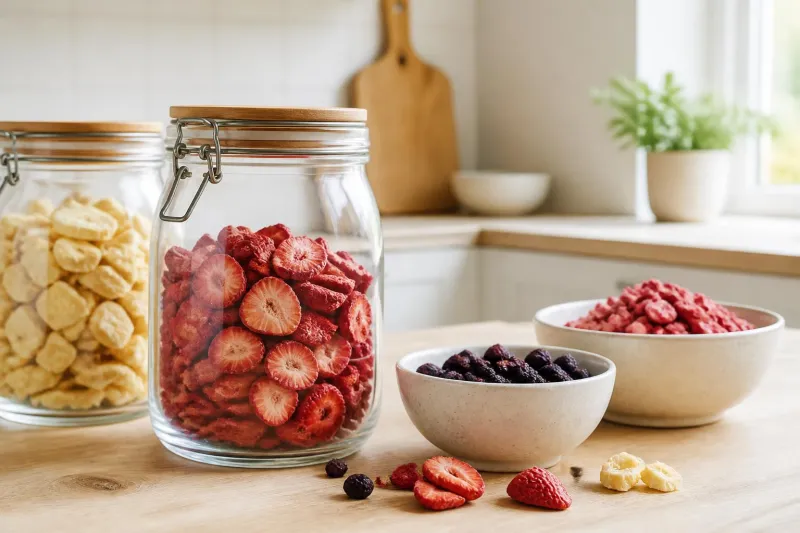
Freeze-dried ingredients deserve their own sub-group within the zone where you use them most. For many home cooks, that means one basket or shallow bin inside the baking section. Put freeze-dried fruit pieces, powders and vegetable ingredients together, with enough space to read the front of each packet. If you use them more often for breakfasts and smoothies than for cakes, place them near oats, seeds and toppings instead.
What should not be stored together? Foods with very different pack sizes and turnover rates are awkward neighbours. A tall bag of flour behind tiny sachets of raising agent leads to waste. Likewise, “healthy bits”, “international foods” and “miscellaneous packets” are usually signs that the system is no longer helping.
Keep onions and potatoes out of the dry-goods cupboard if the cupboard is warm, crowded or poorly ventilated. They are not dry packaged staples, and they can affect the condition of nearby foods. Also keep strongly scented non-food items elsewhere. Cleaning products should never share food storage space.
For readers checking labels carefully, remember that ingredient and allergen information on the actual packet matters. General grouping can help organisation, but it does not tell you whether a food is suitable for your needs. The Food Standards Agency’s consumer guidance is the relevant UK reference point here, especially for ingredient and allergen information on labels: Food Standards Agency consumer allergy guidance.
Containers, packets and the moisture question
Decanting is useful, but it is not automatically better. A clear container can make a cupboard calmer and easier to scan, yet the original packet often carries the information you need most, including storage instructions, best before date, cooking directions and allergen details.
As a working rule, decant foods that are messy, awkward or prone to spillage, but only if you transfer the key information as well. Flour, sugar, oats, rice and breadcrumbs are obvious candidates if you use them often. Choose containers with close-fitting lids and a size that leaves as little dead air space as practical once opened.
Keep foods in their original packet if the pack is already doing the job well. Many biscuits, crackers, noodles, snack bars and specialist ingredients are easier to manage in their own packaging, especially if you are likely to want the instructions later. You can still place the packets inside a basket to keep the shelf orderly.
Moisture is the main reason this matters. Dry foods soften, clump or stale when they pick up water from the air. In a UK kitchen, that may happen gradually rather than dramatically, but it still affects texture. Crackers lose crispness. Sugars harden. Powders form lumps. Freeze-dried ingredients can lose the dry, brittle texture that makes them easy to crush, sprinkle or blend.
That is why we favour dry storage choices over purely decorative ones. A jar with a loose lid may look attractive, but it is not much use for a moisture-sensitive powder. An opened packet folded over once and left in a steamy kitchen cupboard is also not ideal.
For freeze-dried ingredients in particular, keep them sealed well after opening and away from humidity. If the original pouch is resealable and in good condition, it is often the best place to keep the contents. If not, move them to a genuinely airtight container and keep the original label details with them. We cover the handling in more detail in our guide to storing freeze-dried fruit properly after opening.
Do not store dry ingredients above a kettle, next to a dishwasher vent, or in a cupboard that gets warm from an oven housing if you can avoid it. “Cupboard storage” is not one single condition. The driest, coolest, darkest cupboard in the kitchen is usually the most useful for quality.
For food safety and storage generally, UK readers should follow the product instructions where given. The Food Standards Agency’s storage guidance is the relevant primary reference on following storage directions and handling food appropriately: Food Standards Agency food storage guidance.
Labels that help you use food before quality drops
A good cupboard label does more than say what the food is. “Flour” is not enough if you keep plain flour, self-raising flour and rye flour in similar tubs.
We find the most useful labels include four pieces of information where relevant.
Write the product name clearly, including the type. For example, “Plain flour”, “Golden caster sugar”, “Freeze-dried strawberry pieces” or “Raspberry powder”.
Add the date opened. This is especially helpful for ingredients used little and often, such as cocoa, specialist flours, nuts, seeds and freeze-dried powders. You are not trying to create a laboratory system. You are simply giving yourself a fair chance of using the ingredient while quality is still good.
Keep packet instructions if they matter. For couscous, noodles, rice and specialist powders, either tape a trimmed section of the original packet to the back of the container, or note the key preparation instruction on a small label. If a powder is usually added by spoonfuls rather than by fixed serving size, keep the actual packet for reference rather than inventing your own standard.
If you compare foods, note the comparison basis accurately. The NHS explains that a portion and 100g are not the same basis for comparison, which matters when you are reading labels and trying to judge one product against another: NHS food labels guidance. In practice, that means if you copy any nutrition information onto a cupboard note, you should also copy whether it is per 100g, per serving, or prepared as directed. Otherwise the comparison can become misleading very quickly.
For allergens, do not rely on memory once food has been decanted. Keep the original packet until the container is empty, or attach the relevant panel. This is simple, practical and far safer than assuming you will remember later.
If you use baskets rather than decanting, label the basket by purpose, not by a vague lifestyle category. “Weeknight dinners”, “Baking toppings”, “Lunch cupboard” and “Freeze-dried fruit and powders” are all more helpful than “Pantry bits”.
Small-kitchen ideas that make awkward cupboards work harder
Small cupboards fail when they become deep caves. The answer is not to buy more organisers than ingredients. It is to choose a few tools that improve sightlines.
Shelf risers are useful for tins, jars and short packets because they create a back row you can still see. They are less useful for unstable bags of flour or very tall cereal boxes. Use them where they genuinely improve visibility.
Shallow bins are one of the best small-kitchen solutions because they let you pull a whole category forward in one movement. The important word is shallow. A deep bin that swallows ten unrelated packets is just a drawer without the convenience. A shallow bin for sachets, stock cubes, gravy granules or freeze-dried toppings can work very well.
Baskets help most when they hold one clear use category. A basket labelled “Pasta night” with pasta, pesto, olives and breadcrumbs may be more practical than a basket labelled “Italian”, which soon fills with anything vaguely Mediterranean.
Door space can be useful for light items only. Small spice packets, wraps of stock cubes, measuring spoons or clip strips may fit. Heavy jars usually do not belong there. Check that the door still closes freely and that nothing is pressed against packets on the inside shelves.
For awkward corner cupboards or very high shelves, put reserve stock at the back and active stock at the front. If you need a step stool to reach an ingredient, it is not in your active zone. That is fine for back-up bags of rice. It is not fine for the oats you use every morning.
One of the most effective food storage cupboard ideas for a narrow kitchen is to store by depth. Keep tall items at the back only if they do not hide smaller essentials. Better still, group similar heights together so the shelf reads clearly at a glance.
Try a simple visibility test. Stand where you normally open the cupboard. If you cannot identify what is there in three seconds, the shelf is probably carrying too many categories at once.
How freeze-dried ingredients fit into a practical cupboard plan
Freeze-dried ingredients earn their place in a well-run cupboard because they are convenient, light to store and useful in small amounts. The key is to place them where you will actually remember to use them.
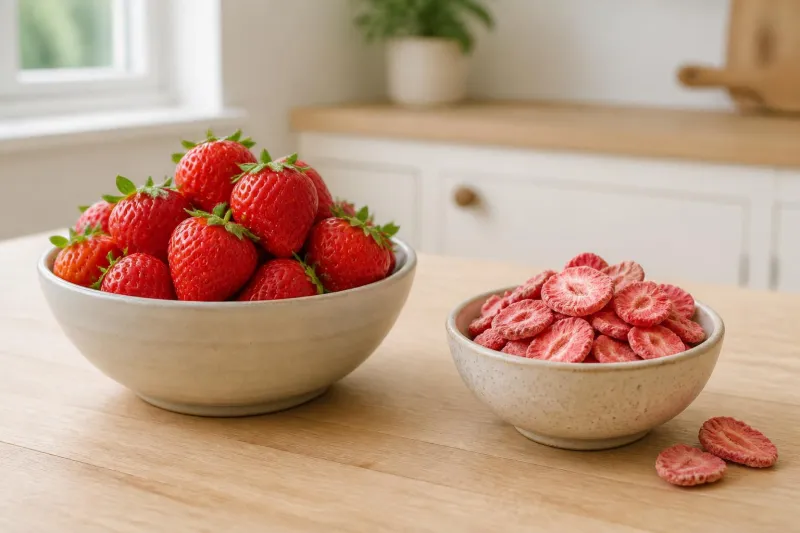
For most home bakers, freeze-dried fruit pieces and powders belong in the baking zone, ideally in a dedicated basket or shallow bin. Keep whole or sliced pieces near cake decorations, chocolate and dried fruit. Keep powders near cocoa, icing sugar and flavour extracts, because that is the moment they are most likely to be used.
If you use freeze-dried fruit on porridge, yoghurt or cereal, a breakfast sub-zone may make more sense. In that case, keep the packets in a small upright file or front-facing bin so they do not disappear behind oats and seeds.
Freeze-dried vegetable ingredients are often best placed between the quick-meal zone and the baking zone, depending on use. If you stir vegetable powders into soups, sauces or savoury doughs, store them with stock, couscous and other fast supper ingredients. If you use them for breads, crackers or savoury bakes, keep them with flour and baking supplies.
The main storage aim is dryness and resealing. Once opened, return the packet to its place promptly and close it properly. Do not leave freeze-dried fruit open on the worktop while boiling a kettle or simmering a pan nearby. Air moisture is what gradually changes the texture from crisp to chewy or clumpy.
It also helps to store by form, not just flavour. Powders together, fruit pieces together, vegetable ingredients together. That way, when you want a topping for overnight oats, a powder for buttercream, or a spoonful of fruit for muffin batter, you can reach for the right format immediately.
If you are still deciding how these ingredients fit into your cupboard, our pages on using freeze-dried fruit in home baking and toppings and keeping fruit powders organised for everyday use are a practical next step.
A final point on planning. A good cupboard does not need every ingredient decanted into matching tubs, and it does not need rigid rules about exactly how many grams or millilitres belong on each shelf. It needs a layout that reflects weekday cooking, labels that preserve useful information, and storage choices that protect texture. If your cupboard stays understandable when life is busy, it is organised enough.