Sulphites in dried fruit and what labels really tell you
Sulphur dioxide is used in some dried fruit mainly to help preserve colour and extend keeping quality.
On this page
Packets of dried fruit can look simple, but the label is doing several jobs at once. If you are trying to work out whether a product contains sulphur dioxide in dried fruit, the shortest answer is this: check the ingredients list first, then check the allergen information, and do not assume the colour tells the whole story.
Some dried fruit is treated with sulphur dioxide to help preserve a lighter, brighter appearance and to support keeping quality. Some is not. Neither label style automatically tells you how the fruit will behave in a cake, a jar mix or a cupboard once opened, so it helps to know what each part of the packet is actually telling you.
What sulphur dioxide does in dried fruit
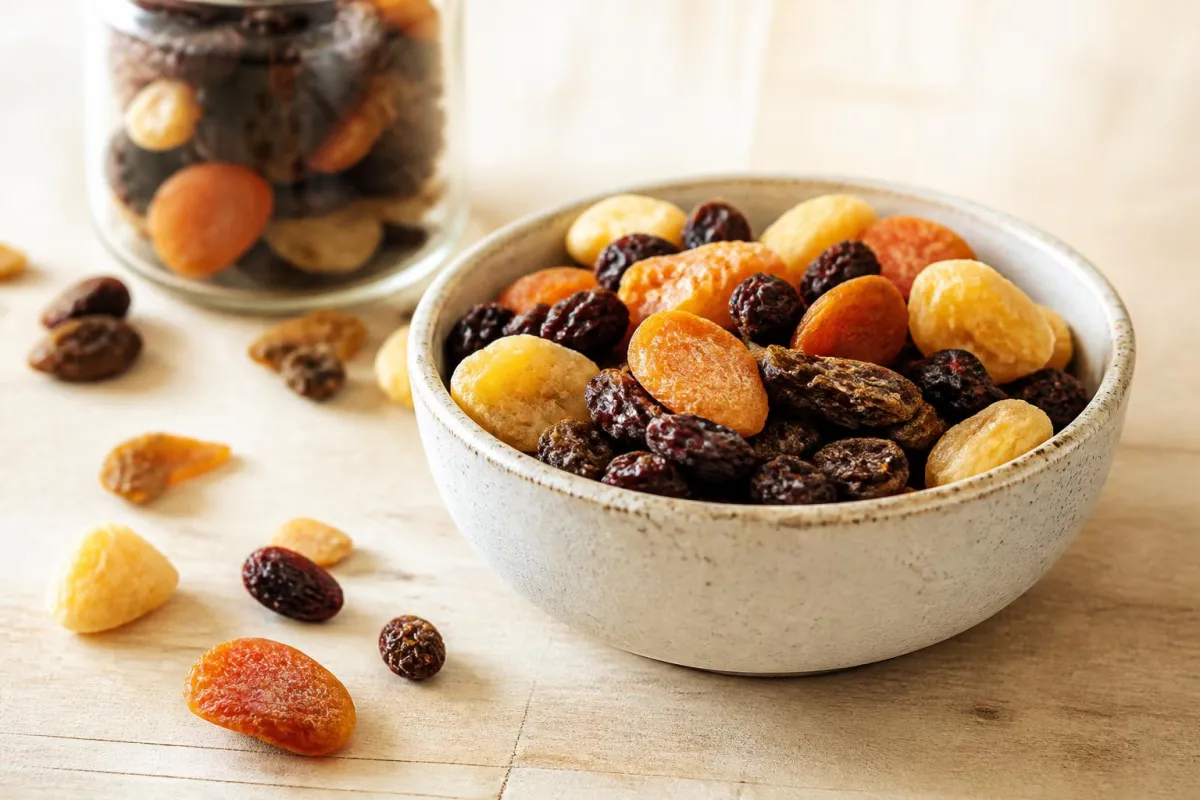
Sulphur dioxide is a preservative used in some foods, including some dried fruit. In practical kitchen terms, it is often there to slow browning and help the fruit keep a more vivid colour during processing and storage. That is why sulphited apricots, for example, are often a brighter orange than unsulphited ones, which tend to look browner.
This matters because dried fruit changes as moisture is removed. Colour darkens, flavours concentrate and texture firms up. When sulphur dioxide is used, the result can be fruit that looks fresher and more uniform on the shelf. It can also help the product remain visually appealing over time, especially where natural colour loss would otherwise be obvious.
That does not mean every pale dried fruit contains it, or that every darker one is free from it. Drying method, fruit variety, sugar content and storage conditions all affect appearance. A packet photo is not enough. The ingredient list is what counts.
In use, sulphited and unsulphited fruit can behave slightly differently in the kitchen. Sulphited fruit often keeps a cleaner, sharper fruit colour in bakes and fruit mixes. Unsulphited fruit may bring a deeper, more caramel-like look and a darker finished crumb or filling. That can be useful if you want a more rustic appearance, or less useful if you are aiming for a light-coloured sponge or a neat topping.
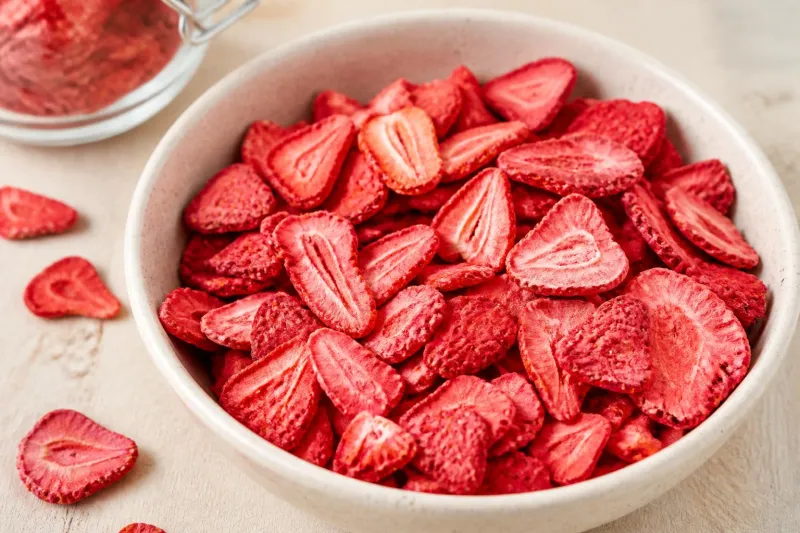
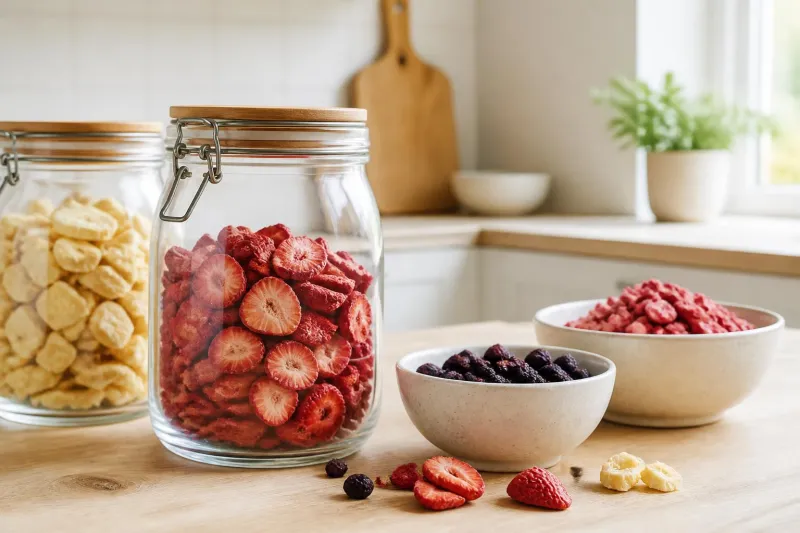
This is a different category from freeze-dried ingredients, which Crispberry covers elsewhere. Freeze-dried fruit is preserved by removing moisture at low temperature under vacuum, so it is a very dry, crisp ingredient rather than the chewy style most people mean by conventional dried fruit. If you want a quick comparison of formats, our first steps with freeze-dried fruit guide explains how freeze-dried ingredients differ in texture and handling.
How to spot it on a UK label
On a UK packet, sulphur dioxide may appear in the ingredients list by name, or as part of a preservative declaration. The exact wording varies by product, but the main place to look is the ingredients panel on the back or side of the pack.
If the product contains sulphur dioxide or sulphites above the threshold where allergen labelling is required, that must be indicated to the consumer. The Food Standards Agency consumer guidance explains why ingredient and allergen information matters, particularly for people who need to avoid specific substances for allergy or intolerance reasons: Food Standards Agency consumer allergy guidance.
In practice, you may see it shown in one or more of these ways:
- in the ingredients list as sulphur dioxide
- in the ingredients list as a preservative, followed by sulphur dioxide
- highlighted in bold, capitals or another emphasis style used for allergens
- repeated in a separate allergen statement such as “Contains sulphites”
The ingredient list and the allergen information are not interchangeable, but they work together. The ingredients list tells you what has been used in the product. The allergen emphasis helps people spot specified allergens more easily. If sulphur dioxide or sulphites are present at a level that triggers allergen declaration, the way it is presented on pack becomes especially important.
For UK readers, this is one area where it is sensible to be precise about jurisdiction. The UK has its own food information rules after leaving the EU, even though many label conventions still look familiar and many businesses sell into both markets. A product packed for the UK should follow UK requirements. An imported product may still look very similar to an EU label, but if you are shopping in the UK, rely on the actual wording on the packet in your hand rather than assumptions based on a general EU example.
If you are buying online, check whether the retailer shows a current ingredients panel image. If not, and sulphites matter for your household, it is safer to wait until you can read the packet itself. Product formulations can change, and old marketplace descriptions are not a substitute for the pack label.
What the label can and cannot tell you
A dried fruit packet usually gives you three main kinds of information, and they answer different questions.
First, the ingredients list tells you what is in the product. If the fruit has been treated with sulphur dioxide, that is where you should expect to find it declared. This is the best place to answer the basic question, “Does it contain it?”
Second, allergen information helps you identify substances that must be emphasised for consumer safety. The Food Standards Agency guidance is the right reference point for understanding why this matters and why people should not guess from product appearance alone: Food Standards Agency consumer allergy guidance.
Third, the nutrition panel tells you about energy and nutrients. It does not tell you whether a preservative is present unless that preservative also appears elsewhere on the pack. Nutrition information answers a different question entirely.
This distinction matters because shoppers often scan one part of the label and think they have covered everything. They have not. A low-fat or high-fibre figure does not tell you anything about sulphites. Equally, an ingredients list does not tell you whether the fruit is especially sweet per portion unless you also read the nutrition table.
When comparing packets, use the nutrition panel carefully. The NHS explains that per 100g and per portion are different bases and should not be mixed up when comparing foods: NHS food labels. For dried fruit this is especially important, because portions can be small, loosely defined, or very different from what you would actually use in a recipe.
For example, one pack might show values per 100g and also per 30g portion. Another might show only per 100g. If you are deciding which fruit to use in a traybake that needs 150 grams, the cleanest comparison is per 100g first, then your own weighed amount. If you are filling a snack pot, the portion figure may be useful, but only if you check what the manufacturer means by a portion.
The label also cannot tell you everything about kitchen performance. It will not usually tell you how sticky the fruit is, how quickly it softens in batter, whether it bleeds colour into icing, or whether it needs chopping before use. Those are handling questions, not mandatory label items.
It also cannot tell you whether a product suits your exact recipe style. A bright sulphited apricot may be ideal in a pale fruit loaf. A darker unsulphited one may be better in a spiced chutney or a rich fruit cake where deep colour is welcome. The packet gives you clues, but not the whole answer.
Choosing dried fruit for baking and cupboard use
When we choose dried fruit for baking, we look at four practical things first: colour, flavour, texture and handling.
If colour matters, sulphited fruit often has the advantage. It can keep a lighter, cleaner look in the bowl and in the finished bake. This is useful for pale cakes, fruit scones, light buns and decorative toppings where you want distinct pieces rather than a uniformly brown finish.
If flavour matters more than appearance, darker unsulphited fruit can be a very good choice. It often brings a fuller, more cooked-fruit look and can suit flapjacks, tea loaves, fruit compotes and spiced bakes. That is not a rule for every packet, just a common kitchen pattern.
Texture is the next question. Some dried fruit is soft and pliable straight from the bag. Some is leathery, sticky or clumped. If you need even distribution through a batter, it helps to separate pieces before adding them. For larger fruits such as apricots, peaches or pears, chopping to a consistent size usually matters more than whether the fruit is sulphited.
For doughs and cake batters, dry the cut surface with kitchen paper if the fruit feels tacky. This helps stop pieces clumping together. If the fruit is very firm, a brief soak can soften it, but drain it well and pat it dry before adding it to the mix so you do not accidentally change the moisture balance.
For muesli jars, trail mixes and emergency cupboard ingredients, think about visibility and convenience. Sulphited fruit may stay more visually appealing in a clear storage jar, especially if you like to see bright pieces mixed through oats, seeds or nuts. Unsulphited fruit may blend in more, which is not a fault, just a different look.
If you want fruit flavour without the chewy texture of conventional dried fruit, freeze-dried ingredients are a separate option. They add concentrated fruit character with very low moisture, which can be useful where you want to avoid softening a topping or thickening a dry mix. Our guides to freeze-dried fruit for baking and topping and fruit powder for icing, fillings and mixes cover those uses in more detail.
A simple kitchen rule is to match the fruit to the job.
- Choose sulphited fruit when you want lighter colour and a tidier visual finish.
- Choose unsulphited fruit when darker colour suits the recipe or presentation.
- Chop for even distribution.
- Soak only when needed, and account for the extra moisture.
- Weigh your ingredient in grams rather than relying on cup measures, because dried fruit size and stickiness vary too much for volume to be dependable.
Storage after opening and when to replace a packet
Once opened, dried fruit needs sensible storage if you want it to stay usable and pleasant. Follow the packet instructions first. The Food Standards Agency storage guidance is clear on the wider principle that correct storage and following product instructions help protect food safety and quality: Food Standards Agency food storage guidance.
For most dried fruit, that means resealing the original pack well or transferring the contents to a clean airtight container. Store it in a cool, dry place away from direct sunlight, steam and strong odours. A cupboard away from the cooker is usually better than a warm shelf above it.
Moisture is the main enemy after opening. If the fruit picks up damp from the air, it can become overly sticky, clump badly and lose quality faster. Use a dry spoon or dry hands when taking some out. Do not return fruit to the packet if it has been sitting in a steamy kitchen or beside a pan.
Check the fruit before use, especially if the packet has been open for a while. Replace it if you notice any of the following:
- visible mould
- an off smell, including musty or fermented notes
- unusual wet patches inside the pack
- heavy clumping that suggests moisture has got in
- obvious signs of pests or damaged packaging
Colour change on its own is not always a sign that the fruit is unsafe. Dried fruit can darken over time, especially after opening. Texture can also become firmer. Those changes may affect baking results, but they are different from clear spoilage signs. When in doubt, do not use it.
If you decant dried fruit into a jar, label it with the product name and the date you opened it. Keep the original packet until the contents are finished, because that is where the ingredients list, allergen details and storage instructions usually are. This is particularly helpful if you keep several similar fruits in matching containers.
Do not assume that all dried fruit stores the same way as freeze-dried ingredients. Freeze-dried pieces and powders are usually more sensitive to humidity because they are deliberately very dry and can soften quickly if left exposed. If that is relevant to your cupboard planning, our guide on how to store freeze-dried fruit covers the handling points that differ from conventional dried fruit.
The label tells you a lot, but only if you read the right part for the right question. For sulphur dioxide in dried fruit, the key checks are the ingredients list and allergen information. For sweetness, energy and other nutrition figures, compare like with like and keep per 100g separate from portion data, as the NHS advises. For storage, follow the packet and keep opened fruit dry, sealed and out of heat.
That gives you a much better basis for choosing the right packet for your baking, your cupboard and the way you actually cook.