How to compare freeze-dried pea snacks in the UK
Compare labels on the same basis, especially per 100g versus per portion.
On this page
If you are comparing a freeze-dried peas snack in the UK, the main job is to make sure you are comparing the same kind of product. A bag of plain freeze-dried peas behaves very differently from roasted peas, baked pea crisps or puffed snacks made with pea flour. They can all sit in the same supermarket category, but their ingredients, texture, nutrition panels and best kitchen uses are not interchangeable.
For most home cooks, the useful comparison points are simple. Check whether the packet contains whole freeze-dried peas or a more processed snack, read the label on the same basis, usually per 100g first, note any added oil or coatings, and look at the storage instructions for after opening. That gives you a much clearer picture than front-of-pack claims alone.
What counts as a freeze-dried pea snack
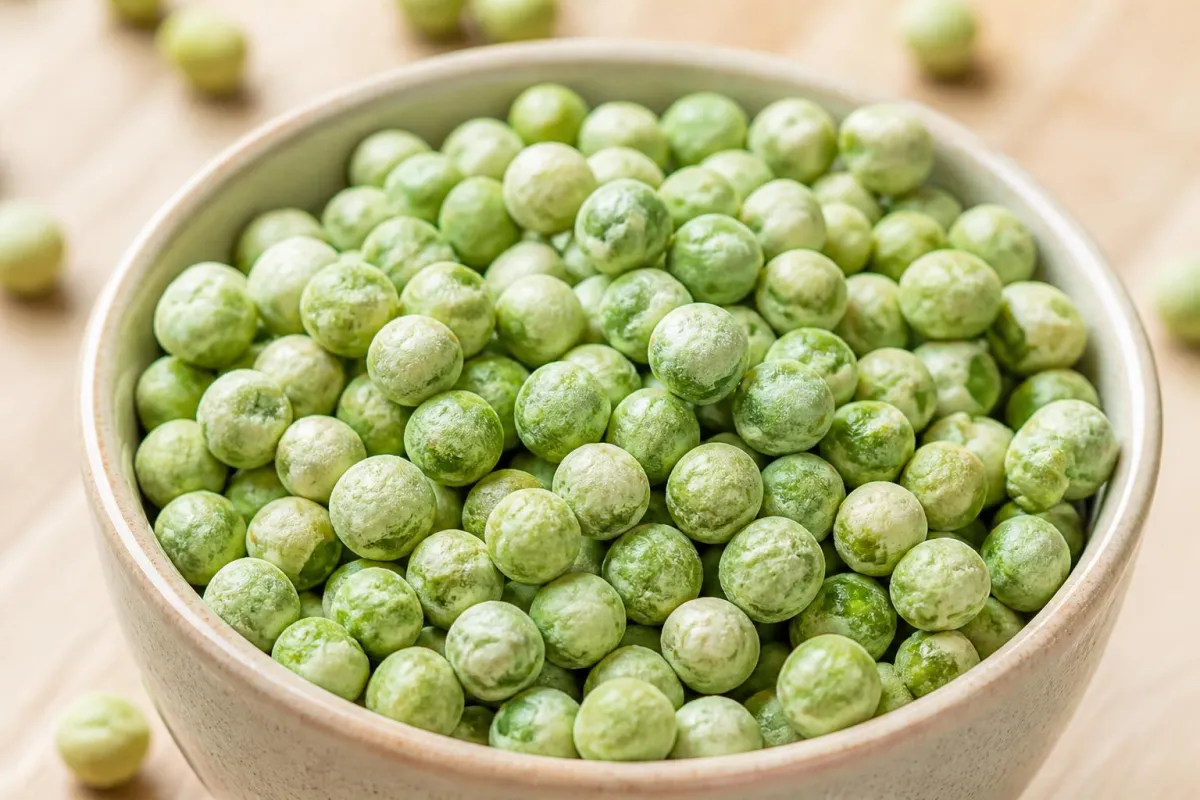
A freeze-dried pea snack is, at its simplest, peas that have been freeze-dried so that water is removed while the peas keep a dry, crisp structure. The result is usually light, brittle and airy rather than dense or hard. If the ingredient list says peas, or peas plus seasoning, and the product is clearly described as freeze-dried, you are in the right category.
That matters because several other pea snacks are sold in similar-looking packets.
Roasted peas are usually firmer, denser and often tougher to bite. They may contain added oil, salt and flavourings, and their crunch comes from roasting rather than freeze-drying.
Baked pea snacks and puffed pea crisps are often made from pea flour or pea starch rather than whole peas. They can be very good in their own right, but they are a different product. Their shape is manufactured, their texture is more uniform, and they are often built to be eaten as crisps rather than used as an ingredient.
Coated snacks can blur the picture further. If peas are wrapped in a seasoned shell or flour coating, the eating experience and the nutrition panel may reflect the coating as much as the peas themselves.
So when you compare a freeze dried peas snack UK shoppers might find online or in specialist food ranges, first confirm the product type. Look at the product name, then the ingredients. If one packet is whole freeze-dried peas and another is a baked pea-and-rice crisp, you are no longer comparing like with like.
For a closer look at the ingredient itself, our guide to freeze-dried vegetable peas explains what they are and how they are typically used in the kitchen.
How to compare labels without mixing up the numbers
The most common label mistake is comparing one product per portion and another per 100g. The NHS explains that these are different bases, and they should not be mixed when you are trying to compare foods directly (NHS food labels).
Per 100g is usually the cleanest starting point because it standardises the comparison. If one freeze-dried pea snack lists energy, fat, salt and sugars per 100g, and another does the same, you can compare them line by line. Portion figures are still useful, but only after you understand what the manufacturer means by a portion. Portion sizes are not always the same from one packet to another.
This matters especially with freeze-dried foods because they are light. A small handful can weigh much less than people expect. If one label gives figures per 20g portion and another per 30g portion, the second can look higher simply because the stated serving is larger. That does not automatically mean it is less suitable for your needs.
A practical way to read the label is:
- Start with the ingredient list.
- Check the allergen information.
- Read the nutrition table per 100g.
- Then look at any per-portion figures and ask how many grams that portion actually is.
Ingredients are listed in descending order by weight at the time of manufacture. For a plain freeze-dried pea product, the list may be very short. If seasoning, sugar, starches, oils or anti-caking ingredients appear, they can change both flavour and kitchen use.
Allergen information needs the same care. The Food Standards Agency advises consumers to read ingredient and allergen information carefully and not assume suitability from general impressions or previous purchases (Food Standards Agency consumer allergy guidance). In practice, that means checking every packet, every time, especially if a seasoned product includes milk powders, wheat-based coatings, soy ingredients or mustard in flavour blends.
In the UK, allergen labelling follows UK rules. Since EU exit, the UK framework is separate from the EU generally, even where many labelling principles remain familiar. For a shopper, the practical point is straightforward. Read the actual UK label on the product you are considering, rather than relying on a general EU description from another website.
Be careful with front-of-pack claims such as “high in protein” or “source of fibre”. Those claims may be perfectly compliant, but they do not tell you whether the product is plain peas, seasoned peas or a more processed pea snack. The back or side panel tells you more.
Ingredients that change texture and kitchen use
The shortest ingredient list often gives the widest kitchen use. Plain freeze-dried peas tend to stay dry on the surface, crumble cleanly when crushed, and work across more uses, from snacking to soup garnish to savoury baking.
Once extra ingredients are added, texture changes quickly.
Seasoning blends can make a product more immediately snackable, but they can also leave a powdery coating on the fingers or create loose crumbs at the bottom of the pack. That may not matter for eating from the packet, but it can matter if you want a neat salad topper or a clean garnish for soup.
Added fats can make the surface feel richer and less dry. They may also reduce the very brittle crunch people expect from plain freeze-dried ingredients. In some products that is deliberate. A lightly oiled, seasoned pea snack can feel more rounded and less starkly crisp. But if you want something to crush into a breadcrumb-style finish, extra fat can make the crumbs clump rather than scatter.
Coatings change the product most dramatically. A flour or starch coating can create a thicker shell, a louder crunch and more resistance when bitten. It can also make the product less suitable for recipes where you want the flavour and appearance of peas rather than a savoury coating.
Sugar is less common in savoury pea snacks, but sweet chilli or similar flavourings can include it. That affects not only taste, but also browning if you add the product to cooking at the end.
For lunchboxes, plain or lightly seasoned whole peas usually travel better than heavily coated products because they leave less residue and are less likely to shed seasoning dust. For garnishes, plain peas or very simply seasoned ones are easier to place neatly. For cooking, the more straightforward the ingredients, the more predictable the result.
We cover some of those practical differences in our piece on freeze-dried snacks for practical cupboard use.
Which format suits snacking and which suits cooking
Format matters almost as much as ingredients. Even within freeze-dried peas, you may find whole peas, broken pieces and powdery crumbs.
Whole peas are usually the best choice for direct snacking. They are easy to portion into a small bowl, easy to pack into a lunchbox, and visually clear if you want to use them as a topping. They also hold their structure best when sprinkled over soup or salad just before serving.
Broken pieces are often less tidy for eating from the packet, but they can be very useful in the kitchen. They distribute more evenly through savoury bakes, work well as a crunchy topper for pasta or vegetable dishes, and are easier to crush further if you want a rough crumb.
Powdered crumbs or fine fragments are not ideal as a stand-alone snack, but they can be excellent as an ingredient. Stirred into breadcrumb-style coatings, scattered over roasted vegetables after cooking, or mixed into savoury doughs, they add pea flavour without the visual presence of whole peas.
If your main use is snacking, choose a packet with as many intact whole peas as possible and not too much dust at the bottom. If your main use is cooking, a less visually perfect pack can still be very useful.
A few kitchen examples show the difference.
For soup garnish, whole peas give the neatest finish. Add them at the table so they stay crisp.
For salad topping, whole or roughly broken peas both work, depending on whether you want visible pieces or a more even scatter.
For savoury baking, broken pieces are often easier to fold into scone, cracker or muffin mixtures because they distribute without creating large hard pockets.
For breadcrumb-style finishes on pasta bakes or gratins, crushed peas or crumb-heavy packs can be practical, especially if mixed with herbs or other dry toppings.
If you want more ideas on using them beyond snacking, see our guide to freeze-dried peas in everyday cooking.
Storage after opening and why moisture matters
Freeze-dried products stay crisp because they are very dry. Once the packet is opened, that dryness is vulnerable to moisture from the air. Leave the bag unsealed in a humid kitchen and the peas can lose crispness surprisingly quickly.
That does not necessarily mean the food becomes unsafe at once, but it does mean the texture changes, and texture is one of the main reasons people choose freeze-dried ingredients in the first place.
The safest and most useful habit is to follow the packet instructions exactly. The Food Standards Agency’s general storage guidance is to store food appropriately and follow product instructions for safe handling and storage (Food Standards Agency food storage guidance). For freeze-dried snacks, that often means resealing promptly after opening and keeping the pack in a cool, dry place.
A few practical points help:
- Open the packet only when you are ready to use it.
- Reseal it straight away if it has a zip closure.
- If there is no resealable top, transfer the contents to a clean, dry airtight container.
- Keep moisture away from the container. Steam from kettles, pans and dishwashers is not helpful.
- Use a dry spoon or dry hands. Introducing moisture directly speeds up softening.
If a product was bought mainly for crunch, once it has softened it may be better used in cooking than for snacking. Slightly less crisp peas can still be stirred into soups, blended into savoury crumbs or added where texture matters less.
Do not guess storage life after opening from another product. One packet may contain only peas, another may contain seasonings or fats that affect how it keeps. The manufacturer’s instructions on the actual pack should lead.
A simple UK checklist before you choose
If you want a quick way to compare options, use this checklist before buying any freeze-dried pea snack in the UK.
First, identify the product type. Is it genuinely freeze-dried whole peas, or a different pea-based snack such as roasted peas or baked crisps made from pea flour?
Second, read the ingredients in order. A short list usually means a more flexible ingredient. A longer list may still suit you better if you want a ready-seasoned snack, but it is a different proposition.
Third, check the allergen statement carefully. The Food Standards Agency guidance is clear that allergen information matters and should be checked on the specific product, not assumed from memory or appearance (Food Standards Agency consumer allergy guidance).
Fourth, compare nutrition on the same basis. Start with per 100g, then look at per-portion figures and the actual number of grams in that portion, as the NHS advises (NHS food labels).
Fifth, look at pack size in relation to your intended use. A small packet may be fine for occasional snacking. If you want peas for toppings and cooking, a larger pack may be more practical, provided you can keep it dry after opening.
Sixth, think about format. Whole peas for snacking and garnishes, broken pieces for mixed uses, crumbs for topping and coating jobs.
Seventh, read the storage instructions before you buy, not after. If the pack is not resealable and you know you will use it slowly, be ready with a suitable airtight container.
Finally, match the product to the job. The best choice for eating straight from the packet is not always the best choice for soup garnish or savoury baking.
At Crispberry, we focus on helping adult home cooks and bakers make these practical distinctions clearly. If you want broader guidance on keeping dry ingredients useful in the cupboard, our article on freeze-dried snacks for practical cupboard use is a good next read. Crispberry is published by Fleeta Limited as an information resource, so our aim here is not to rank brands, but to help you compare labels, texture and storage sensibly.
In short, a good comparison starts with product type, then label basis, then ingredients, then storage. Once you separate those points, choosing a freeze-dried pea snack becomes much simpler, and much more useful for the way you actually cook and snack at home.