How to choose and use dried fruit and nuts well
Check whether the packet is sweetened, salted, roasted or plain before using it in a recipe.

On this page
Choosing dried fruit and nuts well comes down to three things, texture, label reading and storage. If you know whether an ingredient is chewy, crisp, oily, sweetened, salted or already roasted, it is much easier to decide where it belongs in your kitchen and how much to add without throwing a recipe off balance.
For home cooks and bakers, the biggest source of confusion is often that these ingredients sit next to each other on the shelf but behave very differently once opened. Traditional dried fruit brings chew and concentrated sweetness. Nuts bring richness, crunch and natural oils. Freeze-dried fruit is much lighter and crisper, and it reacts to moisture quickly. At Crispberry, we focus on helping UK cooks use these cupboard ingredients with fewer surprises, especially when freeze-dried ingredients are part of the mix.
What counts as dried fruit and nuts in everyday cooking
In everyday cooking, dried fruit usually means fruit with much of its moisture removed so it keeps longer and tastes more concentrated. Common examples include raisins, sultanas, currants, dates, apricots, figs, prunes, mango and cranberries. Some are simply dried. Others may also contain added oil, sugar or preservatives, so two packets of the same fruit can behave differently in a recipe.
Nuts are the edible kernels commonly used in sweet and savoury cooking, such as almonds, walnuts, hazelnuts, cashews, pistachios, pecans and peanuts. In kitchen use, peanuts are often grouped with nuts even though they are botanically legumes. That matters less in a mixing bowl than it does on an allergen label, where the exact ingredient and the stated allergen information matter most.
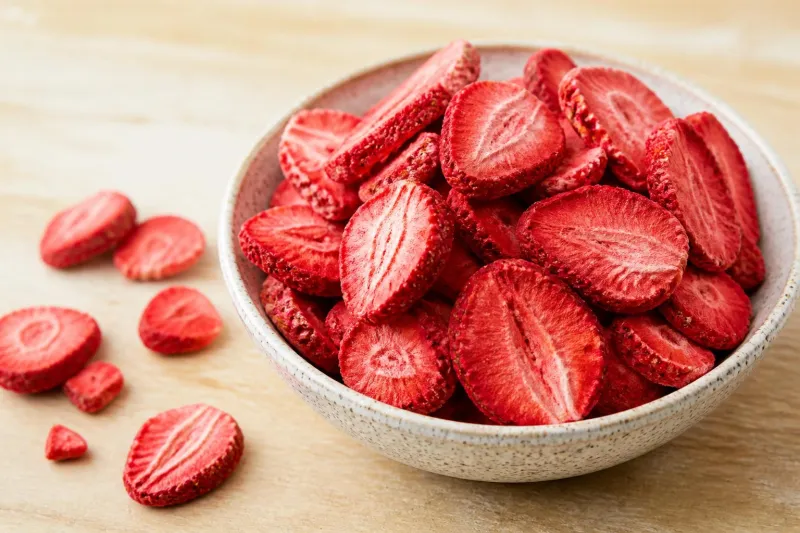
Then there is freeze-dried fruit. This is still fruit, but it is not the same as traditional dried fruit in texture or use. Traditional dried fruit is usually dense and chewy because some moisture remains. Freeze-dried fruit is light, crisp and porous because moisture is removed in a different way. It can be eaten as it is, folded into mixtures for crunch, or crushed into crumbs and powders. Once it meets liquid, it softens quickly.
That difference affects how you cook with it. A chopped date will stay sticky and chewy in flapjacks or muffins. A freeze-dried raspberry will stay crisp only if the mixture stays fairly dry. In porridge, yoghurt or cake batter, it will soften and disperse more readily. If you want a quick overview of how these ingredients behave, our guide to first steps with freeze-dried fruit is a useful companion.
It also helps to separate whole, chopped, flaked and ground forms in your mind. Whole almonds and walnut halves are usually for topping, snacking or chopping yourself. Flaked almonds toast quickly and suit cakes and breakfast bowls. Ground almonds change structure rather than just flavour, adding body and moisture retention to baking. Finely milled fruit powder behaves differently again, giving colour and flavour without the chew of fruit pieces. We cover that in more detail in our guide to using freeze-dried fruit powder.
How to read the packet before you plan a recipe
Before you decide how much to use, read the front and back of the packet. This matters more than many people expect, because small differences in ingredients can change sweetness, saltiness, moisture and texture.
Start with the ingredients list. For dried fruit, check whether the packet contains only fruit or whether it also includes added sugar, glucose syrup, sunflower oil or preservatives. Dried cranberries are a common example where sweetening is often added. Some chopped dates are coated with flour or rice flour to stop them clumping. If you are baking, that coating can slightly affect how they disperse through a batter.
For nuts, check whether they are raw, roasted, blanched, salted, smoked, honey-roasted or seasoned. A salted roasted cashew behaves very differently from a plain raw cashew. The first is ready to snack on or scatter over a savoury dish. The second may be better for baking, toasting yourself or blending into sauces.
Allergen information needs careful attention. In the UK, allergen labelling is regulated, and you should read both the ingredients and any allergen statement each time, not just the first time you buy a product. The Food Standards Agency makes clear that consumers should rely on the label information provided and not assume one brand matches another or that a familiar food is automatically suitable in a new packet Food Standards Agency consumer allergy guidance. This is especially important with nuts, peanuts and mixed products packed in shared facilities.
Next, check the nutrition panel and the comparison basis. The NHS explains that per 100g and per portion are different ways of presenting information, and they should not be confused when comparing foods NHS food labels guidance. That matters with dried fruit and nuts because they are naturally concentrated. If one packet gives values per 100g and another gives values per serving, compare like with like before you judge sweetness, salt or energy density.
Also look for roasting and salt levels before using nuts in a recipe. If a cake recipe assumes unsalted nuts and you use salted roasted nuts, the finished flavour can be noticeably different. If a breakfast mix already includes sweetened dried fruit, adding more sweet ingredients may push it further than you intended.
Finally, read any storage instructions on the packet before opening. Some products are best kept in a cool dry place, some should be resealed promptly, and some may suggest refrigeration after opening. Product instructions take priority over general rules, especially where moisture control matters.
Which type works best for baking, breakfasts and snacking
The best choice depends on the texture you want in the finished food.
For baking, chewy dried fruit works well where you want distinct little pockets of sweetness. Raisins, chopped apricots and dates suit fruit loaves, traybakes, biscuits and muffins. Because they hold some moisture, they stay tender rather than crisp. If pieces are very dry or firm, chopping them smaller usually helps them distribute more evenly.
Nuts in baking can do several jobs. Chopped walnuts or pecans add crunch to loaf cakes and brownies. Flaked almonds give a lighter topping for cakes, tarts and buns because they toast quickly and do not weigh the surface down much. Ground almonds are different again. They add structure and richness to sponge, frangipane and some biscuits without giving obvious nut pieces.
Freeze-dried fruit is often best where you want bright fruit flavour, visible pieces or a crisp finish without adding extra liquid. Folded gently through buttercream, scattered over chocolate bark, stirred into dry granola after baking, or crushed over icing, it can work beautifully. In wetter batters, expect it to soften. If that is what you want, fine. If you want crisp texture, add it later.
For breakfasts, think about how long the ingredient will sit in milk, yoghurt or porridge. Traditional dried fruit, such as raisins or chopped dates, softens gradually and adds chew. Nuts and seeds add crunch, but that crunch fades if left soaking for too long. Freeze-dried fruit adds a lighter crispness at first, then softens quickly on contact with moisture. If you prep overnight oats the night before, freeze-dried strawberry pieces are usually better sprinkled on in the morning, not stirred in at night.
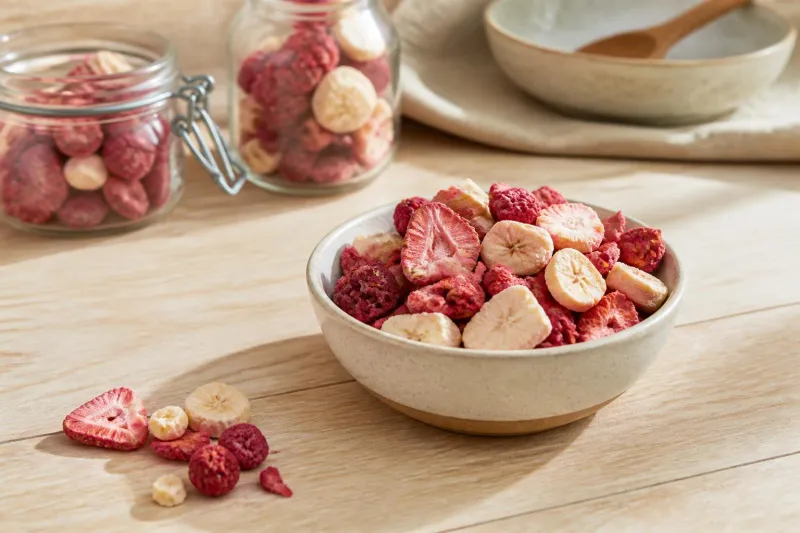
For snacking, the choice is mostly about preference and convenience. Whole or roasted nuts work well when you want something substantial and crunchy. Softer dried fruit works when you want chew. Freeze-dried fruit is light and crisp, and it is useful where you want fruit flavour without stickiness on the fingers. If you are putting together a snack mix, combine textures deliberately rather than throwing everything in at once. A mix of chewy fruit, crisp fruit and crunchy nuts can be excellent, but only if the moisture from one ingredient does not spoil another during storage.
If you are choosing ingredients for fruit-led baking rather than general snacking, our pages on freeze-dried fruit options for baking and specific ingredients such as freeze-dried strawberries can help you picture how piece size and texture affect the result.
How to store them so texture lasts longer
Storage is mostly about protecting texture from moisture, heat, light and air.
Unopened packets should usually be kept as the label directs, commonly in a cool, dry place away from direct sunlight. A kitchen cupboard away from the oven, kettle and radiator is often better than a warm shelf near the hob. Heat can encourage nuts to lose quality more quickly because of their natural oils. Moisture is the main enemy for crisp ingredients, especially freeze-dried fruit.
Once opened, reseal the packet firmly if it has a zip closure. If not, transfer the contents to a clean, dry, airtight container. For nuts, a solid container with a good seal helps protect against air and kitchen odours. For freeze-dried fruit, airtight storage is even more important because it absorbs moisture from the air readily and can lose its crisp texture.
Traditional dried fruit is less fragile than freeze-dried fruit in this respect, but it still benefits from being well sealed. If left open, it can dry out further and become hard, or in damper conditions it can become sticky and clump together.
Light matters too. Clear jars may look tidy on an open shelf, but they expose ingredients to light and room temperature changes. An opaque container, or a clear one stored inside a cupboard, is usually a better choice for longer keeping.
Whether to refrigerate depends on the product and your kitchen conditions. Follow the packet first. In warm homes, some people prefer to chill nuts after opening to help preserve quality, but condensation becomes a risk if a cold container is opened and closed in a humid kitchen. If you do chill them, keep them very well sealed and let the container come towards room temperature before opening if condensation is likely.
For broad food storage principles, the Food Standards Agency advises following product instructions and storing foods appropriately to help maintain safety and quality Food Standards Agency food storage guidance. For freeze-dried ingredients specifically, we set out the practical points in our guide on how to store freeze-dried fruit.
Simple ways to use them without guessing quantities
The easiest way to use these ingredients well is to start with small, measurable additions, then adjust next time after checking the actual packet weight and label details.
For porridge, try adding a measured spoonful rather than tipping from the bag. As an illustrative example, you might stir chopped dried apricots into hot oats during cooking for softness, then finish with a small handful of nuts for crunch. If you want to use freeze-dried fruit instead, sprinkle it on after serving so it keeps more texture. Check the packet for the actual weight in grams and whether the fruit is sliced, whole or crushed, because that changes volume a lot.
For muesli or granola, build in layers of texture. Use larger chewy fruit pieces sparingly so they do not dominate every spoonful. Add chopped nuts for bite. If using freeze-dried fruit, mixing it through after baking rather than before usually keeps the texture cleaner. A useful rule in home mixing is to weigh each addition separately in grams rather than relying on cup measures, because a light freeze-dried fruit and a dense chopped date can look similar by volume but weigh very differently.
For muffins or loaf cakes, chop larger dried fruit pieces so they distribute evenly. Tossing sticky fruit lightly in a spoonful of the recipe flour can help stop clumping, but check the packet first in case the fruit is already dusted. With nuts, think about whether you want them inside the batter, on top, or both. Inside gives a softer bite after baking. On top gives more toast and crunch.
For yoghurt bowls, use a small measured amount of each component rather than a large handful of one thing. A spoon of chopped nuts, a spoon of chewy dried fruit and a spoon of freeze-dried fruit can give three distinct textures at once. If the yoghurt is very loose, add the freeze-dried fruit just before eating.
For biscuit dough or flapjack mixtures, be careful with very large or very hard nut pieces, which can make slicing and shaping awkward. Chopped nuts usually sit better than whole ones. Dates, raisins and chopped figs bring chew and help create a more cohesive bite. Freeze-dried fruit can be used in these bakes, but expect a different result from sticky dried fruit. It contributes flavour and colour, not the same binding effect.
If you are experimenting with dates in particular, our article on what kind of dried fruit dates are explains why they behave differently from lighter, less sticky dried fruits.
One final point on quantity. There is no universal “correct” amount for dried fruit and nuts in a home recipe because packet size, cut size, sweetness, salt level and texture all vary. The NHS notes that dietary balance is considered over time rather than forced into every single snack or bowl NHS Eatwell Guide. In practical kitchen terms, that means you can focus first on the job the ingredient is doing in the dish, chew, crunch, sweetness, colour or fruit flavour, then adjust based on the result and the label in front of you.
Used well, dried fruit and nuts are not difficult ingredients. They simply reward a little attention. Read the packet, choose for texture, store them properly and measure with a light hand the first time. That approach works whether you are baking a fruit loaf, topping porridge or keeping a few reliable cupboard ingredients ready for busy weeks.