Freeze-dried peas in everyday cooking
freeze-dried peas are best chosen for convenience, texture and storage practicality
On this page
Freeze-dried peas are a practical cupboard ingredient when you want the flavour and colour of peas without relying on the freezer or using a fresh pack quickly. In everyday cooking, they can be added dry, soaked briefly, or fully rehydrated, depending on the dish. What matters most is not treating them exactly like frozen peas, because their texture changes with moisture and cooking time.
For many adult home cooks, the main advantage is flexibility. A bag in the cupboard is useful for soups, rice dishes, savoury bakes and quick lunches when you want a small amount rather than a whole bag of frozen vegetables. If you are new to using freeze-dried ingredients, our guide to first steps with freeze-dried ingredients and our page on using freeze-dried vegetables in the kitchen give broader context alongside this pea-specific guide.
What freeze-dried peas are and when they are useful
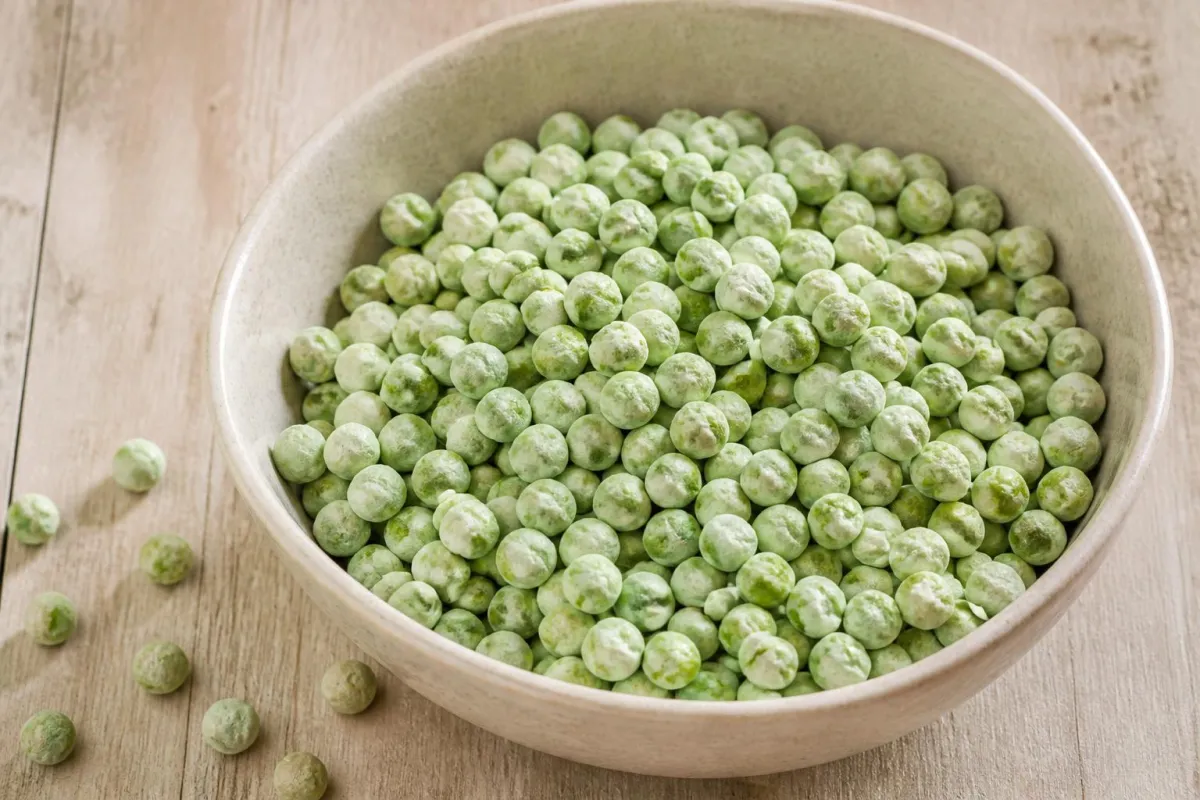
Freeze-dried peas are peas that have had their moisture removed after freezing, leaving them light, dry and shelf-stable while sealed. In kitchen terms, that means they behave more like a dry ingredient than a chilled vegetable. They do not need freezer space, they are easy to measure in small amounts, and they can be added straight from the packet when a dish has enough liquid to soften them.
That is often the point at which freeze-dried peas become more useful than chilled or frozen peas. If we only need a spoonful for a mug of soup, a quick couscous bowl or a pan sauce, opening a cupboard packet is simpler than defrosting anything. They are also practical when freezer space is tight, when we cook in small households, or when we want to keep a few standby ingredients on hand for low-fuss meals.
They are not automatically the best choice for every pea-based dish. If the peas are meant to be the star of the plate, with a very plump, juicy bite, frozen peas may still be closer to what many people expect. Freeze-dried peas come into their own when convenience matters, when the peas are part of a mixed dish, or when we want to scatter in a measured amount without creating leftovers.
In soups, stews, rice dishes and quick savoury bakes, they can be particularly handy because the recipe already provides heat and moisture. They also work well in situations where a bag of frozen peas would be awkward, such as office lunches assembled at home, caravan cooking, holiday lets, or backup ingredients for weeks when the fresh veg drawer is looking sparse.
For readers comparing formats, our page on freeze-dried peas and how they are used covers the ingredient itself in more detail.
How the texture changes in different dishes
Texture is the main thing to understand before using freeze-dried peas confidently. Dry from the packet, they are crisp or firm rather than tender. Once they take on liquid, they soften, but not always in exactly the same way as peas that started frozen or fresh.
Used dry, they can bring a light crunch or a brittle bite. That can be useful as a garnish over a smooth soup, blended vegetable soup, or a soft grain bowl. In that role, think of them less as a vegetable side and more as a finishing ingredient. If they sit on a wet dish for long, they will gradually soften from the surface inward.
Briefly soaked peas usually become softer on the outside while keeping a little firmness in the centre. That can suit quick-cooking dishes where you do not want them to disappear into the background. A short soak before stirring into couscous, bulgur wheat, or a warm pasta sauce can help them hydrate more evenly.
Fully rehydrated peas are the closest to the texture most people expect in cooked dishes. Even then, they may not be identical to frozen peas. In soups, they often become tender enough to blend in or sit comfortably in the spoon without seeming dry. In rice dishes, they can work well if there is enough steam and cooking liquid, but if the pan is on the dry side they may stay firmer than you intended.
In baking, the result depends heavily on the batter or filling. In a savoury muffin, scone or vegetable loaf, dry peas may pull moisture from the mixture and soften only partly during baking. That can be pleasant if you want small bursts of pea texture, but less so if you expect soft, juicy peas. Rehydrating first is usually safer in wetter bakes such as quiches, strata-style bakes or savoury bread puddings.
For soups, expect the most forgiving results. For rice dishes, expect the need to judge liquid carefully. For baking, expect moisture balance to matter more than usual. Freeze-dried ingredients are useful, but they do ask us to notice where the liquid in a dish is coming from.
How to rehydrate them without guesswork
The easiest approach is to match the method to the dish rather than chasing one universal rule. Packet instructions matter, and they should come first where provided, because different products can vary in size, density and intended use.
For a soup or stew, we can often add the peas straight to the pan during the final part of cooking. If the dish already contains a good amount of stock, water or sauce, the peas can absorb what they need there. In practical terms, that means checking whether the pan still looks loose enough after the addition. If it suddenly seems thicker or drier, a small extra splash of liquid may help.
For grain dishes such as rice, couscous or bulgur wheat, two simple methods usually work well. One is to soak the peas separately in hot water, then drain and stir them in. The other is to add them directly while the grains are hydrating, provided there is enough liquid in the pan or bowl. With couscous-style dishes, a brief soak can be especially useful because the overall standing time is short.
If we want fuller rehydration before cooking, covering the peas with hot water in a bowl is a straightforward starting point. The exact amount of water and waiting time depend on the packet and on whether we want them just softened or fully plumped. Once they look and feel closer to the texture we want, we can drain them and use them much like other prepared vegetables.
A helpful way to avoid guesswork is to think in visual cues. Are the peas still wrinkled and chalky in the middle when split? They need more moisture. Do they look rounded and feel tender when pressed? They are likely ready for a sauce, filling or bake. Are they soft enough already, but the recipe still has a long cooking time ahead? Add them later so they do not become mushy.
For sauces and bakes, it helps to remember that dry peas borrow moisture from the mixture around them. If a pasta bake sauce is already quite thick, adding dry peas may tighten it further. In that case, either soak first or loosen the sauce with a little extra liquid before baking. An illustrative approach might be adding an extra 15 to 30 millilitres of milk, stock or water to a small home bake, but the right amount depends on the recipe and the packet, so this is only a starting point to judge by eye.
The same applies to measured quantities. If a recipe uses 200 grams of prepared vegetables, that does not tell us directly how many grams of freeze-dried peas to use without checking the product guidance and the role of the peas in the dish. Freeze-dried ingredients are lighter because the water has been removed, so the dry weight can look surprisingly small.
How to store freeze-dried peas after opening
Once opened, the main enemy is moisture. Freeze-dried peas keep their best texture when they stay dry, so resealing the packet well matters. If the original pack has a reliable zip seal and the peas will be used fairly soon, that may be enough. If not, transferring them to a clean, dry, airtight container is often the better choice.
We keep them in a cool, dry cupboard, away from steam, direct heat and obvious humidity. That means not beside the kettle, not above the hob, and not in a container that traps residual moisture. If we use a jar or tub, it needs to be completely dry before the peas go in.
The Food Standards Agency guidance on storage is broad rather than pea-specific, but the underlying point is clear, proper storage and following the product instructions help keep food safe and in good condition Food Standards Agency. For freeze-dried ingredients, packet instructions should lead, especially if the manufacturer gives advice on resealing, using within a certain period after opening, or avoiding condensation.
A few practical habits make a difference. Use a dry spoon. Do not reach into the packet with damp hands. If the packet has been open while cooking over steam, close it again once the kitchen air is drier. If the peas have obviously softened in storage, they may still be usable in soups or sauces, but they are less likely to perform well where a dry texture matters.
In the UK, consumers should follow the label on the actual product. There is no special UK-only household rule for opened freeze-dried peas that overrides the manufacturer instructions. The sensible approach is to combine those instructions with good general dry storage practice.
What to check on the label before you use them
Before using any freeze-dried peas, read the label properly rather than assuming they are simply peas and nothing else. Some products are just one ingredient, but not all dried or seasoned vegetable products are the same. Ingredient lists, allergen statements and nutrition panels all matter.
Start with the ingredient list. If the packet says peas only, that is straightforward. If it includes oil, salt, flavourings or anti-caking agents, that may affect how the peas behave in cooking and whether they suit the dish you have in mind. A seasoned product may be better as a topping than as a neutral ingredient in a sauce or bake.
Then check allergen information carefully. The Food Standards Agency advises consumers to use the ingredient list and allergen information and not to assume suitability Food Standards Agency. That matters even with a simple ingredient, because manufacturing and labelling details vary. If a household member has an allergy, the actual packet is what counts.
Nutrition information also needs a close read. The NHS explains that per 100g and per portion are different comparison bases, and they should not be treated as interchangeable NHS. This is especially important with freeze-dried foods because 100 grams of a dry ingredient can represent a much larger amount of food once rehydrated, and many people use far less than 100 grams at a time.
So if a packet shows energy, sugars or salt per 100g, that is useful for comparing similar products, but it is not necessarily what ends up in your bowl. If the packet also gives a portion figure, check what the manufacturer means by a portion. If it does not, work from the amount you actually use in your recipe.
Use-by and best-before wording matters too. Most cupboard dry ingredients carry a best-before date rather than a use-by date, but the packet should always be followed. If the peas smell stale, show signs of moisture, or have changed noticeably in texture after poor storage, caution is sensible even if the date has not passed.
Easy ways to use them in an adult home kitchen
Freeze-dried peas are easiest to use when we think of them as a flexible component rather than a stand-alone side. They fit naturally into dishes that already contain liquid, steam or a soft base.
In soup, they can go in near the end for visible whole peas, or earlier if the soup will be blended. A green vegetable soup, leek and potato soup, or chicken-style broth can all take a handful. If we want a garnish effect, a small scattering added at the table gives colour and a contrasting bite before it softens.
In savoury bakes, they work well in quiches, pasta bakes, rice bakes and vegetable slices. The simplest approach is to rehydrate first if the mixture is not very wet. For example, in a cheese and vegetable pasta bake, softened peas can be stirred into the sauce before the dish goes into the oven. In a frittata-style bake, briefly soaked peas are usually more reliable than dry ones.
In pasta sauces, freeze-dried peas are useful when we want a small amount of sweetness and colour without opening extra ingredients. They can be added to a creamy sauce, a ham-style sauce, or a tomato-based sauce, but the timing matters. If the sauce is simmered only briefly, a quick soak first helps. If it cooks longer and stays fairly loose, adding them directly can be enough.
For couscous-style bowls, they are one of the most convenient cupboard additions. We can soak them while the grains stand, then mix them through with herbs, roasted vegetables, lemon or a spoonful of yoghurt on the side. They also work in bulgur wheat or quinoa bowls where we want a little extra vegetable content without more chopping.
As a garnish or finish, they can be used almost like a crunchy topping. A few crushed over a smooth soup, folded through a savoury granola-style topping, or scattered over a whipped feta toast can add colour and light texture. In that role, they are best added just before serving.
They can also be blended into fillings where texture matters less than flavour and colour. Stirred into mashed potato for a fish pie topping, mixed into a soft cheese spread after soaking, or folded into a cooked grain stuffing, they add a familiar pea note without needing separate pan space.
The most useful habit is to start small. Add a modest amount, see how the peas behave in that specific dish, then adjust next time. Freeze-dried ingredients reward that kind of practical cooking. Once we understand how they take up moisture, freeze-dried peas become one of the easier cupboard vegetables to use well.