Is dried fruit a good choice for your cupboard?
Dried fruit can be a useful cupboard ingredient, but the label matters.
On this page
- What dried fruit can and cannot tell you about healthy eating
- How to read the label without mixing up 100g and a portion
- Why texture and moisture change how dried fruit works in the kitchen
- When dried fruit is useful and when another ingredient may suit better
- Storage, allergens and packet checks before you use it
Dried fruit can be a useful cupboard ingredient, but it is not automatically a healthy choice just because it started as fruit. Whether dried fruit is good for you depends on the wider pattern of what you eat, how much you use, and what exactly is in the packet. A small amount stirred into porridge is different from eating large handfuls of sweetened fruit pieces as a snack.
For home cooks and bakers, the more practical question is often not simply whether dried fruit is “good” or “bad”, but what job it is doing. Some dried fruit brings chewiness and concentrated sweetness. Some freeze-dried fruit brings crisp texture and bright flavour with very little moisture. If you compare labels properly and use the right format for the recipe, dried fruit can earn its place in the cupboard without any health hype.
What dried fruit can and cannot tell you about healthy eating
When people ask whether dried fruit is good for you, they are usually looking for a yes or no answer. Real life is less tidy than that. Dried fruit can contribute fibre and fruit content to meals and snacks, but it can also be energy-dense and easy to overeat because the water has been removed. That means a small weight of dried fruit can represent quite a lot of fruit and sweetness in a compact form.
The broader context matters more than any single ingredient. The NHS Eatwell Guide frames healthy eating as an overall balance across the day and week, not as a judgement on one food in isolation. In practice, that means we should not expect a raisin, apricot or freeze-dried strawberry to tell us whether the whole diet is “healthy”. It is one part of a bigger picture.
That bigger picture includes how often you rely on highly sweet foods, whether your meals contain a mix of food groups, and whether your snacks are replacing more substantial foods when you actually need a meal. Dried fruit can fit sensibly into eating patterns, but it does not cancel out the rest of the diet, and it does not need to carry impossible moral weight either.
It also helps to separate plain dried fruit from products that look similar but are more processed. A packet may contain only fruit, or it may include added sugar, oils, flavourings or coatings. Some fruit pieces sold for baking are sweetened. Some cranberry products are commonly sold with added sugar because of their natural tartness. That is why the front of the packet is not enough. The ingredient list and nutrition panel matter.
For cupboard planning, we find it useful to think in terms of function:
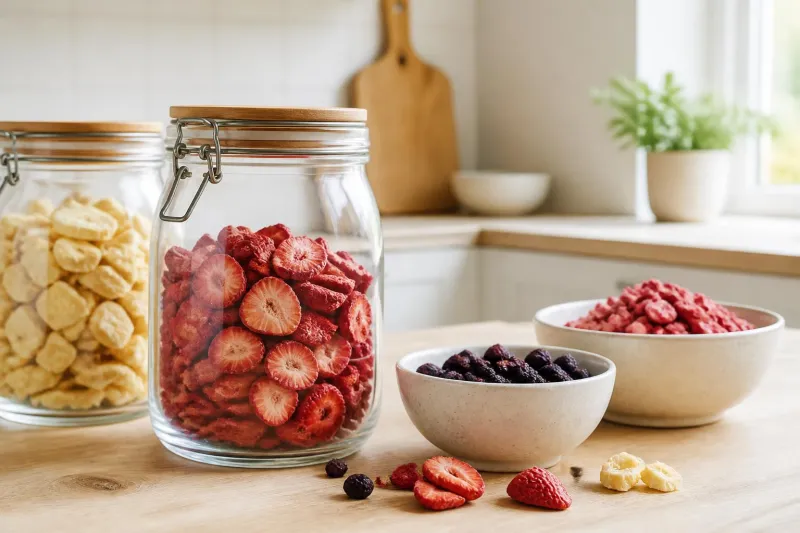
- plain dried fruit for chewiness, sweetness and long shelf storage
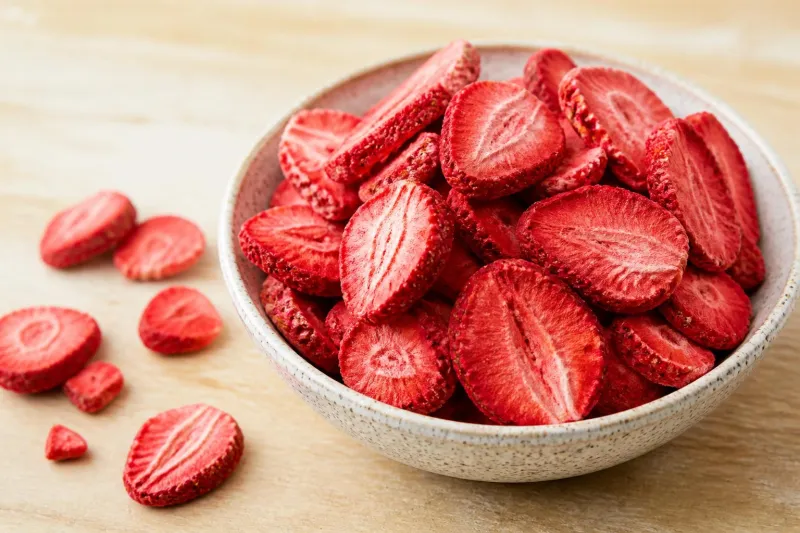
- freeze-dried fruit for intense fruit flavour, crisp texture and low moisture
- fresh or frozen fruit when moisture and juiciness are wanted
That approach is often more useful than trying to sort ingredients into “good” and “bad” boxes.
How to read the label without mixing up 100g and a portion
A lot of confusion starts with the nutrition table. The NHS guide to food labels explains an important point that is easy to miss, per 100g and per portion are different comparison bases. If you compare one product per 100g and another per portion, you can come away with the wrong impression.
Per 100g is the best starting point when you want to compare similar products fairly. If you are choosing between two packs of dried mango, two raisin brands, or dried fruit versus freeze-dried fruit, the per 100g line gives you a standard basis. It helps you compare sugar, fibre, energy and other nutrients without the manufacturer deciding the comparison for you.
Per portion can still be useful, but only if the portion size is realistic for the way you actually use the ingredient. Packet portions are not universal truths. One person may add 15 grams to overnight oats. Another may bake 120 grams into a fruit loaf shared across several slices. A “portion” printed on pack may be convenient for labelling, but it is not automatically the amount you will eat.
When reading the label, check these points in order:
- Ingredients list
Is it just fruit, or are there added ingredients such as sugar, glucose syrup, sunflower oil or preservatives? Ingredients are listed in descending order by weight.
- Nutrition per 100g
This is your cleanest comparison point across brands and formats.
- Nutrition per portion
Useful only if you also check how many grams that portion represents.
- Fibre and sugar
Dried fruit can contain useful fibre, but it can also be high in sugars naturally present in fruit, and sometimes added sugars as well. The label helps you tell which product you are buying.
- Energy
Because water has been removed, dried fruit is concentrated. The energy per 100g is therefore usually much higher than fresh fruit.
An illustrative example shows why basis matters. Suppose one packet lists 65 grams of sugar per 100g, and another lists 8 grams of sugar per 12 gram portion. Those numbers are not directly comparable until you put them on the same basis. The second product may still be high per 100g, or it may not. You have to do the like-for-like comparison first.
This matters particularly with freeze-dried fruit. Because it is very light, a small handful may weigh far less than the same volume of chewy dried fruit. A bowl that looks generous may contain relatively few grams. That can make per portion figures look modest, but the only honest way to compare formats is to check both the weight and the basis used on the label.
If you want more help interpreting nutrition panels for fruit ingredients, our guide on how to compare iron in dried fruit without guesswork shows the same principle, start with the basis before drawing conclusions.
Why texture and moisture change how dried fruit works in the kitchen
For cooks and bakers, texture and moisture are often the deciding factors. This is where chewy dried fruit and freeze-dried ingredients behave very differently.
Traditional dried fruit still contains some moisture. That gives it chew, density and stickiness. Think raisins in scones, chopped dates in flapjacks, or apricots in a tagine. It can soften further during cooking and may release a little sweetness into the surrounding mixture. In some recipes that is exactly what you want.
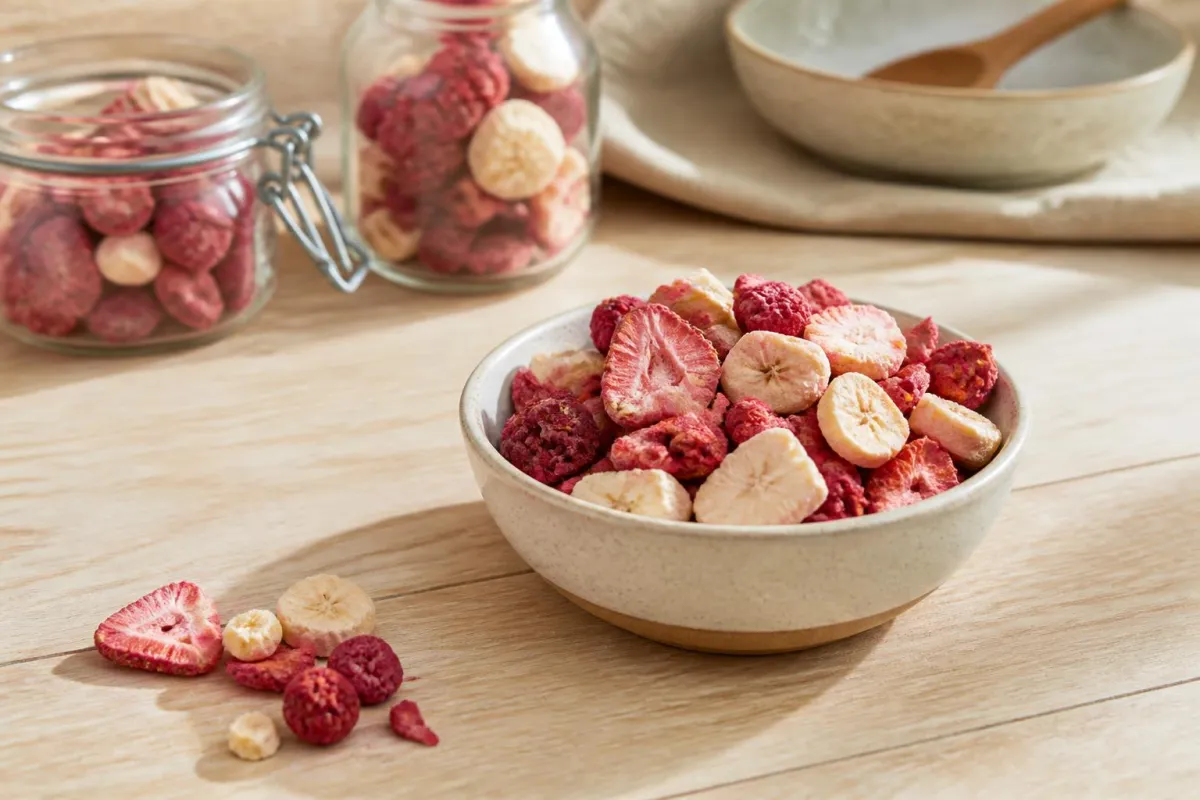
Freeze-dried fruit is different because the water is removed in a way that leaves the structure light and crisp. Whole or sliced pieces can crumble, snap or soften quickly once they meet moisture, and you can learn more about Crispy Snacks to understand how powders disperse through batters, icings and creams without adding much liquid. That makes freeze-dried ingredients especially useful where extra moisture would spoil the texture.
A few practical examples make the difference clearer:
- Snacking
Chewy dried fruit is substantial and sweet. Freeze-dried fruit is lighter, crisper and often more fragile. The eating experience is completely different even when the fruit is similar.
- Baking into doughs and batters
Raisins, currants and chopped dried apricots hold their shape well and suit buns, fruit cakes and traybakes. Freeze-dried raspberries can work in biscuits or cake batters, but they may break down more and can soften as they absorb moisture.
- Stirring into mixtures after cooking
Freeze-dried fruit is useful on top of porridge, yoghurt or muesli when you want texture at the moment of serving. If stirred in too early, it may lose the crispness that made it appealing.
- Moisture-sensitive uses
In meringues, chocolate bark, buttercream, icing sugar blends or decorative toppings, freeze-dried fruit is often easier to handle because it contributes flavour and colour without the wetness of fresh fruit.
- Sauces and compotes
Fresh or frozen fruit usually suits these better because moisture is part of the result.
This is why we separate ingredient choice from health claims. A fruit can be perfectly respectable nutritionally and still be the wrong format for a recipe. If you are choosing for baking or decoration, the moisture behaviour matters just as much as the nutrition panel.
For readers new to these ingredients, our first steps with freeze-dried fruit guide explains how crisp pieces and powders behave once they meet wet mixtures.
When dried fruit is useful and when another ingredient may suit better
The best cupboard choice depends on what you need the ingredient to do.
Choose dried fruit when you want concentrated sweetness, chewiness and good shelf stability in the cupboard. It suits fruit loaves, hot cross buns, couscous salads, stuffing, flapjacks and snack mixes. It also works well when the fruit needs to stay noticeable after baking or simmering.
Choose freeze-dried fruit when you want fruit flavour with very little added moisture. It is particularly handy for folding into icing, mixing into dry blends, finishing desserts, topping breakfast bowls, or adding sharp berry notes to bakes without making the mixture wetter. We cover the main formats in our guide to different types of freeze-dried fruit.
Choose fresh fruit when juiciness, softness or visual freshness matters. Fresh berries in a pavlova, sliced banana on porridge, or chopped apple in a salad bring qualities that dried formats do not replace.
Choose frozen fruit when you want fruit for cooking, blending or baking and are happy to work with the moisture released on thawing or heating. Frozen berries are often practical for compotes, smoothies and muffin batters.
A few common kitchen decisions:
- For porridge or muesli
Dried fruit adds chew and sweetness. Freeze-dried fruit adds crunch at serving time. Fresh fruit adds softness and moisture.
- For fruit cake
Traditional dried fruit is usually the better fit because it stays tender and familiar in the crumb.
- For buttercream or icing
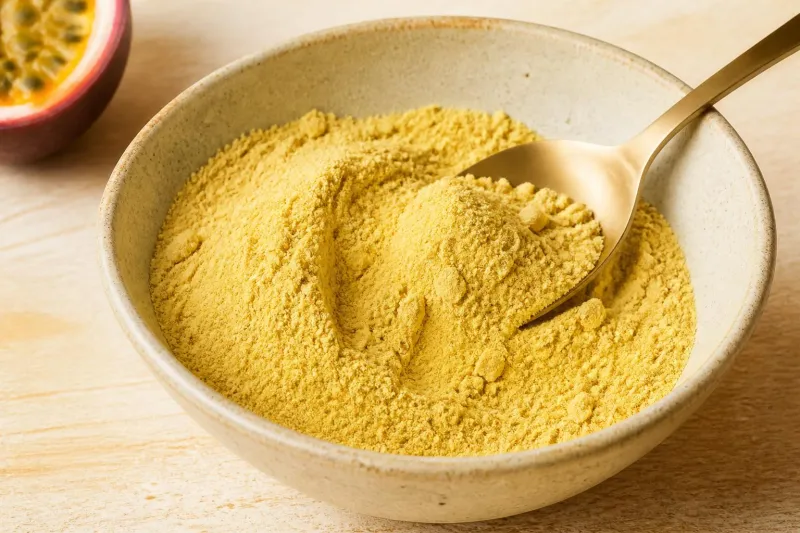
Freeze-dried fruit or fruit powder is often easier than fresh fruit because it does not loosen the mixture in the same way. Our pages on freeze-dried fruit powder explain why powders are useful in moisture-sensitive baking.
- For lunchbox-style cupboard snacks
Dried fruit is robust and portable. Freeze-dried fruit is lighter and crisp, but more crushable.
- For a sauce or fruit topping that should spoon easily
Fresh or frozen fruit usually makes more sense.
So, is dried fruit good for you? It can be a reasonable ingredient in a balanced diet, but the practical kitchen answer is that it is useful for some jobs and less suitable for others. Choosing well means matching the format to the purpose, not expecting one type of fruit to do everything.
Storage, allergens and packet checks before you use it
Good storage protects both quality and safety. The right method depends on the product, the pack and whether it has been opened. The Food Standards Agency guidance on safe food storage gives the broad public health principle, store food appropriately and follow the product instructions.
For dried fruit and freeze-dried ingredients in the cupboard, practical habits matter:
- keep packs sealed when not in use
- store in a cool, dry place away from direct heat and sunlight
- use clean, dry utensils to avoid introducing moisture
- reseal opened packs promptly
- if the product comes in a pouch with a closure, press it shut fully
- if transferring to another container, use one that is clean, dry and airtight, and keep the label details with it
Moisture is especially important with freeze-dried ingredients. Once exposed to damp air, they can lose crispness quickly. That does not necessarily make them unsafe, but it can make them disappointing in the recipe you had planned. If you rely on them for crunch or as a decorative finish, open the packet only when you are ready to use it.
Chewy dried fruit has different storage issues. It can clump together, harden or become sticky depending on humidity and temperature. Again, packet instructions should guide you first. General storage advice is helpful, but the actual product information takes priority.
Allergen checks also need to happen on the real packet, every time. The Food Standards Agency consumer allergy guidance is clear that ingredient and allergen information matters. We cannot infer personal suitability from a general category such as “dried fruit” or “freeze-dried strawberries”. Different manufacturers may handle different allergens, use different processing aids, or package products in facilities with different controls.
That matters even with apparently simple ingredients. A plain fruit product may still carry allergen information or “may contain” wording that is relevant to some households. In the UK, prepacked food must provide ingredient and allergen information, but readers should always check the current packaging in hand rather than relying on memory, old photos or a general web description. Where rules differ between the UK and the EU generally, labelling frameworks are similar in broad purpose, but product presentation and business practices can still vary, so the packet you are using is the final reference point.
Before using any packet, check:
- the ingredient list
- allergen information
- storage instructions
- best before date
- whether the texture or appearance suggests the product has picked up moisture or deteriorated
If a recipe depends on a crisp finish, it is worth checking the fruit just before use. Freeze-dried pieces that have softened may still work stirred into a sponge batter, but they are less suitable for topping a dessert where crunch matters. Our storage guidance for freeze-dried fruit covers the practical cupboard side in more detail.
A sensible cupboard is not built by chasing “superfoods”. It is built by keeping ingredients that suit the way you actually cook. Dried fruit has a place, especially when you want sweetness, chewiness and convenience. Freeze-dried fruit has a different place, especially when moisture control matters. Fresh and frozen fruit still do jobs neither of the others can do well.
If you read the label properly, store the packet well, and choose the format that matches the recipe, dried fruit can be a useful choice for the cupboard. Not because it carries a health halo, but because it is practical, versatile and easy to use well.