Freeze-dried snacks for practical cupboard use
Freeze-dried snacks are very dry, light and crisp, so texture changes quickly if they pick up moisture.
On this page
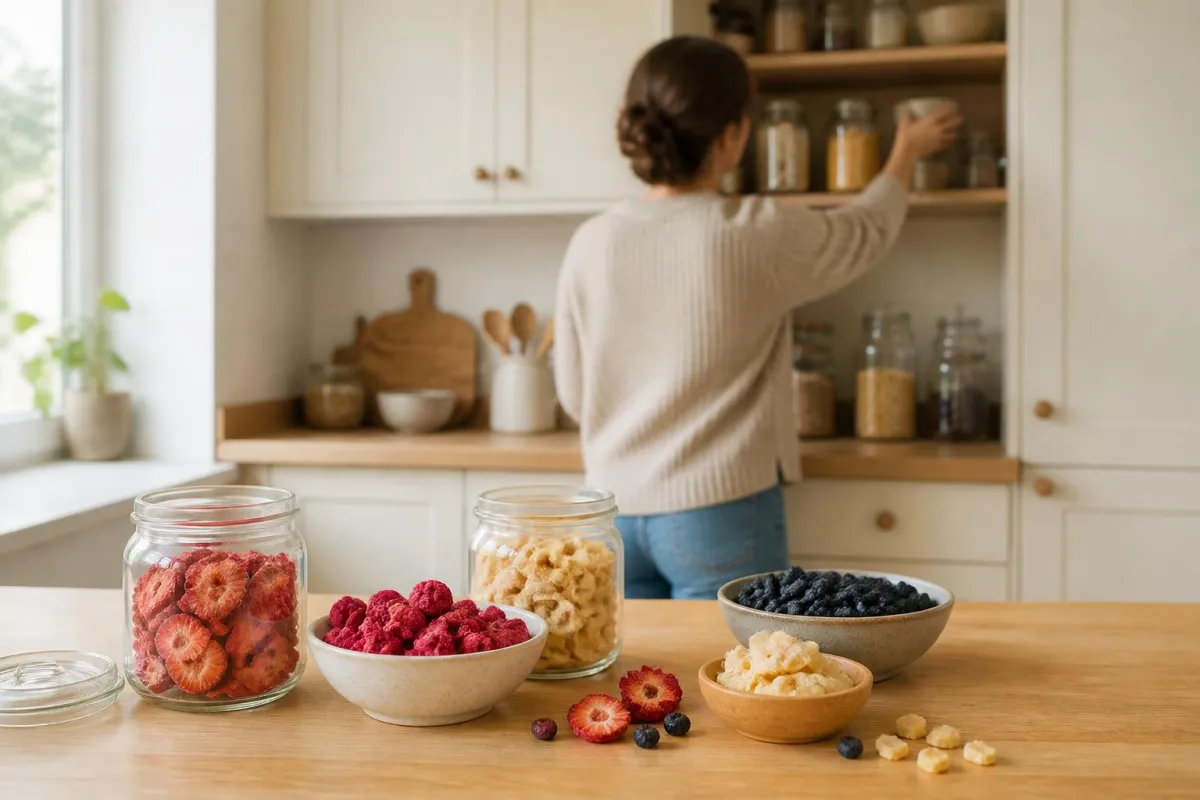
Freeze-dried snacks are useful cupboard ingredients when you want something light, crisp and easy to keep on hand for cooking, baking or topping food at short notice. In practice, most people are buying pieces of fruit or vegetables with very little moisture left in them, so they feel noticeably lighter than fresh produce and often taste more concentrated. That low moisture is also why the texture changes quickly once they meet yoghurt, porridge or cake batter.
At Crispberry, by Fleeta Limited, we focus on the practical side of using freeze-dried ingredients at home. For adult cooks and bakers, the main job is not chasing hype. It is choosing a packet that suits the way you actually cook, reading the label properly, and storing it well after opening so the contents stay crisp for as long as the pack instructions allow.
What freeze-dried snacks are and why they feel so different
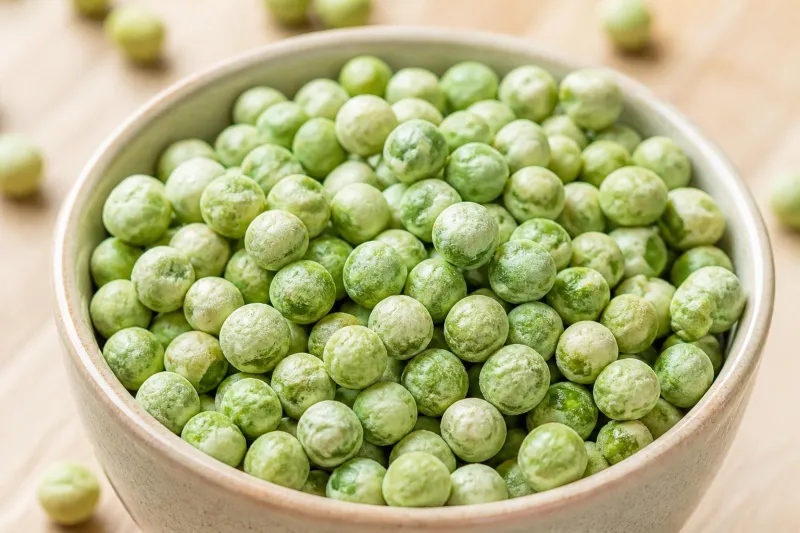
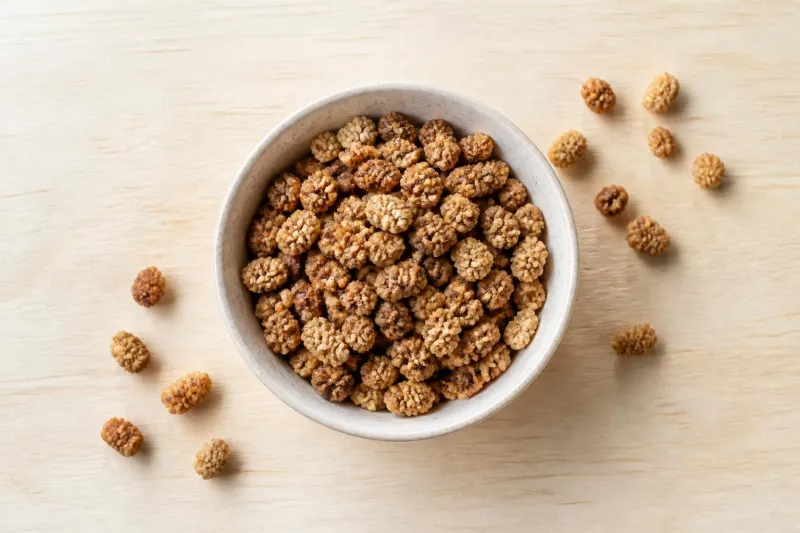
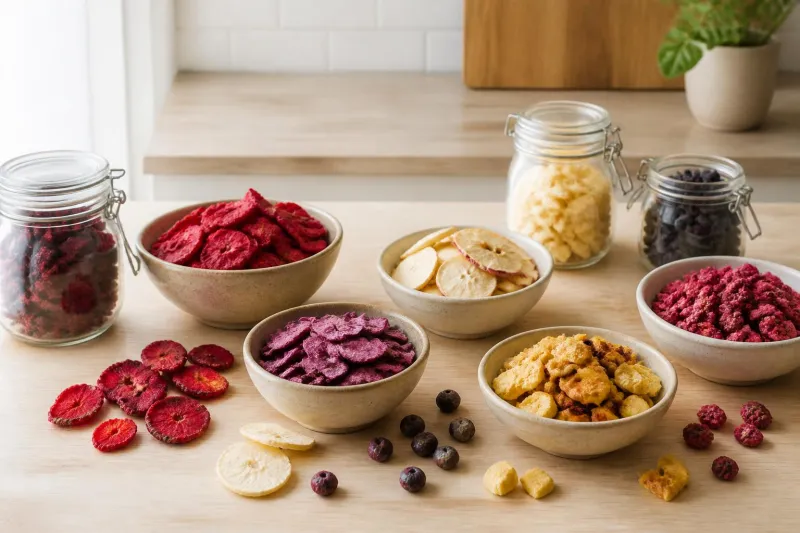
When people talk about freeze dried snacks, they usually mean fruit or vegetables that have been freeze-dried to remove most of the water while keeping the original shape more recognisable than a powder. You might see whole berry pieces, sliced strawberries, apple pieces, peas, sweetcorn or mixed fruit pieces. Some packets are clearly intended for snacking, while others are better thought of as ingredients for baking, porridge, yoghurt or homemade trail mixes.
The reason they feel so different from fresh produce is mostly moisture. With so little water left, the pieces are light in the hand, crisp to bite, and less bulky to store than the fresh equivalent. Flavour can seem stronger because there is less water softening the taste. That does not make every packet intense in the same way. A tart berry, a sweet banana slice and a mild vegetable piece will still behave differently, and cut size matters too. Small fragments often seem punchier because they spread through a mouthful or mixture more evenly than large slices.
Texture is where most first-time buyers notice the biggest difference. A fresh strawberry bends and releases juice. A freeze-dried strawberry snaps or crumbles. A pea may be airy rather than hard, while a denser fruit piece can be crisp at first and then chewy once it picks up moisture from the air. That is why opened packets need care, and why the same ingredient can work beautifully in one kitchen use and disappoint in another.
It also helps to separate ingredient form from intended use. Some packets contain only one ingredient, such as strawberries or raspberries. Others may include sugar, oil, flavourings or anti-caking agents, depending on whether the product is sold as a snack, a cereal topper or a baking inclusion. We cover the ingredient side in more detail in our guides to using freeze-dried fruit in the kitchen and getting started with freeze-dried fruit at home.
For cupboard planning, the key point is simple. Freeze-dried ingredients are not trying to behave exactly like fresh produce. They are a dry ingredient with a distinctive crunch and a fast response to moisture. If you expect that from the start, it is much easier to choose the right packet and use it well.
How to choose a packet that suits your kitchen
A good packet for your kitchen starts with the ingredient list. If you want fruit pieces for baking into scones or folding through buttercream, a short ingredient list may be all you need. If you are looking at a product marketed as a snack, check whether sugar, sweeteners, oils or flavourings have been added. There is nothing automatically wrong with a longer list, but it changes how the ingredient behaves and whether it suits your intended use.
Allergen information matters just as much as the headline ingredient. In the UK, prepacked food must provide ingredient information and emphasise any of the 14 regulated allergens when they are present as ingredients. The Food Standards Agency explains why consumers should read both the ingredients and the allergen information carefully, and not assume that one raspberry packet is interchangeable with another simply because the front of pack looks similar Food Standards Agency. If you are cooking for someone with an allergy, the actual packet in your hand is what matters.
The nutrition panel needs the same care. The NHS explains that per 100g and per portion figures are different bases and should not be confused NHS. Per 100g is useful for comparing one product with another. Per portion can be useful only if the portion is clearly defined and realistic for how you will use it. With freeze-dried foods, this is especially important because they are so light. A small handful may weigh fewer grams than it looks, while a bowlful used in baking may add up quickly.
For example, imagine two packets of freeze-dried strawberries. One gives nutrition per 100g and also per 10 grams. Another gives only per 100g. If you sprinkle 6 grams over porridge, the per 100g figure is still the comparison tool, but it does not tell you what your own bowl contains unless you work it out from the amount you actually used. That is why we avoid making blanket claims about portions. The packet, your scales and your recipe decide the real figure.
This also helps with mixed products. A fruit and nut mix, a breakfast topper and a plain fruit ingredient may all sit near each other on a shelf, but they are not nutritionally or functionally identical. If the goal is cupboard flexibility, plain single-ingredient pieces often give you more control in the kitchen. If the goal is ready-to-eat convenience, a mixed snack may suit you better. Neither choice is universal.
UK readers should also note that labelling rules are applied through UK law, and while much food labelling practice looks familiar across Europe, you should rely on the UK pack in front of you rather than assuming an EU example online will match it exactly. Ingredient wording, allergen presentation and portion references can differ between markets and brands.
One final point on choosing a packet, think about cut size and intended job. Large slices are useful as visible decoration. Small pieces spread more evenly through batter or granola. Powders behave differently again, especially for colour and flavouring in icing or buttercream, which is why our page on freeze-dried fruit powder for baking and toppings is often the more relevant guide when you do not want crunchy pieces.
When to eat them crisp and when to add moisture
Freeze-dried pieces are at their best eaten crisp when texture is part of the appeal. That usually means using them as a topping at the last minute, eating them straight from the packet, or stirring them into a homemade trail mix that stays dry until serving. In those situations, their light crunch and concentrated flavour are exactly what you want.
Yoghurt is a good example of where timing matters. If you scatter freeze-dried fruit over thick yoghurt and eat it straight away, the pieces stay fairly crisp. Leave the bowl for a few minutes and the outer surface softens. Leave it much longer and smaller pieces can become chewy or jammy in spots. That is not necessarily a fault. It depends whether you want contrast or a softer spoonful. If crunch matters, add them just before eating.
Porridge behaves similarly but faster, because the heat and moisture are greater. Sprinkled on top at the table, freeze-dried fruit gives a brief crisp stage before softening. Stirred into hot porridge earlier, it starts to rehydrate and loses most of its snap. This can be useful if you want the fruit to blend through the bowl rather than sit on top. It is less useful if you were hoping for a crunchy garnish.
Cake batter is different again. In a wet batter, freeze-dried fruit pieces absorb moisture during mixing and baking. Small fragments can disappear into the crumb and give pockets of flavour. Larger pieces may soften but still remain visible. Results vary a lot by fruit type and cut size. A fine strawberry crumb behaves differently from a chunky raspberry piece. If you want a clear fruit note without irregular soft bits, powder may be easier than pieces.
Buttercream is one of the clearest cases where moisture control matters. Dry freeze-dried fruit powder can add colour and flavour without introducing liquid, which is helpful because too much moisture can loosen the texture. Larger fruit pieces can be attractive on the outside of a cake or cupcake if added close to serving, but mixed directly into buttercream they may soften and lose their crispness. Some bakers like that speckled effect. Others prefer a smooth finish.
Trail mixes are usually best kept dry from start to finish. Freeze-dried fruit works well with nuts, seeds or cereal elements when everything stays sealed and moisture-free. If you add chocolate, remember that storage conditions matter for the whole mix, not just the fruit. A dry ingredient can still suffer if the rest of the mix is stored badly.
Brief contact with moisture is useful when you want a softer bite, better blending, or a less brittle texture in a mixture. It is unhelpful when the crunch is the whole point, or when the pieces are likely to turn patchily chewy rather than evenly soft. In practice, that means adding freeze-dried toppings late, and adding them earlier only when you actively want them to soften.
Storage after opening without wasting the packet
Once opened, freeze-dried foods start taking on moisture from the air. That is the main reason they lose crispness. Good storage is mostly about slowing that process down.
Start with the pack instructions. The Food Standards Agency advises consumers to follow storage instructions on the label, because food should be kept as the manufacturer directs where those instructions are given Food Standards Agency. There is no reliable single shelf life for every opened packet of freeze-dried fruit or vegetables, and we do not suggest one. The actual product, packaging and your kitchen conditions all matter.
In practical terms, these steps help:
Seal the packet promptly after use. If it has a zip seal, press it closed carefully along the full edge. If it does not reseal well, transfer the contents to a clean, dry airtight container.
Keep moisture out. Use a dry spoon, dry hands and a dry container. Even a small amount of kitchen moisture can start softening the contents.
Store in a cool, dry cupboard, away from steam and direct heat. A shelf near the kettle, oven or dishwasher is often a poor choice because warm, damp air reaches it repeatedly.
Open only what you need. If you use freeze-dried ingredients often, smaller packets can be easier to manage than one large bag that is opened and closed many times.
Check the texture before using in a recipe where crispness matters. If the pieces have gone slightly soft, they may still be perfectly usable in porridge, fillings or baking, but not ideal as a final crunchy topping.
If the packet includes a desiccant sachet, leave it in place if the label allows and keep it away from children. Do not open or use the sachet contents.
For mixed household cupboards, it is also worth separating strongly scented foods. Freeze-dried ingredients do not usually need special odour protection beyond good sealing, but poor cupboard conditions rarely improve any dry ingredient.
If you want a broader overview of ingredient handling, our guide to freeze-dried vegetables for cupboard cooking covers similar storage principles from a savoury angle.
Useful kitchen ideas for adults who cook and bake
Freeze-dried ingredients are most useful when treated as flexible cupboard components rather than novelty toppings. The exact result varies by fruit or vegetable, cut size and how much moisture the recipe contains, so these are idea types rather than tested recipes.
For baking, small fruit pieces can be folded into muffin batter, traybake sponge or biscuit dough for little bursts of flavour. The finer the pieces, the more evenly they spread. Larger slices can look attractive on top of loaf cakes or traybakes, but they usually soften during baking rather than staying crisp.
In fillings, finely crushed freeze-dried fruit can be stirred into cream cheese mixtures, sandwich cake fillings or dessert layers where you want flavour without pouring in extra liquid. If you need a smoother finish, powder is often easier than chopped pieces.
For toppings, freeze-dried raspberries or strawberries work well scattered over iced cakes, cheesecakes, meringues or overnight oats just before serving. If they sit on a wet surface for too long, they soften, so timing matters more than the ingredient itself. We often point readers to specific ingredient pages such as whole and broken freeze-dried raspberries for topping and baking ideas when they want to think about piece size more closely.
In cupboard mixes, you can combine oats, seeds and freeze-dried fruit for a dry breakfast blend, or add fruit pieces to a homemade granola after baking rather than before, which helps preserve more texture. In savoury cooking, freeze-dried vegetables can be stirred into dry soup mixes, couscous jars or camping-style pantry combinations, though rehydration will depend on the size and density of the pieces.
For decoration, a light crush of freeze-dried fruit gives colour and texture on truffles, chocolate bark or buttercream swirls. For flavouring, a powder can be better than pieces because it distributes more evenly. For visible fruit identity, pieces are better than powder.
The most useful approach is to match the form to the job. Use powder when you want smooth colour and flavour. Use small pieces when you want even distribution. Use larger pieces when appearance matters and a little softening is acceptable. With freeze dried snacks, that choice is often more important than the fruit itself.
The NHS Eatwell Guide also reminds readers that dietary balance is considered over a day or week, not demanded from every single snack or topping NHS. For our purposes, that means a cupboard ingredient does not need to do every job. It just needs to be chosen, stored and used in a way that suits your kitchen.
That is the practical value of freeze-dried ingredients. They are light, crisp, quick to use and easy to keep on hand, but only if you read the actual packet, respect moisture, and match the format to the recipe.