How to choose dried fruit snacks for everyday cooking
Dried fruit snacks vary widely in texture, sweetness and added ingredients.
On this page
Choosing dried fruit for everyday cooking comes down to three things, texture, moisture and the label. If you want fruit that folds into flapjack, muffins or fruit loaf, chewy pieces usually make more sense. If you want a crisp topping, a quick fruit powder, or strong flavour without adding extra wetness, freeze-dried fruit is often the better cupboard ingredient.
It also helps to separate snacking fruit from cooking fruit. Many packs are sold as snacks first, so they may include oils, added sugar, preservatives or allergen warnings that matter once you start baking with them. A little time spent checking the type of fruit and how it behaves in a recipe will save you from soggy batters, hard bits in cakes, or toppings that go soft too quickly.
What counts as a dried fruit snack
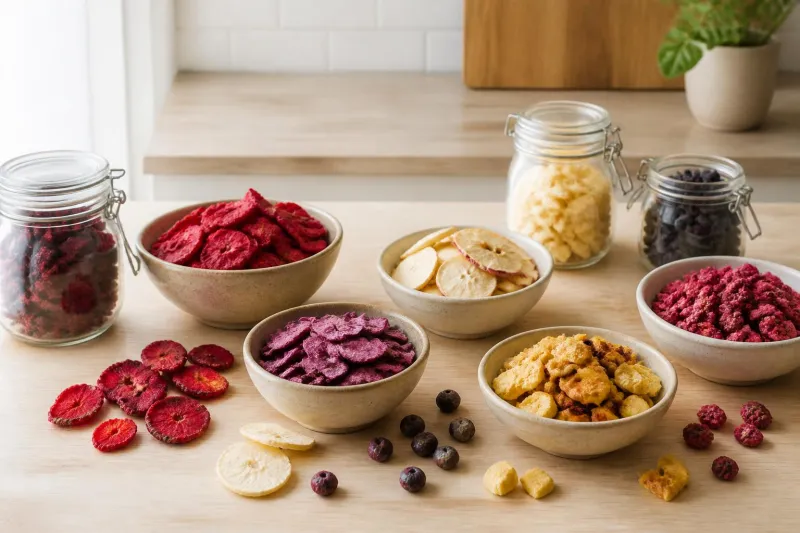
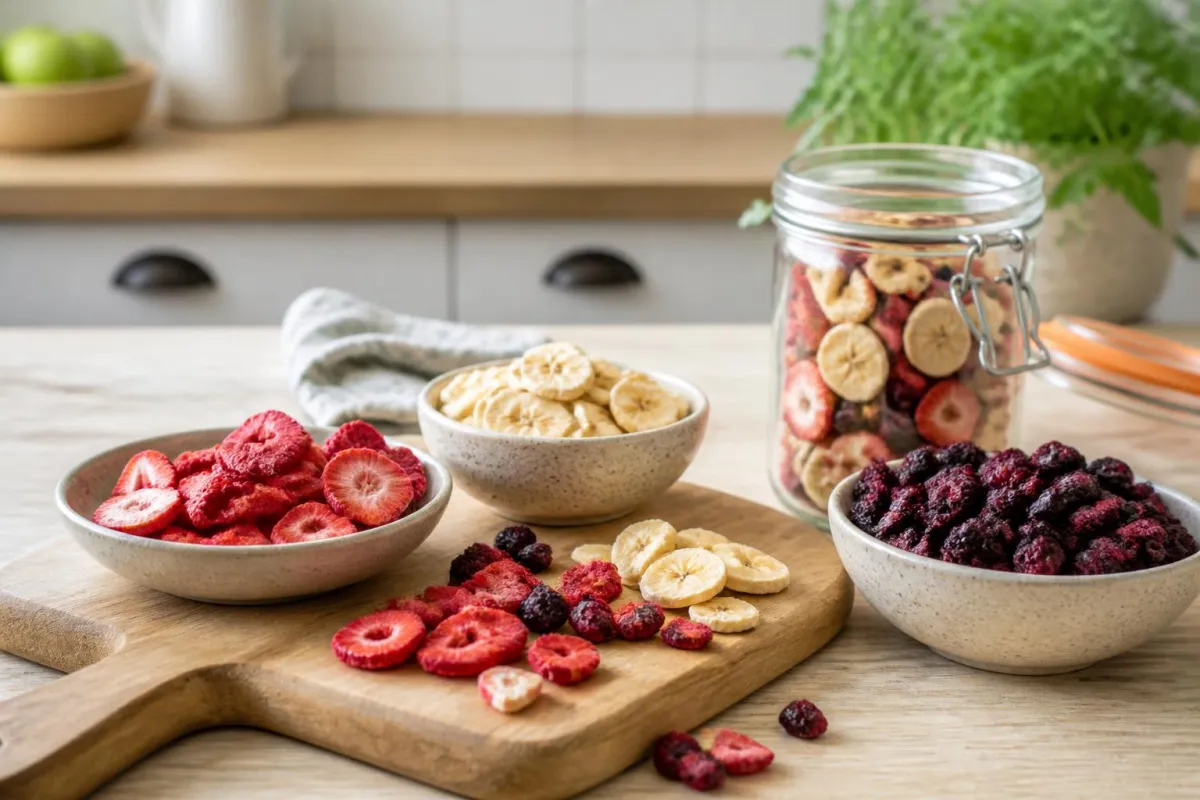
In everyday UK shopping, dried fruit snacks usually fall into two broad groups. The first is conventionally dried fruit, such as raisins, sultanas, dates, apricots, mango slices, apple rings or mixed fruit pieces. These are usually chewy, sometimes sticky, and still contain enough residual moisture to stay pliable. The second is freeze-dried fruit, which is much lighter and crisper because the drying method removes moisture in a different way.
That difference matters in the kitchen. A chewy dried apricot and a crisp freeze-dried strawberry are both dried fruit, but they do not do the same job. Conventional dried fruit contributes sweetness, bite and some moisture. Freeze-dried fruit contributes flavour, colour and texture with very little added wetness.
You will also see products that sit somewhere between the two. Some fruit pieces are soft-baked rather than simply dried. Some are coated to stop sticking. Some snack mixes combine dried fruit with nuts, seeds or chocolate. Those can still be useful, but they are not neutral ingredients. If a pack is built as a ready-to-eat snack, it may not behave well in a plain sponge, bread dough or breakfast topping.
For home cooks and bakers, it helps to think in practical categories.
Chewy dried fruit pieces include raisins, chopped dates, cranberries, dried blueberries, apricot pieces and mango strips. These are best where you want visible fruit pieces that stay soft after baking, or where the fruit can absorb a little liquid from the mixture.
Crisp freeze-dried fruit includes slices, whole berries, berry pieces and crushed fruit. These are useful where moisture is the enemy, such as cake decorating, stirring through icing sugar, folding into chocolate bark, or finishing porridge just before serving. If you are new to using this type of ingredient, our guide to first steps with freeze-dried fruit explains the basics.
Powdered fruit is another category worth separating out. Freeze-dried fruit powder is not simply small dried fruit bits. It disperses very differently in batters, icings and fillings. It can colour and flavour without introducing fruit chunks, and in some uses it is far easier to control than chopped dried fruit. We cover that in more detail in our guide to using freeze-dried fruit powder in the kitchen.
How texture changes what you can do with it
Texture is often the deciding factor when choosing dried fruit snacks for cooking. The same fruit can be excellent in one job and awkward in another, simply because of how it feels and how it handles moisture.
Crisp fruit works best when you want contrast. Freeze-dried raspberry pieces on yoghurt, meringues or iced loaf cakes bring a clean crunch at the point of serving. They also crush easily, which makes them useful for scattering over cheesecake, blending into dust for truffles, or mixing into a dry topping. Because they are dry and brittle, they break down fast. That is helpful for decoration, but less useful if you want intact, chewy fruit pieces in a traybake.
Chewy fruit is usually better for baking into the body of a mixture. Raisins in a tea loaf, chopped apricots in flapjack, or dried cranberries in cookie dough stay noticeable after baking. They can soften further as they absorb liquid from eggs, butter, milk or soaked oats. That gives a rounder, more integrated texture than a crisp fruit would.
Sticky fruit needs a little more care. Dates, figs and some sweetened dried fruit pieces can clump together, sink unevenly or smear through a batter if not chopped well. In a dough, they may create pockets of concentrated sweetness. In some recipes that is exactly what you want. In others, it gives an uneven crumb. A light dusting of flour can help separate sticky pieces before folding them into a cake mixture, although the effect depends on the recipe and the amount used.
For toppings, crisp fruit usually wins. A chewy dried blueberry on top of a frosted cake can look heavy and may leak colour or tackiness into the icing. Freeze-dried berries tend to sit more cleanly on the surface. The trade-off is that they can soften if they absorb moisture from cream, buttercream or the air, so they are best added close to serving if you want crunch.
For mixing into batters, think about whether the fruit should stay distinct or almost disappear. Chewy pieces remain as pieces. Freeze-dried fruit can partly rehydrate during baking, but small fragments may soften and lose their crispness. That is not necessarily a fault. In a muffin or pancake batter, crushed freeze-dried fruit can spread flavour through the mixture more evenly than larger dried fruit chunks.
For doughs, especially enriched buns, fruit bread and biscuits, moisture control is important. Conventional dried fruit can pull moisture from the dough during resting and baking. Sometimes that improves the result. Sometimes it tightens the dough around the fruit and causes uneven shaping. Freeze-dried fruit contributes far less moisture exchange, but it is also more fragile and may break down during mixing.
As a simple rule, choose texture according to the job.
Use chewy fruit for folding in, baking through and giving bite.
Use crisp fruit for topping, finishing, decorating and dry mixing.
Use powders when you want flavour and colour without visible pieces or extra liquid.
If you are comparing options for a specific ingredient, our pages on freeze-dried fruit for home baking can help you picture where crisp fruit pieces are most useful.
What to check on the label before you use it
Before using any dried fruit snack in cooking, read the whole label, not just the front of the pack. The product name may tell you very little about what is actually inside.
Start with the ingredients list. Ideally, a simple dried fruit ingredient will list the fruit itself and little else. But many products include added sugar, vegetable oil, preservatives, acidity regulators or flavourings. None of these automatically makes the ingredient unsuitable, but they do affect how it behaves. Oiled fruit may separate more easily but can alter the texture of a dry mix. Sweetened fruit may make a bake taste much sweeter than expected. Preservatives can matter for some cooks who are trying to keep a recipe very simple.
Then check allergen information carefully. In the UK, allergen details must be clear for prepacked foods. A fruit snack may also be packed where nuts, peanuts, sesame, milk or cereals containing gluten are handled. That matters if you are cooking for someone with an allergy or intolerance. The Food Standards Agency advises consumers to read ingredient and allergen information every time, because products can change and a familiar pack is not a guarantee of suitability Food Standards Agency guidance on food allergy and intolerance.
Next, look at the nutrition panel with the right comparison in mind. The NHS explains that per 100g information is useful for comparing products, while portion information refers only to the manufacturer’s stated serving and may be very different from what you actually use NHS guide to reading food labels. This matters a great deal with dried fruit because recipe quantities are often small, irregular and easy to underestimate.
For example, a pack may show values per 100g and also per portion. If you only use 20 grams in a batch of muffins, the portion panel may not match your actual use at all. Equally, if you scatter freeze-dried fruit over several bowls of porridge, the amount per person might be much smaller than the portion printed on the packet. Compare products on the per 100g basis, then work out your own recipe quantity in grams.
Also check whether the pack gives drained or prepared values, especially if the product is meant to be rehydrated before use. Some fruit snacks are sold ready to eat but can be soaked for baking. If you plan to do that, the texture and weight will change, and the dry label still refers to the product as sold.
Country-specific labelling points are worth noting too. In the UK, food labelling rules can differ from the EU in detail because the regulatory framework is no longer identical. For practical kitchen use, the main point for readers is not to assume that a product bought from an EU seller will present information in exactly the same way as a UK supermarket pack. If anything is unclear, especially allergens or storage instructions, do not guess.
Finally, read the storage statement before you open the packet. Some dried fruit snacks are fairly forgiving. Others, especially freeze-dried fruit, can lose texture quickly once exposed to air or humidity. The right storage method starts with the pack instructions.
When freeze-dried fruit is the better cupboard choice
Freeze-dried fruit is not always the right answer, but there are clear situations where it is the better cupboard choice for everyday cooking and baking.
The first is any low-moisture use. If you are making a crumble topping, biscuit crumb, granola sprinkle, chocolate bark or dry snack mix, added moisture is usually unhelpful. Chewy dried fruit can make a dry mixture clump or soften over time. Freeze-dried fruit keeps the mix lighter and cleaner.
The second is decoration. For topping cakes, traybakes, cheesecakes and desserts, freeze-dried fruit gives strong colour and a recognisable fruit look without syrupiness. A few crushed raspberries or strawberry slices can finish a bake neatly. If you want ideas for specific fruits, our page on freeze-dried raspberries for baking and toppings shows the kinds of uses that suit them.
The third is fruit powder. This is one of the most practical forms to keep in the cupboard because it adds flavour quickly without chopped fruit pieces or extra liquid. A spoonful of powder can be stirred into icing sugar, folded into buttercream, mixed into a cheesecake base, or dusted over yogurt and oats. It is also useful when you want fruit flavour distributed evenly rather than in pockets.
Another good use is where you want quick fruit flavour in a small quantity. If a recipe or garnish only needs a little fruit impact, freeze-dried ingredients can be convenient because they are lightweight and easy to crush. You do not need to chop sticky fruit finely or manage extra moisture in the bowl.
Freeze-dried fruit is also useful when appearance matters. Conventional dried fruit often darkens, glazes or blends into a bake. Freeze-dried berries and slices tend to look more obviously like the fresh fruit they came from, at least until they absorb moisture.
That said, there are limits. Freeze-dried fruit is usually not the best substitute where a recipe depends on the chew of raisins, dates or chopped apricots. It is also delicate. Stir it too vigorously into a batter and you may lose the shape. Add it too early to a moist topping and the crunch may fade.
So when should you reach for it? In practical terms, choose freeze-dried fruit when you want one or more of the following.
A crisp finish.
A dry topping.
A fruit powder.
Fast flavour release.
Strong colour without extra wetness.
A lighter texture in the finished dish.
How to store opened packs so texture lasts
Once a pack is open, moisture becomes the main issue. Dried fruit snacks last by being dry enough to resist spoilage or texture loss better than fresh fruit, but that does not mean they are immune to kitchen conditions. Steam, humidity and poor sealing can change them quickly.
Always follow the storage instructions on the actual pack first. That is the most specific guidance for the product in your hand. The Food Standards Agency’s general storage advice is to follow product instructions and store food appropriately Food Standards Agency storage guidance. For dried ingredients, that usually means keeping them sealed, cool and dry.
For chewy dried fruit, the main risk after opening is often drying out further or becoming sticky and clumped, depending on the environment. Reseal the pack tightly if possible. If the original seal is weak, move the fruit into a clean airtight container. Keep it away from direct heat, sunlight and steam from kettles or hobs. A cupboard away from the cooker is usually better than a shelf above it.
For freeze-dried fruit, crispness is the priority. It absorbs moisture from the air very readily, so open the packet only when you need it and reseal it promptly. If the fruit comes with a sachet inside, leave it there unless the pack says otherwise. Do not transfer it with damp hands or a wet spoon. Even small amounts of moisture can soften the fruit.
If you use freeze-dried fruit for toppings, it often makes sense to portion out only what you need for that moment, then close the pack immediately. Leaving it open while you finish a recipe can be enough to change the texture, especially in a warm kitchen.
Fruit powders need the same care. Moisture can make them clump, dull in colour and become harder to disperse. Use a dry spoon, avoid shaking the pack over steaming pans, and reseal it straight away. If you want more detailed handling points, our page on how to store freeze-dried fruit covers the basics.
A few practical habits help across all types.
Label the opening date on the pack or container if you decant it.
Keep different fruits separate unless they were packed together, because moisture levels and aromas can transfer.
Do not refrigerate opened dried fruit unless the pack specifically tells you to, because condensation can be a problem when containers are brought back to room temperature.
Check the fruit before use. If texture, smell or appearance has changed noticeably, do not assume it will behave as expected in a recipe.
For everyday cupboard planning, the best approach is simple. Buy the texture that suits the job, read the label properly, and store opened packs with moisture firmly in mind. That is what turns dried fruit from a vague snack ingredient into something genuinely useful in weeknight cooking and weekend baking.