Are dates dried fruit and what kind are they?
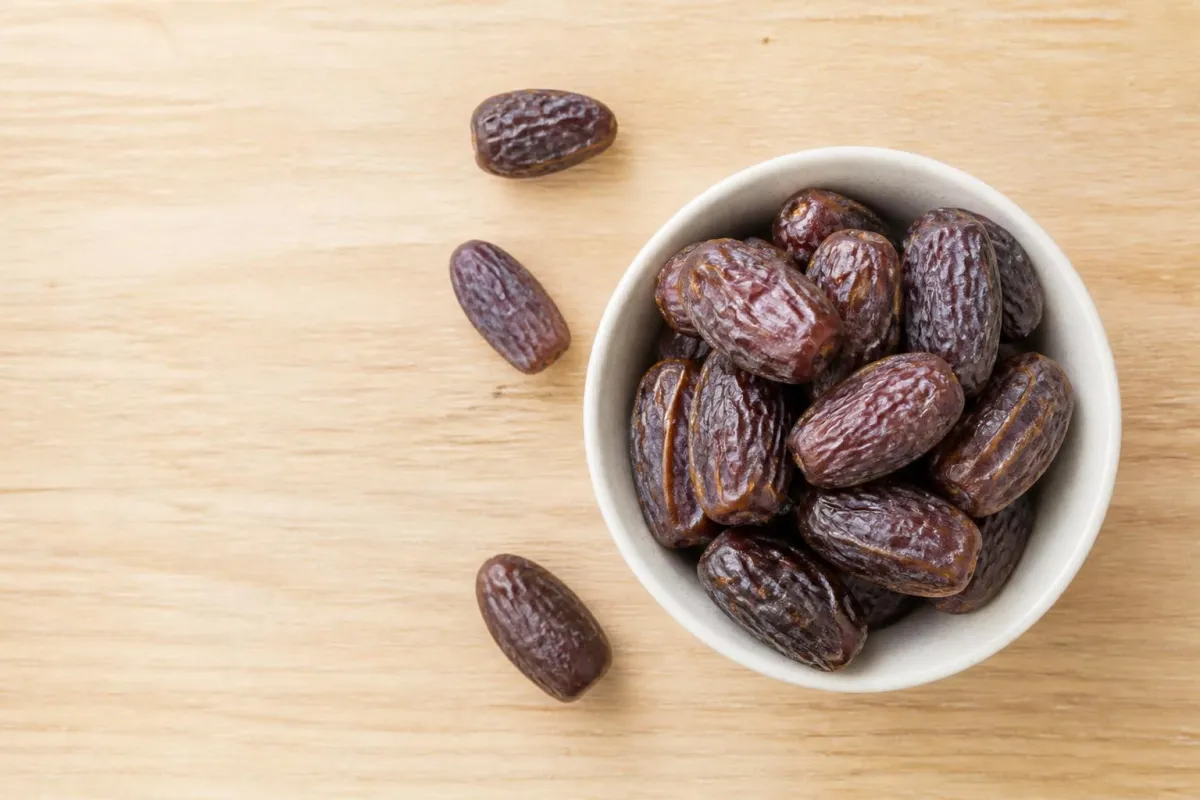
A date is the fruit of the date palm, and many dates sold in the UK are dried or partially dried.
On this page
If you are wondering what dried fruit a date is, the short answer is that a date is not a separate category of dried fruit at all. It is the fruit of the date palm, and many of the dates sold in UK shops are simply dates with part of their natural moisture reduced, either on the tree or after harvesting, so they are commonly grouped with dried fruit.
That is why dates can seem slightly confusing. Some are soft and glossy, some are firmer and more wrinkled, and some are sold chopped with flour or oil to stop them clumping. In practice, dates sit somewhere between fresh fruit and conventionally dried fruit, depending on the variety and how much moisture is left in them.
What a date actually is
A date is the fruit of the date palm, usually from varieties of Phoenix dactylifera. Botanically, it is a fruit with a single stone in the middle. In the kitchen and on shop shelves, it is often treated as dried fruit because it is sweet, concentrated, shelf stable compared with fresh fruit, and commonly sold in ambient packets alongside raisins, apricots and prunes.
That does not mean every date has been dried in the same way as, say, a very leathery dried apricot. Dates naturally ripen through stages, becoming sweeter and lower in moisture as they mature. By the time many varieties are packed for retail sale, they already have the dense texture people associate with dried fruit.
So when people ask what dried fruit a date is, the most accurate answer is this: a date is its own fruit, and many retail dates are sold in a partially dried or fully dried state. It is not a raisin-like version of another fruit. It is simply a date.
This matters in cooking because the word “dried” can suggest a single texture, when dates actually vary a lot. A soft Medjool date and a firmer chopped date ingredient behave differently in a cake mix, a sticky toffee-style sauce, or a snack bar mixture.
If you are comparing dates with other preserved fruit, it also helps to separate drying methods. Dates are usually sold as whole or chopped fruit with some moisture still present. They are not the same thing as what freeze-dried fruit is and how to use it well, which is processed to become crisp and low in moisture in a very different way.
Are dates always dried?
No. Dates are not always dried to the same degree, and some are sold quite soft. That is the main reason one packet can feel almost fudgy while another is noticeably firmer and easier to chop cleanly.
In broad terms, dates sold in the UK tend to fall into a few practical categories:
- Soft whole dates, often Medjool, with a plump texture and higher moisture
- Semi-dry whole dates, such as many Deglet Noor style dates, which are less sticky and more sliceable
- Fully dried or drier dates, which can feel firmer, wrinkle more, and benefit from soaking for some uses
- Chopped dates, often coated lightly to stop pieces sticking together
A date does not need to be brittle to count as dried fruit in ordinary retail language. Plenty of dates sold in the dried fruit aisle still contain enough moisture to feel tender. That is normal.
The wording used by retailers can also be loose. One packet may say “dates”, another “dried dates”, and another simply list the variety name. None of those phrases, by themselves, tell you exactly how moist the fruit is. Variety, packing method and storage all make a difference.
This is one area where a cook’s expectations matter more than the category label. If you want dates to blend into a paste, softer dates save time. If you want neat chunks in a fruit loaf, a slightly drier packet is often easier to handle. If you are stuffing dates or serving them on a board, larger soft whole dates may be the better choice.
It is also worth remembering that dates can dry out further after opening, especially if they are stored badly. A packet that was soft when first opened can become firmer over time if not resealed well.
How to tell from the packet
The packet usually tells you more than the front-of-pack product name. To judge whether dates are dried, chopped, sweetened or coated, start with the ingredient list, the product description and any storage wording.
Look for the simplest case first. If the ingredients say just “Dates”, you are buying plain dates with no other declared ingredient. They may still differ in softness, but they are not obviously sweetened or coated according to the label.
If the pack says “Chopped dates”, check for anti-caking or separating ingredients. It is common to see something like:
- Dates, rice flour
- Dates, oat flour
- Dates, dextrose
- Dates, vegetable oil
These added ingredients are usually there to stop the chopped pieces from sticking into one solid block. That affects handling. Chopped dates with a light flour coating can disperse better in cake batter than very sticky chopped fruit.
If you see “date paste”, “date syrup” or “date pieces”, treat those as different ingredients. Date paste is useful for blending and binding. Date syrup behaves more like a liquid sweetener. Date pieces may be cut to a particular size and may include a coating.
Check whether the packet says “pitted” or “stoned”. Whole dates still containing stones are often softer and less processed, but they need checking before chopping or blending. “Pitted” saves time, but it is still sensible to stay alert for the occasional fragment.
On sweetening, plain dates are naturally sweet and usually do not need added sugar. If sugar, glucose syrup or another sweetener appears in the ingredient list, you are no longer looking at plain whole dates. That is more likely with date-based snack products than ordinary packets of dates, but it is always worth reading the back.
Colour and preservatives can appear too. Some dried fruit uses sulphites to preserve colour, although dates are often sold without them. If you are comparing packets across different dried fruits, our guide to Sulphites in dried fruit and what labels really tell you explains the wording to look for.
For nutrition panels, compare like with like. The NHS notes that a portion and 100g are different comparison bases, so if one packet gives values per portion and another per 100g, you need to check the basis before drawing conclusions (NHS food labels guidance). This is especially relevant with dates because portion sizes on packs can vary a lot, and chopped products may not use the same serving assumption as whole fruits.
What dried dates are like in the kitchen
Dried dates are usually dense, sweet, sticky and fibrous enough to hold together when chopped. Exactly how they behave depends on moisture level.
Softer dates are easiest for:
- blending into pastes
- mashing into sauces
- stuffing
- pressing into no-bake mixtures
Firmer dates are often better for:
- chopping into even cubes
- folding into scones, buns or tea loaves
- tossing through grain salads
- keeping distinct pieces in traybakes
If your dates feel very sticky, lightly oiling the knife can help, or dusting the blade with a little flour if the recipe already includes flour. Kitchen scissors also work well for cutting dates into rough pieces.
If your dates are dry or leathery, soaking helps. Put them in a bowl and cover with hot water from the kettle, then leave them until softened enough for your purpose. Drain well before using. For blending, you can reserve a little soaking liquid and add it a spoonful at a time until the mixture loosens. If you need a rough starting point, 100 to 150 millilitres of hot water can soften a small bowl of firm dates, but the exact amount depends on the quantity and dryness of the fruit, so treat that as illustrative rather than fixed.
For baking, chopped dates bring sweetness and moisture but can also clump. If you are adding 150 grams to 200 grams of chopped dates to a cake or loaf mixture, separating the pieces with your fingers before they go into the bowl helps them distribute more evenly. Coated chopped dates usually need less effort.
For sauces, dates can add body as well as sweetness. Simmered and blended dates can thicken a chutney-style mixture or create a caramel-like effect in puddings and bakes. The flavour is deeper and less sharp than freeze-dried fruit powders, which contribute concentrated fruit character without the same sticky bulk. For a different kind of pantry ingredient, our first steps with freeze-dried fruit information explains how low-moisture fruit ingredients behave in everyday cooking and baking.
Dates also work well in snack-style uses. They can be filled with nut butter, chopped over porridge, pressed into homemade bars, or paired with nuts and seeds for a cupboard-friendly mix. Just bear in mind that a soft date can make a mixture much stickier than a crisp ingredient would. If you are balancing texture, dates often need something dry alongside them.
One practical point, dates are sweet enough to catch and darken quickly in a hot oven. In exposed toppings or thin biscuits, keep an eye on them towards the end of baking.
Storage and label checks that matter
For unopened packets, follow the storage instructions on the pack. Dates are shelf stable compared with fresh fruit, but that does not mean every packet should be treated identically. Manufacturer instructions take priority because moisture level, packing method and added ingredients vary.
Once opened, reseal the packet well or transfer the dates to a clean airtight container. Store them somewhere cool and dry, away from heat and direct light unless the pack says otherwise. A warm kitchen cupboard beside the oven is not ideal. If dates lose moisture after opening, they become firmer and harder to chop. If they pick up moisture from the air, they can become stickier and clump more.
The Food Standards Agency’s storage guidance is general rather than date-specific, but the principle is straightforward, follow product instructions and store food appropriately to help keep it safe (Food Standards Agency food storage guidance). For ambient dried fruit like dates, that usually means keeping the pack closed, dry and protected from contamination.
Refrigeration is sometimes suggested for very soft dates or hot weather, but it can firm them up. If you chill them, let them come back towards room temperature before chopping or stuffing, or warm them briefly in your hands to soften the surface.
On labels, allergen checks matter most with chopped or processed date products. Plain dates may have a one-ingredient list, but mixed products can include flour coatings, oils or shared-facility warnings. The Food Standards Agency advises consumers to read ingredient and allergen information carefully and not assume a food is suitable without checking the label (Food Standards Agency consumer allergy guidance).
That matters especially when comparing:
- whole dates versus chopped dates
- plain dates versus date snack products
- one supermarket own-label packet versus another
- UK-labelled products versus imported packs
If there is a difference between UK and EU practice, the practical point for shoppers is that labels can vary in presentation, and imported products may not look identical to familiar UK packs. For food sold in the UK, use the allergen and ingredient information provided on that actual product, rather than assuming it matches an EU version you have seen elsewhere. Where wording differs, rely on the specific UK retail label in your hand.
For nutrition comparisons, the NHS advises using the nutrition panel carefully and remembering that per 100g and per portion are not the same basis (NHS food labels guidance). Dates are a good example of why that matters. A packet of whole Medjool dates and a packet of chopped dates may suggest very different portion sizes, so a direct comparison only makes sense if you align the basis.
Finally, remember what labels cannot tell you on their own. A packet can tell you ingredients, allergens, storage instructions and nutrition data. It cannot tell you exactly how sticky a date will feel in your kitchen, how neatly it will dice, or whether it suits a particular bake better than another variety. For that, the best clues are the type of date, whether it is whole or chopped, and whether the pack suggests a softer or drier style.
So, are dates dried fruit? In most everyday UK food use, yes, dates are commonly treated as dried fruit. But the more useful answer is that dates are palm fruit sold at different moisture levels. Once you read the packet with that in mind, it becomes much easier to choose the right kind for baking, sauces or a simple cupboard snack.