Organic dried fruit for practical cupboard use
Organic describes how ingredients are produced, not how they behave in every recipe.
On this page
- What organic dried fruit means in practice
- How drying method changes texture and use
- How to choose a packet without guesswork
- Storage after opening
- When to use it dry and when to rehydrate
- Useful kitchen examples for home cooks and bakers
- 1. Porridge topping with crisp contrast
- 2. Fruit cake add-in with soft dried pieces
- 3. Biscuit dough with controlled sweetness
- 4. Yoghurt pot with two textures
- 5. Buttercream finish using fruit powder
- 6. Quick dessert compote effect
- 7. Granola or snack mix addition
- 8. Cheesecake or traybake decoration
Organic dried fruit is useful cupboard food when you want fruit that keeps well, is easy to portion, and can go straight into porridge, baking, toppings or snack mixes. In practice, the organic part tells you about how the fruit was produced and certified. It does not, by itself, tell you whether the fruit will be chewy, crisp, sweetened, sulphited, easy to rehydrate, or best for baking.
That is the point worth keeping clear from the start. When choosing organic dried fruit, kitchen performance comes from the drying method, the cut size, and anything added after harvest. A packet of soft dried apricots behaves very differently from freeze-dried raspberries, even if both are organic. If you treat them as interchangeable, recipes and texture can go off course quickly.
What organic dried fruit means in practice
In the UK, “organic” on food is not a vague style word. It refers to production and certification standards, with controls around how the food is produced and labelled. That matters if you want ingredients made to organic standards, but it does not answer every kitchen question.
What you can reasonably infer is that the fruit has been produced and certified under organic rules for the relevant market. What you cannot infer is that it is unsweetened, additive-free, raw, freeze-dried, softer, better for baking, or nutritionally identical to another dried fruit product. Those details still need checking on the packet.
This distinction matters because dried fruit categories are broad. Raisins, dates, apple rings, banana chips, freeze-dried strawberry pieces and fruit powders can all sit in the same cupboard, but they behave very differently. Some are leathery and moist enough to chop into doughs. Some are brittle and crisp. Some dissolve into batters. Some are sold with added rice flour, sunflower oil, apple juice concentrate or anti-caking agents. Organic status does not remove the need to read the ingredients list.
It also helps to separate production standards from everyday use. If you are deciding what to keep on hand for weekday breakfasts and weekend baking, the more practical questions are these:
- Is the fruit soft or crisp?
- Is it whole, chopped, sliced, powdered or granulated?
- Has anything been added?
- Will it stay separate in a jar, or clump once opened?
- Can it go straight into a mix, or does it need soaking?
For general label reading, the NHS explains that nutrition information is commonly shown per 100g and sometimes per portion, and those are not the same basis for comparison, which matters a lot with dried ingredients where portions vary widely by use how to read food labels.
How drying method changes texture and use
Drying method is what most strongly changes how fruit behaves in the kitchen.
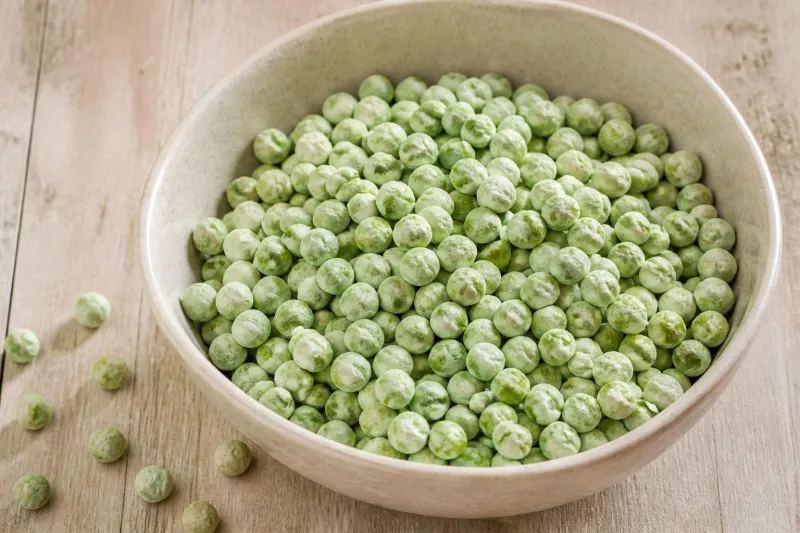
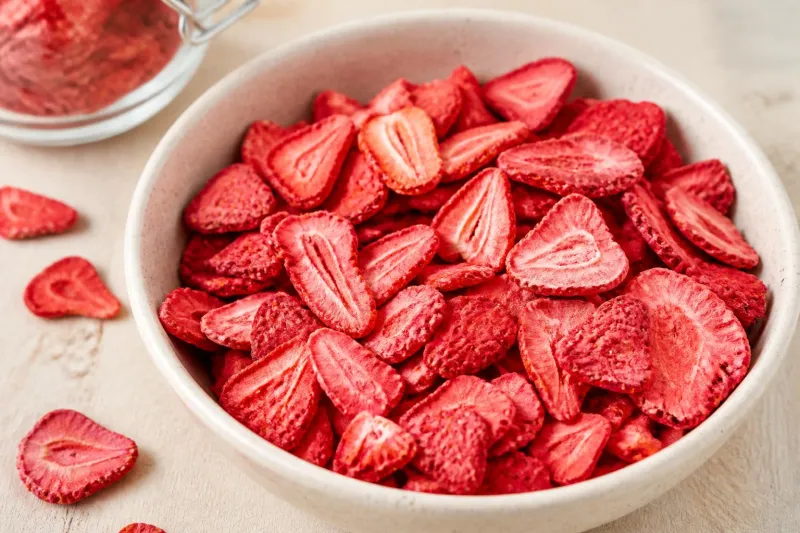
Freeze-dried fruit has had moisture removed while preserving a light, crisp structure. That makes it especially useful where you want sharp fruit flavour without adding extra liquid. It works well in toppings, trail mixes, chocolate work, buttercream finishes, meringues and crushed decorations. It can also be folded into dry mixes, though delicate pieces may soften if left in wetter batters for long.
Air-dried fruit, including many familiar dried fruits such as apricots, figs, raisins and mango, usually stays chewy or pliable. It is often the better choice for fruit cakes, buns, flapjacks and biscuits where you want pieces that remain soft after baking. Because it retains a denser, more flexible texture, it can usually be chopped and mixed straight in.
Oven-dried fruit varies. Some products are leathery, some brittle, and some somewhere in between. The label and the appearance matter more than the term alone.
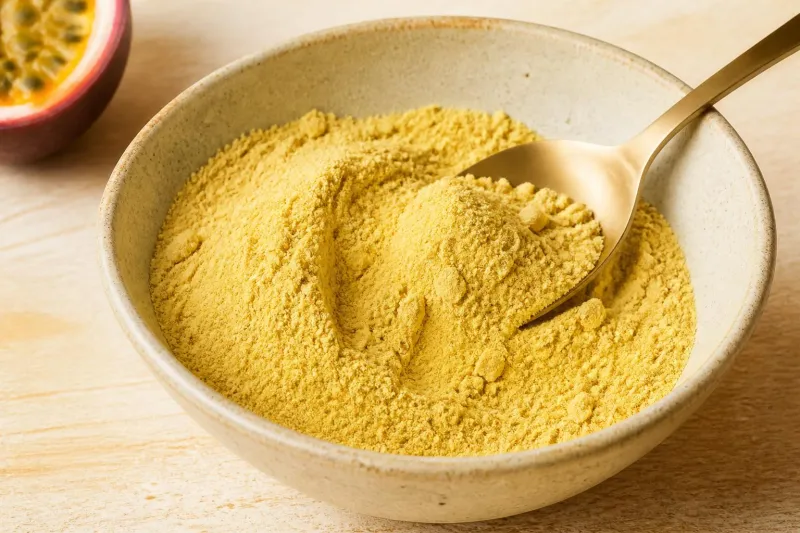
Spray-dried or drum-dried fruit powders are another category again, though many home cooks simply see “fruit powder” on the front. These are useful for flavouring icings, dusting desserts or colouring dry mixes, but they do not behave like chopped dried fruit. If you are comparing formats, our guide to freeze-dried fruit powder explains where powders are practical and where pieces are easier to control.
Here is the kitchen difference in simple terms:
- For crisp toppings, freeze-dried pieces are usually the cleanest option.
- For chewy bites in cakes and biscuits, soft dried fruit is often easier.
- For stirring through granola or snack mixes, both can work, but texture will be completely different.
- For rehydrated sauces, compotes or fruit layers, some dried fruits soften readily, while freeze-dried fruit can break down faster and with less soaking.
A few practical examples help.
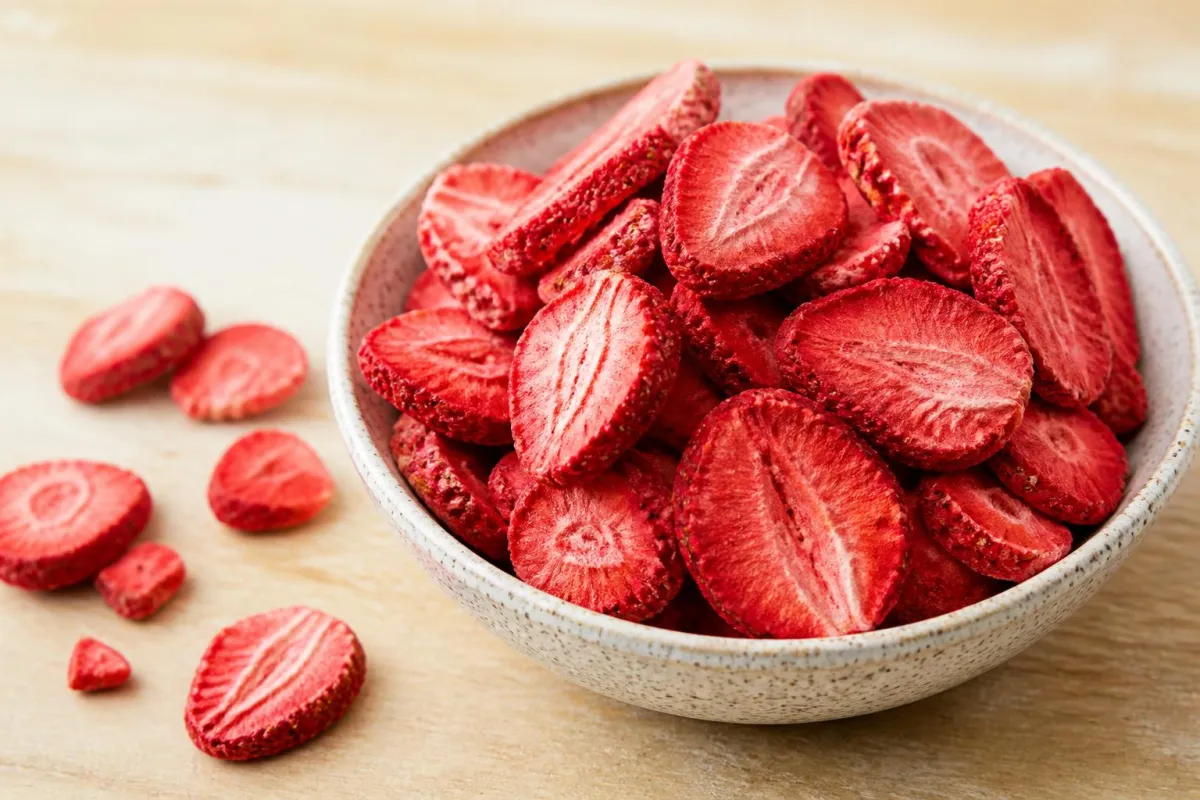
Freeze-dried strawberries scattered over yoghurt stay distinct for a short while, then gradually soften on the surface. In buttercream, crushed freeze-dried raspberries bring colour and flavour without watering the icing down. In contrast, chopped dried apricots in a traybake stay chewy and do not disappear into the mixture. Banana chips are another special case, often fried rather than simply dried, so they should never be assumed to behave like soft dried banana slices.
If you are new to the format, our first steps with freeze-dried fruit information covers the practical differences beginners usually notice first.
How to choose a packet without guesswork
The front of a packet is rarely enough. Turn it over and check the parts that affect use.
Start with the ingredients list. Ideally, it should tell you exactly what is in the bag and nothing more mysterious than that. If you want plain fruit, look for plain fruit. If there are added sweeteners, juices, oils or flour coatings, that changes how the product behaves.
Things worth checking include:
- Added sugar or fruit juice concentrate
- Oils, often used to reduce sticking
- Preservatives such as sulphites, where relevant
- Anti-caking agents in powders
- Acidity regulators
- Rice flour or starch coatings
- Whether it is chopped, sliced, powdered or whole
Sulphites deserve a specific mention because they are common enough in some dried fruit categories to be worth checking, especially with apricots and lighter-coloured fruits. If sulphites are present, they should appear in the ingredients and allergen information according to labelling rules. The Food Standards Agency guidance for consumers is the right reference point for why ingredient and allergen information matters, and why a general impression from the front of pack is not enough Food Standards Agency consumer allergy guidance.
Also check the allergen statement. Dried fruit itself may not be a major allergen, but cross-contamination warnings or shared packing environments can matter to some households. We cannot tell anyone whether a product is personally suitable, and neither can a generic article. The packet is the key document.
Nutrition tables also need careful reading. Compare like with like. Per 100g is useful for comparing one product against another, but not for deciding what you will actually add to porridge or a cake. A topping amount might be 5 grams on one day and 20 grams on another. The NHS guidance on food labels is helpful here because it explains the different comparison bases without implying that one snack or ingredient has to carry your whole diet on its own how to read food labels. For broader context, the NHS Eatwell Guide also makes clear that balance is considered across a day or week, not judged from one ingredient in isolation NHS Eatwell Guide.
One more practical point for UK readers. Where UK and EU labelling rules differ in detail over time, the packet sold in your market is what counts in your kitchen. If you are reading advice from outside the UK, do not assume every front-of-pack claim or certification mark appears in the same way here.
Storage after opening
Once opened, dried fruit storage is mostly about controlling moisture and limiting air exposure. That is especially important with crisp formats.
The biggest risk to freeze-dried fruit is moisture from the room. Leave the packet open while you make tea, and you may notice the pieces start to lose crispness. Soft dried fruit has a different problem. It can dry out further, harden, or become sticky and clump if not sealed properly.
The priorities are straightforward:
- Reseal the packet well, or transfer to a clean, airtight container
- Keep it in a cool, dry place
- Avoid steam, cooker heat and sunny windowsills
- Use dry utensils
- Follow any packet instructions first
If the original pouch has a good zip seal, use it properly and press excess air out where practical. If not, a small airtight jar or food container is usually easier than folding the top over and hoping for the best. For freeze-dried fruit, work quickly and close the container again promptly.
Moisture control matters more than people often expect. A cupboard beside the kettle or hob is convenient, but not always sensible. Repeated warmth and steam can shorten the useful texture life of opened packets even if the product still looks fine.
Do not assume one storage rule covers every format. A chewy dried fig and a bag of freeze-dried strawberry slices need different care. Our guide on how to store freeze-dried fruit goes into more detail on keeping crisp textures from softening after opening.
For food safety and storage generally, packet instructions should lead, and broader Food Standards Agency advice supports the same principle, store food appropriately and follow the product guidance where given Food Standards Agency food storage guidance. That government page is broader than dried fruit alone, but the underlying point still applies.
When to use it dry and when to rehydrate
Use dried fruit as it is when you want texture, contrast or convenience. Rehydrate it when you want softness, plumpness or more even distribution through a mixture.
For porridge, the decision depends on the result you want. Freeze-dried berries scattered on top give a sharper contrast and keep some texture at first. Stirred in early, they soften and tint the oats more. Soft dried fruit such as raisins or chopped dates can go in dry and soften during cooking if there is enough liquid and time.
For cakes and loaf mixtures, soft dried fruit often goes in dry unless it is particularly tough. Rehydrating can help if the fruit is old, very firm, or likely to pull moisture from the batter. A short soak in hot water, tea or juice can soften it, but drain it well before adding so you do not accidentally change the mixture consistency.
For biscuits, using fruit dry often gives better control. Over-soaked fruit can leak moisture into the dough and spread the texture too far towards cakey. Small chopped pieces of dried apricot, raisin or cherry usually work best patted dry if they have been soaked.
For dessert components, rehydration can be very useful. Dried fruit folded into a compote, spooned over rice pudding or layered into trifles often benefits from softening first. Freeze-dried fruit is different. It may only need a brief contact with cream, yoghurt or fruit purée to soften enough.
A simple rule of thumb is this:
- Use it dry for crunch, chew or a clear fruit piece
- Rehydrate it for softness or blending into a wetter component
The exception is when the recipe itself provides enough moisture. In overnight oats, for example, many dried fruits soften without any separate soaking step.
Useful kitchen examples for home cooks and bakers
These are illustrative kitchen uses, not fixed recipes, and the exact result depends on the product in your hand.
1. Porridge topping with crisp contrast
Stir 40 grams oats with 250 millilitres milk or water and cook as usual. Top with 5 to 10 grams crushed freeze-dried berries and a spoonful of yoghurt.
Why this works: the fruit stays bright and distinct at the point of serving. If added earlier, it softens and colours the bowl more evenly.
2. Fruit cake add-in with soft dried pieces
Add 120 grams chopped mixed dried fruit to a simple loaf cake batter, with the pieces lightly tossed in a spoonful of flour first if they seem sticky.
Why this works: chewy fruit keeps its shape during baking better than crisp fruit formats. If the fruit is very firm, soak briefly, drain well, and continue.
3. Biscuit dough with controlled sweetness
Mix 60 grams finely chopped dried apricots into a plain biscuit dough, keeping the pieces small so they distribute evenly.
Why this works: small pieces reduce tearing in the dough and help avoid isolated wet pockets.
4. Yoghurt pot with two textures
Layer 150 grams thick yoghurt with 15 grams soft dried fruit and 5 grams freeze-dried fruit.
Why this works: one fruit brings chew, the other brings crispness. It is a simple way to use different cupboard ingredients without pretending they do the same job.
5. Buttercream finish using fruit powder
Beat buttercream as usual, then add 5 to 15 grams fruit powder gradually, checking colour, flavour and consistency as you go.
Why this works: a dry powder can flavour icing without the extra liquid that fresh fruit purée would bring. Powders vary, so add slowly.
6. Quick dessert compote effect
Soak 80 grams chopped dried figs or apricots in 120 millilitres hot water for 15 to 20 minutes, then simmer briefly until spoonable.
Why this works: rehydration turns a firm dried fruit into a softer dessert component for spooning over ice cream, rice pudding or pancakes.
7. Granola or snack mix addition
Combine 200 grams toasted oats or cereal base with 20 grams seeds, 30 grams nuts and 15 to 25 grams freeze-dried fruit after cooling.
Why this works: adding crisp fruit after the hot stage helps preserve texture. If mixed in while warm, it may soften faster.
8. Cheesecake or traybake decoration
Crush 5 to 10 grams freeze-dried raspberries or strawberries and scatter over the top just before serving.
Why this works: the fruit gives colour and a dry finish without adding extra moisture to the surface. For more on formats and pieces, our pages on freeze-dried fruit offer a useful starting point.
The practical takeaway is simple. Organic dried fruit can be excellent cupboard food, but “organic” is only one part of the decision. Read the packet, check the format, and choose by texture and use. If you do that, you are far more likely to keep the right fruit in the cupboard for the way you actually cook and bake.