Using mulberries from the cupboard without guesswork
Dried mulberry fruit is best chosen by texture, sweetness and intended kitchen use.
On this page
- What dried mulberry fruit is and how it differs from freeze-dried pieces
- How to choose the right pack for baking, porridge or snacking
- What texture to expect in the kitchen
- Simple ways to use it without rewriting a whole recipe
- In porridge
- In muesli or granola
- In flapjacks and cereal bars
- In muffins, buns and loaf cakes
- In biscuits and cookies
- In fruit compote or stewed fruit
- In stuffing for baked apples or pears
- In salads and grain bowls
- How to store it and when quality starts to slip
- How to read the label before you rely on it
If you have a bag of mulberries in the cupboard and are not sure how to use them, the simplest starting point is this. Dried mulberries behave like a soft, naturally sweet dried fruit, not like crisp freeze-dried fruit. They can be eaten straight from the pack, chopped into bakes, stirred into porridge, or soaked briefly if you want them plumper and less chewy. The main mistake is treating every mulberry product as interchangeable.
At Crispberry, we write mainly about freeze-dried ingredients, so it is worth being clear about the difference. Dried mulberry fruit brings moisture, chew and stickiness to a mixture. Freeze-dried fruit brings lightness, crunch and rapid softening once it meets liquid. If you know which one you have, the rest becomes much easier.
What dried mulberry fruit is and how it differs from freeze-dried pieces
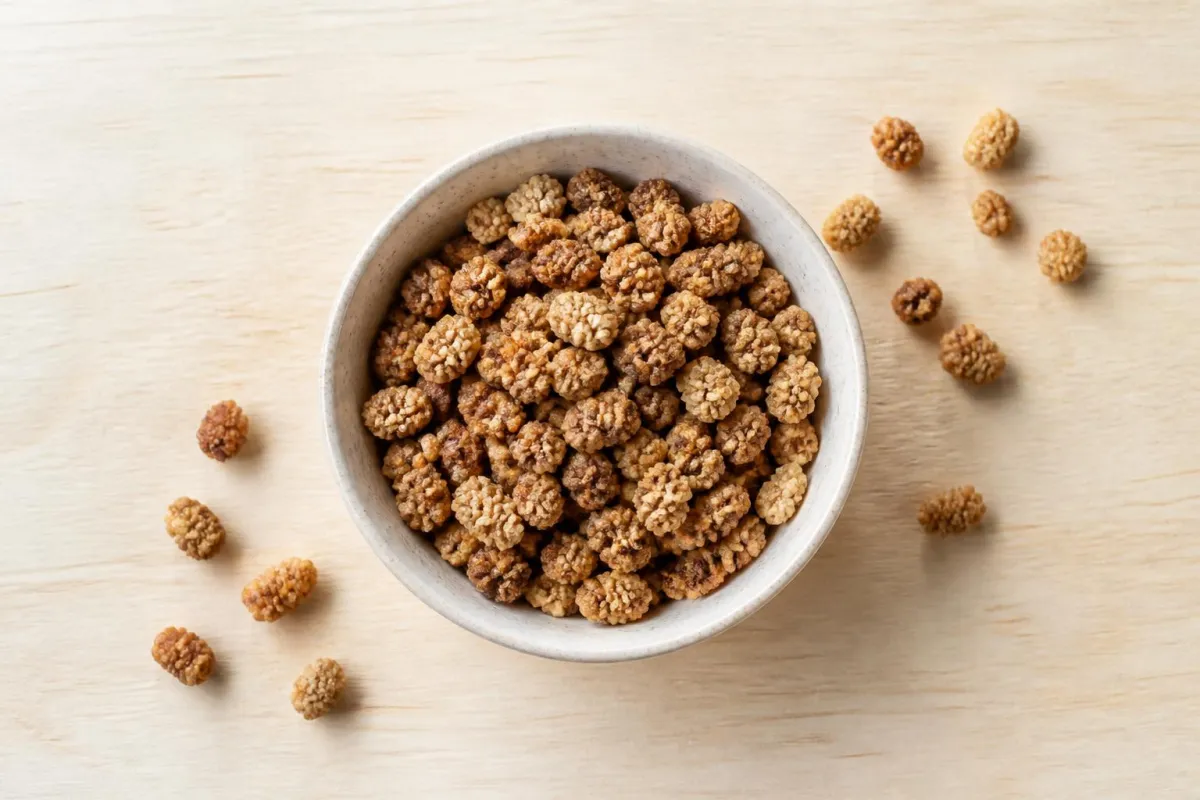
Dried mulberry fruit is mulberry with much of its water removed, leaving a soft to chewy fruit that is shelf stable when packed and stored correctly. Depending on the pack, the berries may be whole, slightly flattened, or clumped together. Their colour is usually cream, golden beige, reddish brown or deep purple, depending on the variety and drying method.
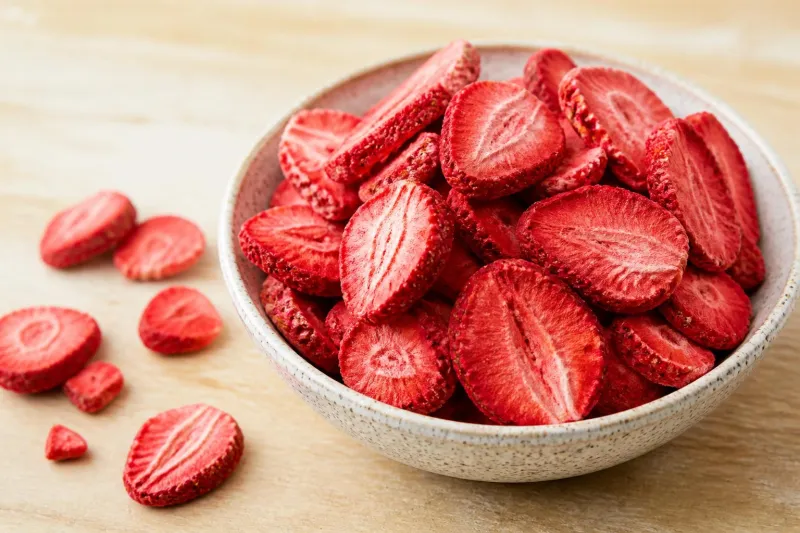
In practical kitchen terms, the key point is residual moisture. Conventional dried fruit still contains enough moisture to feel pliable. That is why it can be sticky, bend slightly when pressed, and sometimes clump in the bag. Freeze-dried fruit is much drier. It is usually crisp, brittle and very light, and it tends to shatter or crumble rather than bend.
That difference matters in use:
- Dried mulberries can be folded into flapjack-style mixtures, muffins, porridge and muesli without disappearing.
- Freeze-dried mulberries or other freeze-dried fruit pieces are better where you want crunch, quick rehydration, or a dry inclusion that will not add tackiness before mixing.
Texture is the easiest way to tell them apart. If the fruit feels leathery, chewy or tacky, it is dried. If it feels airy and crisp, it is freeze-dried. Ingredient format matters too. A freeze-dried product may contain whole pieces, slices or fragments, while dried mulberries are more often sold as whole berries.
If you usually cook with freeze-dried ingredients, our first steps with freeze-dried fruit information explains the handling basics. For a broader comparison of cupboard fruit ingredients, our guide to choosing and using dried fruit and nuts well is also useful.
How to choose the right pack for baking, porridge or snacking
The right pack depends less on the word "mulberry" and more on what the fruit feels like, how sweet it is, and what else is in the bag.
Start with the ingredient list. Some packs are simply mulberries. Others may include vegetable oil to reduce sticking, or preservatives. That is not automatically a problem, but it changes how the fruit handles. A lightly oiled fruit may separate more easily for baking. A very sticky untreated fruit may need chopping or flouring lightly before folding into batter.
Then look at cut size and uniformity. Whole mulberries are convenient for snacking and porridge. For small buns, traybakes or biscuits, very large berries can create uneven distribution, so a smaller or more broken grade may be easier to work with. If the pack does not specify size, looking through a clear window, if there is one, can tell you a lot.
Sweetness varies. Some mulberries taste gently sweet and cereal-like, while others are much sweeter. For snacking, that is mostly preference. For baking, it affects balance. If you are adding them to an already sweet cake batter, a very sweet mulberry can tip the result towards cloying. In plainer mixtures such as porridge, yoghurt or unsweetened cereal, that same sweetness may be useful.
Stickiness matters more than many labels suggest. If you want fruit to scatter neatly over porridge or mix into granola after baking, a drier, less tacky pack is easier. If you want a chewy bite in cookies or loaf cake, a slightly softer, stickier fruit often works well.
Label format also matters. Compare nutrition on the same basis. In the UK, food labels commonly show values per 100g and sometimes per portion. Those are not interchangeable. The NHS explains that per 100g is the reliable basis for comparing products, while portion figures depend on the manufacturer's chosen serving size NHS guidance on reading food labels. If one packet gives only per 100g and another highlights a small serving figure, compare the per 100g panel first.
For kitchen jobs, a simple buying rule helps:
- For snacking, choose whole berries with a pleasant chew and no excessive hard stems.
- For porridge and breakfast bowls, choose fruit that is easy to separate by hand and not heavily clumped.
- For baking, choose a pack with berries small enough to distribute evenly, or expect to chop them.
What texture to expect in the kitchen
Used straight from the packet, dried mulberries are usually chewy, sometimes slightly crisp on the outside, and often seedy in the mild, unobtrusive way common to berries. They are not juicy like fresh fruit and not brittle like freeze-dried fruit. Some packs contain berries that are almost tender. Others are firmer and more leathery.
Chopping changes them more than people expect. A quick rough chop turns them from distinct berries into sweet, chewy fragments that spread more evenly through doughs and batters. If the fruit is sticky, dusting the knife lightly with flour from the recipe can help, though it is best not to add extra flour unless the mixture can spare it.
Soaking softens the chew and plumps the fruit. You do not need a long soak for most home uses. Even 5 to 10 minutes in warm water can make a noticeable difference. If you soak them, drain well and, for baking, pat off surface moisture so you do not accidentally loosen the mixture. This is especially relevant in small batters such as muffin or cupcake mixtures, where a tablespoon or two of extra water can matter.
Baked into cakes, buns or bars, dried mulberries usually stay chewy. They do not dissolve in the way some sugars or jams do, and they do not stay crisp. In wetter batters they may soften further during baking. In drier doughs they tend to remain more distinct.
Mixed into wetter ingredients, such as overnight oats, yoghurt, stewed fruit or soaked muesli, they gradually soften and can become pleasantly plump. If left for longer, they may lose some definition and blend into the mixture more than expected. That can be useful if you want sweetness spread through the bowl, less useful if you wanted a clearly separate fruit texture.
One practical point from our freeze-dried work carries over here. Moisture moves. Once fruit sits in a wet mixture, its texture starts changing straight away. With freeze-dried fruit this happens very quickly. With dried fruit it is slower, but the same principle applies. Our page on how to store freeze-dried fruit explains this moisture issue in a different ingredient context, and the same habit of resealing and keeping ingredients dry is helpful here too.
Simple ways to use it without rewriting a whole recipe
You do not need a dedicated mulberry recipe to use a packet well. In most cases, it works best as a swap-in or add-in ingredient.
In porridge
Stir a small handful into porridge during the last few minutes of cooking if you want softer fruit, or scatter on top at the end if you want more chew. If the berries are firm, soaking them briefly first can help. This works with oat porridge made with water or milk.
In muesli or granola
Mix into muesli as sold, or add to homemade granola after baking rather than before. Because dried mulberries already contain little available moisture compared with fresh fruit, they suit cupboard mixes well, but they can still toughen further in the oven. Adding after baking keeps them softer.
In flapjacks and cereal bars
Use them in place of some raisins, chopped dates or sultanas. If the berries are large, chop them first so they distribute evenly and do not create big sweet pockets. This is an easy partial swap rather than a full rewrite.
In muffins, buns and loaf cakes
Fold them into the batter as you would other dried fruit. If the fruit is sticky, separate clumps first. If a recipe already contains dried fruit, replacing part of that amount with mulberries is usually simpler than adding extra fruit on top of the stated quantity.
In biscuits and cookies
Chop them for more even distribution. Whole mulberries can create lumpy shaping and may catch on the tray if they sit exposed at the edge of the dough. Smaller pieces are generally easier here.
In fruit compote or stewed fruit
Add a few spoonfuls near the end of cooking. They will soften and sweeten the mixture without needing a separate recipe. This is useful if you want more texture than sugar alone would give.
In stuffing for baked apples or pears
Mix chopped mulberries with oats, nuts or breadcrumbs and spoon into the fruit cavity. Because the mulberries are already dried, they will absorb some moisture from the fruit as it bakes.
In salads and grain bowls
Use sparingly, in the same way you might use raisins or dried cranberries. Their sweetness can work well with bitter leaves, cooked grains and salty cheese, but too much can dominate.
These are kitchen suggestions, not tested recipe results, so the sensible approach is to start modestly. Add a little, note the texture, then adjust next time.
If you want a dry fruit ingredient that behaves very differently in toppings, buttercream, yoghurt or powders, our guides to freeze-dried fruit and related formats cover those options separately.
How to store it and when quality starts to slip
Store dried mulberries in a cool, dry cupboard, sealed well after opening. The main enemies are air, moisture and warmth. Unlike chilled foods, an unopened dried fruit packet is usually intended for ambient storage, but the packet instructions come first. The Food Standards Agency's general storage advice is to follow the product instructions and store food appropriately for safety and quality Food Standards Agency storage guidance.
Once opened, reseal the packet firmly. If the original pack does not close properly, transfer the fruit to a clean airtight container. A dry spoon or dry hand matters more than people think. Introducing moisture into the bag encourages clumping and can shorten the period in which the fruit stays at its best.
Quality usually slips before the fruit becomes obviously unusable. Common signs include:
- the fruit becoming much harder and drier
- flavour fading or tasting flat
- excessive clumping from moisture exposure
- stickiness increasing beyond the product's normal texture
- off smells, including musty or stale notes
A few changes are mostly about quality, not necessarily safety. For example, a berry that has dried out further may still be usable in porridge or a simmered compote. But if you see mould, unexplained moisture inside the pack, or smell something unpleasant, it is best not to use it.
UK and EU labelling practice is similar in broad terms, but individual products can differ in storage wording and date marking. Some packs may say "store in a cool dry place" and "once opened, consume within" a stated period. Others may give only general instructions. Follow the packet you have, because dried fruit is not standardised to one universal storage life.
How to read the label before you rely on it
Before using mulberries regularly, read the packet as if you may need to buy it again for the same purpose. That means checking more than the front-of-pack claims.
First, check the ingredients list. If you want plain fruit, confirm that it is plain fruit. If there is added oil, preservative or sweetener, note it. This is not just about preference. It affects handling, sweetness and how the fruit behaves in recipes.
Second, check the allergen information carefully. The Food Standards Agency's consumer guidance explains the importance of ingredient and allergen information and the need to read labels each time, because products and manufacturing details can change Food Standards Agency allergy guidance. A "may contain" statement is not the same as an ingredient, but it is still relevant for anyone managing an allergy. We can explain how to read the wording, but personal suitability depends on individual circumstances.
Third, compare nutrition on the right basis. The NHS advises using the nutrition panel to compare foods and being careful not to confuse per portion with per 100g NHS guidance on reading food labels. For example, if one mulberry packet gives values per 100g and another highlights a 20 gram serving, the serving figure may look small simply because the amount is small. The per 100g line is the standard comparison point.
Fourth, keep dietary context sensible. The NHS Eatwell Guide is about overall dietary balance across the day or week, not about demanding that every single snack or baking ingredient do everything at once NHS Eatwell Guide. That matters because dried fruit labels can tempt people into reading too much into one product. Mulberries are an ingredient choice, not a complete eating pattern.
Finally, watch the units. If a recipe uses 40 grams of dried fruit and your packet's nutrition panel gives values per 100g, you will need to scale mentally if you are making a personal comparison. If soaking instructions mention water, use the stated millilitres if given, but many packs will not specify an amount. In that case, treat soaking as a texture adjustment rather than a precise formula.
At Crispberry, published by Fleeta Limited, our aim is to remove the guesswork from cupboard ingredients. With mulberries, the useful distinction is simple. If the fruit is dried, expect chew, sweetness and some stickiness. If it is freeze-dried, expect crispness and fast texture change once liquid arrives. Read the packet, match the format to the job, and you can use what is already in the cupboard with much more confidence.