Freeze-dried or dehydrated fruit: choosing for the kitchen
Compare freeze-dried and dehydrated fruit by recipe, ingredients and label information, without assuming a universal serving size or health benefit.
On this page
Freeze-dried and dehydrated fruit can give quite different results in a breakfast bowl or a recipe. Start with the texture you want and the information on the particular pack. The drying method alone does not tell you which product is healthier, how much to eat or how long it will keep after opening.
This comparison is for adult home cooks. It is an ingredient guide, with no claim that Crispberry has tested the products you are considering.
Choose for the recipe
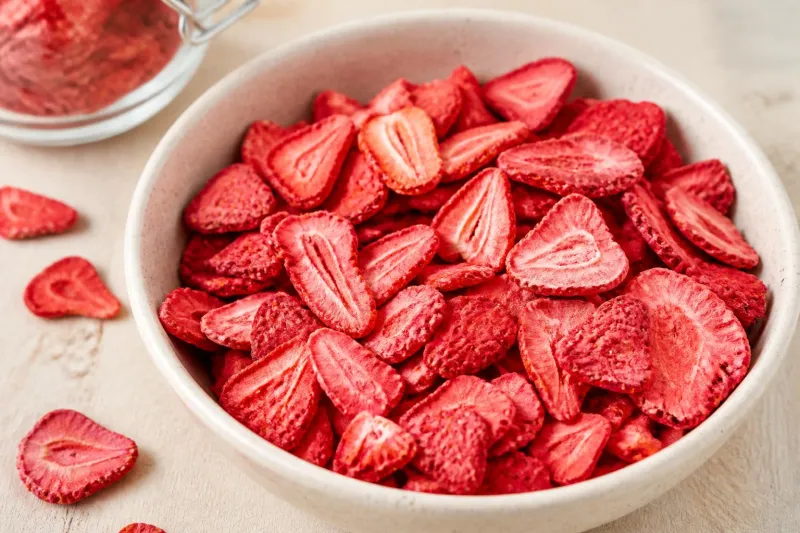
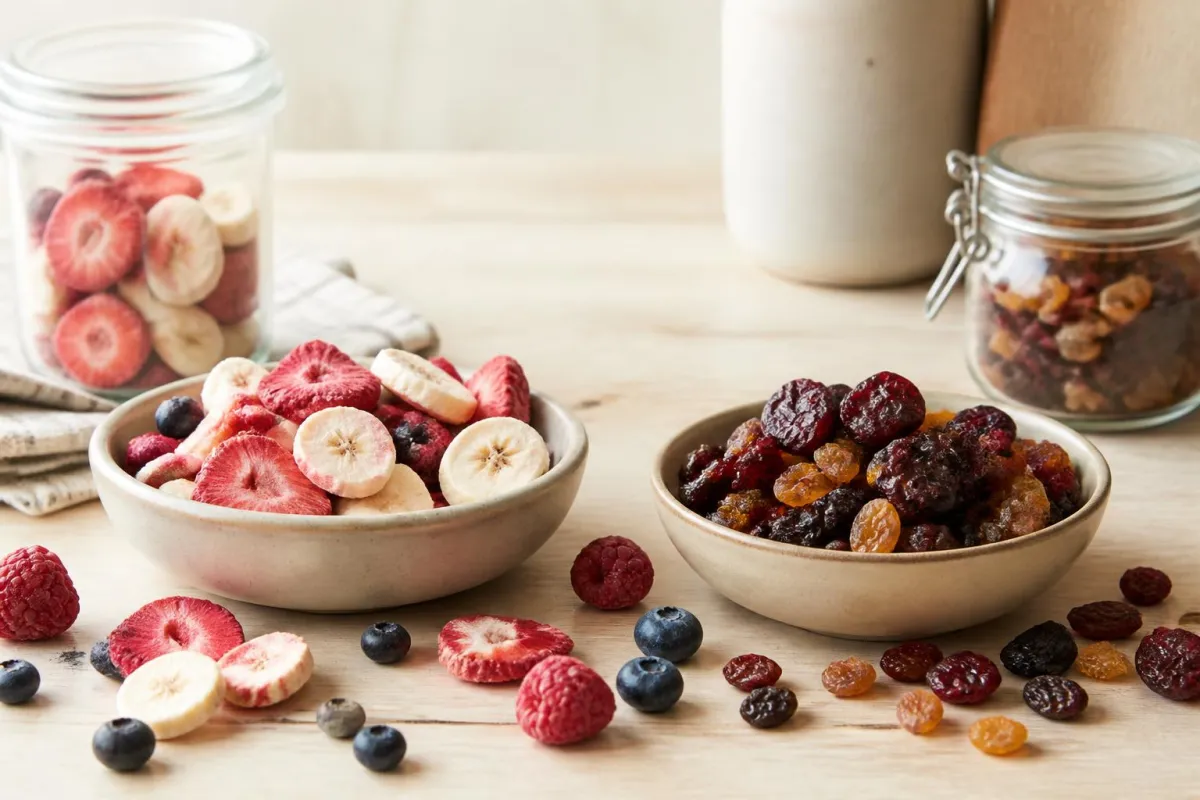
Freeze-dried pieces are commonly crisp and fragile when dry. Traditional dried fruit, such as raisins or dried apricots, is usually chewy. Fruit variety, preparation and storage also affect the result, so use the pack description and your recipe instead of expecting every dried product to behave identically.
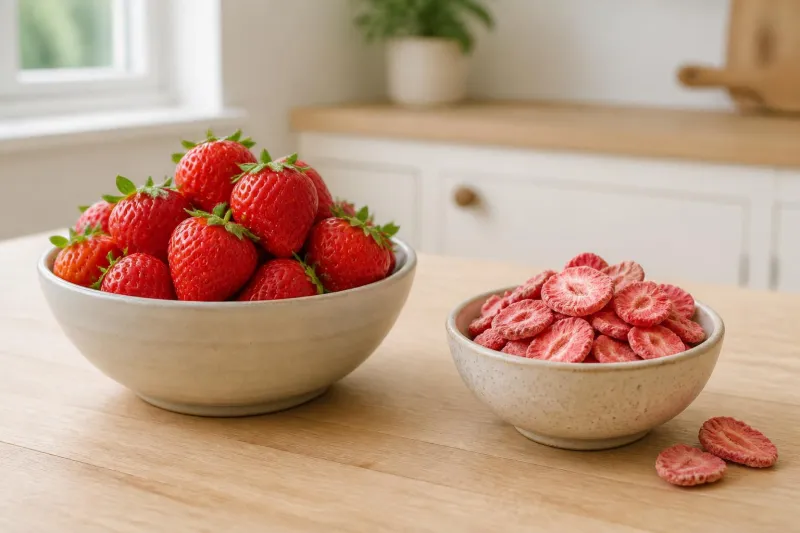
For a topping, decide whether you want a crisp piece, a chewy piece or a powder mixed through the food. For baking, follow a recipe written for the ingredient you have. Replacing fresh fruit with a dried ingredient changes the water being added; there is no single substitution ratio that works for every cake or fruit.
Our freeze-dried and dehydrated comparison and fruit powder guide explain the formats in more detail.
Compare the actual labels
A drying-method label is not a nutrition score. Check the ingredients for the fruit used and anything added, then compare the nutrition panels on a consistent basis. A coated fruit snack and a plain fruit ingredient are different products even if both mention freeze-drying.
The NHS guide to food labels explains per-100g and per-portion information. Use the same basis when comparing packs. If you want to understand the amount in your bowl, measure that amount; a manufacturer's suggested portion may differ from yours.
Do not infer low sugar, high fibre or a particular vitamin content just from the word “fruit”. Use the product information for the specific claim you are considering. Check ingredient and allergen information each time, particularly when choosing for someone with an allergy.
Keep portions and dental guidance separate from texture
A small-looking quantity is not a reliable weight measurement. Pieces and powders can settle or fill a spoon differently. There is no universal serving size for all freeze-dried fruits.
The NHS dried-fruit guidance advises eating dried fruit with meals because of its effect on teeth. A crisp texture does not establish an exemption. That page is general dried-fruit guidance; it is not a tested fresh-fruit conversion for every freeze-dried product.
Store each product as directed
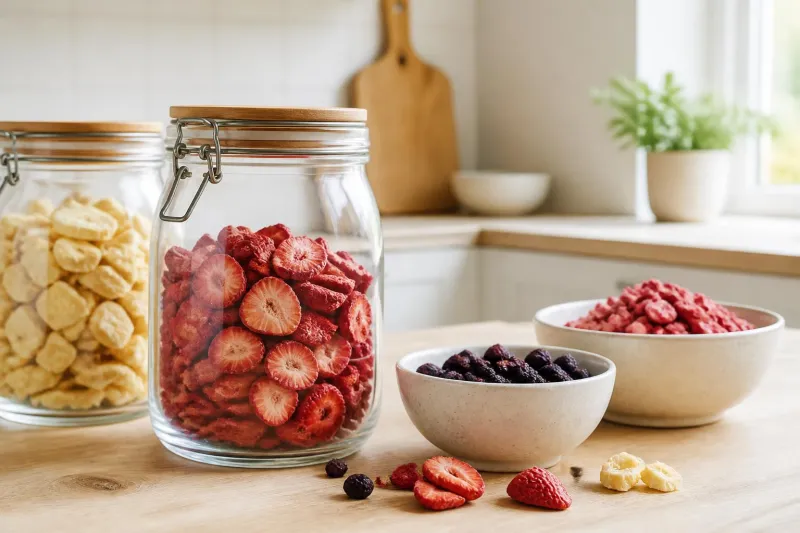
Read the storage instructions before opening and keep them with the container if you decant the contents. Follow any instruction about resealing, refrigeration or use after opening. A texture change alone cannot establish whether food is safe.
Our storage guide helps you find the details to check. Choose the ingredient that suits the dish, buy an amount you expect to use, and keep the label available for the next time you cook.