How to use freeze-dried veg without soggy results
freeze-dried veg behaves differently depending on the dish and moisture level
On this page
Freeze-dried vegetables are easiest to use well when you treat them as a very dry ingredient, not as a direct stand-in for fresh or frozen veg. To avoid soggy results, match them to the moisture already in the dish. Add them dry where they can absorb liquid gradually, such as soups, stews, sauces and some doughs. Rehydrate briefly only when you need a softer piece before cooking, or when the surrounding mixture is too dry to do that job for you.
Most texture problems come from timing and moisture control. Too much soaking leaves pieces waterlogged. Adding them too early can make them limp. Covering a hot dish too tightly can trap steam and soften anything that should stay crisp. A small amount often goes further than expected, so it is worth adding gradually and checking the packet before you start.
What freeze-dried veg is and why it behaves differently
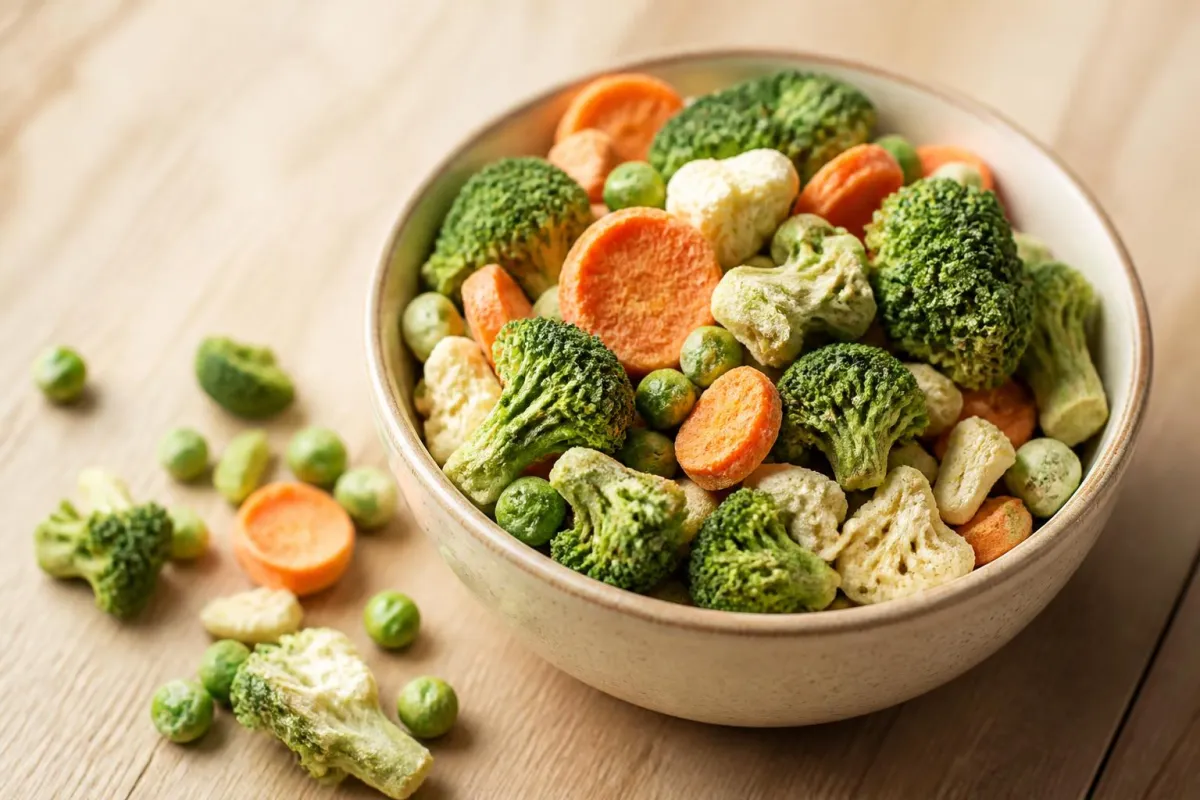
Freeze-dried veg has had its water removed after freezing, leaving a light, dry ingredient that keeps much of its original shape. In kitchen terms, that explains nearly everything about how it behaves. It is crisp or brittle in the packet because there is very little moisture left in it. Once it meets water, steam, sauce or batter, it starts taking moisture back in.
That low moisture content changes texture first. Fresh vegetables contain plenty of water already, so they soften by releasing and redistributing moisture as they cook. Frozen vegetables also contain water, and often release some into the pan. Freeze-dried vegetables do the opposite at the start. They pull in moisture from whatever surrounds them. If the dish has enough liquid, that can be useful. If it does not, the pieces may stay hard in the middle or soften unevenly.
Flavour can seem more concentrated too. When water is removed, the vegetable taste is not being diluted by its original moisture. That does not mean every product is stronger in exactly the same way, because cut size, variety and any added ingredients matter, but it does mean a little can have more impact than the same apparent volume of fresh veg.
Cooking behaviour is different for the same reason. A spoonful of freeze-dried peas stirred into a simmering soup is not doing the same job as a spoonful of fresh peas. The freeze-dried peas are first absorbing liquid, then heating through. In a dry topping, they may stay crisp if exposed to dry heat. In a sealed or steamy environment, they are likely to soften.
This is also why packet reading matters. Some freeze-dried vegetable products are a single ingredient. Others may include salt, oil, starches, anti-caking agents or seasoning, especially in soup mixes or prepared blends. Ingredient lists and allergen information are there to be checked, not guessed, and the Food Standards Agency allergy guidance is the right primary reference for that point.
If you are new to these ingredients, our first steps with freeze-dried ingredients guide gives a useful overview, and our guide to freeze-dried vegetables helps with the kinds of formats you are likely to see in home cooking.
When to use it dry and when to rehydrate it
A simple rule works in most kitchens. If the dish already contains enough free liquid, use the vegetables dry and let the dish rehydrate them. If the dish is fairly dry, or you need a more even softness before mixing, rehydrate them first.
Use freeze-dried veg straight from the packet in soups, broths, casseroles, pasta sauces, curries and similar dishes with visible liquid. Here, the vegetables can absorb moisture gradually while the dish cooks. That usually gives a better result than pre-soaking, because they take on the flavour of the dish rather than plain water.
The same approach often works in wetter doughs and batters. A spoonful of finely broken freeze-dried vegetable pieces can work in savoury scone dough, bread dough, muffin batter or pancake batter if the mixture has enough moisture overall. The key is to think about size. Small pieces hydrate more evenly than large chunks in a thick batter.
Rehydrate first when the surrounding mixture is dense, low in moisture, or not going to cook for long. Examples include savoury biscuit doughs, cracker doughs, stuffing-style mixes, sandwich fillings, cold dips, soft cheese spreads and quick egg dishes where the vegetables need to soften before the dish is finished. In these cases, a brief soak in a small amount of water can help, followed by draining off any obvious excess before mixing in.
Toppings need a different decision. If you want crunch on a finished soup, salad, baked potato or savoury bake, keep the vegetables dry and add them at the end, away from steam where possible. If you scatter them over something hot and then cover it, they will soften quickly. If you want them to blend into a topping, for example in a cheese crust or breadcrumb mixture, a little softening from the dish may be fine.
There is no reliable fixed conversion that tells you exactly how much water every freeze-dried vegetable needs, because cut size and vegetable type vary. Pea pieces, sweetcorn, onion flakes and mushroom slices all absorb differently. Start with the minimum handling needed for the dish. You can always add a splash more liquid during cooking, but it is much harder to rescue over-soaked vegetables that have already gone limp.
How to avoid soggy, chewy or uneven results
The most common mistake is over-soaking. It is easy to assume that because the vegetables are very dry, they need a long soak. Usually they do not. A long soak can leave the outside overly soft while the inside still feels uneven, especially with larger pieces. It also introduces plain water that may dilute a sauce or make a filling wet.
A better approach is brief and controlled. If pre-soaking is needed, use just enough water to cover or barely moisten the pieces, leave them only until they lose their brittleness, then drain well. If they are going into a pan-cooked dish, they often need less pre-treatment than you think.
Adding them too early is another frequent problem. In a long-simmered soup, that may be fine if you want the vegetables fully soft. In a quick sauce, stir-fry style dish or savoury bake, adding them at the start can mean they spend too long in moisture and become limp. Add later when you want more shape and texture.
Steam is often the hidden cause of sogginess. A garnish that is crisp when sprinkled on can turn soft in minutes if it sits on a covered bowl of soup or under foil on a hot traybake. If texture matters, add the garnish just before serving and leave the dish uncovered for a moment if practical.
Uneven results often come from piece size. Large slices and fine crumbs do not hydrate at the same speed. If your packet contains mixed sizes, think about how that affects the dish. Larger pieces suit soups and braises better. Finer pieces work more evenly in doughs, batters and coatings. Crushing some of the contents by hand can help when you want a more even distribution.
Quantity is easy to misjudge because freeze-dried vegetables are so light. A small handful can be enough for a pot of soup, while the same visual amount in a dry dough could dominate the mixture once it rehydrates. That is why we do not recommend fixed conversion ratios. We prefer to add gradually, stir, then assess the texture of the whole dish. Measuring by grams is more repeatable than judging by volume, especially for very airy pieces.
Also watch the salt and seasoning balance. If the packeted ingredient includes added salt, and you soak it then use the soaking liquid, that seasoning goes into the dish too. If you drain it away, some flavour may go with it. Check the ingredient list before deciding.
For oven cooking, think about the moisture path. In a bread dough or savoury scone, the vegetables are enclosed in a moist structure and will soften as the bake progresses. On the exposed top of a bake, they may crisp first, then soften later if the bake is covered or stored warm. If you want a decorative finish, adding some pieces for the final part of baking can work better than adding them from the start.
How to read the packet before you cook
The packet tells you more than many people realise. Start with the ingredient list. If it says only the vegetable name, you know you are working with a single-ingredient product. If there are other ingredients, they may affect flavour, browning, saltiness or how the product behaves in water.
Next, check allergen information carefully. Under UK food rules, allergens must be emphasised in the ingredients list when present in prepacked food, but that does not mean every product suits every person with an allergy or intolerance. The Food Standards Agency consumer guidance is clear that ingredient and allergen information should be checked each time, and personal suitability should not be inferred from a general description alone.
Then look for storage instructions. Freeze-dried ingredients are particularly sensitive to moisture after opening. If the packet says reseal promptly, store in a cool dry place, or use within a stated period after opening, follow that product-specific instruction ahead of any general tip. The Food Standards Agency guidance on safe storage supports the general principle that storage instructions matter and should be followed.
Nutrition panels need careful reading too. The NHS explains that per 100g and per portion are different comparison bases, and both can appear on the same label NHS food labels guidance. That matters a great deal with freeze-dried vegetables because the product is so light. Per 100g values can look high simply because 100g of a very dry ingredient represents quite a lot of material in practical kitchen use. A packet may also define a portion in a way that does not match the amount you plan to cook with. Compare like with like.
If you are using the ingredient as part of general meal planning, it is also worth remembering the NHS point that balance is judged over a day or week, not by forcing every ingredient to do every job on its own NHS Eatwell Guide. For our purposes here, that simply means using the packet information sensibly, not reading more into it than it says.
Finally, check whether the packet gives any use instructions. Some products say suitable for cooking from dry. Others suggest soaking first. Some are intended for sprinkling or garnish use. Where a manufacturer gives a clear handling instruction for that product, follow it.
Storage after opening and sensible kitchen uses
Once opened, freeze-dried vegetables need protecting from air and humidity. Their crisp texture is part of what makes them useful, and that texture starts to disappear if they absorb moisture from the room. In a British kitchen, that can happen surprisingly quickly on a damp day.
The practical aim is simple. Keep them dry, sealed and away from heat. Reseal the original pack if it is designed for that, or transfer the contents to a clean, dry, airtight container. Close it promptly after each use rather than leaving it open on the worktop while you cook. If the packet includes a desiccant sachet and the label does not tell you to discard it after opening, leave it in place but keep it away from food preparation and never treat it as edible.
Do not store the ingredient above a kettle, beside the hob, or in any spot that gets warm and steamy. A cool, dry cupboard is usually better than the fridge, because refrigeration can introduce condensation when the container is opened and warmed again. If the packet gives different instructions, follow the packet.
Safety and quality are not quite the same thing here. A loss of crispness does not automatically mean the product is unsafe, but it does mean it may no longer behave as expected in the pan or as a garnish. If it has obvious signs of moisture damage, clumping, off odours, or anything else that suggests it has deteriorated, it is sensible not to use it.
As for kitchen uses, think in terms of moisture management rather than novelty. Freeze-dried vegetables are practical in soups because they absorb stock while contributing flavour. They work in sauces where you want vegetable pieces without keeping fresh produce on hand. They can be folded into bread doughs and savoury bakes, provided you allow for the way they take up liquid. They are useful in breadcrumb coatings, cracker doughs and pastry toppings when used sparingly and with attention to steam.
They also make sense in cupboard-based cooking. A few spoonfuls of freeze-dried peas in a soup, or onion pieces in a savoury muffin batter, can be easier to manage than opening a whole bag of frozen veg or chopping a fresh onion when you only need a little. If you want ideas for one specific ingredient, our page on using freeze-dried peas is a good example of how one vegetable can behave differently depending on the dish.
The main point is not to force freeze-dried vegetables to behave like fresh ones. Use them for what they are, a dry ingredient that can become tender, stay textured, or remain crisp depending on when and how you add moisture. Once you start thinking in those terms, soggy results become much easier to avoid.