Using freeze-dried fruit in cocktails without watery results
Freeze-dried fruit adds flavour and colour without adding much liquid
On this page
Freeze-dried fruit can work very well in cocktails when you want fruit character without the extra water that comes with fresh slices, thawing frozen berries or fruit purée. Used well, it gives you a cleaner garnish, more control over dilution and a wider choice of textures, from crisp on top of the drink to lightly softened in the glass.
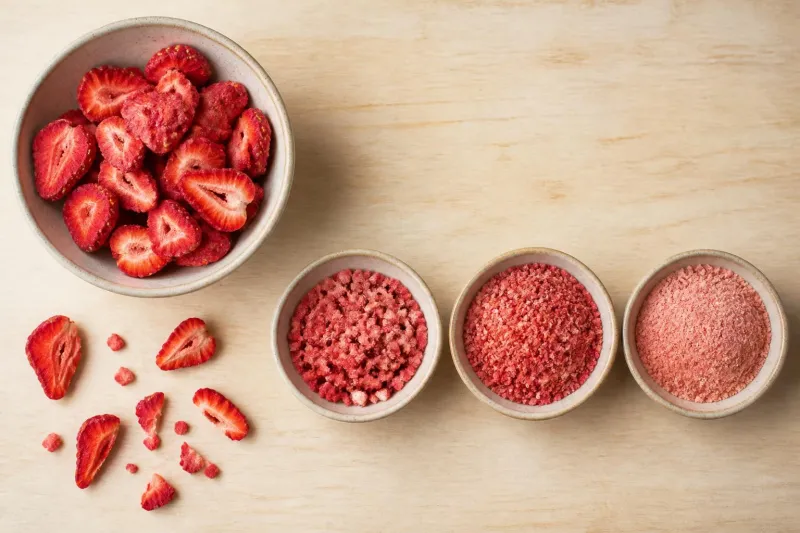
For a home bar, the main trick is matching the format to the job. Slices suit garnishes, small pieces and crushed fruit suit rims and quick infusions, powders suit syrups and decorative finishes, and whole berries can sit in sparkling drinks without leaking juice straight away. The practical details matter more than the idea itself, so below we set out how we use freeze-dried fruit for cocktails without ending up with soggy garnishes or cloudy drinks.
Why freeze-dried fruit works well in cocktails
The useful thing about freeze-dried fruit is its very low moisture content. Because most of the water has been removed, the fruit is light, crisp and concentrated in flavour. In cocktails, that changes three things at once.
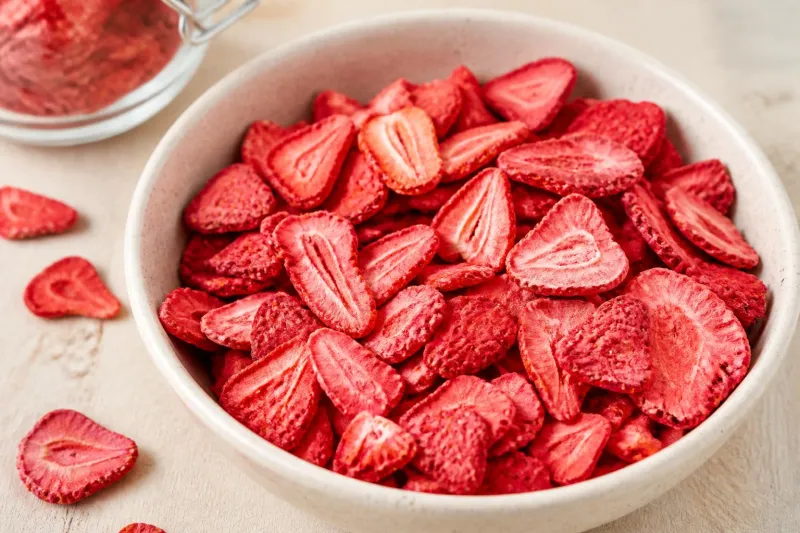
First, it changes texture. A fresh strawberry slice on the rim starts soft and gets wetter as condensation builds. A freeze-dried strawberry slice starts dry and crisp. If you keep it out of the liquid, it can stay visually neat for longer. If you drop it into the drink, it will gradually soften as it absorbs liquid. That is not a flaw, it is simply part of how the ingredient behaves.
Second, it changes flavour impact. Because there is less water in the fruit itself, a small amount can give a noticeable fruit note, especially when the fruit touches the nose as you sip. A raspberry on top of a gin and tonic does not need to flood the drink with juice to contribute aroma. The effect is often cleaner than muddling fresh fruit, which can add pulp, seeds and extra liquid.
Third, it changes dilution. Fresh fruit, frozen fruit and fruit juice all add water to the glass. Sometimes that is useful, but sometimes it pushes a drink away from the balance you wanted. Freeze-dried fruit gives you fruit character with much less direct dilution. That can help in short drinks where a few extra millilitres make a difference, such as a Martini variation, or in sparkling serves where too much fruit juice can flatten the profile.
This does not mean freeze-dried fruit is always better. Fresh citrus still gives you peel oils and juice in a way dried fruit cannot. Frozen berries can chill a drink while adding colour. But if your goal is to keep a cocktail from getting watery while still adding fruit, freeze-dried fruit is often the tidier option.
If you are new to the ingredient, our first steps with freeze-dried fruit gives a broader kitchen overview before you start using it in drinks.
Which format to choose for each drink
Different shapes behave differently in the glass, so choosing the right format matters more than choosing the right fruit.
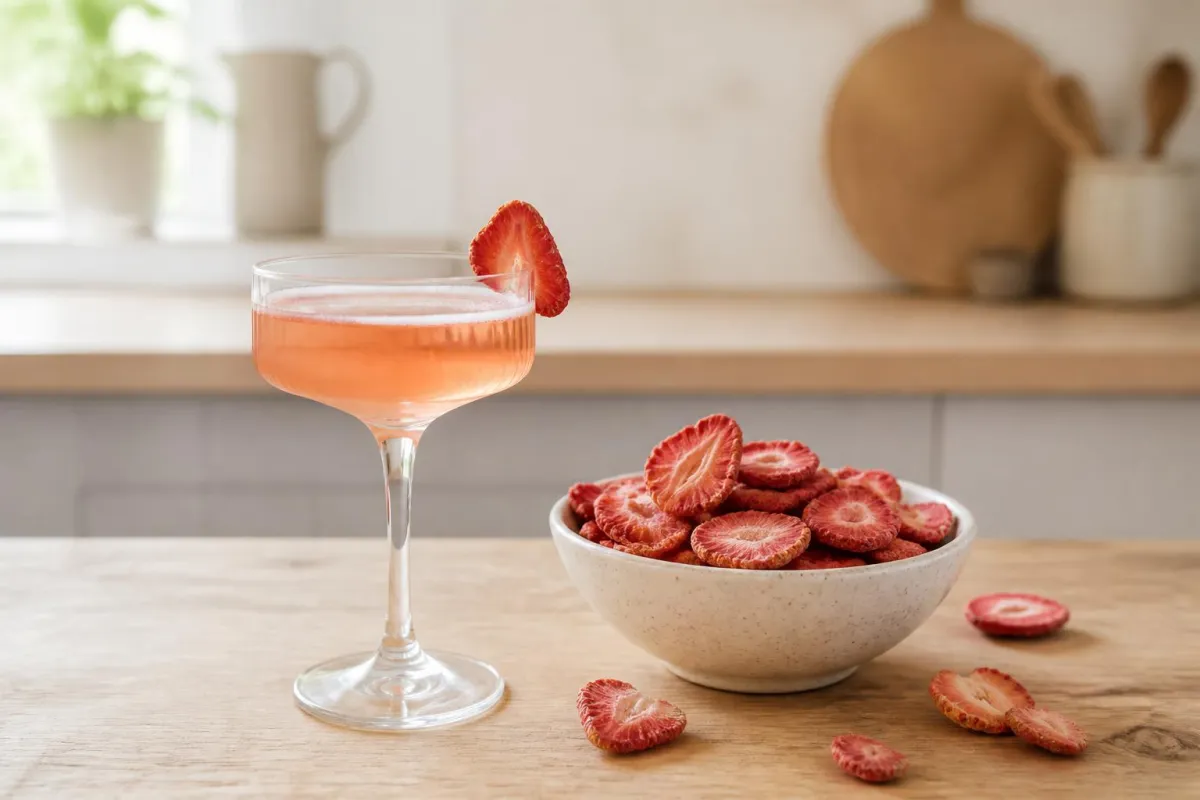
Slices are the easiest garnish format. Strawberry slices, apple slices and citrus-style wheels made from freeze-dried fruit work well perched on the rim, clipped to the side of a coupe, or floated briefly on foam. They look deliberate and are easy to portion. Use slices when appearance matters and you do not want bits breaking off into the drink.
Small pieces are useful when you want a looser garnish or a little fruit movement in the glass. Chopped freeze-dried mango, peach or strawberry can work in a spritz, a punch cup or a non-alcoholic soda where the fruit can soften gradually. Pieces are also practical for sugar or salt rims because they stick more easily than whole slices.
Whole berries are a good fit for drinks served in a highball or flute. Freeze-dried raspberries and blueberries can sit on top of ice or among bubbles and release flavour more slowly than crushed fruit. They also give a clear visual cue of the fruit used, which is useful when the drink itself is pale. For examples, see our guide to freeze-dried raspberries.
Powders are the most versatile format for bar use, but they need the most restraint. A fruit powder can be mixed into caster sugar for a rim, stirred into a syrup, dusted over foam, or blended into a dry garnish mix. It is less suitable when you want a clean, transparent drink, because too much powder can make the drink look cloudy or settle unevenly. Our page on freeze-dried fruit powder explains the format in more general kitchen terms.
A simple way to choose is this:
- Use slices for visible garnish on the rim or surface
- Use pieces for scattered garnish, crushed rims or gentle soaking in long drinks
- Use whole berries for sparkling serves and drinks over ice
- Use powders for rims, syrups and decorative dusting
For muddling, freeze-dried fruit is not a direct replacement for fresh fruit. If you muddle it dry, it tends to shatter rather than bruise. If you want a muddled effect, let it soften first in a small measured amount of syrup, citrus juice or spirit, then crush it. That gives you fruit character without adding as much free water as fresh fruit would.
How to use it without losing texture
The easiest way to ruin the texture is to treat freeze-dried fruit like a fresh garnish and leave it sitting in a damp room while you build drinks. It starts dry, but it will readily absorb moisture from liquid, condensation and humid air.
For crisp garnishes, add the fruit at the last moment. Build the drink, wipe any drips from the rim, then place the garnish just before serving. If the fruit is going on top of foam, add it after shaking and straining, not while you prepare other elements. A slice resting on wet foam will soften faster than one clipped to a dry rim.
For controlled softening inside the drink, think in minutes rather than hours. If you want a berry to plump slightly in a spritz or tonic, add it just before pouring the mixer so it hydrates gently in the glass. If you want softer fruit pieces in a stirred or shaken drink, soak them briefly in a measured spoonful of the liquid you are already using, such as 10 to 15 millilitres of syrup, vermouth or spirit, then add that to the drink. That way you are not introducing extra water by accident.
For rims, crush the fruit finely enough to adhere but not so finely that it turns to dust. Mix it with sugar or salt, moisten only the outer edge of the glass, and rim immediately. If the fruit pieces are too large, they fall off. If they are too powdery, they can pull moisture from the air and clump. If you want a smoother result when crushing fruit, our guide on how to crush freeze-dried fruit for smoother baking is useful for the same basic technique.
For syrups, powder is usually easier than pieces. Stir the powder into a simple syrup in small amounts and strain if needed. Because powders vary in fineness and intensity, work gradually. It is better to build colour and flavour in stages than to overshoot and end up with a thick, opaque syrup that dominates the drink.
If you are making a batch for guests, keep the fruit separate until serving where possible. Pre-garnished glasses look efficient, but the garnish often softens before the first drink reaches the table.
What to check on the packet before you use it
Before using any freeze-dried fruit in drinks, read the packet rather than assuming it is just fruit.
Start with the ingredients list. Some packets contain only fruit. Others may include sugar, flavourings, acidity regulators, anti-caking agents or other added ingredients, especially in powdered products or fruit blends. That matters for taste, sweetness and how the ingredient behaves in a syrup or rim.
Next, check allergen information. In the UK, allergen information is there to help you identify relevant ingredients, but it is not a substitute for your own suitability judgement. The Food Standards Agency advises consumers to read ingredient and allergen information carefully and not to guess from the product name or front-of-pack claims alone Food Standards Agency consumer allergy guidance. If you are serving guests, keep the packet until everyone has been served so the information stays available.
Then check the nutrition panel properly. The NHS notes that nutrition information can be given per 100g and sometimes per portion, and those are not the same basis for comparison NHS food labels guidance. This matters with freeze-dried fruit because it is light. A small garnish may weigh only a few grams, while the panel may be listed per 100g. That does not make the panel wrong, but it does mean the numbers can look surprisingly concentrated if you forget the basis.
Also check storage instructions and any use-by or best-before wording. Freeze-dried fruit is shelf-stable while sealed, but once opened it is more exposed to moisture. The packet may tell you to reseal, keep cool and dry, or use within a stated period after opening. Follow the packet first. General food storage advice from the Food Standards Agency is to follow product instructions where given Food Standards Agency food storage guidance.
Where UK and wider EU practice differ, use the packet intended for the market you bought in. Since the UK left the EU, labelling presentation and business details can vary between UK and EU packs, even where the ingredient itself is similar. If you are reading imported stock, do not assume the format will match a UK supermarket label exactly.
Storage after opening for a home bar
Once opened, the enemy is moisture. Light matters less than damp air.
If the original pack has a reliable zip seal and the fruit will be used soon, resealing it carefully may be enough. Press out excess air without crushing the contents and close it fully. If the seal is weak, move the fruit to a dry, airtight container with a close-fitting lid.
Keep the container in a cool, dry cupboard, away from the kettle, dishwasher steam, cooker splashback and sunny windowsill. A home bar shelf above a radiator is also a poor spot. Freeze-dried fruit absorbs moisture from the air quickly enough that a bad storage position can matter even if the lid goes back on each time.
For powders, use a dry spoon every time. A damp spoon introduces enough moisture to start clumping. For slices and berries, avoid reaching into the container with wet hands after handling ice or citrus.
Labelling helps more than people expect. Write the name of the fruit and the date opened on the container. If you decant several fruits into matching jars, add the original packet details or keep the packet nearby, especially for ingredient and allergen information. This is useful for guests and avoids mystery powders later.
We do not give a fixed shelf life after opening because it depends on the packet, the humidity in your kitchen and how often the container is opened. Instead, check condition before use. Good signs are dryness, crispness and a clean fruit smell. Warning signs are stickiness, clumping, leathery texture where it should be crisp, or obvious loss of aroma. If the fruit no longer seems dry and stable, do not use it for a garnish where texture matters.
For more general cupboard handling, see our guide on how to store freeze-dried fruit.
Simple cocktail ideas and non-tested serving suggestions
These are illustrative serving ideas, not tested recipes. Treat them as starting points and adjust to your own drink, glass size and garnish style.
A dry gin and tonic can take one or two freeze-dried raspberry pieces or a single whole raspberry. Add the fruit to the glass after the ice and before the tonic so it settles naturally. This works best when you want a berry note without the extra liquid of fresh berries.
A vodka soda with lime can be finished with a freeze-dried strawberry slice on the rim rather than in the drink. That keeps the slice crisper and gives aroma as you sip. If you drop it into the glass, expect it to soften.
A prosecco serve can take a few tiny freeze-dried strawberry pieces or half a raspberry. Use a light hand. Too much fruit debris in a sparkling drink can look messy and disturb the clean line of the bubbles.
For a Margarita-style rim, try mixing crushed freeze-dried strawberry with caster sugar, or raspberry powder with fine salt and sugar. Rim only the outer edge so the drink stays comfortable to sip. If you use powder, start with a small amount and check colour and flavour before doing a full batch.
For a Bramble-style idea, a spoonful of berry syrup coloured and flavoured with freeze-dried fruit powder can give fruit character without using a ready-made liqueur. Because this is not a tested recipe, build it in small quantities and strain if the texture looks heavy.
For alcohol-free serves, freeze-dried fruit is often even more useful because the drink itself may be lighter. A tonic water and rosemary serve can take a few freeze-dried citrus-style fruit pieces if you have them, or a raspberry garnish for contrast. A lemonade with crushed ice can take a strawberry slice on the rim rather than fresh chopped fruit in the glass, which helps keep the drink from turning pulpy.
A simple soda spritz idea is sparkling water, a measured splash of cordial and a pinch of freeze-dried fruit pieces. Add the fruit last so you can control how much softening you want before serving.
If you want colour without visible pieces, a pinch of strawberry or raspberry powder stirred into a small amount of syrup can be added to the base of a mocktail. Keep the quantity modest and stir thoroughly. Too much powder can make a drink look dull rather than bright.
The main advantage of freeze dried fruit for cocktails is not that it replaces every fresh ingredient. It is that it gives us another way to add fruit flavour, aroma and decoration while keeping better control of water in the glass. Used with a bit of care, it can make home cocktails look sharper, taste cleaner and stay closer to the balance you intended.