Simple baking when your cupboard is running low
Fewer ingredients usually means each one has a bigger effect on texture and structure.
On this page
When the cupboard is looking sparse, simple baking can still work very well. The trick is not to strip a full recipe at random, but to choose bakes that were always meant to do more with less. A short ingredient list usually means each item has a bigger job, so small changes in quantity, mixing or baking time matter more than they do in a rich sponge or a heavily flavoured traybake.
That is why baking with little ingredients is less about clever hacks and more about understanding what each ingredient is doing. If you know which items are carrying structure, moisture, sweetness and flavour, you can judge whether a recipe is genuinely simple or simply under-supported. That also makes it much easier to use cupboard ingredients, including freeze-dried fruit and powders, without ending up with a dry, flat or oddly chewy result.
What baking with fewer ingredients really changes
A low-ingredient bake is not automatically easier. In many cases it is actually less forgiving.
When a recipe contains flour, fat, sugar, eggs, liquid and a raising agent, those ingredients balance one another. If one is slightly off, the others can sometimes cushion the result. In a pared-back bake, there is less room for error. A tablespoon too much milk, an undersized egg, or an extra five minutes in the oven can change the texture noticeably.
It helps to think in four jobs.
Structure usually comes from flour, egg and sometimes starch. Flour provides the framework. Eggs set as they cook and help hold air if they have been beaten in. If a recipe has very few ingredients, structure is often fragile. That is why flourless or near-flourless bakes can go from tender to collapsed very quickly if timings or proportions drift.
Moisture comes from butter, oil, eggs, milk, yoghurt, fruit purée or syrups. Sugar also helps retain moisture. When you remove one of these without replacing its function, the bake often turns dry or tough rather than merely less rich.
Sweetness is not just about taste. Sugar affects colour, spread, softness and shelf life. In biscuits, reducing sugar can mean less spread and a firmer texture. In cakes, it can mean a drier crumb and paler surface. A simple recipe that seems “too sweet” on paper may rely on that sugar for more than flavour.
Flavour comes from more than vanilla or spices. Butter, brown sugar, cocoa, citrus zest and fruit all contribute aroma and depth. In a short recipe, there are fewer places to hide blandness. That is where concentrated ingredients can be useful, especially freeze-dried fruit, because they add flavour and colour without introducing the extra water that fresh fruit brings.
This is also why omission is riskier than substitution. Leaving out chocolate chips from a cookie dough is usually harmless. Leaving out an egg from a four-ingredient sponge is not. If you are working from a basic pantry, choose recipes that are naturally spare rather than trying to force a longer recipe into becoming one.
How to choose a recipe that still works
The safest low-ingredient bakes tend to share three features. They use a familiar method, they rely on ingredients that are doing clear jobs, and they do not ask one delicate step to carry the whole result.
Good examples include shortbread, simple drop scones, basic muffins, oat biscuits, yoghurt flatbreads, loaf cakes with standard ratios, and traybakes where the batter is mixed in one bowl. These recipes are usually built to tolerate ordinary home measuring in grams and millilitres, standard UK oven variation, and straightforward mixing.
Be more cautious with recipes that depend on whipping large volumes of air into eggs, folding with great precision, or balancing acidity and bicarbonate exactly. Meringue-based bakes, soufflé-style cakes and highly reduced “healthy” versions often look simple on the page but are not the easiest place to improvise.
A good cupboard recipe should answer a few practical questions immediately:
- Is there a clear tin size or tray size?
- Are ingredients listed by weight or volume in a usable way?
- Is the mixing method specific enough to follow?
- Does the bake rely on one ingredient you do not have, or can it work as written from your cupboard?
If the method says “mix everything together” but the ingredient list includes melted butter, eggs, milk and self-raising flour, that is a realistic everyday bake. If it says “whisk until tripled in volume” or “fold carefully to preserve air”, you have less margin for substitution and timing errors.
This is also where planning your cupboard helps. We have covered how to choose baking ingredients that work in UK cupboards and baking cupboard ingredients that actually earn their space, because a useful baking cupboard is not the one with the most items. It is the one with ingredients that can cover several roles without constant guesswork.
For baking with little ingredients, look for recipes where the “little” is intentional. Four ingredients in a shortbread is normal. Four ingredients in a fruit cake is usually a sign that the method expects very specific products or ratios. Those can still work, but they are less flexible.
Managing moisture, texture and rise
Most problems in simple baking fall into four camps. The bake turns dry, dense, gummy or flat. Each problem usually points to a short list of causes.
If a bake turns dry, the most common reasons are overbaking, too much flour, or not enough fat or sugar for the style of recipe. In a low-ingredient cake or muffin, even 15 to 20 grams extra flour can make the crumb noticeably tighter. That is one reason metric weighing is so helpful. If your mixture looks thicker than expected, avoid correcting it blindly with a large splash of milk. Add liquid cautiously, because a little goes a long way in a small batter.
If a bake turns dense, look first at mixing and raising. Overmixing develops gluten in flour and can make muffins, quick breads and simple cakes heavy. Under-creaming butter and sugar can also reduce lightness where that step matters. Check your raising agent too. Baking powder and bicarbonate of soda lose reliability over time once opened, and a recipe with few ingredients often depends on them more heavily.
If the middle stays gummy, the issue is usually too much moisture for the structure available, or baking in a tin that is too small or too deep. This often happens when people add fruit casually to a plain batter. Fresh fruit leaks water as it bakes. A simple sponge that was balanced for a dry crumb can struggle if extra moisture is introduced without adjusting flour, time or pan depth.
If the bake comes out flat, consider whether it had enough support to rise in the first place. A batter with little egg, no active raising agent and a lot of added fruit or syrup will not lift much. Flat is not always failure, but if you expected height, the recipe may have been too ambitious for its ingredient list.
A few habits help:
- Weigh flour and sugar in grams rather than estimating by cups.
- Preheat the oven fully before the batter goes in.
- Use the tin size stated, or as close as possible.
- Avoid changing several ingredients at once.
- Cool bakes as directed, because setting continues after they leave the oven.
Storage matters too. Flour that has picked up moisture, sugar that has hardened, or opened dried ingredients that have gone soft can all affect texture. For cupboard basics, our guide on how to store baking ingredients without losing texture is a useful place to start.
Where freeze-dried ingredients fit best
freeze-dried ingredients are especially useful in simple baking because they bring concentrated flavour with very little water. That makes them quite different from fresh fruit, frozen fruit or standard dried fruit.
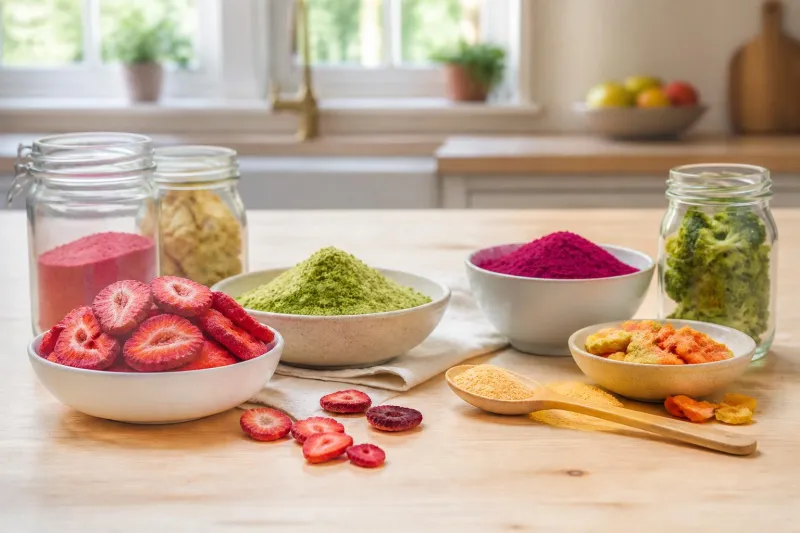
In practice, they fit best in recipes where you want to add flavour, colour or a light crisp texture without disturbing the moisture balance too much. Good uses include stirring crushed freeze-dried berries into biscuit doughs, folding small pieces through scone mixtures, topping icing, flavouring buttercream, or adding fruit powder to shortbread, meringues or simple sponge batters.
That said, they are not invisible ingredients. Pieces can soften once they absorb moisture from a batter. Powders can intensify colour quickly and may slightly dry a mixture if used generously. A tablespoon or two may be straightforward. Larger amounts need more care.
Fruit powders are often the easiest starting point. A small quantity can flavour icing, whipped cream, cheesecake fillings or plain cake batter without introducing extra liquid. If you are adding powder to a dry mix, it helps to whisk it through the flour first so it disperses evenly. If you are adding it to icing or frosting, add it gradually and watch the texture.
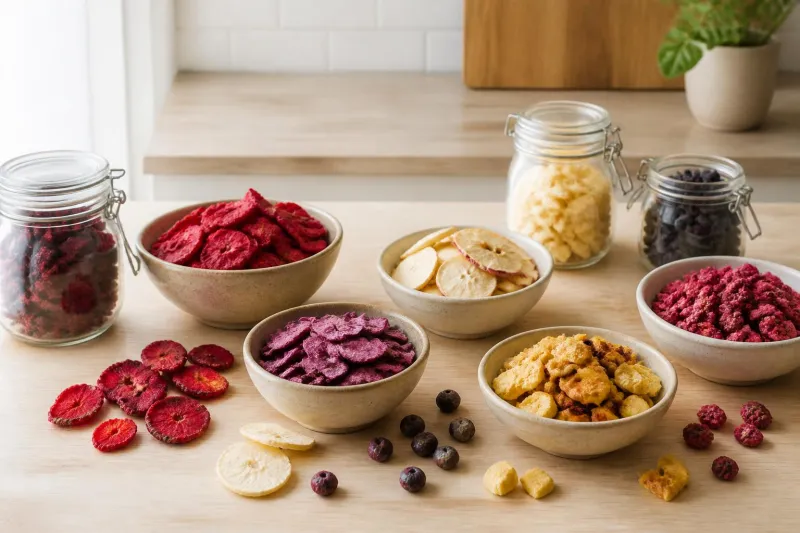
Larger pieces work best where you want defined pockets of fruit rather than a uniform flavour. In biscuits and traybakes, they can stay pleasantly distinct. In wetter batters, they may soften and lose crispness, which is not wrong, just different from their dry state.
Vegetable powders can also have a place in savoury baking, such as crackers, scones or flatbreads, but they need the same practical treatment. They contribute flavour and colour, not the bulk and moisture of fresh vegetables.
Because freeze-dried ingredients behave differently from fresh ones, it is better not to assume a direct swap by eye. If a recipe was written for chopped strawberries, using the same apparent volume of freeze-dried strawberry pieces will not give the same result. Fresh fruit adds water and weight. freeze-dried fruit adds concentrated solids and then pulls in moisture from the mixture around it.
If you are new to these ingredients, our first steps with freeze-dried fruit information explains the basics, and for a more specific example, how to use passion fruit powder without wasting it shows where a strong fruit powder is easiest to manage.
Smart substitutions and label checks
Some substitutions are usually low risk. Others are where simple baking starts to go wrong.
Lower-risk swaps include changing white sugar to light brown sugar in biscuits or muffins, swapping one neutral oil for another, or replacing one dried spice with another in small amounts. In many straightforward bakes, changing raisins to chopped freeze-dried fruit pieces, or vanilla to citrus zest, is also manageable because the structure of the recipe stays largely intact.
Moderate-risk swaps include changing plain flour plus baking powder to self-raising flour, or the reverse, because you need to adjust the raising agent properly. Swapping butter for oil changes texture and spread. Swapping milk for yoghurt changes thickness and acidity. These changes can work, but not casually.
Higher-risk changes include removing eggs, cutting sugar heavily, replacing flour with ground nuts, or adding a lot of fruit to a recipe that was not designed for it. Those are not small flavour edits. They alter the architecture of the bake.
Packet instructions matter more than many people expect. Flour blends, cocoa powders, milk powders, freeze-dried powders and raising agents can vary in strength, sweetness, particle size and added ingredients. If a packet says to store in a cool dry place, reseal promptly, or use within a certain period after opening, follow that guidance. For general food storage and freezing safety, the Food Standards Agency advises following product instructions and storing foods appropriately to help keep them safe (Food Standards Agency guidance).
Allergen checks are non-negotiable. Even when you are baking for adults and using familiar cupboard items, do not assume a fruit powder or dried ingredient is suitable just because a similar product was. Ingredient lists and allergen statements can change. The Food Standards Agency’s consumer guidance explains why ingredient and allergen information should be checked on the actual product used, rather than inferred from category or memory (Food Standards Agency allergy guidance).
Nutrition panels also need careful reading. The NHS explains that per 100g and per portion are different bases, and both can appear on labels (NHS food labels guidance). That matters when you are comparing powders, dried fruit and baking additions, because concentrated ingredients often look very different depending on whether the label is showing a small suggested serving or 100 grams. For UK readers, this is a practical label-reading point rather than a baking technique, but it helps avoid confusion when planning cupboard ingredients.
Where UK and EU rules differ in presentation, the safest approach for home bakers is still the same. Read the actual packet in front of you. Product naming, allergen emphasis and labelling format can vary, especially on imported goods, but the decision in your kitchen should be based on the label supplied with that food in the UK market.
Simple baking works best when we keep the method simple as well. Choose recipes that were designed to be spare, measure carefully, make one change at a time, and use concentrated cupboard ingredients for what they do well. With that approach, baking with little ingredients stops feeling like a compromise and starts feeling like a reliable way to bake from what you already have.