How to choose baking ingredients that work in UK cupboards
Choose ingredients by function first: structure, sweetness, fat, flavour or decoration.
On this page
Choosing baking ingredients that work well in a UK cupboard starts with one practical question, what job does this ingredient need to do in the recipe? Flour gives structure, sugar affects sweetness and browning, fats change texture, eggs bind and lift, and fruit or flavourings can add moisture, colour or sharpness. Once you think in those terms, it becomes much easier to build a cupboard that is useful rather than crowded.
For most home bakers, the best baking ingredients in the UK are not the ones that look impressive on a shelf. They are the ones you can store properly, recognise on the label, and use across several bakes without constant guesswork. That includes ordinary staples such as flour, sugar and raising agents, but also well-chosen specialist ingredients such as freeze-dried fruit, which can add flavour and colour without pouring extra liquid into a batter.
What counts as a baking ingredient in a UK home kitchen
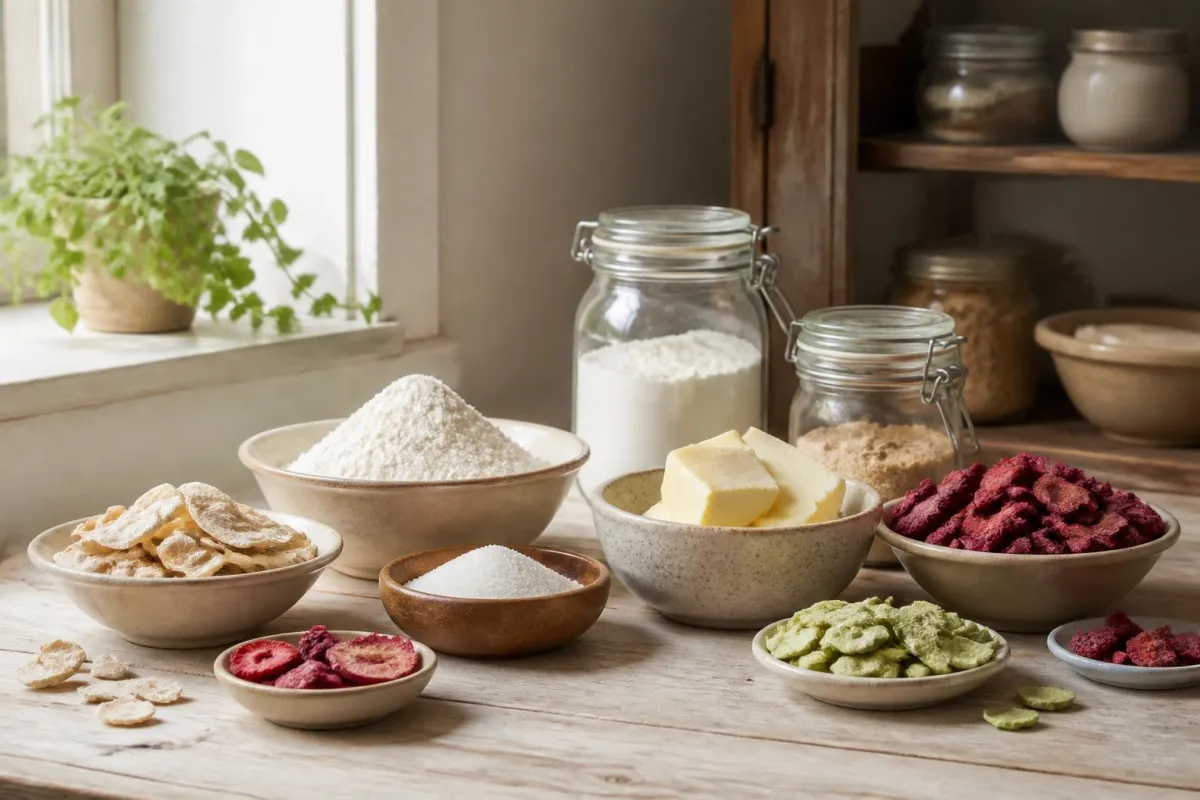
In a real UK home kitchen, baking ingredients usually fall into three groups. The first is cupboard staples. These are the ingredients most of us reach for weekly or monthly, such as plain flour, self-raising flour, strong white bread flour, caster sugar, light brown sugar, bicarbonate of soda, baking powder, cocoa powder, dried fruit, chocolate chips, vanilla extract and salt.
The second group is chilled ingredients. Butter, eggs, milk, cream cheese, yoghurt and double cream all belong here. They may seem obvious, but they shape everyday baking decisions because they have shorter storage windows and often behave differently depending on temperature. Cold butter gives a different result from softened butter. Full-fat yoghurt adds more richness than a thinner low-fat one. Eggs straight from the fridge can affect how smoothly a batter mixes.
The third group is specialist ingredients. These are not necessarily niche, but they are chosen for a specific effect. Ground almonds, cornflour, golden syrup, black treacle, bread improvers, food colourings, freeze-dried fruit pieces, freeze-dried vegetable powders, fruit powders, nuts, seeds and decorative toppings all fit here. They may not go into every bake, but they can solve particular texture or flavour problems very effectively.
Thinking in these groups helps with cupboard planning. Cupboard staples need to be versatile and stable. Chilled ingredients need to be bought with timing in mind. Specialist ingredients need a purpose. If an ingredient only works in one recipe and goes stale before you use it again, it is taking up space rather than helping.
This is also where UK kitchen habits matter. Many home bakers work with limited cupboard depth, warm kitchens in summer, and multipurpose storage. So the best ingredient choice is often the one that keeps its texture and reliability between uses, not just the one that worked beautifully once. We cover that in more detail in our guide to baking cupboard ingredients that actually earn their space.
How to choose ingredients by the job they need to do
Buying by habit is common. Replacing one bag of flour with the same one, or picking the same sugar each time, feels efficient. But better baking usually comes from matching the ingredient to the job.
For structure, start with flour. Plain flour suits cakes, biscuits and batters where you control the raising separately. Self-raising flour is useful when you want convenience and a reliable rise in sponges, muffins and simple traybakes. Strong bread flour has more gluten-forming potential, so it is better for yeasted doughs than for tender cakes. Wholemeal flour adds flavour and fibre, but it can also make bakes denser, so many bakers use it as part of the flour rather than all of it.
For moisture, think beyond liquid. Applesauce, yoghurt, mashed banana, pumpkin purée and syrups all contribute moisture, but they also bring sugars, acidity or fibre. That means they can soften crumb, slow baking, or make a mixture heavier. This is why one moist ingredient cannot always be swapped straight across for another.
For sweetness, the choice is not only about how sweet the bake tastes. White caster sugar dissolves easily and suits many cakes. Light brown sugar adds moisture and a mild caramel note. Darker sugars bring stronger flavour and deeper colour. Icing sugar is useful where you want a smooth finish, such as buttercream, glacé icing or short textures in some biscuits.
For fat, butter gives flavour and can help with aeration when creamed with sugar. Margarine or baking spreads can work well in some cakes, but the water content and texture can differ. Oil often gives a softer, moister crumb, especially in loaf cakes and traybakes, but it will not cream in the same way as butter. If the recipe depends on trapping air during mixing, oil changes the method as well as the result.
For flavour, choose ingredients that contribute clearly without upsetting the balance of the mixture. Cocoa powder, citrus zest, spices, extracts and freeze-dried fruit all do this in different ways. A wet fruit purée may taste excellent, but it can also loosen a buttercream or weigh down a sponge. A dry fruit powder can sometimes give the flavour you want with fewer side effects.
For colour, ingredients matter more than many bakers expect. Brown sugars darken crumb. Egg yolks enrich colour. Cocoa and treacle deepen a batter quickly. Freeze-dried raspberry or strawberry powder can colour icing naturally, but because powders vary in intensity, it is best to add them gradually and watch the consistency.
For decoration, think about texture and shelf life. Fresh fruit looks attractive but can leak moisture onto cakes and toppings. Chopped nuts stay crisp if stored well, but soften in humid kitchens. Freeze-dried fruit pieces can be useful for topping biscuits, brownies or meringues because they add colour and flavour without introducing much extra water.
This is often the most useful way to choose baking ingredients in the UK, not by category alone, but by function. When you know what the ingredient is doing, you can make better substitutions and buy fewer one-purpose items.
When freeze-dried ingredients make sense in baking
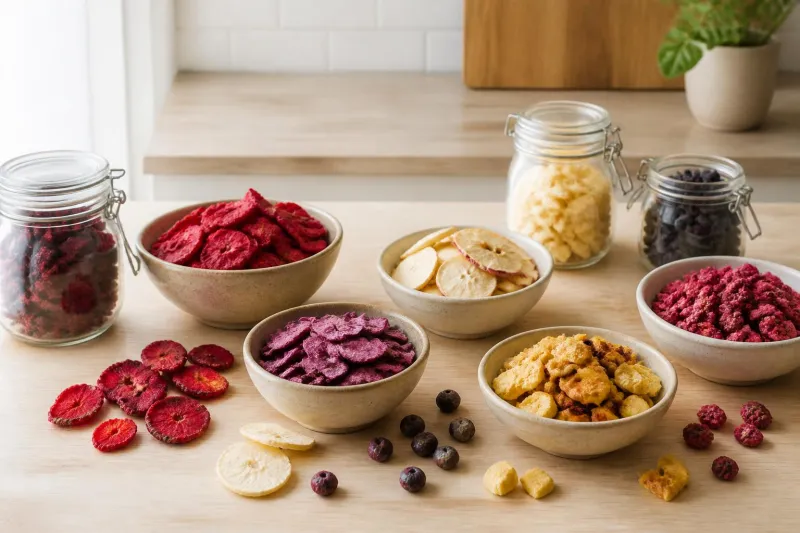
freeze-dried ingredients are especially useful when you want flavour or colour without adding much liquid. That matters in baking because extra moisture can change everything from mixing time to crumb texture.
Fruit powders are a good example. If you stir fresh raspberry purée into buttercream, whipped cream or a sponge batter, you add flavour but also water. That may thin the mixture or force you to adjust sugar or flour. A freeze-dried raspberry powder can give a more concentrated fruit note and pink colour with much less impact on consistency.
Pieces can also be practical. In biscuits, traybakes, rocky road style bakes and toppings, freeze-dried fruit pieces can stay distinct rather than melting into the mixture. In meringues, macarons and some icings, that lower moisture content is particularly helpful.
Vegetable powders have their place too. Beetroot powder can tint frostings and doughs. Pumpkin or carrot powder may contribute colour and background flavour in savoury baking or novelty bakes. But this is where expectations matter. Even with dry ingredients, recipe adjustments are sometimes still needed. Powders can absorb moisture, alter acidity, or slightly change texture if you add a lot.
That means we do not treat freeze-dried ingredients as magic replacements. They are tools. Start small, mix, and assess the batter or icing before adding more. If you want a smoother result, our guide on how to crush freeze-dried fruit for smoother baking is a good place to start. If you are deciding between formats, fruit pieces or powders for better baking texture explains where each tends to work best.
They also make sense for cupboard planning. For bakers who do not want to buy fresh berries for one recipe and use the rest in a hurry, freeze-dried fruit can be a convenient ingredient to keep on hand. It is still important to follow the packet storage instructions, reseal promptly and protect it from moisture.
How to read labels before you bake
A label tells you more than flavour and best-before date. Before you bake, check four things, ingredient list, allergens, storage instructions and nutrition format.
First, read the ingredient list. This matters most when an ingredient sounds simple but is actually a blend. Cocoa products may contain added sugar. Dried fruit may be coated lightly in oil. Baking powders vary in their components. Vanilla flavouring is not the same as pure vanilla extract. A fruit powder may be pure fruit, or it may include carriers or anti-caking agents. If you need a dry, concentrated ingredient for a delicate icing, those differences can matter.
Second, check allergens carefully. In the UK, allergen information must be clear for prepacked foods, and the Food Standards Agency advises consumers to read ingredient and allergen information every time because recipes and manufacturing details can change Food Standards Agency guidance on food allergy and intolerance. Do not assume that a familiar brand or a similar-looking packet has the same allergen profile as the last one you bought.
Third, check storage instructions. Some ingredients are fine in a cool, dry cupboard once opened if well sealed. Others need refrigeration after opening. Some decorative items or fruit products may clump or soften if exposed to humidity. The packet instructions take priority over general habit.
Fourth, look at the nutrition panel properly. The NHS explains that per 100g and per portion are different comparison bases, and both can appear on the same label NHS guide to reading food labels. For baking, this matters because portion information can be based on a manufacturer’s assumed serving, while your recipe may use 15 grams, 80 grams or the whole pack. If you are comparing products, per 100g is usually the clearer basis. If you are calculating what goes into a batch, use the actual weight in grams or liquid volume in millilitres from your recipe and the packet.
Where UK and EU rules differ in practice, the safest approach at home is simple. Read the packet in front of you rather than relying on a general memory of how labels “usually” look. Post-Brexit packaging can still resemble EU formats in many cases, but your baking decisions should come from the actual label, not from assumptions.
Storage choices that protect texture and reliability
Dry baking ingredients fail quietly. They absorb moisture, lose aroma, clump, stale or pick up odours long before they look obviously spoiled. That is why storage affects reliability as much as recipe choice.
Moisture is the main enemy of many cupboard ingredients. Flour, icing sugar, cocoa powder, milk powder, freeze-dried fruit and raising agents all suffer if damp air gets in. Sugar may harden. Powders may clump. Crisp toppings may soften. Raising agents may become less dependable.
Air is the next problem. Nuts and seeds can lose freshness. Spices and citrus powders fade. Open packets of decorative ingredients can pick up kitchen smells. Heat speeds all of this up, especially in cupboards near ovens, kettles or sunny windows.
Handling matters too. Scooping with a damp spoon, shaking steam from a pan near an open packet, or leaving a bag open while you answer the door can all shorten the useful life of an ingredient. In a busy kitchen, small habits make a visible difference.
The Food Standards Agency advises following product storage instructions and storing food appropriately to help keep it safe and usable Food Standards Agency guidance on chilling, freezing and defrosting food safely. For cupboard baking ingredients, that usually means cool, dry storage, good sealing after opening, and clean handling. It does not mean every dry ingredient belongs in the fridge. Refrigeration can introduce condensation if packets are moved in and out.
For ingredients you open often, practical containers can help, but only if they are dry, clean and suited to the ingredient. Large tubs are not always best. If you open a big container repeatedly in a steamy kitchen, you may expose the whole supply each time. Smaller sealed portions can sometimes protect quality better.
We have covered this in more depth in how to store baking ingredients without losing texture and in our guide to choosing kitchen containers that keep dry ingredients usable.
Smart swaps and planning for everyday baking
A flexible baking cupboard is not the same as a fully stocked one. It is a cupboard built around ingredients that can do more than one job and can be stored sensibly in the space you have.
A practical starting point is one or two flours, one white sugar, one brown sugar, one raising agent, one cocoa product, one reliable fat for baking, and a small set of flavour builders such as vanilla, cinnamon and citrus zest. After that, add specialist items according to the bakes you actually make. If you often decorate cakes, icing sugar and toppings earn their place. If you bake with fruit flavours regularly, freeze-dried fruit pieces or powders may be more useful than repeatedly buying fresh fruit for small quantities.
Swaps should be cautious and labelled as illustrative, not treated as fixed rules. For example:
Illustrative swap, if a sponge recipe uses fresh berries folded through the batter, freeze-dried fruit pieces may reduce the risk of wet patches, but they can also change how the fruit is distributed and how the crumb feels.
Illustrative swap, if an icing is becoming too loose with fruit purée, a fruit powder may add flavour with less extra liquid, but you may still need to adjust sugar gradually.
Illustrative swap, if you only have plain flour and a recipe calls for self-raising flour, many bakers make an adjustment with raising agents, but the exact result depends on the recipe and the freshness of the ingredients.
Illustrative swap, if you replace butter with oil in a loaf cake, expect a softer crumb and a different mixing method.
The point is not to memorise universal substitutions. It is to understand likely effects before you start. Structure, moisture and fat balance are the three areas most likely to go wrong when people improvise.
Planning also helps prevent waste. If your cupboard is running low, bake from what is reliable rather than forcing a recipe with half-suitable ingredients. A simple biscuit, muffin or traybake often tolerates small changes better than a delicate sponge or laminated dough. For ideas, our article on simple baking ideas when your cupboard is running low may help.
At Crispberry, published by Fleeta Limited, we focus on the ingredients that make everyday baking easier to manage in real UK kitchens. That usually means choosing with purpose, checking labels properly, storing ingredients well, and using specialist items such as freeze-dried fruit where they solve a practical baking problem rather than just adding novelty. If you build your cupboard around those habits, you are far more likely to get consistent results from the ingredients you already have.