How to use passion fruit powder without wasting it
Passion fruit powder adds sharp tropical flavour with very little moisture.
On this page
Passion fruit powder is easiest to use well when you treat it as a concentrated dry flavouring, not as a straight swap for fresh pulp. Start small, mix it thoroughly, and add any extra liquid separately if your recipe needs moisture. That approach gives you the sharp, tropical flavour without thinning icing, splitting buttercream or turning dry mixes lumpy.
For cupboard cooking and baking, it often solves a practical problem. Fresh passion fruit brings seeds, juice and variable acidity. A freeze-dried powder gives you flavour, colour and aroma in a dry form that is easier to store, measure and fold into mixtures where extra liquid would cause trouble.
What passion fruit powder is and why cooks use it
Most passion fruit powder sold for home baking is made from fruit that has been freeze-dried and milled into a fine powder. The exact contents vary by brand, so the packet matters. Some products are simply fruit. Others may include carriers, anti-caking ingredients or added sugar. That is one reason we always suggest reading the label before you start, even if the front of the pack looks straightforward.
Cooks use it because it brings fruit flavour in a form that behaves very differently from fresh fruit, juice or purée. Fresh passion fruit is excellent where you want brightness, seeds and obvious fruit texture. It is less convenient where moisture control matters. In buttercream, royal icing, meringue, cheesecake filling or a dry cake mix, extra liquid can change consistency quickly. A powder lets you add flavour with much less disruption.
That dry format is also useful for cupboard planning. You can keep a sealed pack on hand for spur of the moment baking, instead of buying fresh fruit for a recipe that only needs a small amount. If you regularly use freeze-dried ingredients, our guide to using fruit and veg powder without guesswork covers the same general principle, start with a little, mix well, then adjust.
Another advantage is consistency in jobs where fresh fruit can vary. One batch of fresh passion fruit may be sweeter, sharper or juicier than the next. Powder still varies by brand and batch, but in the kitchen it is usually easier to measure in grams and repeat a result than it is with loose pulp scooped from fruit.
What flavour and texture to expect
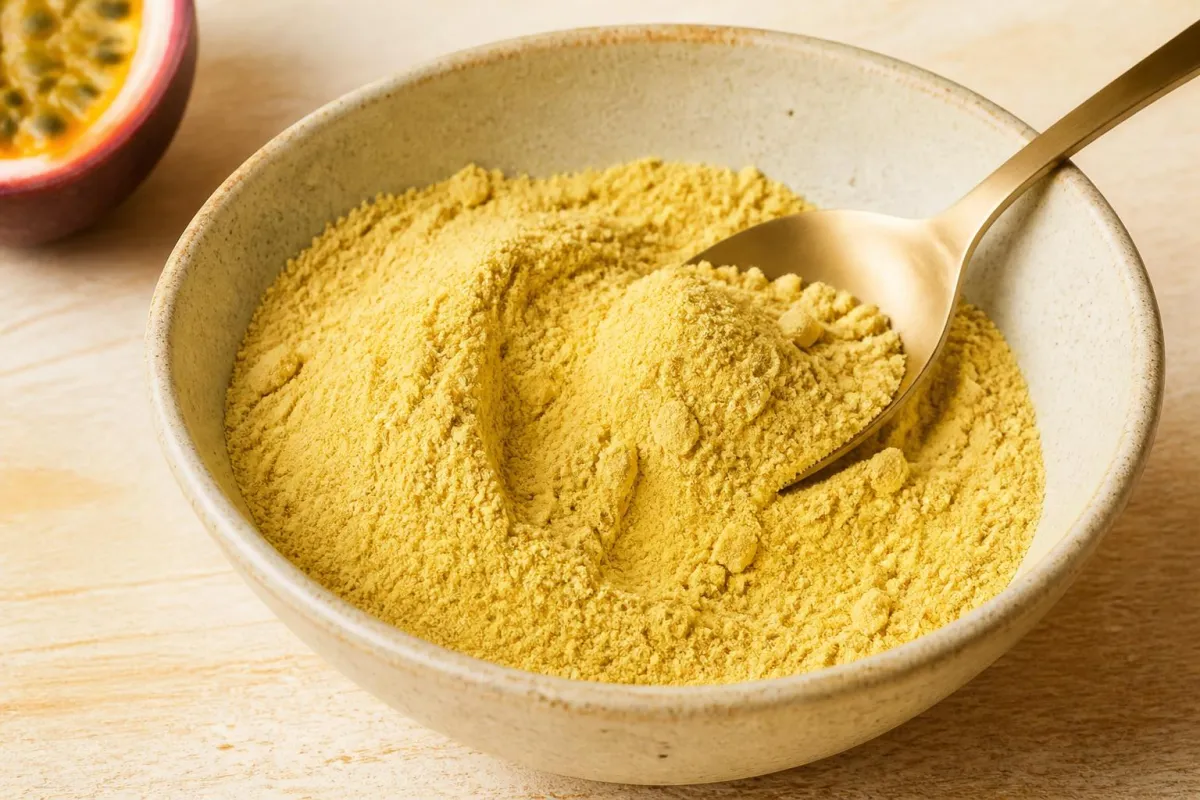
Expect a concentrated passion fruit flavour, usually tart, fragrant and distinctly tropical. Depending on the product, it may lean more sharply acidic or slightly sweeter. The aroma is often noticeable as soon as the pack is opened, because the powder is dry and the fruit solids are concentrated.
Colour is usually yellow to yellow-orange, though shade varies with the fruit itself and with any added ingredients. In pale mixtures such as icing, yoghurt or buttercream, even a small amount can tint the final result. In darker batters or chocolate-based mixtures, the colour may contribute very little visually while still affecting flavour.
Texture depends on what you mix it into. In a smooth icing or yoghurt, a fine powder can disappear almost completely if stirred well. In a fat-rich mixture such as buttercream, it may need a little extra mixing time to hydrate evenly. In very dry mixes, it behaves like another dry ingredient until liquid is added.
The main difference from juice, purée or fresh pulp is moisture. Low moisture changes both flavour impact and kitchen behaviour. Because there is less water, the flavour can seem more direct and less rounded than fresh fruit. You may notice tartness first. At the same time, you do not get the juicy mouthfeel of fresh pulp unless you add liquid elsewhere in the recipe.
That matters in baking. If you add passion fruit powder to meringue, for example, you can increase flavour without pouring in juice that might loosen the foam. If you add it to cheesecake filling, you can boost fruit character without making the filling as slack as a purée would. The trade-off is that powder alone will not create the same fresh, spoonable fruit texture. If you want both flavour and juiciness, use the powder for flavour and add measured liquid separately.
Where it works best in the kitchen
Passion fruit powder works best where a dry fruit ingredient is an advantage.
In icing sugar glazes, start by whisking the powder into the icing sugar before adding water or lemon juice. This helps distribute it evenly. Then add liquid a few millilitres at a time until you reach the consistency you want. If you add the powder after the glaze is already mixed, it can form small lumps.
In buttercream, beat the powder in after the butter and sugar are already combined. Start with a small amount, mix, then taste. If the buttercream becomes a little stiff, add a very small amount of milk or water separately. The key point is that the powder brings flavour, but not the moisture that fresh fruit would provide.
In meringues, fold or sift a small amount in carefully once you have reached a stable meringue stage, or add it to a dry sugar component depending on the method you use. Too much powder can affect structure, so this is a case for restraint. You are seasoning the meringue with fruit flavour, not replacing a major ingredient.
Cheesecake fillings are another good use. In a no-bake filling, mix the powder into the soft cheese and sugar first so it hydrates evenly, then fold in cream if using. In a baked cheesecake, whisk it into the main mixture with the sugar or dairy elements. If you want a looser fruit note, add liquid separately, because the powder itself will not thin the filling in the way juice does.
Yoghurt and porridge are simple places to use it. Stir a small spoonful into plain yoghurt, taste, and sweeten separately if needed. With porridge, mix it in after cooking rather than boiling it for long periods. That keeps the flavour clearer and lets you judge how much you need once the oats are at serving consistency.
For drinks, whisking matters. Passion fruit powder can work in milkshakes, smoothies and simple water-based drinks, but it needs enough agitation to disperse properly. Shake it in a jar, use a small whisk, or blend it. If you are making a cold drink, add the powder first, then the liquid, and shake well. In hot drinks or warm mixtures, avoid holding the open packet over steam. More on that below.
Dry mixes are one of its strongest uses. You can stir it into cake mix, biscuit dough dry ingredients, pancake mix, or a dusting sugar for finishing. If you want more on choosing between powders and larger pieces, our article on better baking texture with fruit pieces or powders is useful here.
If you are comparing formats more broadly, our overview of freeze-dried fruit powders explains where powders tend to be the easier choice than whole or broken fruit.
How much to start with
Start cautiously. Passion fruit powder can be surprisingly strong, and there is no universal rule that one spoonful from one brand matches one spoonful from another. Particle size, added ingredients and fruit intensity all vary.
A practical method is this:
- Measure out your base mixture.
- Add a small amount of powder.
- Mix thoroughly.
- Taste.
- Add more only if needed.
For a bowl of yoghurt, that may mean starting with a pinch or a small spoonful. For buttercream or cheesecake filling, weigh a little in grams, mix fully, then reassess before adding more. For a dry cake mix, whisk the powder through the flour and sugar first so you do not get pockets of concentrated flavour.
If the packet includes a serving suggestion or usage note, treat that as brand-specific guidance, not a rule for every recipe. The actual strength of the product in your hand matters more than a general internet conversion.
It also helps to separate two questions. First, how much flavour do you want? Second, does the recipe also need more liquid, sweetness or acidity? A common mistake is to keep adding powder when what the mixture really needs is a splash of water, milk, juice or cream. Add those separately and in small amounts.
If you are adapting a recipe that uses fresh passion fruit, do not assume the powder can replace both flavour and bulk by itself. Use it to add flavour first. Then decide whether the recipe also needs extra millilitres of liquid for texture.
How to store it and avoid clumping
Passion fruit powder needs to stay dry. Once moisture gets in, it can clump, cake or lose its easy-flowing texture. That is why storage habits matter more than many people expect.
Reseal the pack as soon as you have measured out what you need. Do not leave it open on the worktop while you finish the recipe. If the original pack is resealable, press the seal closed properly. If it is not, transfer the contents promptly to a clean, dry, airtight container only if the pack instructions allow for that. The safest starting point is always to follow the storage directions on the actual packet.
Steam is a common problem. If you hold an open pack over a pan, kettle, dishwasher door or a bowl of hot porridge, the powder can start absorbing moisture immediately. Even if you do not see obvious wet patches, that damp air encourages clumping. Measure the amount you need away from steam, then close the pack before you go back to the hob.
Use a dry spoon every time. A slightly damp teaspoon is enough to start caking in the pack. The same goes for wet fingers around the seal.
For general food storage, the Food Standards Agency advises following product instructions and handling food in ways that help keep it safe and in good condition, including appropriate storage and temperature control where relevant Food Standards Agency storage guidance. For a dry fruit powder, the practical takeaway is simple, keep it sealed, dry and stored as directed on the packet.
If clumps do form but the powder is otherwise within its instructions and still dry enough to use, you may be able to break small lumps up before mixing into a recipe. If it has clearly taken on moisture, smells stale, or no longer matches the pack guidance, it is better not to guess.
What to check on the label before you use it
The label tells you how to use the product sensibly. Start with the ingredients list. If the powder is 100 per cent fruit, that is straightforward. If it contains sugar, starches, carriers or anti-caking agents, that can affect flavour, sweetness and behaviour in recipes. A sweetened product may need less icing sugar adjustment than an unsweetened one. A product with added ingredients may dissolve or thicken differently.
Next, check allergen information carefully. In the UK, prepacked foods must provide allergen information in line with Food Standards Agency guidance for consumers Food Standards Agency allergy advice. If you are cooking for someone with an allergy or intolerance, read the ingredients and allergen statements on the actual pack every time. Do not rely on memory, assumptions or a general description online. Where rules differ, follow the UK label in front of you rather than general EU-era expectations, because the practical wording and presentation you see in UK retail can vary.
Nutrition panels also need careful reading. The NHS explains that per 100g and per portion are different bases and should not be confused when comparing foods NHS guidance on reading food labels. That matters especially with fruit powder because the amount you actually use in a recipe may be much smaller than 100g. A packet might show values per 100g, while a serving suggestion on the front may refer to a much smaller amount. Those are not interchangeable.
For home cooks, the practical check is this:
- Read the ingredient list.
- Read the allergen information.
- Check whether the nutrition panel is per 100g, per serving, or both.
- Look for any usage or storage instructions.
- Check whether the powder is sweetened or unsweetened.
If you are trying to compare one product with another, compare like with like. Per 100g is usually the clearest common basis, as the NHS notes, but it does not tell you how intense the flavour will be in your recipe. For that, you still need to start small and taste.
Passion fruit powder is a useful cupboard ingredient when you use it for what it is, a concentrated dry fruit ingredient that adds flavour without much moisture. That makes it especially handy in icings, buttercream, meringues, cheesecake fillings, yoghurt, porridge, drinks and dry mixes. Measure lightly, mix well, add liquid separately when needed, and let the packet guide the final details.