Using an air fryer to dry fruit without guesswork
Air fryers can dry some fruit, but results depend on low heat, thin slices and patient checking.
On this page
Drying fruit in an air fryer can work well, but it helps to think of it as quick home dehydration, not as a route to the crisp, airy texture of freeze-dried ingredients. The best results come from fruits that can be sliced evenly, laid in a single layer, and dried slowly at the lowest setting your machine allows. You are aiming to remove enough moisture for a chewy or slightly leathery finish, not to roast the fruit or catch the sugars.
That matters because air-fried dried fruit is useful in a different way from freeze-dried fruit. It is good for lunchbox-style snacking, chopped additions to porridge, or stirring into bakes where a little chew is welcome. It is less useful where you want a dry, brittle ingredient for powders, crunchy toppings, or neat cupboard storage. If you want the short version, choose the right fruit, slice it thinly and evenly, keep the temperature low, turn pieces during drying, cool fully before storing, and discard any batch that stays damp or shows condensation after packing.
What air-fried dried fruit can and cannot do
An air fryer dries fruit by moving hot air around small pieces and gradually driving off moisture. In practice, this is much closer to a compact fan oven than to commercial dehydration or freeze-drying. The basket design helps air circulation, but the chamber is small, temperatures can run hot, and sugary fruit can move from drying to browning quite quickly.
Realistic choices include apples, pears, bananas, strawberries, mango, peaches and thin slices of citrus. These all have a shape that can be cut into fairly even pieces. They also dry in a way that still leaves them recognisably edible if the result is chewy rather than crisp.
Soft, very wet or awkwardly seeded fruits are more difficult. Watermelon is usually disappointing because there is so much moisture to remove. Blueberries often need piercing or halving, otherwise the skins hold moisture in. Raspberries can work, but they are fragile and their hollow structure collapses irregularly. Grapes become raisins eventually, but they take time and can dry unevenly unless halved.
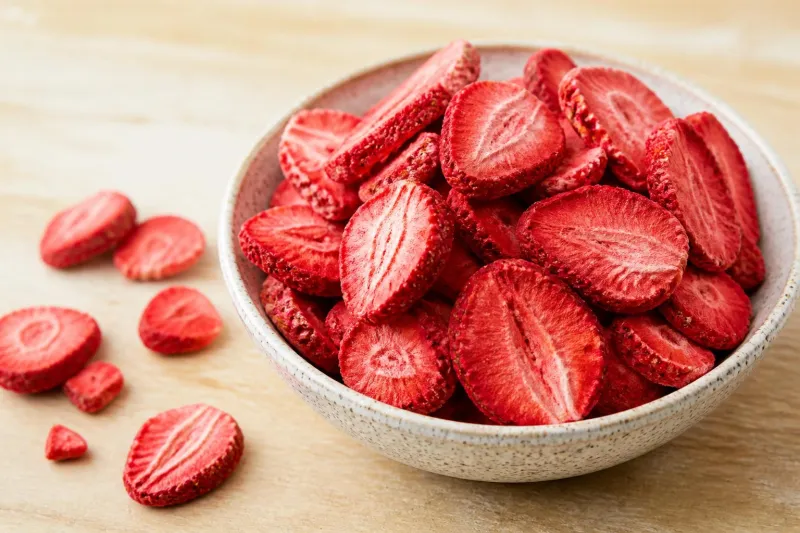
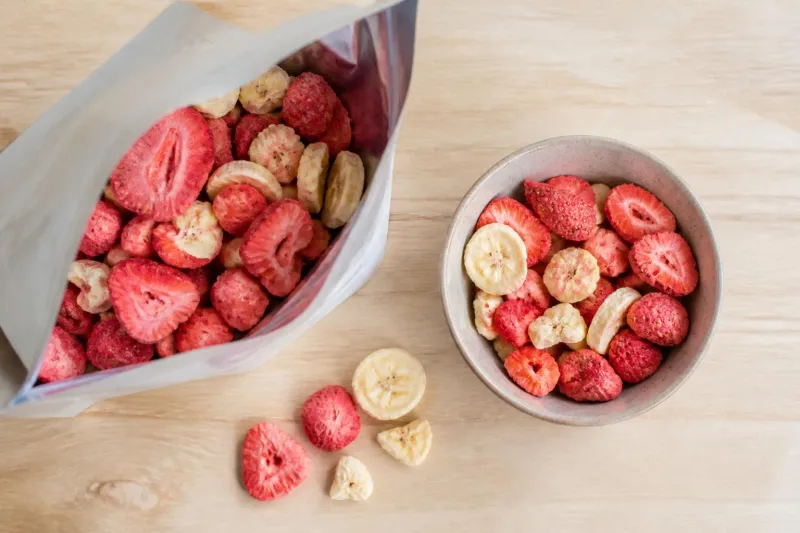
What you cannot reasonably expect from an air fryer is the texture of freeze-dried ingredients. Freeze-drying removes water at very low temperatures under controlled conditions, so the fruit keeps a light, brittle structure. That is why freeze-dried strawberries crush easily, freeze-dried raspberries stay dry in the cupboard, and fruit powder blends into icing or buttercream without adding much moisture. Air-dried fruit, by contrast, usually ends up flexible, sticky, leathery or chewy because sugars concentrate as water leaves.
That difference matters in the kitchen. If you want fruit pieces to stay crisp on top of yoghurt for more than a few minutes, air-dried fruit is rarely the best option. If you want a fruit powder for meringues, buttercream or dusting, air fryer drying is not a reliable substitute for fruit powders for baking and flavouring. If you simply want to use up spare apples or bananas and make a homemade dried snack, the air fryer is much more realistic.
How to dry fruit in an air fryer with fewer disappointments
The most useful rule is to keep everything even. Uneven slices are the main reason one half of a batch turns dark while the rest is still wet.
Start with sound fruit. Overripe fruit can be used, but it is harder to slice neatly and more likely to stick. Wash it, dry the surface, remove bruised patches, and slice to a consistent thickness. For most fruits, 3 mm to 5 mm is a sensible starting point. Thicker pieces stay wetter in the middle. Paper-thin slices can catch and become brittle at the edges before the centres are ready.
A practical method for common fruits looks like this:
- Apples and pears, cored, sliced into rings or half moons, 3 mm to 4 mm thick
- Bananas, sliced into coins, about 5 mm thick
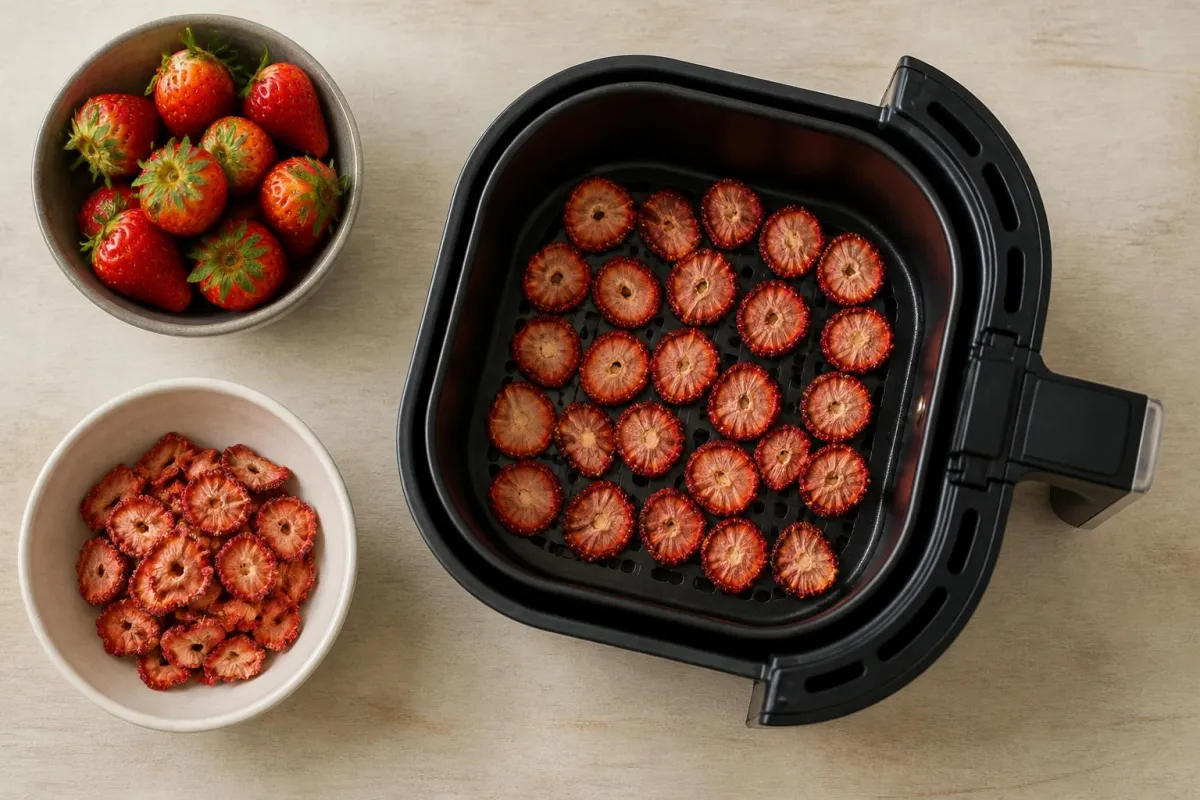
- Strawberries, hulled and sliced lengthways, 3 mm to 4 mm thick
- Mango, peeled and sliced into thin strips, about 4 mm thick
- Peaches or nectarines, stoned and sliced thinly
If your air fryer has a dehydrating function, use that. If not, use the lowest temperature available, often around 80C. Some models go lower, which is helpful. Higher temperatures can still dry fruit, but they increase the chance of cooked edges, scorched sugars and a jammy centre.
Lay the fruit in a single layer with gaps between pieces. Do not pile or overlap. Air needs room to circulate. In a basket-style machine, you may need to work in several batches rather than forcing too much in at once.
Drying times vary by fruit, slice thickness, sugar level and the way your particular air fryer runs. That is why exact timings are less useful than regular checking. As a rough working method, check after 20 to 30 minutes, turn or flip the slices, then continue checking every 10 to 15 minutes. Some fruits may take under an hour. Others can take much longer. Bananas and strawberries often need patience.
What you are looking for at the end depends on the fruit and how you plan to use it. Apples and pears can become almost crisp once cooled. Mango and banana are more often leathery or pliable. Strawberries usually dry to a concentrated, slightly tacky texture rather than a brittle one.
A few practical points reduce frustration:
- Pat very juicy fruit dry with kitchen paper before loading the basket
- Keep slices similar in size so they finish together
- Rotate trays or swap positions if your model has racks and obvious hot spots
- Remove finished pieces as they are ready, rather than leaving them to darken while thicker ones catch up
- Let pieces cool before judging the final texture, because warm fruit often feels softer than it will once cold
Avoid adding sugar if your aim is storage. Extra sugar makes the surface tackier and can make it harder to judge whether the fruit has actually dried through. Lemon juice is sometimes used on apples or pears to limit browning, but use it lightly. Too much surface moisture slows drying.
If your first batch is disappointing, the usual fix is not a higher temperature. It is thinner slicing, more space, and more time at a low setting.
Which fruits are easiest and which are awkward
The easiest fruits for air drying are those with moderate moisture, a tidy structure and flesh that holds together in slices.
Apples are usually the best starting point. They slice neatly, dry fairly predictably, and can become pleasantly crisp if cut thinly enough. Pears are similar, though very ripe pears can soften too much. Bananas are easy to prepare and forgiving, but they tend towards chewiness rather than crispness.
Mango can work very well if it is not overripe. It has enough body to hold its shape, and the finished strips are useful chopped into granola or traybakes. Strawberries are popular because the flavour concentrates nicely, but they are wetter than many people expect, so they need longer than apples.
The awkward group tends to include fruit with one or more of these traits:
- Very high water content
- Tough skins that trap moisture
- Lots of small seeds
- Flesh that collapses or sticks badly
- Irregular shapes that make even slicing difficult
Watermelon is the classic example of too much water for too little reward in a home air fryer. You can dry it, but the yield is tiny and the texture can be oddly leathery. Blueberries are awkward because the skin acts like a barrier. Halving them helps, but that turns the basket into a sticky, fiddly job. Grapes are similar. They can become good raisins, but not quickly.
Raspberries and blackberries are delicate. They can dry, but they lose shape, catch on the basket, and the seeds become more obvious as the moisture leaves. Kiwi is possible, though the tiny seeds and very soft centre can make the texture less appealing than people expect.
Citrus slices look attractive, but they are best treated as a special case. Thin orange or lemon rounds can dry into decorative slices, yet the peel can stay tough while the centre takes a long time to lose moisture. They are often more useful for garnishes than for casual eating.
If you want the simplest route to reliable air fryer dried fruit, start with apples, pears or banana. If you want pieces for baking where neat shape matters, mango and strawberry are often worth the effort. If you want a dry pantry ingredient for crumbling, decorating or blitzing, our guide to freeze-dried fruit is the more relevant place to start.
How to store air-dried fruit and spot problems
Storage is where many homemade batches go wrong. Fruit can feel dry enough when warm, then release a little remaining moisture once packed, which creates condensation in the container.
Always cool the fruit completely before storing it. Spread it out on a plate or rack and let steam escape. Packing warm fruit into a jar is an easy way to trap moisture.
Use a clean, dry airtight container. A glass jar with a close-fitting lid works well if the fruit is genuinely dry. A food container with a reliable seal is also fine. If you are making only a small batch for use within a few days, a sealed tub in the fridge is sensible, especially for fruit that finished chewy rather than properly dry.
Check the container after the first day. If you see condensation, the batch was not dry enough for that style of storage. Tip it back out and dry it a bit longer, or move it to the fridge and use it soon. This is simple kitchen judgement rather than a guarantee of safety. Moisture left in homemade dried fruit shortens keeping quality.
Texture is your best guide. Fruit intended for room temperature storage should feel dry on the surface, with no wet patches in the centre when torn open. Chewy is fine. Damp is not. Sticky and glossy can be normal with sugary fruits such as mango or banana, but actual moisture beads are a warning sign.
Discard a batch rather than keeping it if you notice any of the following:
- Visible mould
- Fermented or alcoholic smell
- Slimy patches
- Condensation that keeps returning after repeated cooling and repacking
- Pieces that were accidentally left partly raw in the middle
For general food handling, the Food Standards Agency advises following appropriate storage practices and keeping food properly chilled where needed Food Standards Agency food storage guidance. With homemade air-dried fruit, that means being realistic. A chewy batch is not magically shelf-stable just because it looks rustic in a jar.
If your priority is longer, tidier cupboard storage with less moisture uncertainty, our storage guide for freeze-dried fruit explains why fully dry ingredients are easier to manage.
When freeze-dried fruit is the better kitchen choice
Air-dried fruit and freeze-dried fruit solve different kitchen problems.
Air-dried fruit is useful when you want a homemade, chewy fruit piece and do not mind spending time slicing, turning and checking. It suits snacks, porridge toppings that can soften a little, and bakes where a bit of moisture is acceptable.
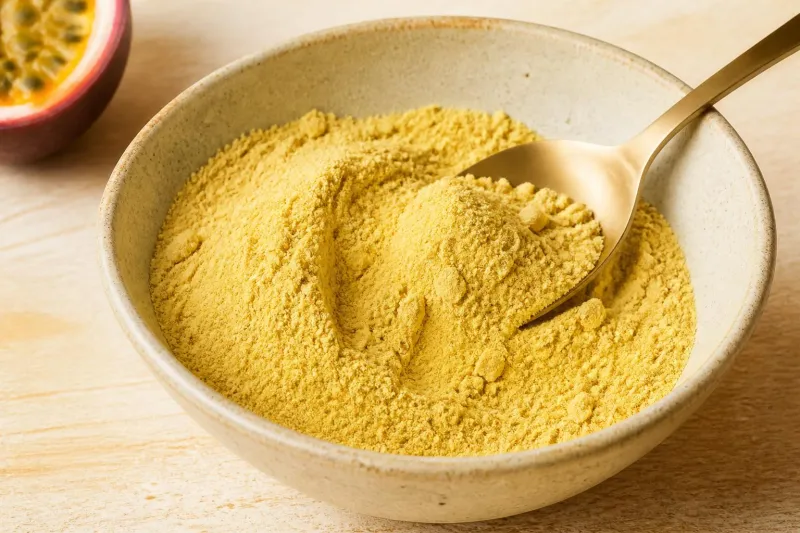
Freeze-dried fruit is the better choice when you need a dry ingredient with predictable behaviour. In baking, that can mean folding crisp raspberry pieces through white chocolate bark, decorating cakes without making the topping weep, or crushing strawberries into crumbs for coating truffles. It is also much better for powders. If you try to grind air-dried fruit, you often get a sticky paste or clumps rather than a free-flowing powder. Freeze-dried fruit turns into powder much more readily, which is why strawberry powder for icing, buttercream and dusting is a different sort of ingredient from homemade dried strawberry slices.
Rehydration is another dividing line. Air-dried fruit can soften, but it rarely returns neatly to the character of fresh fruit. Freeze-dried fruit rehydrates differently and more quickly because of its porous structure. For that side of things, our guide on how to rehydrate freeze-dried fruit without guesswork covers the practical points.
Cupboard convenience is also different. Homemade air fryer dried fruit usually varies from batch to batch. Slice thickness, residual moisture and storage conditions all affect the result. Freeze-dried ingredients are useful precisely because they start dry and stay dry if stored properly after opening.
When comparing packed ingredients, read labels carefully. The NHS explains that nutrition information can be shown per 100g or per portion, and those are not the same basis for comparison NHS food labels, a distinction further detailed at healthyfoodreviews.co.uk. That matters if you are comparing sweetened dried fruit, unsweetened freeze-dried fruit, or blends that include added sugar, oils or flavourings. Check the ingredient list, not just the front of pack.
Allergy checks matter too. The Food Standards Agency advises consumers to read ingredient and allergen information carefully and not assume suitability from a general description Food Standards Agency consumer allergy guidance. In practice, that means not assuming that all berry powders are just berries, or that every mixed fruit topping is free from other ingredients. In the UK, allergen labelling rules are established nationally, and readers elsewhere in Europe may see differences in presentation even where the broad approach is familiar.
If the aim is simply to use up fresh fruit, your air fryer is a handy tool. If the aim is a dry baking ingredient, a crisp topping, a workable fruit powder, or a low-fuss cupboard staple, freeze-dried fruit is often the more practical choice. At Crispberry, published by Fleeta Limited, we focus on helping home cooks and bakers make that distinction clearly, so the ingredient fits the job rather than creating more kitchen guesswork.