Baking cupboard ingredients that actually earn their space
Choose baking staples by function, not by habit or long shopping lists.

On this page
A baking cupboard earns its keep when the ingredients in it solve common baking jobs, not when it is packed with every possible option. The essentials are the items that give structure, sweetness, fat, lift, flavour and moisture control across the recipes most of us actually make, such as sponge cakes, loaf cakes, biscuits, brownies, traybakes, crumbles and simple icings.
For us at Crispberry, that also means being realistic about storage space. A useful cupboard is not the one with the longest shopping list. It is the one with ingredients you understand well enough to swap, combine and store properly. That is where freeze-dried fruit and powders can be especially handy, because they add flavour and colour without bringing much liquid with them.
What counts as a baking essential ingredient
When we talk about baking essentials ingredients in a practical way, we mean ingredients that do a clear job in the mixture.
Structure usually comes from flour and eggs. Plain flour gives a softer, less springy result in cakes, shortbread and many biscuits. Self-raising flour already includes raising agents, so it is useful for quick cakes and scones. Strong bread flour matters for bread, but for everyday home baking it is not always essential unless bread is part of your regular routine. Eggs help bind, add richness and support structure as they set in the oven.
Sweetness is not just about taste. Caster sugar, light brown sugar and icing sugar all behave differently. Caster sugar dissolves easily in cake batters and meringues. Light brown sugar brings moisture and a softer texture to cookies, ginger cake and some traybakes. Icing sugar is for buttercream, glacé icing and dusting. If you only keep one, caster sugar is usually the most versatile.
Fat affects tenderness, flavour and keeping quality. Unsalted butter is often the most useful all-round choice for baking because you can control the salt yourself. Margarine and baking spreads can work well in some cakes, especially all-in-one mixtures, but they do not always behave exactly like butter in biscuits or pastry. Neutral oils are useful for loaf cakes, muffins and some brownies where a moist crumb matters more than a buttery flavour.
Lift comes from baking powder, bicarbonate of soda, yeast and, in some recipes, the air beaten into butter, sugar or eggs. Baking powder is the broadest everyday staple. Bicarbonate of soda is worth keeping if you bake with acidic ingredients such as yoghurt, buttermilk, lemon juice, treacle or brown sugar. Dried yeast is only essential if you bake bread, buns or enriched doughs regularly.
Flavour is broader than vanilla extract. Salt, cocoa powder, spices, citrus zest, chocolate and freeze-dried fruit all matter here. A very plain cake can taste flat without a small amount of salt, even if it is sweet. Vanilla is useful because it rounds out flavour in cakes, custards and icings without changing texture.
Moisture control is the part people often notice only when something goes wrong. Too much liquid can make a sponge heavy, a filling runny or a biscuit soft when it should snap. Ingredients such as ground almonds, oats, cocoa powder, cornflour and freeze-dried fruit can help absorb moisture or shift texture in a controlled way.
The core cupboard list for reliable everyday baking
A reliable UK baking cupboard does not need to be huge, but it does need range. We would split the core list into dry staples and chilled staples.
Dry staples worth keeping in most homes:
Plain flour Useful for cakes, biscuits, crumbles, sauces and thickening fruit fillings. If we had room for only one flour for general baking, this would be a strong contender.
Self-raising flour Worth the extra space if we bake quick cakes or scones often. It saves measuring raising agent each time and reduces one source of error.
Caster sugar The main everyday sugar for cakes, sponges and many traybakes.
Light brown soft sugar Best kept if we make cookies, flapjacks, ginger cakes or anything where a softer, slightly deeper flavour is welcome.
Icing sugar Useful for buttercream, simple icings and finishing. If we rarely ice cakes, this can be bought as needed.
Baking powder A genuine essential for everyday cake baking.
Bicarbonate of soda Worth the space when recipes use yoghurt, buttermilk, cocoa or syrupy ingredients.
Sea salt or table salt Needed in small amounts, but it sharpens flavour and balances sweetness.
Cocoa powder Useful for chocolate cakes, brownies, biscuits and buttercream without adding extra fat.
Vanilla extract or vanilla bean paste A small bottle goes a long way and improves many simple bakes.
Cornflour Helpful for fruit fillings, custards and softer sponge textures.
Dried fruit Raisins, sultanas, currants or chopped dates are still practical cupboard ingredients. For a broader comparison, our guide to dried fruits for everyday baking covers where they work best.
Oats Good for flapjacks, crumbles and biscuit texture.
Chocolate, nuts or seeds Not essential in every home, but useful if we bake regularly and want quick flavour variation.
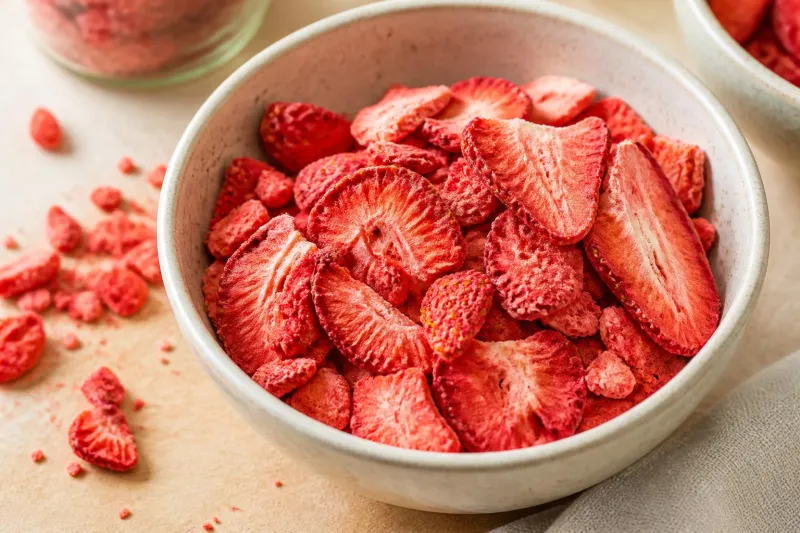
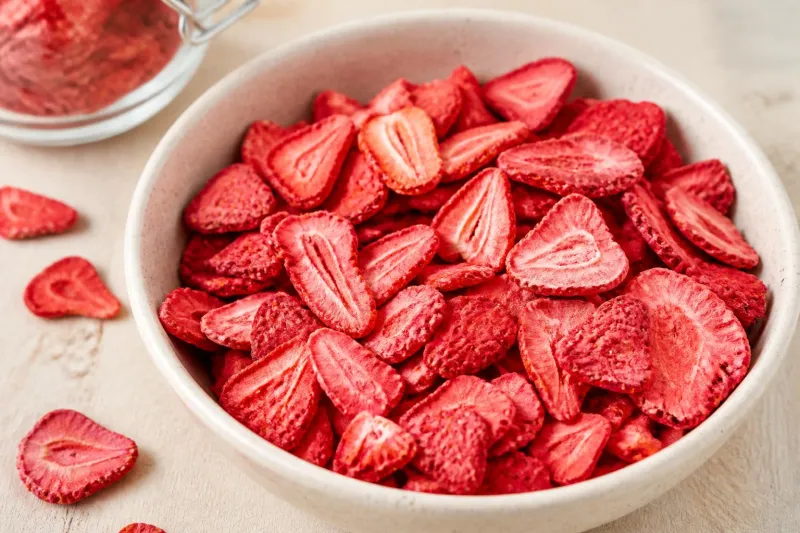
Freeze-dried fruit pieces or powders These are especially useful when we want fruit flavour or colour without loosening a batter too much. They also suit small cupboards well, because a little can go a long way. We have more on small-cupboard ways to use freeze-dried ingredients well.
Chilled staples worth keeping if space allows:
Unsalted butter Still the main all-round fat for cakes, biscuits and pastry.
Eggs One of the most flexible baking ingredients in the kitchen.
Milk Useful for cake batters, scones, custard and adjusting icing consistency.
Yoghurt, sour cream or buttermilk Not essential for everyone, but helpful for tender cakes and bakes that use bicarbonate of soda.
Double cream or cream cheese These are more occasional items, worth buying for fillings, frostings or cheesecakes rather than keeping routinely unless we use them often.
The key is matching storage space to baking habits. If we bake Victoria sponge weekly, self-raising flour, caster sugar, butter and eggs earn their place. If we mostly make brownies and traybakes, plain flour, cocoa, brown sugar and oil may matter more.
How freeze-dried ingredients fit into baking
Freeze-dried ingredients are not there to replace every fresh or dried fruit ingredient. Their strength is precision. Because they contain very little moisture, they let us add concentrated flavour and colour without shifting the liquid balance as much as fresh or frozen fruit would.
That matters in buttercream, meringue, macarons, sponge batters, biscuit doughs and white chocolate fillings. Fresh strawberries, raspberries or mango can be delicious, but they can also water down icing, create wet pockets in cake batter or shorten shelf life once baked. Freeze-dried fruit pieces and powders avoid much of that.
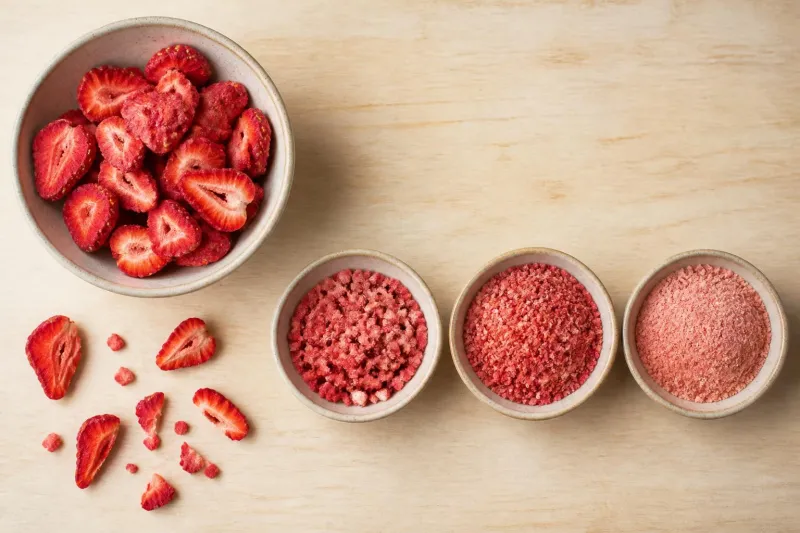
Fruit powders are especially useful where smoothness matters. Strawberry powder, raspberry powder or blueberry powder can tint and flavour icing, buttercream, cheesecake topping or sponge batter with less risk of curdling or thinning. If we want a smoother finish, our guide on how to crush freeze-dried fruit for smoother baking is a practical starting point.
Pieces work differently. They add visible fruit specks and bursts of flavour in cookies, traybakes, granola slices or cake decoration. In some recipes they stay crisp, and in others they soften slightly as they absorb moisture from the mixture or topping.
Vegetable powders also have a place, though usually a smaller one in sweet baking. Beetroot powder can add colour to red velvet style bakes or icing. Pumpkin or carrot powders can support flavour in spiced cakes, though the exact result depends on the recipe and the packet instructions.
What freeze-dried ingredients do not do is provide the same juiciness as fresh fruit in a compote, pie filling or spooned dessert. They are best seen as a cupboard tool for flavour, colour and convenience, not a universal substitute.
Choosing ingredients by texture, moisture and recipe type
The best ingredient choice depends less on trend and more on what the bake needs to feel like.
For cakes, fresh fruit can be lovely in upside-down cakes, loaf cakes and fruit-topped traybakes, but it adds water. That can be helpful in an apple cake and awkward in a light vanilla sponge. Frozen fruit behaves similarly, and if added straight from frozen it can affect baking time and leave wetter patches. Freeze-dried fruit is often easier in sponge batters where we want fruit flavour without a dense or gummy crumb.
For biscuits, low moisture matters. Fresh fruit is usually a poor fit because it softens dough and steams as it bakes. Dried fruit works well in oat biscuits, shortbread variations and cookies because it is chewy and stable. Freeze-dried fruit works when we want sharper fruit flavour, lighter texture or a crisper finish. Powder can be mixed into the dough, while pieces can be folded in near the end.
For icings and buttercream, moisture control is critical. Fresh fruit purée tastes good but can loosen buttercream quickly. Jam can help with flavour, but it also changes sweetness and texture. Freeze-dried powders are often the cleanest option for fruit flavour in icing because they add colour and flavour with less added liquid. This is one of the clearest cases where freeze-dried ingredients genuinely earn cupboard space.
For fillings, the right choice depends on whether we want smoothness, chew or juiciness. Fresh or frozen fruit suits compotes and cooked fillings. Dried fruit suits buns, fruit loaves and spiced traybakes where chew is welcome. Freeze-dried fruit is useful in creams, whipped fillings, chocolate ganache, marshmallow toppings and no-bake layers where too much liquid would spoil the set.
For traybakes, all four forms can work. Fresh fruit gives softness and moisture, frozen fruit is convenient but may need careful handling, dried fruit gives chew and sweetness, and freeze-dried fruit gives stronger flavour with less effect on structure. If we are deciding between pieces and powder, our article on fruit pieces or powders for better baking texture helps with that choice.
A simple way to decide is to ask three questions.
Do we want moisture, or do we want to avoid it? Do we want smooth flavour, visible pieces, or chew? Is the recipe delicate, such as meringue or buttercream, or forgiving, such as a crumble or flapjack?
Those answers usually point us in the right direction faster than any fixed rule.
How to read labels and store baking ingredients well
A tidy cupboard is only useful if the ingredients in it are still in good condition and clearly labelled. That starts with reading packets properly.
For nutrition panels, the NHS advises checking whether values are given per 100g or per portion, because those are different comparison bases NHS food labels guidance. For baking, this matters less for health claims and more for understanding what we are actually using when comparing ingredients such as dried fruit, chocolate or fruit powders. A packet may also list serving suggestions that are not relevant to how much goes into a recipe.
For allergens, check both the ingredients list and any allergen emphasis, and do it every time you buy, not only the first time. Recipes change, factories change and product ranges change. The Food Standards Agency advises consumers not to guess from the product name or packaging style, and to use the label information provided Food Standards Agency consumer allergy guidance. In the UK, prepacked food must provide allergen information in line with UK rules. Since Brexit, UK food labelling law is not simply the same as EU law in every detail, even where many practical label features still look familiar to shoppers. If a reader has a diagnosed allergy or intolerance, packet information takes priority over any general baking guide.
Storage matters just as much as buying. Flour, sugar and cocoa keep best in a cool, dry place, sealed against moisture and pests. Nuts and wholemeal flours can turn stale faster than white flour, so they are often better bought in smaller amounts if we do not bake often. Baking powder and bicarbonate of soda lose effectiveness over time once opened, especially if exposed to damp air.
Freeze-dried ingredients need particularly dry storage. Once opened, reseal the pack promptly and keep it away from steam, sunlight and humid cupboards near the kettle or hob. If the packet includes a resealable strip or a specific instruction to transfer contents to an airtight container, follow that rather than assuming all packs behave the same way. Crispness is part of what makes freeze-dried pieces useful, and ambient moisture can undo that.
For chilled items such as butter, eggs, cream cheese and milk, follow the packet storage instructions and use-by dates. The Food Standards Agency’s guidance on chilling and freezing food safely is the practical baseline here, especially for temperature control and following product instructions Food Standards Agency food storage guidance. If we freeze baking ingredients, label them clearly and defrost them according to the packet guidance where given.
One final point on stocking a cupboard well. We do not need every format of every ingredient. We need a sensible mix. A baker who keeps plain flour, self-raising flour, caster sugar, butter, eggs, baking powder, cocoa, vanilla and one or two freeze-dried fruit options will usually be able to make more, with fewer texture problems, than someone with a crowded shelf of rarely used extras.
That is the standard we use at Crispberry. Ingredients should earn their space by solving real baking problems, whether that is giving lift to a sponge, chew to a cookie, or fruit flavour to an icing without turning it runny.