A practical guide to dried fruits for everyday baking
Dried fruit is a broad category with important differences in texture, sweetness and moisture.
On this page
If you want one reliable way to think about dried fruit in baking, start with function rather than category. Some dried fruits bring chew and sweetness, some bring sticky sugar and peel-like bite, and some, especially freeze-dried fruit, bring flavour with very little extra moisture. That difference affects everything from whether your scone dough stays light to whether your fruit loaf needs a longer bake.
A good dried fruit list is not just a catalogue of names. In the kitchen, it helps more to sort dried fruit by what it does. That is the approach we use at Crispberry, because home bakers usually need to know which fruit will hold its shape, which one should be soaked first, and which one will turn a buttercream pink without making it runny.
What counts as dried fruit
In everyday cooking, dried fruit usually means fruit with most of its water removed so it keeps longer and stores well in the cupboard. But there are a few distinct types, and they do not behave the same way.
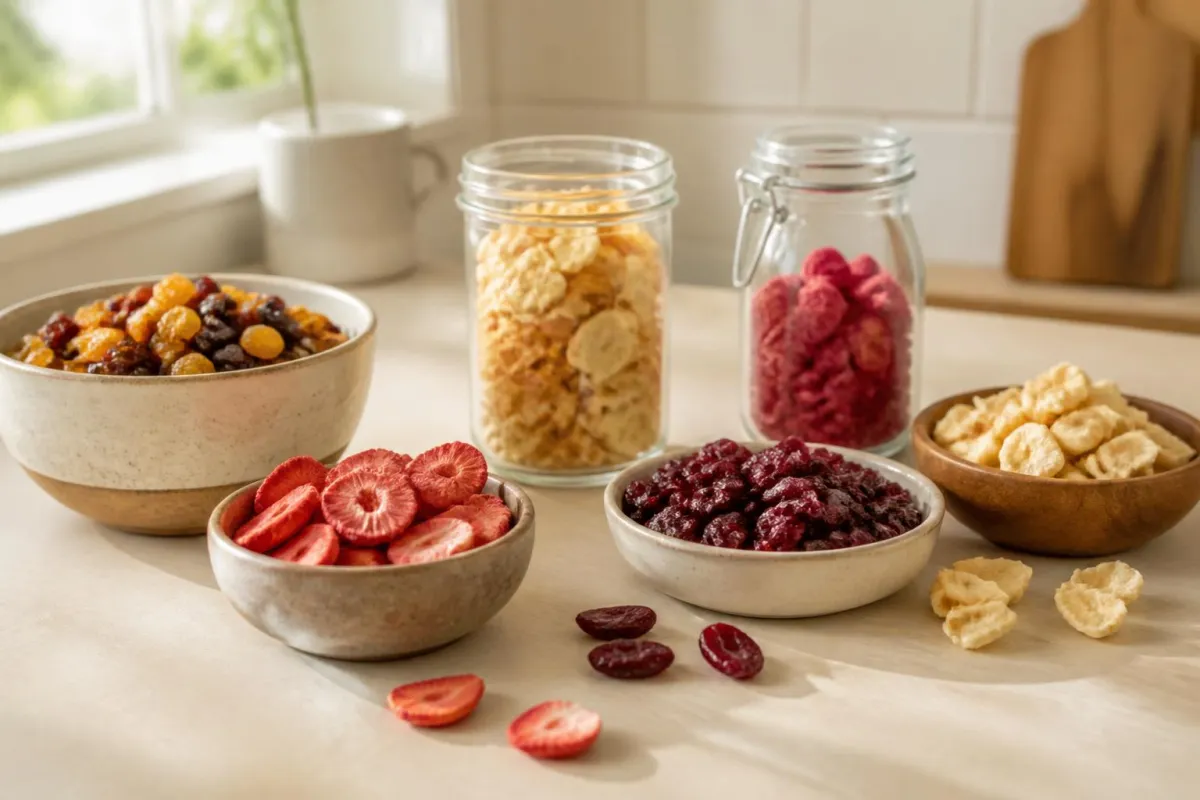
The first group is the chewy dried fruit most people know well. This includes raisins, sultanas, currants, chopped dates, prunes, apricots, figs, cranberries and mango. These are still soft enough to bite through. They often contain enough remaining moisture to feel pliable, sticky or dense. In baking, they can add sweetness and body, but they also pull moisture from doughs and batters if they are very dry.
The second group is candied fruit. This includes glacé cherries, mixed peel, candied citrus peel and crystallised ginger. Technically, some of these are preserved with sugar rather than simply dried. That matters because they behave more like sweet inclusions than like plain fruit. They can be sticky, heavy, and more sugary on the surface. In a fruit cake, that is exactly what you may want. In a plain muffin, it can make the crumb seem sweeter and denser than expected.
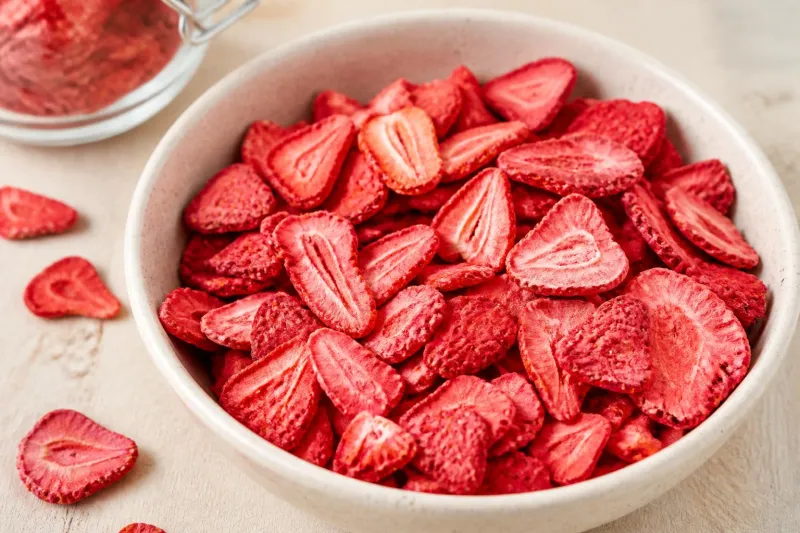
The third group is freeze-dried fruit. This is fruit that has been frozen and dried so that moisture is removed while the structure is largely preserved. The result is light, crisp fruit pieces or powders with intense flavour and very little water. In practical terms, freeze-dried strawberries, raspberries, blueberries or apple pieces do a different job from raisins or chopped apricots. They can be folded into biscuit dough, crushed over porridge, or stirred into icing without adding the liquid that fresh or soft dried fruit would bring. We cover the basics in our guide to first steps with freeze-dried fruit information.
Why does the distinction matter? Because recipes are built around moisture, sugar and texture. A sticky chopped date and a crisp freeze-dried raspberry are both fruit, but they do not swap in gram for gram without changing the result. If you know which family an ingredient belongs to, you can make better substitutions and avoid guessing.
A useful dried fruit list by kitchen use
Rather than listing dried fruit alphabetically, it is more useful to group it by the jobs it does well.
For everyday baking, the classic choices are raisins, sultanas, currants, chopped dates, chopped apricots, prunes, figs, glacé cherries and mixed peel. These suit fruit cakes, tea loaves, hot cross buns, flapjacks, oat bars, scones and traybakes. Raisins and sultanas distribute easily through batter. Currants are smaller, so they work well in lighter doughs where large fruit pieces would sink. Dates and prunes add a softer, stickier richness, which can be useful in loaf cakes but can also make a mixture heavier if used too generously. Glacé cherries and mixed peel are best where you want defined sweet bites rather than an even fruit background.
For porridge, muesli and breakfast bakes, softer dried fruit and crisp fruit pieces both work well, but in different ways. Raisins, chopped apricots and dates soften nicely in warm oats. Freeze-dried berries stay brighter in flavour and can be added at the end for contrast. If you want fruit throughout baked oats without making them wet, freeze-dried fruit is often easier to control than fresh berries. Our overview of freeze-dried fruit for home baking and cooking explains where these ingredients fit best.
For snacking and lunchbox-style mixes for adults, common choices include dried apple, banana chips, mango, pineapple, cranberries, raisins and figs. Here texture matters more than baking performance. Banana chips, for example, are often firmer and more like a crisp snack ingredient than a baking fruit. Dried mango can be leathery or tender depending on the packet. Cranberries are often sweetened, which is worth checking if you are comparing packets.
For sauces, compotes and quick fruit fillings, prunes, apricots, dates, figs and raisins are especially useful because they rehydrate readily. Simmered with water, juice or tea, they soften into spoonable mixtures for cake fillings, breakfast toppings or simple dessert sauces. Freeze-dried fruit can also be used here, but usually for flavour or colour rather than bulk. A spoonful of berry powder can sharpen the taste of a compote without adding more liquid.
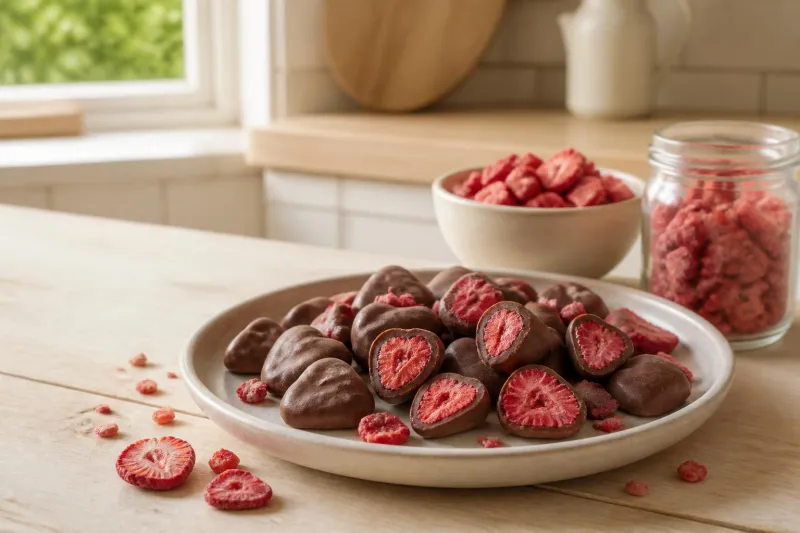
For decorating, freeze-dried fruit is usually the easiest option. Crushed freeze-dried raspberries or strawberries can top yoghurt, cheesecakes, cupcakes and chocolate bark while staying dry and colourful. Fruit powders are useful in icing sugar glazes, buttercream and sponge decoration where fresh fruit would bleed or water down the mixture. If that is the effect you want, our page on using freeze-dried fruit powder in the kitchen is a practical next read.
If you are building your own dried fruit list for the cupboard, it helps to keep at least one fruit from each useful group. For example, one everyday baking fruit such as sultanas, one sticky fruit such as dates, one candied fruit such as mixed peel, and one freeze-dried fruit for finishing or low-moisture flavour.
How texture and moisture change your recipe
Dried fruit changes a recipe in five main ways, mixing, soaking, baking time, crumb texture and finished moisture.
Mixing comes first. Small, dry fruit such as currants and raisins usually folds into cake batter or biscuit dough without much fuss. Larger or stickier fruit, such as chopped dates, figs or glacé cherries, tends to clump. A light dusting of flour taken from the recipe quantity can help separate pieces before folding them in. Freeze-dried fruit is fragile, so stir it in late and gently if you want visible pieces. If you crush it first, expect it to spread flavour and colour more evenly.
Soaking matters most for chewy dried fruits that feel firm or leathery. Raisins, sultanas, currants, apricots and figs can all be soaked if you want them plumper and less likely to draw moisture from the batter during baking. For many home recipes, 10 to 20 minutes in hot tea, fruit juice or warm water is enough. Drain well before adding. If fruit goes into the bowl dripping wet, you have not solved a moisture problem, you have moved it. Candied fruit usually does not need soaking. Freeze-dried fruit usually should not be soaked unless the recipe specifically wants it rehydrated, because one of its advantages is that it contributes flavour without extra liquid.
Baking time can shift when you add a lot of moist or dense fruit. A plain loaf cake and the same batter loaded with soaked fruit will not bake identically. Heavy fruit slows heat movement through the mixture and can leave the centre underdone while the edges are ready. In practice, that means checking doneness later and using a skewer with judgement. If you hit a melted cherry or soft date, check a second spot. By contrast, a sponge flavoured with freeze-dried berry powder may need little or no bake-time adjustment because you have added flavour without meaningful extra water.
Crumb texture is where the differences become obvious. Raisins and currants give small sweet pockets and keep a bake familiar and even. Chopped apricots and figs create more noticeable pieces and can make a slice feel chunkier. Dates and prunes can soften so much that they almost merge into the crumb, adding a fudgier texture. Candied peel gives bite and definition. Freeze-dried fruit pieces stay light and can create tiny crisp or softened pockets depending on the bake, while powders colour and flavour the crumb with very little structural change.
Finished moisture is the last part to judge. Soft dried fruit can make a cake seem moister after a day or two because moisture redistributes through the crumb. That is one reason fruit loaves often slice better the next day. But very dry fruit can do the opposite if used straight from the packet in a lean dough or low-fat batter. Freeze-dried fruit usually has the least effect on overall moisture, which is useful when you want fruit flavour in meringues, macarons, shortbread or buttercream.
A practical example helps. If a biscuit recipe uses 100 grams of raisins, swapping them for 100 grams of chopped dates will usually give a stickier, denser dough. Swapping them for 100 grams of freeze-dried strawberries will give a drier, lighter mix with a different sweetness level and a more delicate fruit note. The fruit is not just a flavouring. It is part of the recipe structure.
How to choose a packet without guessing
The easiest way to avoid surprises is to read the packet in the same order every time.
Start with the ingredients list. For plain dried fruit, you may see only the fruit itself, or fruit plus a little vegetable oil to reduce sticking. For cranberries, cherries, pineapple or mango, added sugar is common, so check rather than assume. Candied fruit often includes sugar, glucose syrup or similar ingredients as part of preservation. Freeze-dried fruit is often simpler, but again, the packet decides.
Next, check allergens carefully. UK food businesses must declare regulated allergens when they are used as ingredients, and advisory statements such as “may contain” are handled separately. This is particularly relevant for mixed fruit products, bakery add-ins and packing environments where nuts, peanuts or sesame may also be present. The Food Standards Agency has consumer guidance on using ingredient and allergen information and on not assuming suitability from a general description alone, Food Standards Agency consumer allergy guidance.
Then compare nutrition on a like-for-like basis. This is where many shoppers get caught out. One packet may highlight values per serving, another per 30 grams, and another per 100g. The NHS advises using the per 100g figures to compare foods fairly, because a portion and 100g are not the same comparison base, NHS food labels guidance. For dried fruit, this matters because serving sizes on packs vary widely and can make sweeter products look closer to unsweetened ones than they really are.
After that, look at sugars in context. Dried fruit is naturally concentrated because water has been removed, so per 100g figures will often look high compared with fresh fruit. That does not mean every packet is equivalent. A product with added sugar will usually show it in the ingredients list, and comparing per 100g values can help you see whether two similar products are likely to behave differently in a recipe.
Serving information is useful, but mainly for planning and portioning, not for comparing one packet against another. If a packet says one serving is 25 grams and another says 40 grams, those figures tell you how the manufacturer presents the product. They do not tell you which fruit is sweeter, drier or more suitable for your cake. For that, go back to ingredients and per 100g information.
For UK readers, this label-reading approach is grounded in UK guidance. Where rules differ between the UK and the EU generally, packet layout and wording can vary slightly, especially on products imported from EU countries, but the practical checks remain the same. Read the ingredients list, allergen information and nutrition panel on the actual packet you have in your hand.
Storing dried fruit once opened
Once opened, dried fruit keeps best when protected from air, moisture and strong odours. The simplest rule is to follow the packet instructions where they are given, because different products have different moisture levels and handling needs. The Food Standards Agency’s general food storage guidance also stresses following product instructions and storing food appropriately, Food Standards Agency food storage guidance.
For most standard dried fruit, a cool, dry cupboard is fine after opening if the fruit is sealed well. An airtight container is usually better than repeatedly folding the top of the packet, especially for products you use in small amounts over time. If the fruit is sticky, use a clean dry spoon rather than damp fingers, which can introduce moisture and encourage clumping.
For freeze-dried fruit, airtight storage matters even more. These products readily absorb moisture from the air, which can turn crisp pieces soft quite quickly once opened. Keep them in a well-sealed container or tightly resealed pouch, away from steam from kettles, hobs and dishwashers. We set out the practical points in our guide on how to store freeze-dried fruit.
For leftover recipe portions, think in weighed amounts. If you opened a packet for 40 grams of chopped apricots and have 85 grams left, label the container so you know what remains. This sounds basic, but it prevents the common baking problem of mystery tubs that look similar but behave differently.
If you have soaked dried fruit for a recipe and not used it all, do not return it to the original packet. Treat it as a separate ingredient. Store it covered in the fridge and use it promptly in another bake, porridge or compote. The same applies to chopped fruit mixed with syrup, juice or alcohol for a cake recipe.
For mixed bakes and leftovers, storage depends on the finished food, not just the fruit. A fruit scone, flapjack or tea loaf should be stored according to the recipe and the other ingredients in it. Dried fruit does not cancel out the needs of butter, eggs or dairy.
A sensible cupboard strategy is to keep small amounts of several useful fruits rather than one oversized bag that lingers for months. In practice, that might mean raisins for general baking, dates for sticky loaf cakes, mixed peel for seasonal bakes, and one freeze-dried berry for decoration and low-moisture flavour. That gives you flexibility without turning the cupboard into a guessing game.
A practical dried fruit list is really a working list. Once you know which fruits add chew, which add stickiness, and which stay dry and bright, choosing for cakes, biscuits, breads and toppings becomes much simpler.