How to use fruit and veg powder without guesswork
fruit and veg powder can add flavour, colour or solids, but it does not behave like fresh produce in every recipe
On this page
Using fruit and veg powder well is mostly about treating it as an ingredient with a job to do, not as a direct stand-in for fresh produce. In the kitchen, that usually means one of four things, flavour, colour, dry fruit or vegetable solids, or a finishing dust. Once you decide which role you want, the packet tells you most of what you need to know.
For home cooks and bakers, the main practical questions are simple. Will the powder add enough flavour on its own, will it thicken a mixture, how much liquid will it pull in, and is it suitable for the people eating it? At Crispberry, we find that a little label reading and a few small adjustments in grams and millilitres remove most of the guesswork.
What fruit and veg powder is actually for
Fruit and veg powder is best thought of as a concentrated dry ingredient. That matters because dry ingredients behave differently from fresh ones, even when they come from the same original fruit or vegetable.
In everyday cooking and baking, powder usually does one or more of these jobs:
- adds flavour without adding much extra water
- adds colour
- changes texture by absorbing moisture
- contributes sweetness, acidity, or savoury notes
- gives a dry finish on the surface of a bake or dessert
That is why freeze-dried powders are often easier to use in buttercream, icing sugar mixes, meringue-style bakes, sponge batters, yoghurt toppings, rubs and seasoning blends than in dishes that rely on the structure of fresh produce.
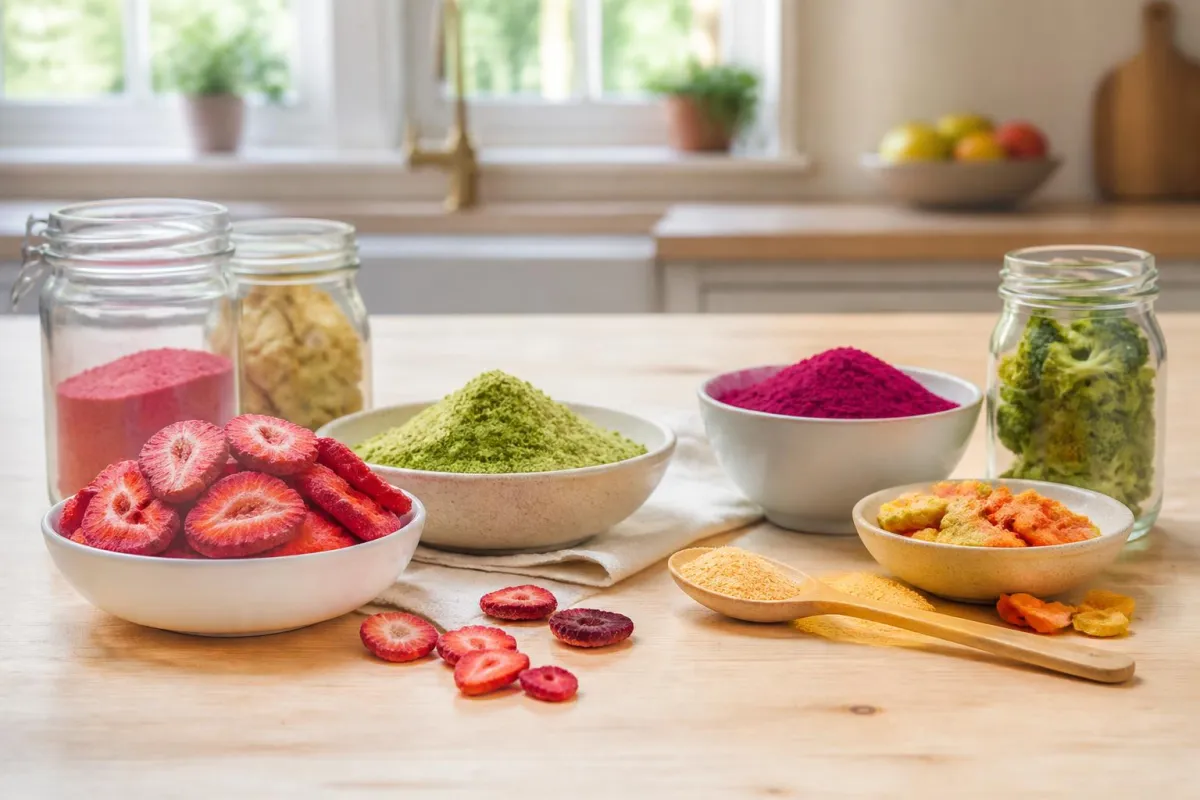
For example, strawberry powder can give a clear berry flavour and pink colour in icing without the looseness you would get from strawberry purée. Tomato powder can deepen savoury flavour in a rub or sauce base without adding chopped tomato pieces or extra liquid. Beetroot powder can colour a batter vividly, but it will not behave like grated beetroot in a cake because it brings dry solids rather than fibrous moisture.
This is the key distinction. Fruit and veg powder is not usually a one-to-one fresh substitute. If a recipe depends on the water, bulk, fibre strands, or pieces of fresh fruit or vegetables, powder will not recreate that on its own. A soup made with carrot powder will not have the same body as one made with cooked carrots unless you adjust liquid and texture elsewhere. A muffin made with raspberry powder will taste of raspberry, but it will not have the pockets of fruit you get from whole berries.
In practice, it helps to ask one question before you start. Are we using the powder mainly for flavour, for colour, or as part of the dry mix? If it is mainly flavour or colour, small amounts may be enough. If it is part of the dry structure, you may need to rethink the wet ingredients as well.
If you are new to freeze-dried ingredients, our first steps with freeze-dried fruit information explains the basics, and our guide to freeze-dried fruit powder shows the forms these ingredients commonly take.
How to read the packet before you cook
Before opening the packet, check four things, ingredients, allergens, storage instructions, and the nutrition panel.
The ingredient list tells you whether the powder is a single ingredient or a blend. That sounds obvious, but it changes how you use it. A packet may contain only freeze-dried strawberry powder, or it may include sugar, anti-caking agents, flavourings, acids, or colourings. If there are added ingredients, the powder may taste sweeter, flow more freely, clump less, or behave differently in a batter or icing.
For people cooking for others, allergen information matters just as much as the ingredient list. In the UK, prepacked foods must provide allergen information, and the Food Standards Agency advises consumers to check labels carefully and not assume suitability from general descriptions alone Food Standards Agency. If a packet says “may contain”, that is different from an ingredient being deliberately included, but both are relevant when planning what to serve.
Storage instructions are not filler text. They tell you how the maker expects the ingredient to stay stable once packed. Some powders need a cool, dry place and tight resealing after opening. Others may specify refrigeration after opening. Follow the packet first, because storage advice can differ by formulation and packaging.
Then read the nutrition panel properly. The NHS explains that per 100g and per portion are different comparison bases, and both can appear on a label NHS. This matters especially with fruit and veg powder because a small spoonful can carry concentrated flavour and concentrated sugars from the original ingredient. A per 100g figure is useful for comparing products. A per portion figure is only useful if the portion on the pack resembles the amount you are actually using.
That means we should not assume that a labelled portion matches our recipe. If the packet gives nutrition per 100g and also per 10g, but we plan to use 18 grams in a buttercream, the relevant amount is 18 grams, not the printed portion. Equally, if a sponge only uses 6 grams for colour, the per 100g panel can look dramatic while the actual recipe amount is modest.
A few practical checks help before cooking:
- Is it a single-ingredient powder or a blend?
- Are there any allergens listed in the ingredients or highlighted separately?
- Does the packet say store in a cool, dry place, refrigerate after opening, or use within a stated time after opening?
- Is the nutrition panel shown per 100g, per portion, or both?
- If there is a portion size, is that portion realistic for your recipe?
Where UK labelling practice differs from EU-wide general expectations, follow the actual UK packet in front of you. If you are using an imported product, the information format may look slightly different, but the same careful reading applies.
For readers comparing packets, our page on how to compare sugar on freeze-dried fruit labels covers the common confusion between label bases.
How powder changes texture and moisture
Most of the guesswork with fruit and veg powder comes from moisture. Powders absorb liquid, but not all at the same rate and not all to the same degree. Fine fruit powders often disappear quickly into icing or cream, while some vegetable powders can leave a drier, slightly pasty texture if used heavily.
The first effect is thickness. Add powder to a wet mixture and it will usually become thicker. In a buttercream, that can be helpful because the powder brings flavour while helping the icing hold shape. In a sponge batter, too much powder can make the mixture heavier and less fluid. In a sauce or soup, powder can act like a background thickener as well as a flavouring.
The second effect is stickiness. Fruit powders that contain natural sugars can make mixtures tackier, especially in glazes, fillings, and meringue-style bakes. A dusting of raspberry or strawberry powder on the outside of a dessert can also pull in moisture from the air and become patchy or sticky over time.
The third effect is spread. In biscuits or cookies, extra dry solids often reduce spread. If you replace part of the flour with fruit powder, the dough may hold itself more firmly, but if the powder also adds sugar and acidity, the final effect can vary. Start small and watch the first tray.
The fourth effect is colour. Powders can colour a mixture far more quickly than fresh ingredients. That is helpful, but colour does not always survive heat exactly as expected. Some shades mute in the oven, some deepen, and some change in acidic or alkaline mixtures. A bright pink icing may stay bright, while a pink sponge can bake to a softer tone.
The fifth effect is sweetness or savouriness. Fruit powders can make a recipe taste sweeter or sharper even without added sugar. Vegetable powders can add earthy, grassy, savoury, or slightly sulphurous notes depending on the ingredient. This is why it is sensible to season after adding the powder, not before.
As a starting point, we suggest making liquid changes gradually rather than dramatically. These are illustrative kitchen adjustments, not fixed rules:
- In a buttercream or icing, if 10 grams of powder makes the mixture too stiff, add 5 to 10 millilitres of liquid, then reassess.
- In a sponge batter, if adding 15 grams of powder noticeably tightens the mixture, loosen with 10 to 20 millilitres of milk or water.
- In a soup or sauce, whisk in the powder first, then add 15 to 30 millilitres of extra liquid if the texture becomes thicker than intended.
- In a dry rub, no liquid adjustment may be needed at all, but you may need to reduce salt or sugar if the powder itself tastes intense.
The safest approach is to reserve a little liquid from the original recipe. Instead of pouring in all the milk, water, juice, or eggs at once, hold back a small amount, add the powder, and then decide whether the mixture needs the reserved liquid.
If you are adapting a recipe, weigh the powder. Spoon measures are too variable for something this light and concentrated. A level teaspoon of one powder can weigh very differently from a level teaspoon of another, especially if one is very fine and another is slightly granular.
Where it works best in everyday recipes
Fruit and veg powder is most useful where we want a clear flavour or colour without introducing much extra water. The examples below are suggestions for home use, not tested recipes.
In buttercream, fruit powder is often straightforward. Start with a small amount, mix thoroughly, and give it a minute to hydrate before deciding whether to add more. The colour usually develops as it disperses. If the buttercream firms up too much, loosen it with a small amount of milk or water in millilitres, added gradually.
In icing sugar glazes and water icings, powder can add both colour and flavour, but it can also encourage lumping if mixed in carelessly. It often helps to stir the powder into the icing sugar first, then add liquid. That distributes it more evenly.
In sponge cakes, powder works best when treated as part of the dry ingredients. Sift it with the flour where possible. If you simply dump it into a finished batter, small clumps can remain and streak the crumb. For stronger flavour, it is usually better to use a moderate amount in the sponge and a little more in the filling or icing rather than forcing all the flavour into the cake itself.
In meringue-style bakes, caution helps. Powders can add flavour and colour, but too much can affect structure because they introduce solids into a foam that depends on balance. Fold in a small amount near the end and expect some experimentation.
In sauces, a vegetable powder can be useful when we want to deepen flavour quickly. Tomato, mushroom, beetroot, spinach, or carrot powders can all work in different styles of sauce, but each changes colour and thickness as well as taste. Whisking the powder with a little cold liquid first can help avoid lumps before adding it to a warm pan.
In soups, powders are best used as boosters rather than full replacements for the vegetables that create the soup’s body. A spoonful can reinforce flavour in a blended soup, but if the whole recipe depends on the powder, the result may feel thinner or more one-dimensional than expected unless the rest of the ingredients provide structure.
In spice rubs and seasoning blends, powders are particularly handy because they stay dry. Fruit powder can add sharp sweetness to a rub, while vegetable powder can add savoury depth. Keep the balance restrained, because concentrated powders can dominate other seasonings.
As a finishing dust, fruit powder can be very effective on truffles, biscuits, meringues, cheesecake tops, yoghurt, porridge, or plated desserts. The practical point is timing. Dust close to serving if possible, because ambient moisture can dull the colour and make the surface damp.
If you want ingredient-specific ideas, our pages on strawberry powder for baking and finishing and using freeze-dried strawberries in the kitchen are useful next reads.
How to store it and when to be cautious
Storage is simple in principle. Keep powder dry, sealed, and away from heat and steam. In practice, most problems come from moisture getting into the packet during normal kitchen use.
Open packets away from a boiling kettle, simmering pan, dishwasher steam, or a just-opened oven. Do not hold the packet over a saucepan while spooning. Use a dry spoon. Reseal promptly. If the original pack does not reseal well, transfer it to a clean, dry, airtight container only if the packet instructions do not say otherwise, and keep the label details with it.
Clumping is usually the first sign that moisture has crept in. A few soft clumps do not automatically mean the powder is unusable for every purpose, but they do mean storage has been less than ideal. If the packet instructions give a use-by or best-before context after opening, follow that. If the product shows signs of dampness, off odour, or obvious deterioration, it is safer not to use it.
The Food Standards Agency’s general storage guidance is to follow storage instructions and handle food in ways that reduce avoidable safety risks Food Standards Agency. For powders, the practical version is straightforward, keep moisture out and follow the packet.
Caution is also sensible where allergies or intolerances are concerned. A fruit or vegetable name on the front is not enough information on its own. Check the full ingredients, allergen statements, and any advisory wording each time you buy, because recipes and manufacturing arrangements can change. The Food Standards Agency’s consumer guidance is clear that labels matter and that people should not rely on assumptions about suitability Food Standards Agency.
We also avoid making personal dietary claims from a general label. NHS guidance on labels is useful for comparing foods, but it does not turn a packet into individual advice NHS. If you are cooking for someone with a medical dietary need, the packet and the person’s own guidance take priority over any general kitchen article.
For more on keeping freeze-dried ingredients in good condition, see our guide on how to store freeze-dried fruit.
Used well, fruit and veg powder is not mysterious. Read the packet, decide whether you want flavour, colour, or dry structure, weigh what you add, and adjust liquid in small steps. That is usually enough to make it practical rather than unpredictable.