
Freeze-dried strawberries for baking, snacking and breakfasts
Freeze-dried strawberries are fresh strawberries with the water removed, leaving a light, crisp fruit.
On this page
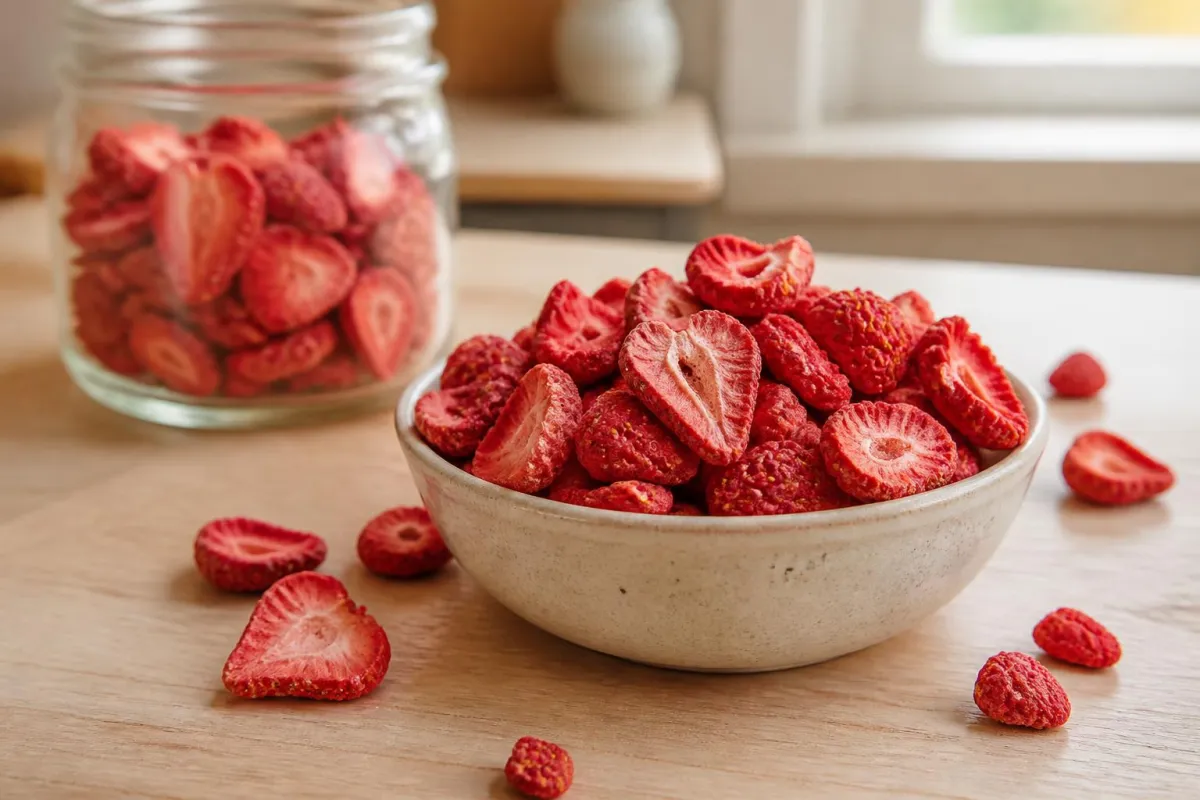
Freeze-dried strawberries are real strawberries with most of the water removed very gently. That leaves fruit that is light, crisp, intensely strawberry-flavoured and easy to keep in the cupboard. They work well when you want a punch of berry flavour without adding extra liquid, which is why bakers, breakfast people and hikers all keep them around.
The short version is this. Fresh strawberries are juicy and delicate. Dried strawberries are chewy and sweet. Freeze-dried strawberries are crisp, concentrated and usually much lighter by weight. A small handful can go a long way, and a typical serving is about 10g.
What freeze-dried strawberries are and why they taste so strong
Freeze-dried strawberries start as fresh strawberries. The fruit is frozen first, then put under very low pressure so the ice can leave the fruit as vapour without turning back into liquid water. That process is called sublimation. You may also see it called lyophilisation.
The important bit for home cooks is what that means in practice. Because the water is removed while the fruit stays cold, the strawberry keeps much of its shape, colour and aroma. The tiny structure of the fruit is left behind like a crisp scaffold. That is why the pieces feel airy and crunchy rather than leathery.
It also explains the flavour. When you take out the water, everything else is more concentrated. So the strawberry taste seems stronger. The sweetness can feel more obvious too, even when no sugar has been added. You are tasting less water and more fruit in each bite.
Texture plays a part as well. Crunchy foods often seem more vivid because they break apart quickly in the mouth. Then, as the fruit picks up moisture from yoghurt, porridge or your tongue, the flavour opens up fast. That is why a few slices on breakfast can taste surprisingly bold.
If you bake with them, this low moisture is a big advantage. Fresh strawberries can make cake batter wet and patchy. Freeze-dried pieces bring flavour and colour with far less liquid. Powder does the same job even more neatly in buttercream, icing and meringues. If you want a closer look at the fruit itself, our page on whole and sliced freeze-dried strawberries shows the forms people usually buy.
How they compare with fresh and dried strawberries
Fresh, dried and freeze-dried strawberries all have their place. They are just useful in different ways.
Fresh strawberries are juicy, soft and perishable. They are lovely eaten as they are, folded into cream, or served on top of pancakes. But they bruise easily, they do not keep for long, and in baking they can release a lot of water. If you stir chopped fresh berries into muffin batter, you often need to accept a softer crumb and wetter pockets.
Conventional dried strawberries are usually chewy. Some are sweetened. Some are infused with juice or sugar before drying. They can be good in flapjacks, trail mix or granola where you want a denser bite. But they do not crush into a clean powder in the same way, and they are not usually as crisp or as bright in flavour.
Freeze-dried strawberries sit in the middle in some ways, but they also do their own thing. They are very light, very dry and very crisp. They can be eaten straight from the bag, crushed over breakfast, stirred into bakes, or blitzed into powder. Because they contain so little water, they are much more concentrated than fresh fruit.
That concentration matters for portion size. A typical serving is about 10g. It does not sound much, but 10g of freeze-dried fruit can look like a decent scattering over porridge or yoghurt. The same 10g of fresh strawberries would be only a few small pieces.
Storage is another practical difference. Fresh strawberries usually belong in the fridge and need using fairly quickly. Dried and freeze-dried fruit are pantry ingredients. Freeze-dried fruit tends to need more protection from moisture once opened, because it will lose its crunch if left exposed to damp air.
Nutrition is best thought about per serving, not just per 100g. Per 100g, freeze-dried strawberries often look high in sugar and kcal compared with fresh strawberries. That is mostly because the water has gone, so everything is concentrated. But nobody usually eats 100g of freeze-dried strawberries in one go. A 10g serving gives a more realistic picture.
If you want the wider picture on methods, our guide to the difference between freeze-dried and dehydrated fruit goes into the kitchen implications in more detail.
Are freeze-dried strawberries healthy
The balanced answer is yes, they can be a healthy food, but the portion matters and the label matters.
Plain freeze-dried strawberries are still fruit. They typically provide fibre, naturally occurring sugars, and a modest amount of kcal in a small serving. They can be a useful way to add fruit flavour to breakfast or snacks without adding syrups, jams or artificial colourings.
Fibre is one of the practical positives. A spoonful over porridge or yoghurt can help add a bit more fruit and texture to the bowl. Because the fruit is concentrated, the sugars are concentrated too. That does not make the fruit “bad”, but it does mean it is easy to eat more than you think if you snack straight from a large pack.
Typical values vary by brand and cut, so check the label. As a rough way to think about it, 10g of plain freeze-dried strawberries is a small serving. It usually gives far fewer kcal than a pastry topping or chocolatey cereal addition, but more concentrated fruit sugars than the same weight of fresh berries. That is why label reading matters more than broad claims.
In the UK, people often ask whether freeze-dried fruit counts towards 5 A Day. The clearest rule from the NHS is about dried fruit. Dried fruit counts, but only once per day, and a portion is 30g. Freeze-dried fruit is not always explained separately in the same simple way on consumer pages, so it is sensible not to guess beyond the label and official guidance. In practice, many people treat plain freeze-dried fruit similarly to dried fruit because the water has been removed, but if you are tracking portions carefully, stick close to current NHS advice and use common sense about how concentrated it is.
That matters if you follow a plan such as Slimming World or you are keeping an eye on sugar intake for family meals. The right approach is not to fear the fruit. It is to use realistic portions. Sprinkle 5g to 10g over breakfast. Add 2g to 4g of powder to icing for flavour. Put a small amount in a lunchbox rather than half a pouch.
Also watch for added ingredients. Some freeze-dried strawberry products are just strawberries. Others may include sugar, fruit juice, maltodextrin, anti-caking agents or other ingredients, especially in powders or mixed snacks. In the UK, prepacked foods must list ingredients clearly, and allergens must be emphasised where relevant. If the front says strawberries, the back should tell you whether it is 100 percent fruit or not.
For most adults, plain freeze-dried strawberries can fit comfortably into a balanced diet. They are not a miracle food, and they are not a trick. They are simply fruit in a concentrated, crunchy form.
The easiest ways to use them at home
This is where freeze-dried strawberries really earn their cupboard space. They are easy, tidy and versatile.
For porridge, start with 5g to 10g per bowl. Add pieces right at the end if you want some crunch. Add them 2 to 3 minutes before serving if you want them softer. Powder works well too. Stir 1 teaspoon, about 2g to 3g, into warm porridge for an even pink colour and a more rounded strawberry flavour.
For yoghurt, scatter 5g over a single pot or 10g over a breakfast bowl. Pieces are best if you want texture. Powder is good if you want a ripple effect. Stir in 1 teaspoon, then let it sit for a minute so the colour blooms.
For lunchboxes, a small 5g to 10g portion works well mixed with cereal, seeds or a few plain nuts for older children and adults. Keep it separate from damp fruit or cucumber, or it will soften before lunchtime.
In baking, pieces and powder do different jobs.
Pieces are best when you want visible fruit. Try 15g to 25g folded into muffin batter, blondies, flapjacks or traybakes. Add them at the end, just before the mixture goes into the tin. If you crush them slightly first, you get a more even spread of flavour.
Powder is best when you want smooth colour and flavour without extra moisture. For buttercream, start with 5g to 10g powder per 250g icing sugar and taste from there. For glace icing, add 2g to 5g powder first, then the liquid gradually, because the powder itself affects the texture. For whipped cream, 3g to 5g powder per 300ml cream gives a gentle strawberry note without making it runny.
Meringues love freeze-dried strawberries. Fold 5g to 8g powder into a batch of meringue after whisking, or sprinkle crushed pieces over the shaped nests before baking. The flavour stays bright, and you avoid the water problems that fresh fruit would cause.
For traybakes and cheesecake toppings, pieces are usually the better choice. Scatter them over the top just before serving to keep the crunch. If you put them onto a very moist topping too early, they will soften. That is not a disaster, but it is a different texture.
For pancakes and waffles, crush 5g to 10g over the top just before eating. For overnight oats, stir in 5g pieces the night before for a softer berry texture, or add them in the morning for crunch.
For camping and hiking, they are hard to beat. They are light, non-messy and easy to portion. Pack 10g to 20g into a small tub or zip bag for snacking, or add them to porridge sachets before you leave home. If you are building a cupboard of fruit ingredients, our freeze-dried fruit powders for baking and breakfasts are handy when you want the flavour without the pieces.
How to choose, store and serve them safely
When you buy freeze-dried strawberries in the UK, start with the ingredient list. If you want plain fruit, it should say strawberries, and little else. For powders, check whether it is pure strawberry powder or a blend. Some products include carriers or sweeteners to improve flow or reduce clumping.
Then look at the nutrition panel per 100g and, if given, per portion. Per 100g values will look concentrated. That is normal. What matters for everyday use is the amount you are likely to eat. If a product suggests a serving size, compare that with how you actually use it.
Check the best-before date too. A best-before date is about quality rather than safety. Freeze-dried fruit often keeps well when unopened, but the crunch and flavour are best before that date and best when stored properly after opening.
Storage is simple. Keep the pack sealed, cool and dry. Once opened, reseal it promptly. If the bag has a zip, press out as much air as you can before closing. If not, move the fruit into an airtight container. A cupboard is usually better than the fridge, because fridges can be damp. Moisture is the enemy here. It turns crisp fruit soft very quickly.
If the fruit softens, it is not automatically unsafe, but it will be less pleasant and may stale faster. If it smells odd, shows signs of moisture damage, or the pack is compromised, do not use it.
For serving, think about the eater as well as the ingredient. Large crisp pieces can be awkward for babies and very young children. The Food Standards Agency gives general advice on choking hazards and the need to adapt food to a child’s age and stage. With freeze-dried fruit, the sensible approach is to soften pieces in yoghurt or porridge first, crush them finely, or use powder instead. Avoid giving hard, dry chunks to babies. For toddlers, supervise and choose small softened pieces rather than large crisp slices.
If you are baking for very young children, powder is often the easiest route. It gives the flavour and colour without the hard texture. Stir a small amount into porridge, yoghurt or soft icing, or fold it into pancake batter.
Finally, remember that labels and guidance can change. UK rules on food labelling, ingredients and allergen information are not always presented in exactly the same way as EU guidance, especially since UK consumer information may be updated separately. So if you are comparing products from different sellers, use the UK label in front of you as your final check.
Freeze-dried strawberries are one of those ingredients that make life easier. They add colour without food dye, fruit flavour without extra liquid, and crunch without much effort. Used in sensible portions, they fit neatly into breakfasts, bakes, lunchboxes and walking snacks. Keep a pouch in the cupboard, use the label as your guide, and they will earn their place very quickly.
Good questions, short answers
Do freeze-dried strawberries count as 5 A Day?
Treat them like dried fruit. The NHS says 30g of dried fruit counts as one portion of 5 A Day, and it is best eaten with meals rather than between them to help protect teeth.
Are freeze-dried strawberries the same as dried strawberries?
Not quite. Freeze-dried strawberries are crisp and airy because the water is removed by sublimation. Ordinary dried strawberries are usually chewy and may be sweetened, so always check the label.
How much should I use in porridge or yoghurt?
A small amount is usually enough. Around 5g to 10g gives plenty of flavour because the fruit is concentrated. If you are adding powder, start with 1 to 2 teaspoons and adjust.
Can children eat freeze-dried strawberries?
Older children usually can, but crisp pieces can be a choking risk for babies and young children. Soften them first or use powder, follow NHS weaning guidance, and ask a health visitor or GP if you need individual advice.
Do freeze-dried strawberries need to go in the fridge?
Usually no. Keep them in a cool, dry place and seal the pack well after opening. Moisture makes them lose their crisp texture, so use a dry spoon and check the best-before date.