How to use dragon fruit powder without wasting it
Dragon fruit powder is mainly a colour and flavour ingredient, so small amounts often go further than expected.
On this page
If you want to use dragon fruit powder without wasting it, the simplest approach is to treat it as a concentrated cupboard ingredient, not as a spoon-for-spoon replacement for fresh fruit. Start with a small amount, mix it into something where colour matters, and only add more once you can see how it affects the batter, icing or drink.
Most waste happens for ordinary kitchen reasons. The packet looked bright but the flavour was milder than expected. Too much went into a mix too quickly. Moisture got into the bag after opening and the powder clumped. A little care with labels, measuring and storage usually solves that. At Crispberry, we write about freeze-dried ingredients for home cooks and bakers, so this guide stays focused on practical kitchen handling rather than hype.
What dragon fruit powder is and what it does in the kitchen
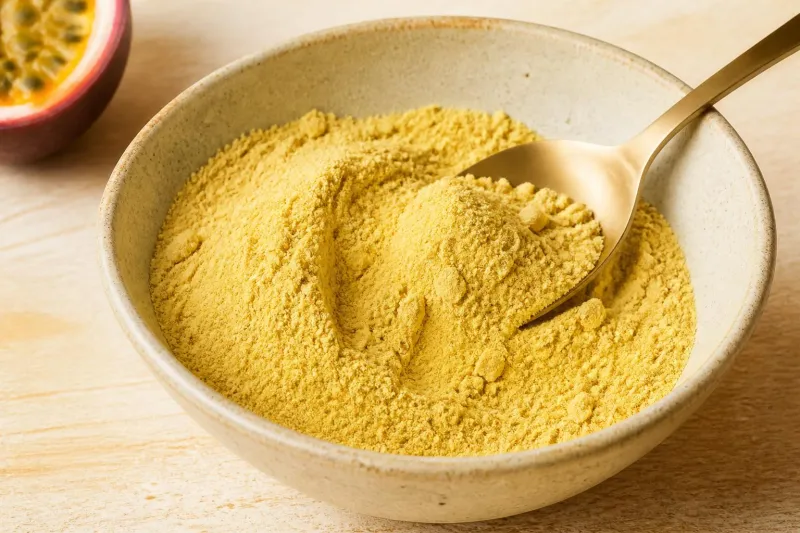
Dragon fruit powder is usually made from dragon fruit that has been dried and milled into a fine powder. In many kitchen contexts, the main reason to use it is convenience. You can add colour and some fruit character without peeling fruit, dealing with seeds and pulp, or introducing as much extra moisture as fresh fruit would.
That matters because fresh fruit changes a recipe in several ways at once. It adds water, fibre, bits of flesh, and sometimes uneven pockets of fruit. A powder behaves differently. It disperses through dry ingredients or dissolves into liquid, so it can tint a mixture more evenly and with less disruption to texture.
In baking, dragon fruit powder is often more useful for colour than for strong flavour. Many fruit powders smell more intense straight from the packet than they taste once diluted into cake batter, buttercream or yoghurt. That is not a fault. It is simply how a dry ingredient behaves when spread through a larger mixture. If you buy it expecting a dramatic tropical flavour from a tiny spoonful, you may use too much trying to chase taste and end up with a colour or texture you did not want.
Texture is the other point worth understanding. A fine powder can slightly thicken mixtures because it absorbs some moisture. In a sponge batter that effect may be minor if you use a small amount. In icing, glazes, yoghurt, overnight oats or smoothies, it can be more noticeable. This is one reason powder is often easier than fresh fruit for decorative finishes or small-batch flavouring. You can change colour and fruit character without adding chopped pieces or extra liquid.
If you are still getting used to fruit powders generally, our guide to using fruit and veg powder without guesswork explains the same handling principles across different ingredients.
How to choose a packet worth using
Before you think about recipes, read the label properly. A good packet for home use is one you can understand quickly and compare fairly.
Start with the ingredient list. If you want dragon fruit powder mainly for colour and fruit content, check whether it is simply dragon fruit, or whether it includes other ingredients such as sugar, maltodextrin, anti-caking agents, flavourings or colourings. None of those is automatically wrong, but they change how the powder behaves. Added sugar can make it sweeter than expected. Carriers such as maltodextrin can dilute flavour intensity and alter texture. Anti-caking agents can help flow, but the packet should still tell you what is in it.
Next, check allergen information carefully. In the UK, prepacked foods must provide ingredient information and emphasise regulated allergens when present in the ingredients list. The Food Standards Agency also advises consumers not to guess from a general description alone and to rely on the full label information for suitability, especially if an allergy or intolerance matters to them Food Standards Agency consumer allergy guidance. A fruit powder may be packed in a facility that also handles other ingredients, and any advisory wording should be read as it stands on the actual packet.
Then look at the nutrition panel, but compare like with like. This is where people often misread fruit powders. One brand may show values per 100g, another may highlight a portion, and a portion may be much smaller than 100g. The NHS notes that a portion and 100g are different comparison bases, so if you are comparing packets, use the same basis across both, usually per 100g unless the pack gives another basis that is clearly more relevant to your use NHS food labels guidance. With powders, this matters because the amounts used in the kitchen are often small, and a dramatic-looking per 100g number can be misleading if you are only using a few grams at a time.
Also check whether the packet says freeze-dried or another drying method. That does not tell you everything about quality, but it does tell you something about how the ingredient is likely to behave. A freeze-dried fruit powder is often chosen because it keeps fruit ingredients in a dry, easy-to-use form for baking and mixing.
Finally, look for practical details. Is the pack resealable? Does it give storage instructions after opening? Does it state a best before date clearly? These are not glamorous points, but they are often the difference between using the powder steadily and forgetting it in the cupboard until it cakes into a lump.
For a broader look at how fruit powders are described and used, see our guide to freeze-dried fruit powder.
Where it works best in baking, icing and drinks
Dragon fruit powder works best where you want an even colour, a light fruit note, and controlled moisture.
In baking, good starting places include sponge cakes, muffins, sandwich biscuits, macarons, meringues and pancake batter. In those kinds of mixtures, a powder can be easier than fresh fruit because you are not introducing chopped fruit pieces or extra juice. If you stirred fresh dragon fruit into a buttercream, for example, you would quickly loosen the icing and may end up needing extra icing sugar to bring it back. With powder, you can add colour and fruit character with far less disruption.
For cake batters, it usually makes sense to mix the powder with the dry ingredients first so it disperses more evenly. If you add it straight into a wet batter in one spot, you can get darker streaks or little pockets that need extra mixing. Extra mixing can then affect the crumb, especially in lighter cakes.
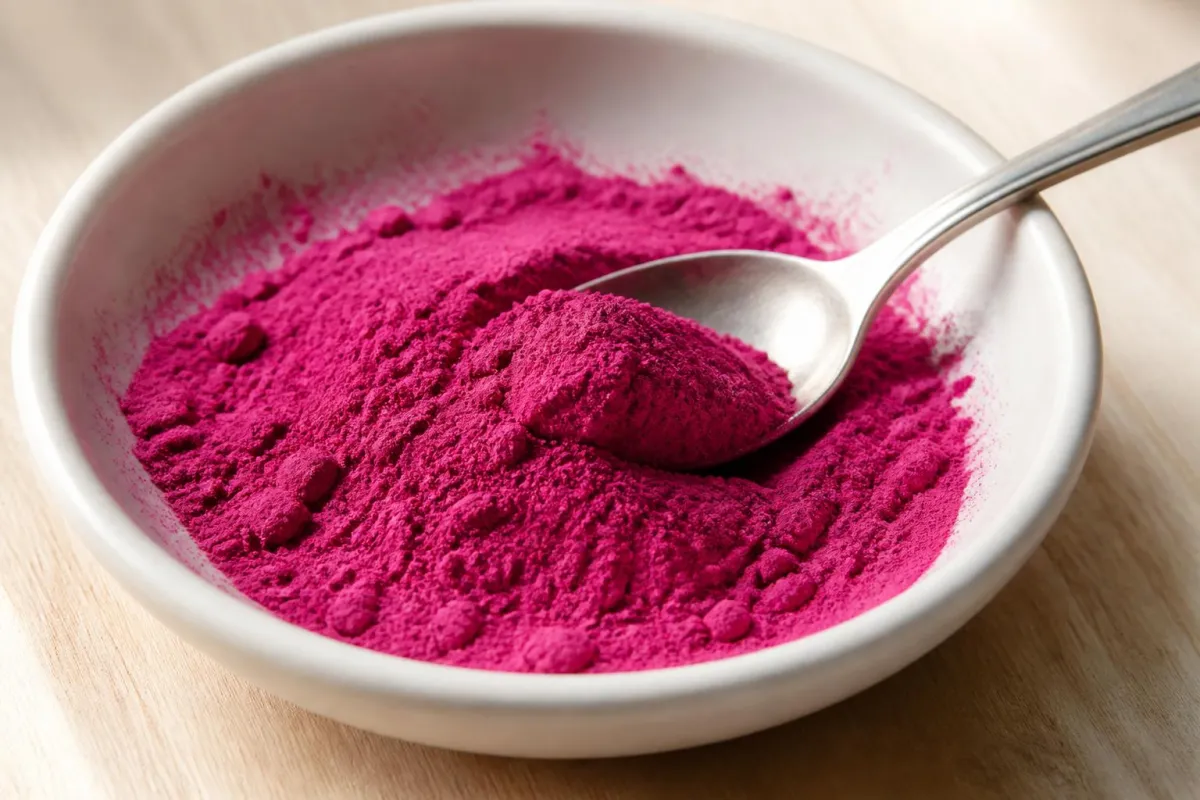
In buttercream or cream cheese icing, sift the powder first if it looks at all lumpy. Then beat it in gradually. This helps avoid speckling and gives you a clearer sense of how much colour is developing. Fruit powder can deepen in appearance once fully mixed, so it is sensible to pause before adding more.
In royal icing or simple glazes, powder can be particularly convenient because a very small amount can tint the mixture without the mess of reducing fruit purée. That said, any dry powder can make a thick icing thicker. You may need a few extra drops of water or lemon juice, added carefully, to keep the consistency workable.
In drinks, dragon fruit powder is often easiest in smoothies, milkshakes, yoghurt drinks and shaken cold drinks. Stirring it into plain cold water can work, but some powders need vigorous whisking or shaking to disperse properly. If the powder tends to cling or float, make a paste first with a small amount of liquid, then dilute it with the rest. That is often less frustrating than trying to chase dry clumps around a full glass.
It can also work well in overnight oats, chia puddings and yoghurt bowls because those mixtures have enough body to hold the powder evenly. In very thin liquids, colour may show well but flavour can seem faint. In thicker mixtures, the fruit character often feels more integrated.
There are also times when fresh fruit is still the better choice. If you want juicy pieces, visible seeds, or the look of cut fruit on top of pavlova, powder will not do that job. Powder is best when you want distribution, convenience and less added moisture. Our article on fruit pieces or powders for better baking texture goes into that choice in more detail.
How much to start with and how to adjust
The safest way to avoid waste is to start smaller than your instinct suggests.
Fruit powders vary. One may be finely milled and vivid. Another may be paler, coarser or blended with other ingredients. Because of that, fixed advice such as "always use x grams" is less useful than a method.
For baking, begin with a modest amount relative to the total mixture and assess it in stages. If you are making a bowl of buttercream, add a small spoonful, beat it in thoroughly, then stop and look. Ask three questions. Has the colour changed enough? Has the flavour come through at all? Has the texture tightened? If the answer to the first two is no and the third is yes, adding much more may not solve the problem elegantly. You may be pushing the ingredient beyond the job it does best.
For dry batters, whisk the powder through flour or sugar first. This spreads it before liquid goes in and reduces speckling. For wet mixtures such as yoghurt, custard, icing or smoothies, sprinkle while whisking instead of tipping in a heap. A heap absorbs moisture on the outside first and traps dry powder inside.
If you do need to adjust, do one thing at a time. Add more powder for stronger colour or fruit character. Add a small amount of liquid only if the mixture has become too stiff. Do not correct both at once unless you already know the ingredient well, or you can end up overshooting in both directions.
Sifting helps more than many people expect. Fine fruit powder can compact in the packet, especially after transport. A quick sift before measuring gives a truer sense of volume and helps it blend more evenly. If you measure by weight, use grams for consistency, especially if you are trying to repeat a result later. A spoonful can vary a lot depending on how settled the powder is.
If you are trying to judge the powder in a new recipe, reserve a small plain portion first where possible. For example, if you are making icing for biscuits, keep back a little uncoloured icing before adding the fruit powder to the rest. That gives you a reference point for both colour and consistency, and it means you can blend the two if the pink turns stronger than expected.
The same cautious approach applies in drinks. Mix a little into a small amount of liquid, taste and inspect, then top up or strengthen. It is easier to build than to rescue an over-coloured or slightly chalky drink.
Storage, moisture and clumping after opening
Once opened, dragon fruit powder usually keeps best when protected from moisture, warmth and repeated exposure to air. Always follow the packet instructions first, because storage advice belongs to the actual product and packaging. General food storage guidance also matters. The Food Standards Agency advises consumers to follow storage instructions and handle food in ways that help keep it safe and in good condition Food Standards Agency food storage guidance.
Humidity is the main enemy in an ordinary kitchen. Fruit powder is dry and hygroscopic, which means it readily pulls in moisture from the air. That is why a packet can seem perfect one week and slightly clumpy the next, especially if you open it over steaming pans, near a kettle, or in a warm kitchen on a damp day.
A few habits help:
- Close the packet promptly after use.
- Use a clean, completely dry spoon.
- Do not shake the powder directly over steam.
- If the packet has a zip seal, press it fully closed.
- If the original pack is flimsy, place it inside a well-sealed container, while keeping the label details with it.
Clumping does not always mean the powder is spoiled. Often it just means it has absorbed some moisture. If the packet instructions still allow use and there are no signs of spoilage, you can often break up minor clumps by pressing them through a sieve or crushing them gently with the back of a spoon in a dry bowl. For larger hardened lumps, the texture may be too uneven for delicate icing but still usable in a smoothie or a baked batter where complete smoothness matters less.
What you should not do is guess past obvious warning signs. If the powder has developed an unusual smell, visible moisture, discolouration beyond normal variation, or anything that suggests contamination, it is better not to use it. General food guidance from the NHS and Food Standards Agency is useful for understanding labels and storage principles, but neither source can tell you whether a specific opened packet in your cupboard is suitable. The actual pack condition and instructions matter most.
It also helps to buy with a purpose. If you only want dragon fruit powder for one birthday cake, a very large packet may be false economy if the rest sits half-open for months. If you expect to use it across icing, yoghurt and drinks over time, plan a few uses before opening so the ingredient earns its cupboard space.
At Crispberry, our aim is to help adult home cooks use freeze-dried ingredients with less guesswork and less waste. If you want a broader starting point for cupboard planning, our first steps with freeze-dried fruit information is a useful next read.