How to store baking ingredients without losing texture
Moisture, air, heat and light affect baking ingredients in different ways.
On this page
- What actually spoils baking ingredients in the cupboard
- Which ingredients can stay in the cupboard and which need more care
- How to store freeze-dried fruit, vegetables and powders after opening
- Choosing containers, labels and the right place in the kitchen
- When to keep, discard or check the label first
Good baking ingredients storage is mostly about keeping dry ingredients dry, cool, sealed and clean. Texture usually goes first. Flour can pick up stale odours and moisture, sugar can harden, cocoa can clump, raising agents can lose strength, chocolate can bloom, and freeze-dried ingredients can soften within minutes if they are left open in a damp kitchen.
The practical answer is to store each ingredient according to what damages it most. For some, that means a well sealed tub in a dark cupboard. For others, it means using the original packet inside an airtight container, adding a label with the opening date, and keeping a dry spoon nearby so steam and crumbs do not get in. That matters most with freeze-dried fruit and powders, because their crisp texture depends on staying very dry.
What actually spoils baking ingredients in the cupboard
Five things do most of the damage in a baking cupboard: moisture, air, temperature, light and contamination.
Moisture is the biggest enemy of texture. Dry ingredients naturally pull in water from the air to different degrees. Sugar may set into hard lumps. Cocoa powder and fruit powders can clump. Nuts and seeds lose their snap. Freeze-dried fruit pieces, which start off very crisp, can turn chewy or soft once they absorb moisture. In practical terms, this often happens because a packet is left open while the kettle boils, a scoop goes back damp, or ingredients are stored above the hob where steam collects.
Air matters even when an ingredient still looks dry. Oxygen gradually dulls flavour and can make fatty ingredients go rancid. Wholemeal flour, ground almonds, nuts, seeds and chocolate are more vulnerable than plain white flour or granulated sugar because they contain more natural oils. If a bag is loosely clipped and opened often, the ingredient may still be safe but taste flat, stale or slightly bitter.
Temperature changes do two things. First, warmth speeds up flavour loss and staling. Secondly, repeated swings between cool and warm can create condensation inside containers. That is one reason a cupboard near the oven is a poor place for delicate dry ingredients. Chocolate is especially sensitive. Warm storage can lead to bloom, where the surface turns dull or streaky. It is usually a quality issue rather than a safety issue, but it affects appearance and mouthfeel.
Light is a slower problem, but still worth controlling. Strong light can fade colour and affect flavour over time, especially in powders, nuts and seeds stored in clear jars on open shelving. A neat row of glass jars can look good, but if the shelf catches sun for part of the day, the ingredients will not keep as well as they would in a dark cupboard.
Contamination is often overlooked. A spoon used in cocoa and then dipped into baking powder can weaken the raising agent. Crumbs introduce moisture and microbes. Traces of allergens matter too. If you are baking for someone with an allergy or intolerance, the label needs checking before use, not just when the packet first comes into the house. The Food Standards Agency advises consumers to read ingredient and allergen information carefully and not assume suitability from general impressions or previous purchases alone Food Standards Agency consumer allergy guidance.
For baking ingredients storage, the aim is not to make everything last indefinitely. It is to keep each ingredient in a condition where it still behaves properly in a recipe.
Which ingredients can stay in the cupboard and which need more care
Many baking basics are happy in a standard kitchen cupboard if they are kept sealed, dry and away from heat.
Plain flour, self-raising flour and strong white bread flour usually store well in the cupboard. Keep them in their original bag if it is intact, or transfer them to a dry container with the flour name and best before date. Wholemeal flour needs more care because its oils deteriorate faster. If you use it slowly, a cooler spot is better, and some bakers prefer to refrigerate it in a tightly sealed container to protect flavour.
Sugars are generally robust. Granulated and caster sugar keep well if dry. Soft light brown sugar and dark brown sugar are more troublesome because they lose moisture and harden. An airtight container helps, but so does buying in amounts you will actually use. Icing sugar also needs good sealing because it clumps easily.
Raising agents deserve more attention than they often get. Baking powder, bicarbonate of soda and yeast can all lose effectiveness over time, especially if exposed to air or damp. Baking powder should be closed promptly after use. Bicarbonate of soda is less fragile but still benefits from a dry, tightly sealed container. Dried yeast is best stored exactly as the packet directs after opening. Some brands specify cupboard storage if used quickly, while others direct you to the fridge. Follow the pack rather than assuming all yeast behaves the same.
Cocoa powder usually keeps well in the cupboard, but only if dry and tightly sealed. It readily absorbs odours, so storing it beside strongly scented tea, spices or cleaning products is not ideal. Drinking chocolate and hot chocolate powders may contain sugar or milk solids, so their texture can change differently from pure cocoa.
Chocolate needs a cool, stable place. In the UK, that often means a cupboard rather than the fridge, provided the kitchen does not run warm. Refrigeration can cause condensation when the chocolate comes back to room temperature, which affects texture and appearance. A steady, cool cupboard away from the oven is usually better for bars, chips and couverture used in baking.
Nuts and seeds can stay in the cupboard if you use them quickly and keep them sealed, but they are among the ingredients most likely to lose quality first. Their oils can turn stale or rancid. If you buy larger bags, dividing them into smaller sealed containers can help, because the main supply is not being opened repeatedly. Ground nuts, such as almonds, are more delicate than whole nuts.
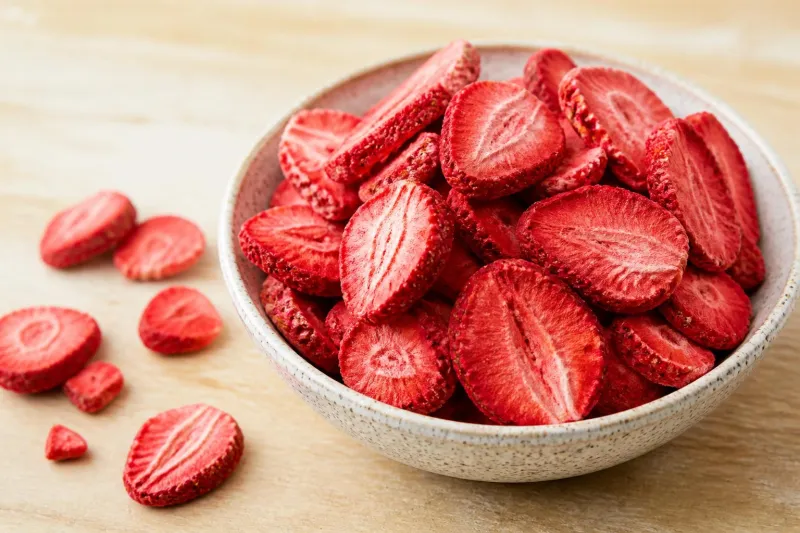
Freeze-dried ingredients need the most deliberate handling once opened. Whole pieces, slices, crumbs and powders all attract moisture quickly. That does not mean they belong in the fridge. In most cases, fridge storage creates more humidity risk, not less. A dry cupboard is usually the better choice, together with a properly sealed container and quick handling. If you are building a practical cupboard rather than just filling shelves, our guide to baking cupboard ingredients that actually earn their space sets out which dry ingredients tend to be worth keeping on hand.
How to store freeze-dried fruit, vegetables and powders after opening
Freeze-dried ingredients are useful because they bring concentrated flavour and low moisture into baking, but that same dryness makes them quick to react to humidity.
The first rule is simple. Follow the packet instructions. Storage advice can differ by ingredient, cut size and packaging format. The Food Standards Agency’s storage guidance is broad but clear on the principle, follow the product instructions and store food appropriately for safety and quality Food Standards Agency food storage guidance.
Once opened, work quickly. Decide what you need before you unseal the packet. If a recipe needs 15 grams of freeze-dried strawberry pieces or 8 grams of raspberry powder, weigh that amount out, then close the packet straight away. Do not leave it open on the counter while you cream butter and sugar.
For pieces and slices, the main risks are softening and loss of crispness. For powders, the main risks are clumping and caking. In both cases, moisture from the air is usually the cause. Use a completely dry spoon. Never scoop straight after washing up, and do not hold an open packet over a steaming saucepan or kettle.
If the original packet has a reliable zip seal and the ingredient will be used soon, that may be enough. If not, place the packet inside a well sealed container. This extra barrier helps in busy kitchens where packets are handled often. It also protects fragile pieces from being crushed.
Avoid compressing powders into small jars if you can leave them in the original labelled pouch inside a container instead. The original packaging often carries the clearest storage instructions, ingredient declaration and allergen information. Keeping that with the ingredient reduces the chance of mystery pink powder later on.
Do not refrigerate freeze-dried fruit or powders unless the packet specifically tells you to. Fridges are humid environments. Each time the container comes out, warmer air can create condensation. That is exactly what makes powders clump and fruit soften.
If a powder has formed a few small lumps but still smells and looks normal, it may simply have picked up some moisture. Sifting can restore a usable texture for some baking jobs. If the powder has become heavily caked, discoloured, or smells stale, it is better discarded. For pieces that have lost crunch, they may still be usable in fillings, batters or toppings where crispness is not essential, but they will not behave the same way in decoration or chocolate work.
We cover the basics in more detail in our guide on how to store freeze-dried fruit, and if you are deciding between formats, our article on fruit pieces or powders for better baking texture can help you choose the one that is easier to use before quality drops.
Choosing containers, labels and the right place in the kitchen
A good storage container does three jobs. It limits moisture, limits air exposure and makes the ingredient easy to identify.
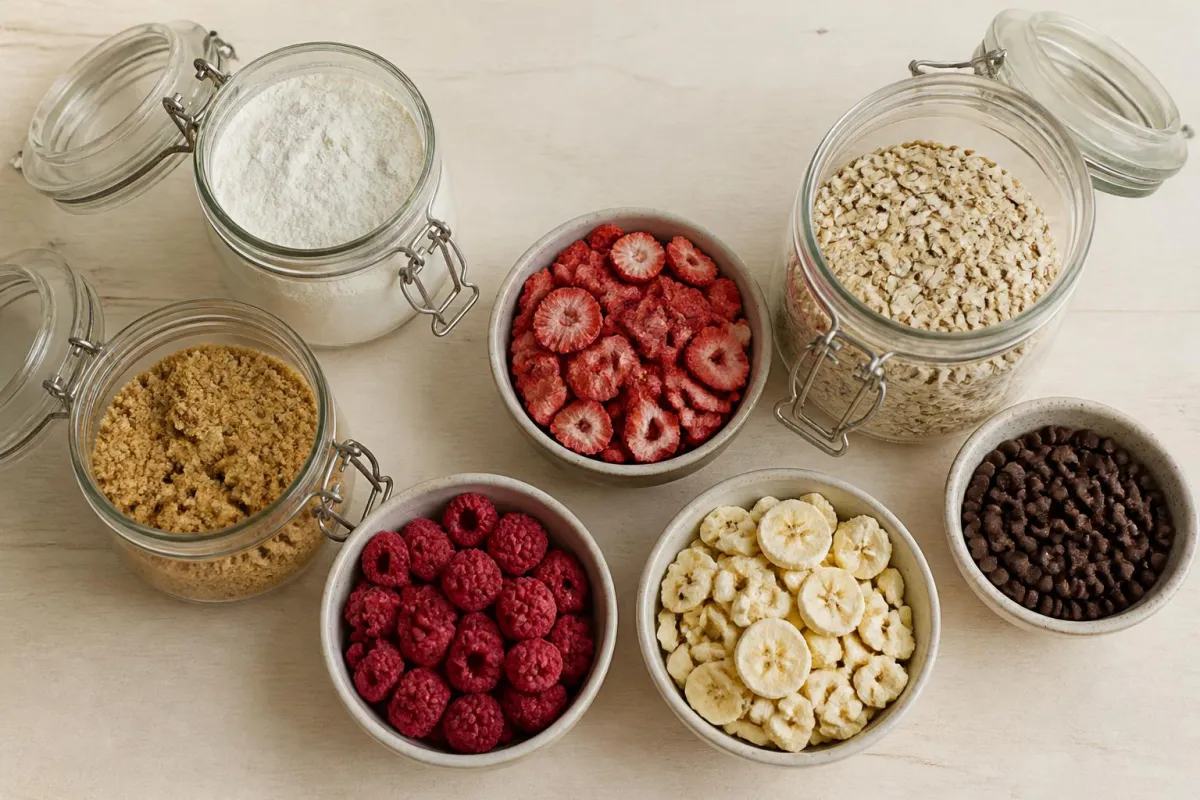
For most dry baking ingredients, rigid plastic or glass containers with a tight fitting seal work well. The key point is not the material alone, but the seal. A handsome jar with a loose lid is less useful than a plain tub that actually closes properly. For flour and sugar used daily, wide containers make scooping easier and reduce spills. For smaller quantities of cocoa, nuts or freeze-dried powders, compact containers leave less empty air inside.
Clear containers are convenient because you can see what is left, but they are best kept inside a cupboard rather than on a bright shelf. Opaque containers offer more light protection, which can be helpful for colourful powders and delicate ingredients.
Labels matter more than many home bakers expect. Write the ingredient name, best before date and opening date. If the original packet includes a storage instruction such as use within a certain period after opening, note that too. This is especially useful for ingredients that look similar, such as icing sugar and cornflour, or raspberry powder and beetroot powder. If you bake for others, it is also sensible to retain allergen information from the original pack. The NHS explains that food labels can be read on different bases, and that per 100g and per portion are not the same thing, which is another reason to keep the original packaging available when you need to check details NHS food labels guidance.
Placement in the kitchen is just as important as the container itself. The best cupboard is cool, dark and away from steam. That usually means not above the kettle, not next to the oven, and not on top of the fridge where heat can build up. If your kitchen is small, it is worth giving the driest cupboard to the ingredients most sensitive to humidity, such as raising agents, cocoa and freeze-dried fruit.
Try to group ingredients by use and fragility. Daily staples can go in the easiest reach zone. More delicate items can sit higher up where they are less likely to be left open in the middle of cooking. If you want a more detailed comparison of tubs, jars and packet-in-container setups, we have set it out in choosing kitchen containers that keep dry ingredients usable.
When to keep, discard or check the label first
Not every ingredient needs throwing away the moment it passes its best before date. Best before is about quality, not automatically safety, for many shelf-stable foods. But the sensible question for bakers is whether the ingredient still performs properly and whether the label still needs checking before use.
Keep an ingredient if it still looks, smells and behaves as expected, the packaging has stayed dry and intact, and there are no signs of pests, mould or contamination. Sugar that has hardened can often still be used if broken up. Cocoa with a few lumps may still be fine once sifted. Chocolate with bloom may melt and bake acceptably, even if it no longer looks ideal for decoration.
Discard ingredients that show obvious spoilage or contamination. That includes mould, insect activity, damp patches, strong stale or rancid odours, or unexplained discolouration. Nuts and seeds with a paint-like, bitter or stale smell should go. Flour with signs of pests should go. Freeze-dried fruit that has become tacky, damp or noticeably stale is unlikely to give good results.
Check the label first whenever allergens, storage directions or ingredient composition matter. This is particularly important with flavoured chocolates, mixed baking chips, powdered products and packaged freeze-dried ingredients that may vary by brand. If you are baking for someone else, do not rely on memory. Read the packet again. The Food Standards Agency’s consumer advice is the right reference point here, because allergen suitability depends on the actual product information, not general assumptions Food Standards Agency consumer allergy guidance.
For freeze-dried powders and pieces, be realistic about quality. If texture is central to the bake, for example a crisp topping, a bright natural decoration, or a smooth powder folded into icing, slightly softened or clumped ingredients may disappoint even if they are not unsafe. In that case, replacement is often better than trying to rescue them.
Good baking ingredients storage is not about perfection or buying specialist kit for everything. It is about matching each ingredient to the conditions it needs. Keep dry ingredients dry, seal them properly, label them clearly, and store the most delicate ones away from heat and steam. Do that, and your cupboard ingredients are far more likely to keep the texture you wanted them for in the first place.