How to make flapjacks with dried fruit that stay chewy
The main challenge is balancing fruit sweetness with enough moisture for a chewy tray.
On this page
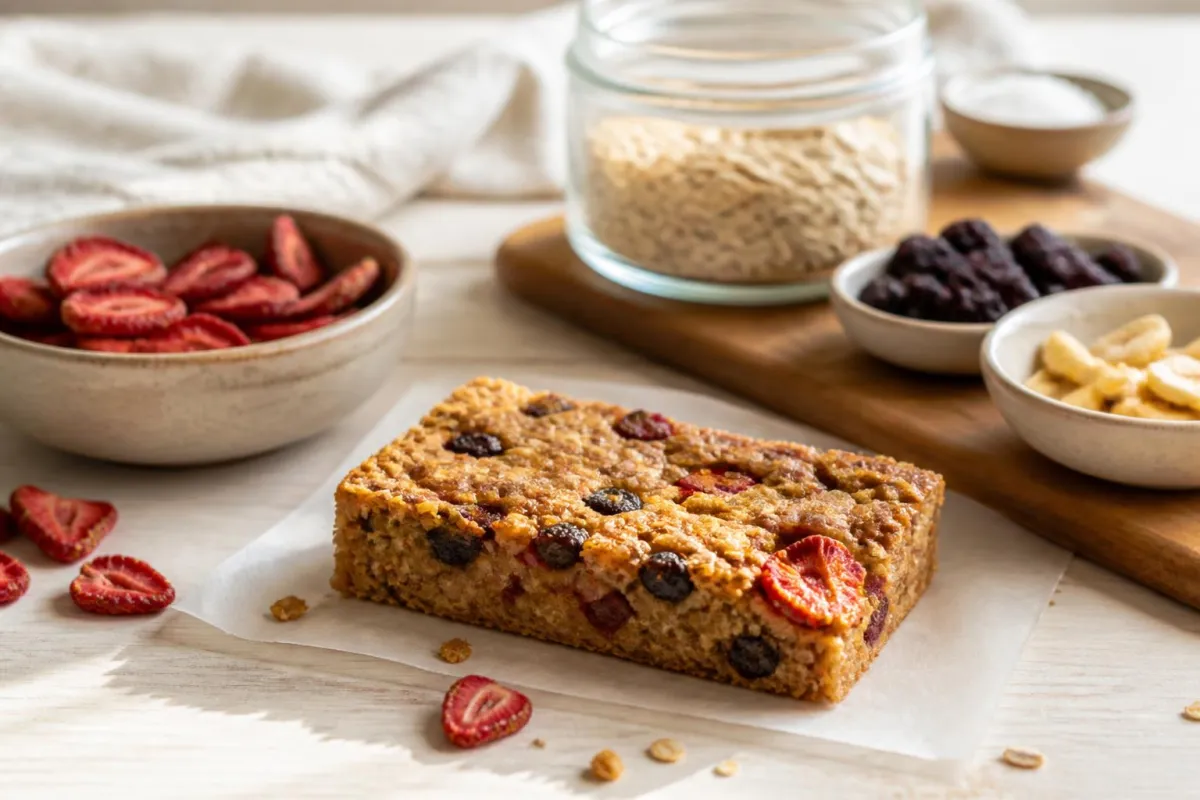
A chewy flapjack comes from balance, not luck. You need enough syrup and fat to coat the oats, enough moisture from the fruit to soften the bake as it cools, and enough pressing in the tin to help it set into slices instead of crumbling into granola. If the mixture looks dusty before it goes into the oven, it will usually bake dry. If it looks glossy, evenly coated and slightly sticky, you are much closer.
When dried fruit is involved, the main choice is not just flavour. It is how much moisture that fruit brings, how quickly it absorbs liquid from the syrup, and whether it stays soft in the oven. That is why a good dried-fruit flapjack recipe treats raisins differently from chopped apricots, and both differently from freeze-dried berries.
What makes a dried-fruit flapjack chewy rather than crumbly
The classic chewy flapjack texture comes from four parts working together, oats, syrup, fat and fruit.
Oats are the structure. Rolled oats give the best balance for most traybakes because they hold shape but still soften in the oven. Jumbo oats make a rougher, looser flapjack unless you increase the binder or crush some of them first. Porridge oats can make a denser slice because they pack more tightly and absorb liquid faster. For a traybake that cuts neatly and stays chewy for a few days, rolled oats are the easiest starting point.
Syrup is the sticky binder. In UK flapjacks that usually means golden syrup, sometimes with a little honey or treacle for flavour. Syrup helps the oats cling together and keeps the centre softer than a sugar-only mix would. If you cut the syrup too far, the flapjack often turns sandy and fragile. If you add too much, it can become heavy and overly sweet. The right amount leaves every oat lightly coated, with no dry patches at the bottom of the bowl.
Fat carries the syrup and softens the bake. Butter gives flavour, but texture matters too. Melted butter mixed fully with the syrup creates a more even coating than rubbing in cold fat. Too little fat gives a hard, brittle result. Too much can make the tray greasy and cause the slices to slump. You are aiming for a mixture that holds together when pressed in your hand, but does not weep butter around the edges.
Fruit moisture is what often decides whether a flapjack stays chewy on day two. Soft dried fruit such as raisins, sultanas, dates and cranberries contributes some chew of its own and releases a little moisture into the bake. Larger, tougher fruits such as apricots, figs or prunes can do the same, but only if chopped small enough and, sometimes, softened first. By contrast, freeze-dried fruit contains very little moisture. It gives bright flavour and crisp texture, but on its own it will not help keep a flapjack soft.
Before baking, judge the mixture by sight and feel. It should be glossy, evenly mixed and slightly clumpy. When you press it into the tin, it should compact readily without springing apart. If it looks dry, add a little more syrup or a spoonful or two of hot water to the warm mixture. If it looks very loose and wet, add a small handful of oats and mix again. That adjustment is more useful than following any recipe rigidly when your fruit choice changes.
Which dried fruits work best and how to prepare them
Not all dried fruit behaves the same way in a flapjack. We find it useful to think in three groups.
Soft dried fruit is the easiest. Raisins, sultanas, dried cranberries, chopped dates and blueberries usually go straight in. They are already pliable, so they bake without turning leathery. If your dates are sticky and clumped, chop them and separate them with your fingers before mixing. If your cranberries are very dry, a brief soak can help, but many supermarket versions are soft enough to use as they are.
Larger dried fruit needs more preparation. Apricots, figs, prunes, peaches and pears can be excellent in flapjack, but they should usually be chopped quite small, around raisin size or a little larger. Big pieces create weak points in the slice and make cutting untidy. If the fruit feels tough rather than supple, soak it in just-boiled water for 5 to 10 minutes, then drain thoroughly and pat dry before adding. You want the fruit softened, not dripping. Excess water can make the centre of the tray too wet and stop it setting properly.
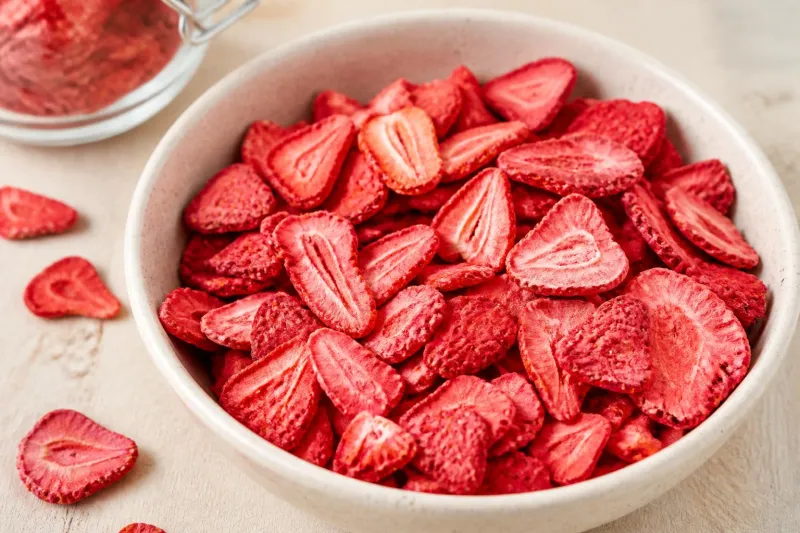
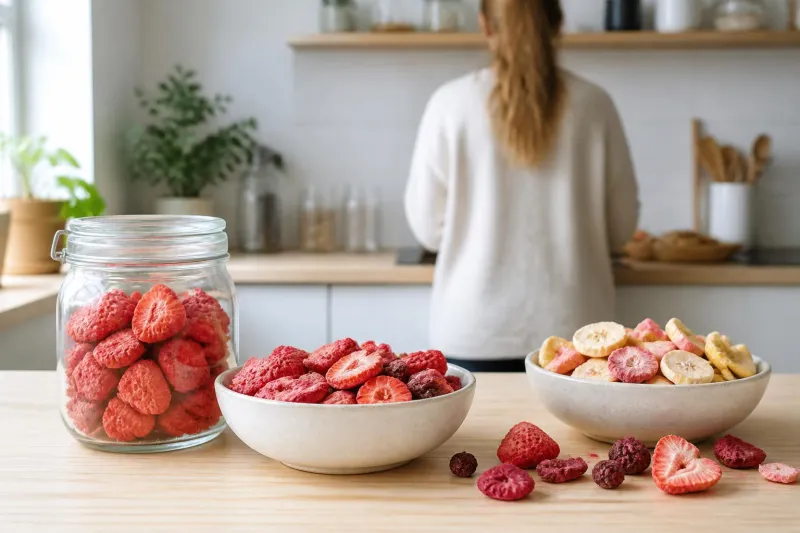
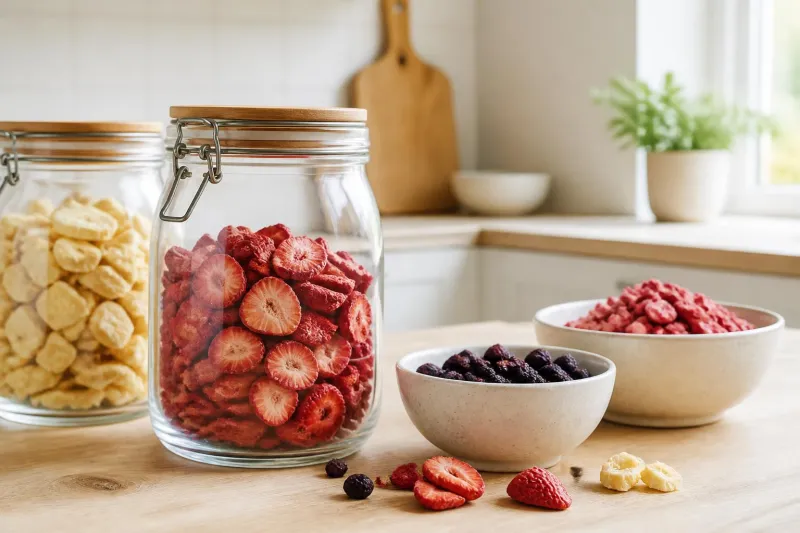
Freeze-dried fruit is different again. Because it is dry and porous, it can pull moisture from the surrounding mixture. That makes it useful for flavour and colour, but less useful as the main fruit in a chewy traybake. Whole freeze-dried raspberries or strawberries are best used in modest amounts, either folded in carefully near the end of mixing or scattered on top after baking. Crushed pieces and powders disperse flavour well, but they still do not contribute the soft chew that conventional dried fruit does. For a primer on handling these ingredients, our first steps with freeze-dried fruit guide is a good place to start.
A practical way to choose fruit is this:
- For guaranteed chew, make at least half of your fruit content soft conventional dried fruit.
- For larger fruits, chop small and soak only if they feel firm.
- For freeze-dried fruit, think of it as an accent ingredient unless you are happy with a drier, crisper finish.
Good combinations include raisin and apricot, date and cranberry, or sultana with a little freeze-dried raspberry for contrast. If you want more berry flavour without relying entirely on crisp pieces, a small amount of powder can help. We cover the differences in our guide to using freeze-dried fruit without wasting it.
A reliable metric method for building your own traybake
This base method makes one medium traybake in a roughly 20cm square tin or similar area. It is a framework rather than a lab formula, but it is reliable if you keep the balance of dry to sticky ingredients sensible.
Base ingredients:
- 250 grams rolled oats
- 125 grams unsalted butter
- 85 grams light brown sugar
- 75 millilitres golden syrup
- 150 grams dried fruit in total
- 1 gram fine salt, optional but useful
- 15 to 30 millilitres hot water, only if needed for adjustment
Method:
- Heat the oven to 160C fan, or 180C conventional.
- Line the tin with baking paper.
- Melt the butter, sugar, syrup and salt gently in a saucepan until smooth. Do not boil it hard.
- Put the oats and fruit in a large bowl.
- Pour over the warm syrup mixture and stir until everything is evenly coated.
- Check the texture. The mixture should look glossy and hold together when pressed. If it seems dry, add 15 millilitres hot water and mix, then add a little more only if needed.
- Tip into the lined tin and press down firmly and evenly, especially into the corners.
- Bake for about 22 to 28 minutes, depending on how chewy or toasty you like it. For a softer chewy flapjack, remove it when the edges are lightly golden and the centre still looks just set.
- Cool in the tin until warm, then mark portions with a knife. Leave until fully cool before lifting out and cutting through.
Here are practical fruit combinations for that base:
- 100 grams raisins plus 50 grams chopped apricots
- 80 grams chopped dates plus 70 grams dried cranberries
- 120 grams sultanas plus 30 grams chopped figs
- 120 grams soft dried fruit plus 30 grams freeze-dried berries
If you use very moist fruit, especially soaked dates, prunes or apricots, you may not need any extra water at all. If you use a higher proportion of freeze-dried fruit, you may need the full 30 millilitres extra water, or an extra 10 to 15 millilitres syrup, to avoid a dry bake.
Two adjustments matter most.
First, fruit size. Small pieces distribute better and make cleaner slices. If one piece is bigger than a thumb nail after chopping, it is probably too big for a neat traybake.
Second, pressing. Crumbly flapjack is often under-compressed rather than under-baked. Use the back of a spoon, then the flat base of a glass or measuring cup, to compact the mixture firmly without crushing the oats into paste.
If you want berry notes without adding crisp chunks, a teaspoon or two of powder can be stirred into the melted syrup mix. Our freeze-dried fruit guides explain how different fruits behave in baking, but treat powder as a flavour addition, not a moisture source.
How to use freeze-dried fruit without making the tray dry
Freeze-dried fruit behaves differently because most of its water has been removed. In a flapjack mixture, that means it does not soften the oats in the way raisins or chopped apricots do. Instead, it either stays crisp for a while or starts absorbing moisture from the syrup and surrounding ingredients.
That gives you three useful ways to use it.
The first is to mix in a small amount with conventional dried fruit. For example, use 120 grams sultanas and 20 to 30 grams freeze-dried raspberries. This keeps the overall chew while adding sharper berry flavour. Whole or broken pieces work, but fold them in gently at the end so they do not collapse into dust.
The second is to use freeze-dried fruit as a finish. Scatter crushed pieces on top once the flapjack has cooled slightly, or after a very light glaze if you are using one. This preserves more colour and texture because the fruit is not spending 25 minutes in the oven drawing moisture from the traybake. This works especially well with freeze-dried strawberries or raspberries.
The third is to use powder in the binder or as a topping. A little strawberry or raspberry powder whisked into the syrup mixture adds flavour through the whole tray without changing the texture much. Powder can also be dusted over a cooled flapjack, but it will absorb surface moisture quickly, so it is best added close to serving or packing.
What usually does not work as well is replacing all the conventional dried fruit with freeze-dried fruit and expecting the same chew. You may still get a good traybake, but it will be less soft and less forgiving. If you want a flapjack that stays chewy for several days, keep freeze-dried fruit as part of the fruit content, not all of it.
For more on keeping these ingredients in good condition once opened, see our guide on how to store freeze-dried fruit. Good storage matters because once freeze-dried fruit absorbs moisture from the air, its texture changes quickly.
Storage, slicing and food-label checks before you share or pack them
Let the flapjack cool fully before storing. While it is still warm, steam is trapped easily, and that can make the top tacky or the base soggy. Once cool, store slices in an airtight container at room temperature if you expect to eat them within a few days. If your kitchen is very warm, or your flapjack contains particularly moist fruit, cooler storage may help it keep its texture better. General food storage guidance from the Food Standards Agency is worth following where relevant, especially on keeping foods properly chilled when needed and following packet instructions for ingredients and finished foods Food Standards Agency storage guidance.
For slicing, score while still slightly warm, then cut through once cold. That gives neater edges. A very chewy flapjack is easier to cut with a large sharp knife than a small serrated one. If pieces start to break, leave the slab for another 30 minutes. Flapjack often firms as it finishes cooling.
If you are sharing with colleagues, taking slices to a group, or packing them for an event, check the ingredient packets rather than relying on memory. Conventional dried fruit can include added oil, sugar or preservatives. Freeze-dried fruit may be packed in premises handling allergens. Oats themselves are often a point of confusion for people managing allergies or intolerances, so do not guess from the front of the packet. The Food Standards Agency guidance for consumers is clear that ingredient and allergen information matters, and personal suitability should not be assumed from a general label Food Standards Agency allergy guidance.
Nutrition labels also need careful reading. In the UK, a pack may show values per 100g, per portion, or both. Those are not interchangeable. If you are comparing one dried fruit with another, per 100g is the more consistent basis. If you are estimating what went into one flapjack square, you need to work from the actual amount used in the tray and the number of pieces cut. The NHS explains this distinction clearly in its guide to reading food labels NHS food labels guidance.
One final point on sharing. A flapjack does not need to be nutritionally perfect to be useful in a home baking plan. The NHS Eatwell Guide is about balance across the day or week, not a demand that every single snack do every job NHS Eatwell Guide. For us, the practical part is making informed choices, reading the packet properly, and storing ingredients in a way that preserves the texture you wanted in the first place.
If you remember only the essentials, keep them simple. Use rolled oats, do not skimp on the syrup and butter, choose mostly soft dried fruit for chew, and use freeze-dried fruit as a flavourful addition rather than the whole fruit content. Press the mixture firmly, bake only until just set, and let it cool fully before cutting. That is the difference between a dry, crumbly square and a flapjack you will actually want to make again.