How to use freeze-dried fruit without wasting it
Use freeze-dried fruit where you want fruit flavour without adding much liquid.

On this page
If you are wondering what to do with freeze dried fruit without wasting it, the short answer is this: use it where you want concentrated fruit flavour without adding much extra liquid. That makes it especially useful in batters, icings, toppings, fillings, porridge, yoghurt, biscuit doughs and cupboard mixes, where fresh or frozen fruit can make the texture too wet.
The other key to avoiding waste is to match the format to the job, then protect it from moisture as soon as the packet is open. Whole pieces, crumbs and powders behave differently. A spoonful added at the wrong stage can go chewy, bleed colour or soften a crisp topping. A spoonful added at the right stage can make a plain bake taste clearly of fruit with very little adjustment elsewhere.
When freeze-dried fruit is the better choice
Freeze-dried fruit is often the better choice when moisture is the main problem. Fresh fruit brings water, juice and weight. Frozen fruit also brings ice crystals and, once thawed, extra liquid. Conventional dried fruit is useful, but it is denser, chewier and usually less bright in flavour than freeze-dried pieces or powder.
In everyday baking, this matters most in four situations.
First, use freeze-dried fruit when you want fruit flavour in a batter that is already close to its moisture limit. Sponge cakes, muffins, madeleines and some traybakes can become heavy or patchy if you fold in fresh berries. A small amount of crushed freeze-dried fruit or fruit powder can add flavour without forcing you to rebalance the whole recipe.
Second, choose it when you want a clean finish on the surface of a bake or dessert. Fresh fruit on top of icing or cream can leak juice and shorten the time before the finish looks untidy. Freeze-dried crumbs or pieces can give colour, flavour and a crisp bite with much less seepage.
Third, it is useful for cupboard mixes and make-ahead components. If you keep a jar of porridge mix, granola base, pancake dry mix or crumble topping, freeze-dried fruit can sit in the dry mixture more predictably than fresh fruit ever could. You still need to store it well, but it is a practical ingredient for planned convenience.
Fourth, it helps where you want flavour without obvious chunks. Fruit powder can flavour buttercream, royal icing, glaze, meringue mixture, cheesecake filling or milkshake powder more evenly than chopped fruit. That is often the simplest answer when the question is not just what to do with freeze dried fruit, but how to use it so the final texture still makes sense.
If you are new to the ingredient, our first steps for using freeze-dried fruit at home set out the basics, and our guide to what freeze-dried fruit is and how it behaves explains why it differs from fresh, frozen and standard dried fruit.
Pick the right format for the job
The easiest way to waste freeze-dried fruit is to buy one format and try to make it do everything. Whole pieces, crumbs and powders each have jobs they do well.
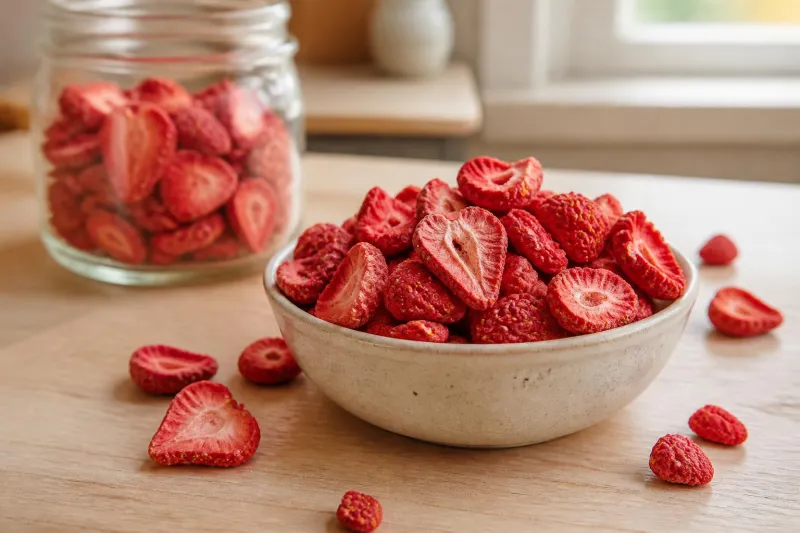
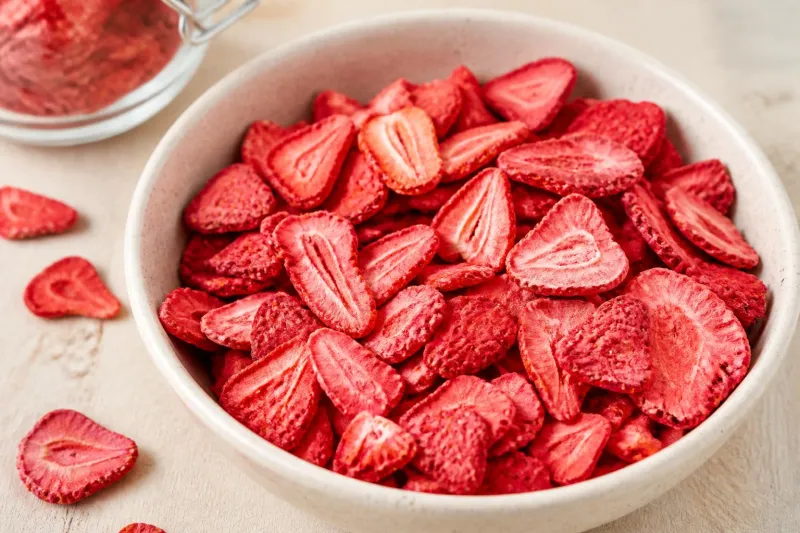
Whole pieces are best when you want shape and visible fruit. Think of topping porridge, granola, overnight oats just before serving, decorating iced buns, finishing a cheesecake, or folding a few pieces through a snack mix. They look appealing, but they are also the most likely to soften if they sit in moisture for long.
Crumbs or lightly crushed pieces are often the most versatile format for home baking. They give you some fruit identity, but they distribute more evenly than large pieces. They work well in biscuit doughs, crumble toppings, traybake finishes, streusel, meringue nests, rocky road-style mixes and cake fillings where you want small bursts of flavour rather than large hollow pieces.
Powders are the best choice when smoothness matters. Use them for icing sugar mixes, buttercream, glazes, marshmallow dusting blends, yoghurt flavouring, milkshake bases and dry mixes. Powder is also the easiest way to add fruit flavour to batters without introducing extra pockets of air or sharp fragments.
A few practical pairings help:
- Whole slices or berries for finishing and topping.
- Crushed fruit for folding into doughs, batters and crumb toppings.
- Powder for flavouring icing, whipped fillings and dry ingredients.
If you have whole fruit and need powder, crush only what you need. A pestle and mortar works well for small amounts. A mini chopper can work too, but pulse carefully. Over-processing in a warm machine can make powder clump if the fruit picks up moisture from the air or residual humidity in the bowl.
If you are comparing formats, our overview of freeze-dried fruit powder uses is useful for smooth mixtures, while whole fruit guides are better for visible toppings and pieces.
How to add it without ruining the texture
Timing matters as much as quantity. Freeze-dried fruit absorbs moisture quickly, and the same piece can be crisp, chewy or soft depending on when you add it.
For cakes and muffins, fold crushed fruit or small pieces into the batter near the end, just before the mixture goes into the tin. If it sits too long in the bowl, it starts to soften and can bleed colour into pale batters. Powder can usually go in earlier with the dry ingredients, but remember that it is still part of the dry balance. If you add enough powder to noticeably increase the dry load, you may need a little more liquid. Keep that as an adjustment, not a rule, because different powders absorb differently.
For biscuits and cookies, crushed pieces usually work better than large whole fruit. Large pieces can pull moisture into themselves during baking and leave hollow or awkward pockets. Smaller fragments spread more evenly through the dough. If you want visible pieces on top, press them in just before baking rather than mixing them all through.
For porridge, oats and breakfast bowls, keep freeze-dried fruit back until serving if you want contrast. Stirring it in while the porridge is cooking will soften it quickly. That is not wrong, but it gives a very different result. For a brighter fruit note, add some powder to the oats and milk or water during cooking, then finish with pieces on top.
For whipped cream, mousse, cheesecake filling or yoghurt, use powder when you want a smooth flavour and add pieces at the last moment if you want texture. If pieces sit in a wet dairy mixture for hours, they soften and can lose their crisp edge.
For icing and buttercream, sift powder with the icing sugar if you want an even finish. Crumbs can work for a speckled look, but they may continue to hydrate from the icing and become softer over time. That can be attractive in some finishes and messy in others.
Rehydrating is useful, but only in specific cases. If you want freeze-dried fruit to behave more like soft fruit in a filling, compote-style spooning mixture or porridge swirl, add a measured splash of water and give it a few minutes. Start small. For example, a tablespoon or two of water for a modest handful of fruit may be enough, depending on the fruit and the result you want. The point is control. If you soak it fully and then add it to a delicate mixture, you are back to dealing with extra moisture.
Keeping it for finishing is often the safest option. If you have made a cake, pavlova, trifle or sundae and are unsure how the fruit will behave, use it as the final layer. That preserves colour and texture, and it avoids compromising the base.
Easy ways to use it in everyday cooking and baking
You do not need elaborate recipes to use freeze-dried fruit well. In many kitchens, the most useful ideas are the plain ones you can repeat.
At breakfast, add a spoonful of crumbs to porridge after cooking, scatter whole pieces over yoghurt, or mix fruit powder into overnight oats for flavour without more liquid fruit. In muesli or granola, add freeze-dried fruit after baking, not before, so it keeps its character.
In baking, stir a small amount of crushed fruit into plain muffin batter, fold powder into pancake dry mix, or add crumbs to a crumble topping for a sharper fruit note. In shortbread or biscuit dough, use a restrained amount so the dough still holds together cleanly. If you want a visible finish, reserve some for the top rather than putting it all inside.
For simple desserts, use fruit powder in whipped cream, cheesecake filling or icing sugar for dusting. Crush pieces over ice cream, fold a few crumbs through Eton mess just before serving, or finish a rice pudding with fruit powder and toasted nuts. These are not tested recipes, just practical directions for use, so start modestly and adjust to taste.
Cupboard mixes are one of the most sensible ways to use small leftover amounts. If a packet is nearly empty, combine the last pieces with oats, seeds and nuts for a breakfast jar. Add powder to a hot chocolate blend, a pancake mix, or a sugar for dusting doughnuts or sponge. The point is to use what remains in a dry, low-risk application rather than opening a new packet for a tiny garnish.
Freeze-dried fruit also works well in savoury-adjacent uses where sweetness is welcome but moisture is not. A little fruit powder can sharpen a salad topping blend with nuts and seeds, or finish a goat's cheese crostini. Keep these uses light. The flavour is concentrated, and too much can taste dusty or one-dimensional.
If you are using stronger powders such as strawberry or raspberry, start with a small amount, mix, taste and build from there. Our strawberry powder guide for home cooks and bakers gives a clearer picture of where powder is easier to handle than pieces.
Storage, labels and safety checks that matter
Once opened, freeze-dried fruit needs protecting from moisture first, then from air, light and kitchen heat. The practical rule is simple: open the packet, take what you need quickly, reseal it promptly, and if the original pack does not close tightly, move the contents to a properly airtight container. Our storage guidance for freeze-dried fruit at home goes through this in more detail.
Moisture exposure changes the texture fast. A packet left open during a long baking session can lose its crispness even if the room does not feel humid. That does not automatically make it unsafe, but it can make it disappointing. If pieces have softened, use them in mixtures where crispness is not the goal, such as porridge, batters or fillings, rather than throwing them away immediately.
Always read the packet instructions. Storage advice, allergen statements and ingredient details are product-specific. Some products are pure fruit. Others may include additional ingredients. In the UK, allergen information on prepacked food matters and should not be guessed from the front of pack or the product name alone. The Food Standards Agency consumer guidance is the primary reference here, especially for anyone managing a food allergy or intolerance: Food Standards Agency consumer allergy guidance.
Nutrition labels also need careful reading. One of the easiest mistakes is comparing a per 100g figure with a portion figure as if they meant the same thing. They do not. The NHS guidance on reading food labels explains that per 100g is a standard comparison basis, while portions vary and must be checked on the actual pack: NHS guidance on how to read food labels. This matters especially with freeze-dried ingredients because they are light, and a small bowlful may weigh fewer grams than it looks.
If you are planning cupboard ingredients for general household use, keep the wider context sensible. The NHS Eatwell Guide is about overall dietary balance across a day or week, not turning every topping or snack into a nutritional test: NHS Eatwell Guide. That is useful perspective when you are comparing packets or deciding how often to keep freeze-dried fruit to hand.
On food safety, follow the storage instructions on the pack and keep opened ingredients in suitable conditions. General Food Standards Agency guidance on storage and temperature control supports the basic point that proper storage matters and product instructions should be followed: Food Standards Agency guidance on chilling, freezing and defrosting food safely. For freeze-dried ingredients, that usually means dry storage unless the pack says otherwise.
One final point on labels, UK rules and the EU. Food labelling frameworks are closely related, but UK requirements apply in the UK market and product packs should be read as sold here. If you are using imported ingredients, do not assume a label aimed at another market presents portions, allergens or storage wording in exactly the same way as a UK retail pack.
Used well, freeze-dried fruit is less about novelty and more about control. It lets us add fruit flavour where fresh fruit would bring too much water, and it gives us flexible formats for finishing, folding, flavouring and mixing ahead. Choose the right format, add it at the right stage, and store it properly after opening. That is how we get the convenience without the waste.
Crispberry is published by Fleeta Limited as a practical UK information site for adult home cooks and bakers, so we keep the focus where it belongs, on ingredient handling, texture and clear label reading.