What freeze-dried fruit is and how to use it well
freeze-dried fruit is fruit with almost all its water removed by sublimation
On this page
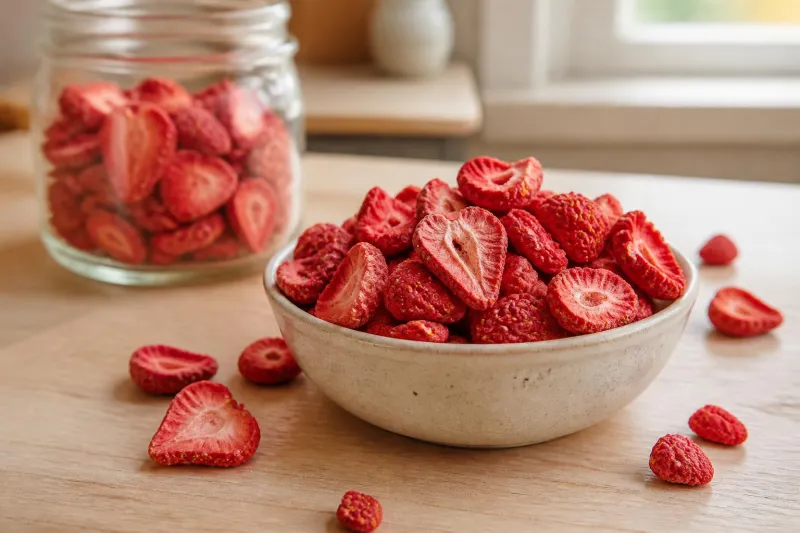
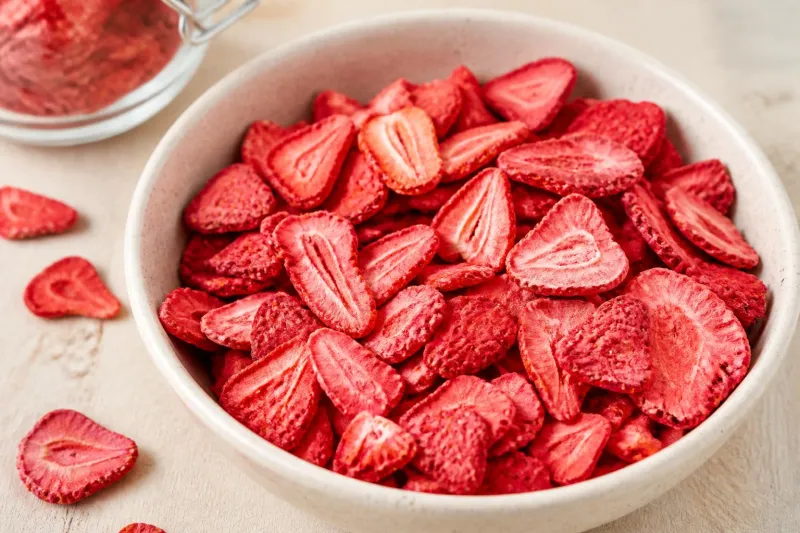
Freeze-dried fruit is fruit that has had almost all its water removed while it stays cold. The result is light, crisp, intensely fruity, and easy to store in the cupboard. If you have ever wondered why it snaps rather than bends, that is the reason. There is very little moisture left in it.
The short version is simple. Fresh fruit is frozen first, then the ice inside it is removed in a special low-pressure process. That process is called sublimation, and the full technical name for freeze-drying is lyophilisation. You do not need the science to use it well, but it helps explain why freeze-dried fruit behaves so differently from both fresh fruit and the chewy kind of dried fruit you buy in bags.
What freeze-dried fruit actually is
Freeze-dried fruit starts as ordinary fruit. Strawberries, raspberries, bananas, apples, blueberries, mango and plenty more can all be made this way.
The fruit is frozen. Then it goes into a chamber where the air pressure is lowered. Under those conditions, the ice in the fruit turns straight into vapour instead of melting into liquid water first. That jump from solid ice to vapour is sublimation.
That is the key step. Because the water leaves while the fruit is still cold and structured, the fruit keeps much of its original shape. Tiny gaps are left behind where the ice crystals were. Those gaps make the fruit dry, light and crisp.
Lyophilisation is simply the technical word for this whole freeze-drying process. In everyday kitchen terms, it means the fruit has been dried very thoroughly without being cooked in the usual way.
Why does that matter?
Because water affects almost everything:
- Texture, fresh fruit is soft because it is full of water
- Weight, once the water is gone the fruit becomes much lighter
- Shelf life, less moisture means less chance of spoilage
- Flavour, the fruit taste can seem more concentrated
- Use in recipes, crisp pieces behave very differently from juicy fruit
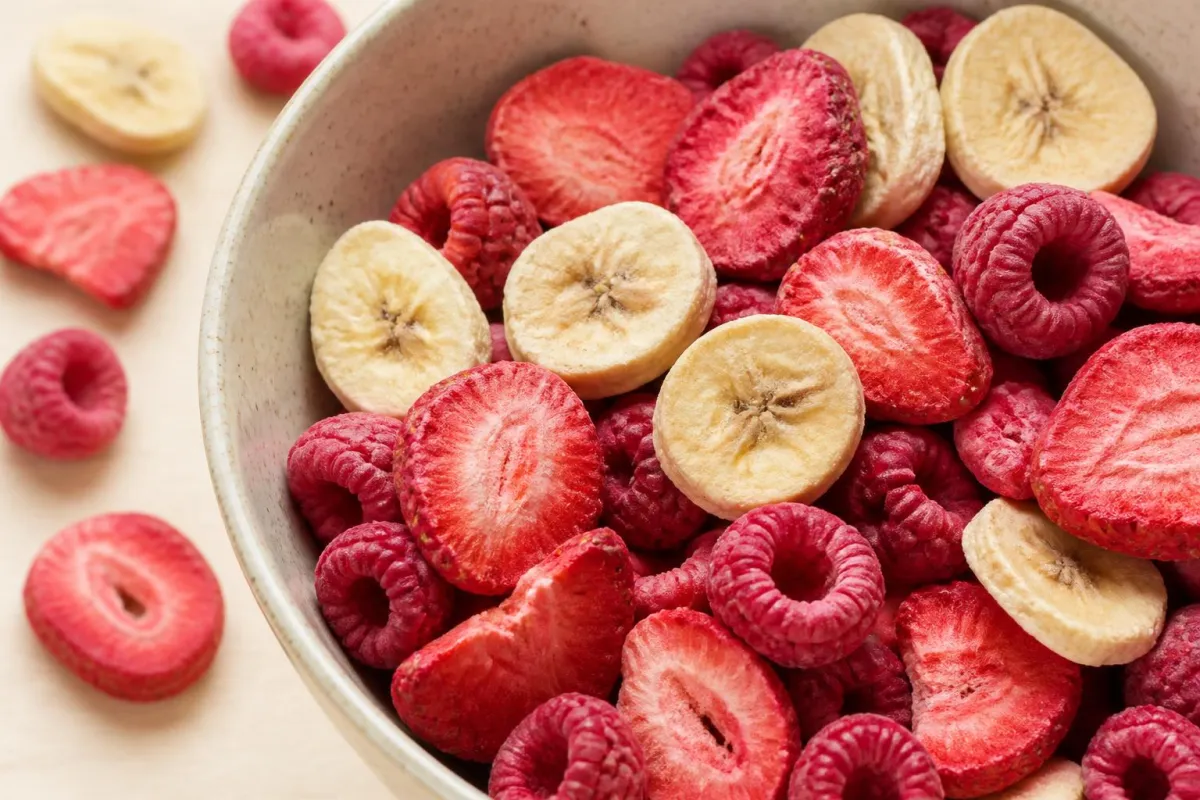
A raspberry that was plump and delicate when fresh becomes airy and crisp after freeze-drying. A strawberry slice becomes light enough to crush between your fingers. That is why freeze-dried fruit works so well scattered over porridge, folded into icing, or packed for a walk.
If you want a quick look at the kinds people use most, our guide to freeze-dried fruit for everyday baking and snacking is a useful place to start.
How it compares with fresh and ordinary dried fruit
Fresh fruit, freeze-dried fruit and ordinary dried fruit all have their place. They are not interchangeable in every situation.
Fresh fruit is juicy, perishable and usually best when you want bulk, freshness and softness. Ordinary dried fruit, such as raisins, apricots or dates, is usually chewy because water has been removed more slowly, often with heat. Freeze-dried fruit is the crisp one. It is dry enough to snap or crumble.
Here is the practical comparison.
| What matters | Fresh fruit | Freeze-dried fruit | Ordinary dried fruit | |---|---|---|---| | Texture | Juicy, soft | Crisp, airy, light | Chewy, dense | | Flavour | Fresh and rounded | Bright, concentrated | Sweet, richer, sometimes slightly cooked | | Storage | Fridge or fruit bowl, short life | Cupboard, long life if kept dry | Cupboard, long life | | Weight | Heaviest | Lightest | Lighter than fresh, heavier than freeze-dried | | Serving size | Larger in grams | Small in grams | Small in grams | | Typical uses | Snacking, salads, puddings | Toppings, baking, lunchboxes, walking snacks, powders | Baking, snacking, cooking | | Moisture in recipes | Adds moisture | Adds almost none | Adds some stickiness and sweetness | | Best feature | Freshness | Crunch and convenience | Chew and sweetness |
For UK shoppers, the biggest surprises are usually portion size and texture.
A small handful of freeze-dried berries can represent quite a lot of fresh fruit because the water has been removed. But it will not feel filling in the same way a bowl of fresh strawberries does, simply because it weighs less and takes up less space in the stomach once chewed.
The other big difference is how it behaves in food. Fresh raspberries can make a cake batter wetter. Ordinary dried fruit can make it sweeter and heavier. Freeze-dried raspberries add flavour and little bursts of colour without adding much moisture at all. That is why bakers like them.
If you are choosing between whole pieces and powder, powder is handy when you want colour and flavour spread evenly through icing, buttercream, sponge or yoghurt. Our page on fruit powder for icing, baking and desserts explains where powder is easier than pieces.
Sugar, fibre, kcal and 5 A Day
This is the bit people rightly ask about. Is freeze-dried fruit healthy? Is it high in sugar? Does it count towards 5 A Day?
The honest answer is that the fruit is still fruit, but once the water is removed, everything else becomes more concentrated by weight. That includes natural sugars, fibre and kcal.
So if you compare 100g of fresh strawberries with 100g of freeze-dried strawberries, the freeze-dried version will look much higher in sugar, fibre and kcal on the label. That does not mean sugar has been added. It usually means the water has been taken away.
Typical values vary by fruit and brand, so check the label. As a broad guide:
- Freeze-dried fruit often contains roughly 250 to 400 kcal per 100g
- Sugars are often roughly 40g to 70g per 100g
- Fibre is often roughly 5g to 20g per 100g
Those are typical ranges only. A freeze-dried banana product will not look the same as freeze-dried raspberries. Ingredient lists and nutrition panels matter.
Portion size is what makes the numbers sensible in real life. Most people do not eat 100g of freeze-dried fruit in one go. A topping portion might be 5g to 15g. A snack portion might be 10g to 20g, depending on the fruit and the person.
What about 5 A Day?
For general dried fruit, the NHS 5 A Day guidance lists a 30g portion and advises eating it with meals. This is not product-specific validation of every freeze-dried format. An estimated fresh-weight conversion cannot establish nutrient content or an official portion equivalent.
Teeth matter too. The NHS advises that dried fruit can stick to teeth, which can increase the risk of tooth decay, especially if eaten often between meals. Freeze-dried fruit is usually less sticky than chewy dried fruit, but it still contains natural sugars and can break into small pieces that sit in the mouth. It is sensible to have it with meals, drink water afterwards, and avoid constant grazing.
If you follow Slimming World or another structured eating plan, do not assume all fruit products are treated the same way. Check the current plan rules for the exact product and portion.
One more label point for UK readers. In the UK, food labelling rules are set domestically, while many products still look similar to those sold in the EU. Where rules or presentation differ, go by the product actually sold here. If in doubt, the ingredient list and nutrition panel on the pack are the documents that count.
Best ways to use it at home
This is where freeze-dried fruit really earns its keep. It is easy to keep in the cupboard and easy to add at the last minute.
For porridge, use 5g to 10g per bowl. Add it after cooking if you want it crisp. Stir it in 1 to 2 minutes before the end if you want it to soften slightly. Freeze-dried strawberries and raspberries are especially good here.
For yoghurt, use 5g to 15g. Sprinkle on just before serving to keep the crunch. If you stir it in and leave it for 10 minutes, it softens and tastes more like fruit pieces in a compote.
For baking, think about whether you want crunch, colour or flavour.
- In muffin or cookie batter, use 10g to 25g and fold in at the end
- On top of cupcakes, add a few grams just before serving
- In buttercream or icing, use powder rather than chunks for a smoother result
- In sponge cake batter, small crushed pieces work better than large whole slices
If you want strong strawberry flavour without extra liquid, strawberry powder for buttercream, icing and yoghurt is often easier than whole pieces.
For lunchboxes, 5g to 10g is usually enough. A little goes further than people expect. It adds interest without becoming a full sugary snack by itself. Pack it in a small sealed pot so it stays crisp.
For walking snacks and camping, 10g to 20g is practical. Freeze-dried fruit is light to carry and does not bruise. It works well mixed with nuts or seeds. Add it just before you leave if you are making a trail mix, especially on damp days.
A few simple home uses that work well:
- Crush over porridge with a spoonful of seeds
- Sprinkle onto Greek yoghurt with oats
- Fold into white chocolate bark after melting and spreading
- Stir into pancake batter at the last moment
- Scatter over pavlova or cheesecake just before serving
- Add to homemade granola after baking, not before
- Mix into flapjack crumbs for topping, not the main bake
- Take a small pot on a walk with almonds or pumpkin seeds
The timing matters. Add freeze-dried fruit late if you want crunch. Add it earlier, or let it sit in something moist for 5 to 15 minutes, if you want it softer.
How to store it and what to check on the label
The enemy of crispness is moisture. Freeze-dried fruit absorbs water from the air surprisingly quickly. Leave it open on a humid kitchen counter and it can go from crisp to leathery faster than people expect.
Once opened, keep it in an airtight container or reseal the pack well. Store it in a cool, dry cupboard, away from steam and sunlight. Do not keep dipping in with a wet spoon.
If the original pack has a zip seal, press it closed properly. If not, transfer the fruit to a jar or tub with a tight lid. For larger bags, dividing the contents into smaller containers can help because you open each one less often.
The best-before date is about quality, not safety in the simple way people sometimes assume. A best-before date tells you when the product is expected to be at its best for flavour and texture if stored properly. It is not the same as a use-by date. If the fruit has gone soft because it absorbed moisture, that is usually a quality issue first. If it smells odd, shows signs of contamination, or the pack is damaged, do not use it.
When buying, check the label for these details:
- Ingredients, ideally just fruit if you want plain fruit
- Added sugar, some products contain it, some do not
- Oils or glazing agents, more common in some dried fruit products than others
- Anti-caking agents in powders
- Piece size, slices, whole berries, crumbs or powder all behave differently
- Allergen statements, especially if packed in a facility handling nuts or cereals
- Nutrition panel, because values vary by fruit
It is also worth checking whether the product is whole fruit pieces or a flavoured cereal snack that happens to contain some freeze-dried fruit. The front of pack can be cheerful. The ingredient list tells the real story.
If you want a fuller cupboard guide, we have a separate page on how to keep freeze-dried fruit crisp after opening.
Who should take extra care
Freeze-dried fruit is easy for most adults to enjoy, but it is not one-size-fits-all.
This general ingredient article does not establish suitability for babies or young children. Powdering, crushing or softening a product does not automatically establish that it is safe for a child. Follow the NHS guidance on preparing food safely and ask a health visitor or other appropriate clinician about individual suitability.
Adults should be sensible about portions too. Because freeze-dried fruit is light and easy to nibble, it is possible to eat quite a lot without noticing. A realistic adult portion is often around 10g to 20g as a snack, or 5g to 15g as a topping. More than that is not forbidden, but it can push up sugar and kcal quickly simply because the fruit is concentrated.
People with dental concerns may prefer to eat it with meals rather than grazing on it all afternoon. People who find the crisp texture uncomfortable may prefer softened fruit or powder.
Choose powder instead of pieces when:
- You want smooth icing or buttercream
- You want fruit flavour without crunchy bits
- You are adding it to drinks, yoghurt or porridge
- You want colour evenly spread through a recipe
Freeze-dried fruit is simple once you know what it is. It is fruit with the water removed by freezing and sublimation, which leaves it crisp, light and concentrated. Use small amounts. Keep it dry. Check the label. Add it late for crunch, or let it soften if that suits the recipe better. That is usually all you need to get the best from it at home.
Good questions, short answers
Is freeze-dried fruit healthy?
It can be a handy fruit ingredient or snack, but it is concentrated. Weight for weight it usually has more sugar and kcal than fresh fruit because the water has gone. Check the label and keep portions modest.
Does freeze-dried fruit count towards 5 A Day?
The NHS guidance linked in this article covers dried fruit generally. It does not validate an identical portion equivalent for every freeze-dried product; do not infer one from water loss.
Is freeze-dried fruit the same as dehydrated fruit?
No. Both have water removed, but freeze-dried fruit is frozen first and dried by sublimation, which helps it stay light and crisp. Dehydrated fruit is usually chewier and denser.
How much freeze-dried fruit should I eat?
A typical serving is about 10g because it is so light and concentrated. Exact nutrition varies by fruit and brand, so use the label for sugar, fibre and kcal.
Can children eat freeze-dried fruit?
This article does not assess suitability for a child. Powdering or softening does not automatically make a product safe. Follow the NHS food-preparation guidance linked above and seek individual advice from a health visitor or appropriate clinician.